 Bellingham Roofing
 Asphalt Shingle Roofing Built for Sudden Valley's Conditions
Sudden Valley sits in one of the shadier, more heavily wooded pockets of Whatcom County, tucked along Lake Whatcom with tree cover on most lots. That's part of what makes it a great place to live, and part of what makes it harder on a roof. Shade slows drying time after every storm, needle and leaf litter collects in valleys and behind chimneys, and the lake's moisture adds to the marine air already rolling in off Bellingham Bay. An asphalt shingle roof can handle all of that for decades, but only if it's specified and installed with this specific environment in mind, not a generic spec sheet.
This page covers what we actually look at when we bid asphalt shingle work in Sudden Valley: the moss and moisture pressure specific to shaded, tree-heavy lots, what a correct installation includes, and why local install experience changes the outcome more than most homeowners expect.
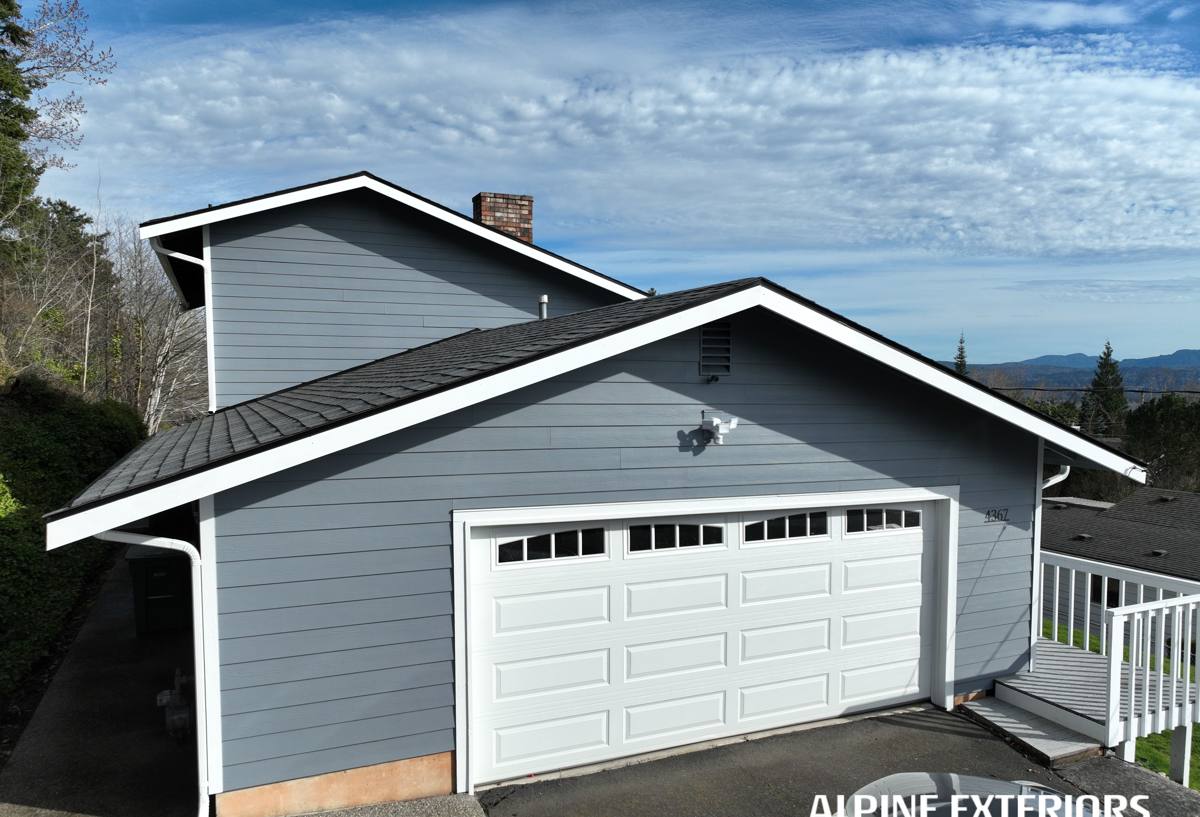
What Bellingham's Climate — and Sudden Valley's Tree Cover — Do to a Shingle Roof
Whatcom County's marine climate means long stretches of low-intensity rain rather than short downpours. That pattern is actually easier on shingles than the heavy, wind-driven storms some regions see. The bigger issue here is how slowly roofs dry out between rain events, especially on lots shaded by conifers.
Moss and Organic Growth
Shade plus moisture is the exact recipe moss needs. On a lot with full sun exposure, a roof surface dries within a day of a storm. Under mature tree cover, north-facing slopes and valleys can stay damp for days. Moss doesn't just sit on top of shingles — its root structure works into the granule surface and, over time, lifts shingle edges and holds water against the roof deck. Left unaddressed for years, that's what turns a cosmetic issue into a deck-rot issue.
Salt Air and Granule Wear
Bellingham's proximity to salt water adds a slow, steady mineral load to everything exposed outdoors, including roofing. It's a secondary factor compared to moss and shade in a wooded community like Sudden Valley, but it does contribute to granule wear over the life of a roof, which is one more reason we don't treat shingle selection as an afterthought here.
Debris Load
Needles, cones, and leaf litter collect fastest in valleys, behind chimneys and skylights, and along lower eaves under overhanging branches. That debris holds moisture against the shingle surface and, if it backs up at the eaves, can force water up and under the shingle courses during heavy rain.
What a Correct Asphalt Shingle Installation Includes
A shingle roof is a system, not a single product. Skipping any layer of that system shows up eventually as a leak, premature wear, or a warranty claim that gets denied because the installation didn't match the manufacturer's requirements.
- Deck inspection and repair — every sheet of the roof deck gets checked for soft spots, delamination, or rot before a single shingle goes down. This matters more on shaded, moss-prone lots where hidden moisture damage is more common.
- Ice and water shield — self-adhering membrane at eaves, valleys, and around penetrations, where the majority of leaks originate.
- Synthetic underlayment — a water-resistant layer across the full deck that acts as the roof's backup barrier if wind or debris ever compromises the shingle surface.
- Proper flashing — new step flashing, counter-flashing, and pipe boots rather than sealing over old, failing metal. Sealant is a stopgap, not a flashing repair.
- Balanced attic ventilation — intake at the eaves and exhaust at the ridge, sized correctly. Poor ventilation traps heat and moisture in the attic, which shortens shingle life from underneath and can void a manufacturer's warranty outright.
- Correct nailing pattern — proper nail count and placement per shingle, per the manufacturer's spec, not the minimum needed to pass a quick glance.
- Ridge cap and hip detailing — matched ridge cap product installed to spec, not cut from field shingles as a shortcut.
Our Process
- On-site inspection — we walk the roof and the attic, not just the ground. On tree-heavy lots we specifically check for moss intrusion, trapped moisture, and shaded slopes that may need extra attention.
- Written estimate — a clear scope covering tear-off, deck repair allowances, underlayment, flashing, ventilation, and the shingle product itself, so there are no surprise line items mid-project.
- Tear-off and deck check — full removal down to the deck, with every sheet inspected before we cover it back up.
- System installation — ice and water shield, underlayment, flashing, ventilation, and shingles installed to manufacturer specification, in order.
- Cleanup and magnetic sweep — job site, gutters, and grounds cleared of debris and stray fasteners.
- Final walkthrough — we review the finished roof with the homeowner before calling the job done.
Shingle Options for Sudden Valley Homes
Not every shingle product performs the same way under heavy shade and moisture. We'll talk through options based on your specific roof, budget, and how much sun exposure your lot actually gets, but here's the general comparison we start from.
| Shingle Type | Typical Lifespan | Moss/Algae Resistance | Best Fit |
|---|---|---|---|
| Standard 3-tab | Shorter end of the asphalt range | Lower unless treated | Budget-conscious re-roofs on well-drained, sunnier slopes |
| Architectural (laminate) | Longer than 3-tab | Better base durability | Most Sudden Valley homes; heavier profile sheds debris and holds up better under shade |
| Algae-resistant (AR) granules | Same as base product | Significantly better against streaking and growth | Shaded, tree-covered lots — the norm in Sudden Valley |
| Impact-rated / heavier laminate | Upper end of the asphalt range | Best overall | Homeowners prioritizing longevity and reduced maintenance over the lowest upfront cost |
For most Sudden Valley properties, we lean toward architectural shingles with algae-resistant granules as the practical baseline, given how much tree cover is typical in the area. That's a professional judgment call based on shade and moisture exposure, not a push toward the most expensive option available.
What Affects the Cost of a Shingle Roof Here
| Factor | Why It Matters Locally |
|---|---|
| Deck condition | Shaded, moss-affected roofs more often need deck repair discovered during tear-off |
| Roof access | Steep driveways, tree-lined lots, and gated-community access can affect setup time |
| Roof pitch and complexity | Valleys, dormers, and multiple planes add flashing and labor time |
| Shingle tier chosen | 3-tab vs. architectural vs. upgraded algae-resistant products |
| Ventilation upgrades | Older Sudden Valley homes sometimes need added intake or exhaust to meet current standards |
| Debris and moss removal | Heavier moss growth from long-term shade adds to tear-off time |
Maintenance That Actually Extends a Sudden Valley Roof's Life
- Have gutters and valleys cleared of needles and leaf litter at least once, ideally twice, a year given the tree cover common in the area.
- Address moss early with proper roof-safe treatment rather than waiting until it's visibly thick — early moss is far easier and cheaper to manage than established growth.
- Trim back overhanging branches where practical to improve sun exposure and airflow across shaded slopes.
- Check attic ventilation periodically — blocked soffit vents are a common, easy-to-miss cause of trapped moisture.
- Have flashing around chimneys, skylights, and pipe boots inspected during routine maintenance, since these are the most common leak points on any shingle roof.
- Schedule a professional inspection after any major windstorm, even if no damage is visible from the ground.
Why Local Sudden Valley Experience Matters
A roofing crew that already works in Sudden Valley knows what to expect before they climb the ladder. That includes understanding the shade patterns and moss pressure typical of tree-covered lots, working within gated-community access and any HOA coordination that comes with it, and knowing which slopes on a given lot are going to need extra attention regardless of what the shingle product's data sheet says. It also means familiarity with Whatcom County permitting and inspection requirements, so the paperwork side of a re-roof doesn't slow the project down.
None of that replaces a solid installation — the fundamentals of deck prep, flashing, ventilation, and correct shingle installation matter everywhere. But local experience means fewer surprises, a more accurate estimate the first time, and a crew that already understands why a roof in Sudden Valley isn't quite the same job as one in a wide-open, sun-exposed neighborhood a few miles away.
If you're planning a shingle roof replacement or repair in Sudden Valley, we're happy to take a look and give you a straight answer on what your roof actually needs. Use the form below to request a free, no-pressure estimate.