 Bellingham Roofing
 Decks Built for How Sudden Valley Actually Lives Outside
Sudden Valley is one of the more heavily wooded residential communities in Whatcom County, tucked along the shoreline and hillsides of Lake Whatcom. That setting is a big part of why people live there, and it's also exactly why a deck built for a wide-open, sunny lot doesn't hold up the same way here. Tree canopy, lake-driven humidity, and long stretches of shade change how a deck dries out, how fast it collects moss, and how long the wood or fasteners underneath actually last.
We build and repair custom decks in Sudden Valley regularly, and most of what separates a deck that looks good for two years from one that holds up for two decades comes down to decisions made before a single board goes down: material choice, framing details, drainage, and fastener selection. This page walks through what actually matters for a deck in this specific setting.
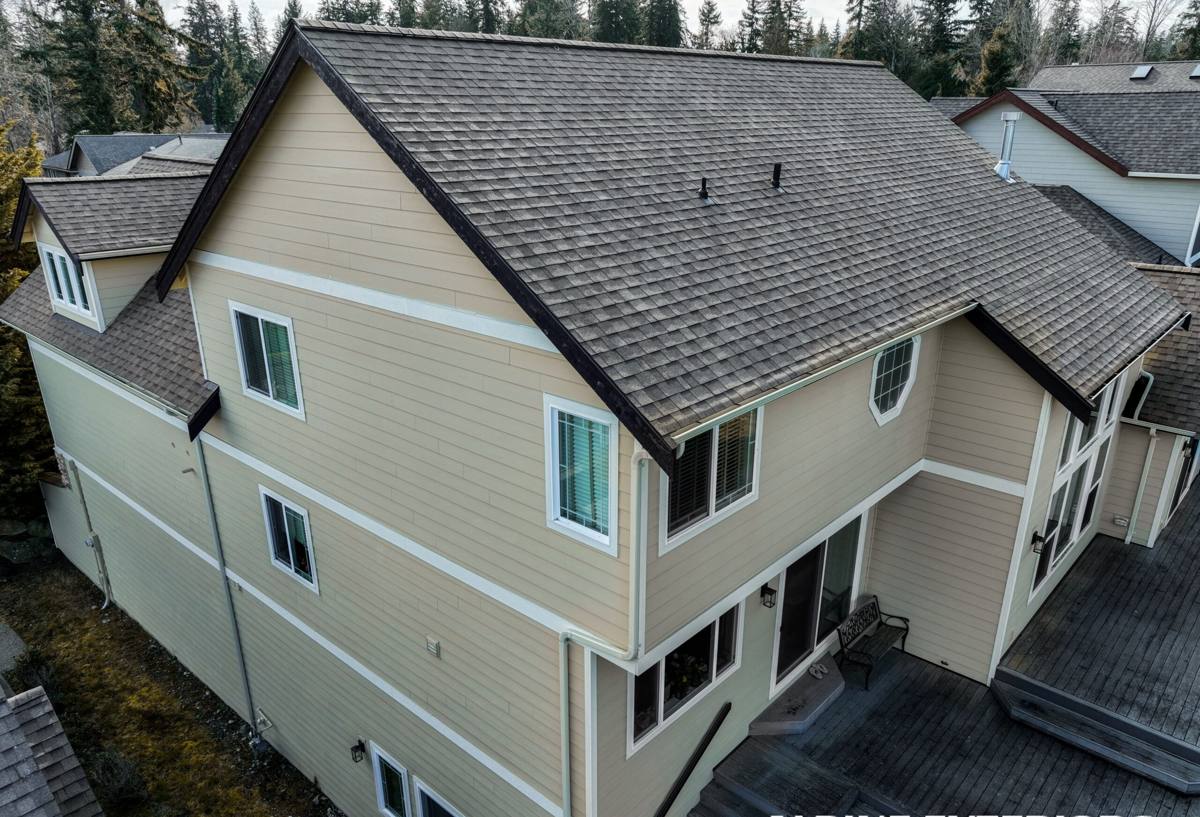
What Sudden Valley's Setting Means for Deck Design
Like much of Bellingham and the wider Whatcom County area, this region gets a marine-influenced climate with damp, salt-tinged air moving in off the Sound and long stretches of overcast, drizzly weather through fall and winter. In Sudden Valley specifically, that regional moisture gets compounded by heavy tree cover and proximity to the lake. Shaded decks under conifers or big-leaf maples simply don't dry out between rain events the way a deck on an open, south-facing lot would.
A few things we plan around on almost every Sudden Valley deck project:
- Extended shade periods that slow surface drying and encourage moss and algae growth
- Needle and leaf litter that collects between boards and traps moisture against the framing
- Sloped and hillside lots common around the lake, which affect footing depth and post height
- Higher ambient humidity near the water, which accelerates corrosion on the wrong fasteners
None of this means a deck can't hold up well here — it means the design has to account for it rather than ignore it.
Choosing the Right Decking Material
There's no single "best" decking material for every situation, but there are materials that make more sense than others once you factor in a shaded, damp Sudden Valley lot. The table below covers the main options we install and how they tend to hold up in this specific climate.
| Material | Upfront Cost | Maintenance | Performance in Shade & Moisture |
|---|---|---|---|
| Pressure-treated wood | Lowest | Annual cleaning, periodic staining/sealing | Needs consistent upkeep to resist moss and rot in shaded spots |
| Cedar | Moderate | Regular cleaning, sealing every 1-2 years | Naturally rot-resistant but still needs care under heavy canopy |
| Capped composite | Higher | Occasional washing, no staining or sealing | Handles constant dampness well; some grip loss when wet with heavy moss buildup if not cleaned |
| PVC decking | Highest | Occasional washing | Fully moisture-resistant; best option for deeply shaded, low-airflow areas |
Cedar and Wood Decking
Cedar remains a solid choice for homeowners who want a natural look and are willing to keep up with maintenance. In a sunny yard, that might mean sealing every couple of years. Under heavy Sudden Valley tree cover, we tell people to plan on more frequent cleaning and sealing, because the wood simply doesn't get the sun exposure to dry out on its own between rains. Pressure-treated lumber is a reasonable budget option for framing and for decks where cost matters most, but it's the material most affected by inconsistent maintenance in shaded conditions.
Composite and PVC Decking
For shaded, lake-adjacent lots, capped composite and PVC decking are usually the better long-term investment. They don't absorb moisture the way wood does, which matters when a deck sits under trees and stays damp for days at a time. The trade-off is upfront cost and the fact that composite surfaces still need periodic washing to keep moss and algae from building a foothold — it doesn't rot, but it can still get slick if it's never cleaned.
What Holds the Deck Up Matters More Than What You Walk On
The decking boards get all the attention, but the framing underneath is what actually determines how long a deck lasts — and it's where we see the most corner-cutting on decks we're asked to repair or rebuild in this area. A correct deck build includes:
- Ledger board flashing that properly sheds water away from the house rim joist, not just a bead of caulk
- Joist tape or flashing over every framing member to keep standing moisture out of the wood grain
- Footings sized and set to local frost depth and soil conditions, which matters more on the sloped lots common around Sudden Valley
- Stainless steel or coated deck screws and structural hardware rated for exterior, high-moisture use
- Proper board spacing to let water drain through instead of pooling on the surface
Skipping any one of these doesn't show up right away. It shows up two or three winters later as soft framing, rusted hardware stains, or a ledger board that's been feeding water into the house rim joist the whole time. On a shaded lot with less natural drying, these details matter more than they would on an open, sunny site.
Railings, Stairs, and Code Requirements
Sudden Valley is unincorporated Whatcom County, so deck permitting and inspection go through the county rather than the City of Bellingham. Most decks above a certain height off grade require a permit, an engineered or prescriptive framing plan, and inspection at the footing and framing stages before decking goes down. Guardrails on elevated decks need to meet minimum height requirements with baluster spacing tight enough that a small child can't pass through — this isn't optional trim work, it's a safety code requirement, and it's one of the first things an inspector checks.
We handle the permit submission and coordinate inspections as part of the build so homeowners aren't left figuring out county requirements on their own.
Moss, Algae, and Keeping a Shaded Deck Safe Underfoot
This is the maintenance issue we hear about most from Sudden Valley homeowners, and it's a direct result of the tree cover and lake humidity that make the area attractive in the first place. Moss and algae don't just look bad — on a deck surface, they get slick and genuinely unsafe, especially on stairs. A few practical habits go a long way:
- Sweep leaves and needles off the deck regularly rather than letting them sit and compost against the boards
- Rinse or wash the surface at least once or twice a year, more often in deeply shaded spots
- Keep gutters and downspouts clear so roof runoff isn't dumping extra water onto or near the deck
- Trim back overhanging branches where practical to improve airflow and sun exposure
Material choice affects how much this matters. A PVC or capped composite deck in a shaded spot will still need occasional cleaning, but it won't develop the soft, spongy spots that untreated wood can once moss and moisture sit on the surface for months at a time.
Our Process for a Sudden Valley Deck Project
Every property around the lake is a little different — some are flat and open, others are on a slope with significant grade change from the house to the yard. Our process is built to account for that rather than apply a one-size approach:
- On-site walk to assess the slope, sun exposure, tree cover, and how the deck ties into the existing structure
- Material and layout recommendation based on shade levels, budget, and how the space will actually be used
- County permit submission and engineering where required
- Footing and framing work, including proper flashing and joist protection before decking goes down
- Decking, railing, and stair installation with fasteners rated for this climate
- Final walkthrough covering how to maintain the specific material installed
Why a Crew That Already Works in Sudden Valley Makes a Difference
A lot of the decisions on this page aren't things you can fix after the fact without tearing the deck apart — ledger flashing, footing depth, fastener choice, and material selection all get locked in during construction. A contractor who's already built and repaired decks around Sudden Valley has seen what actually goes wrong on shaded, lake-adjacent lots in this part of Whatcom County, rather than applying a generic build plan and hoping the moss and moisture cooperate.
If you're planning a new deck or looking at replacing one that's showing its age, we're happy to walk the property, talk through material options for your specific amount of shade and sun, and put together a straightforward, no-pressure estimate using the form below.