 Bellingham Roofing
 Windows Built for York's Coastal Climate
York is one of Bellingham's older, established neighborhoods, and that means a lot of homes here are still working with windows that were never designed for the conditions Whatcom County actually delivers. Salt-tinged air off the Salish Sea, wind-driven rain that hits siding and trim at an angle instead of straight down, and a moss season that stretches from fall through spring all put steady stress on window frames, seals, and glazing. None of that is dramatic on its own, but year after year it adds up to fogged glass, soft wood, and heating bills that creep higher every winter.
Energy-efficient windows solve more than a comfort problem. In a climate this damp, the window is one of the main places where moisture, air, and heat all try to move through the wall at once. Get the product and the installation right, and a York home stays warmer, drier, and quieter. Get it wrong, and you've just installed an expensive way for water to find its way into the wall cavity.
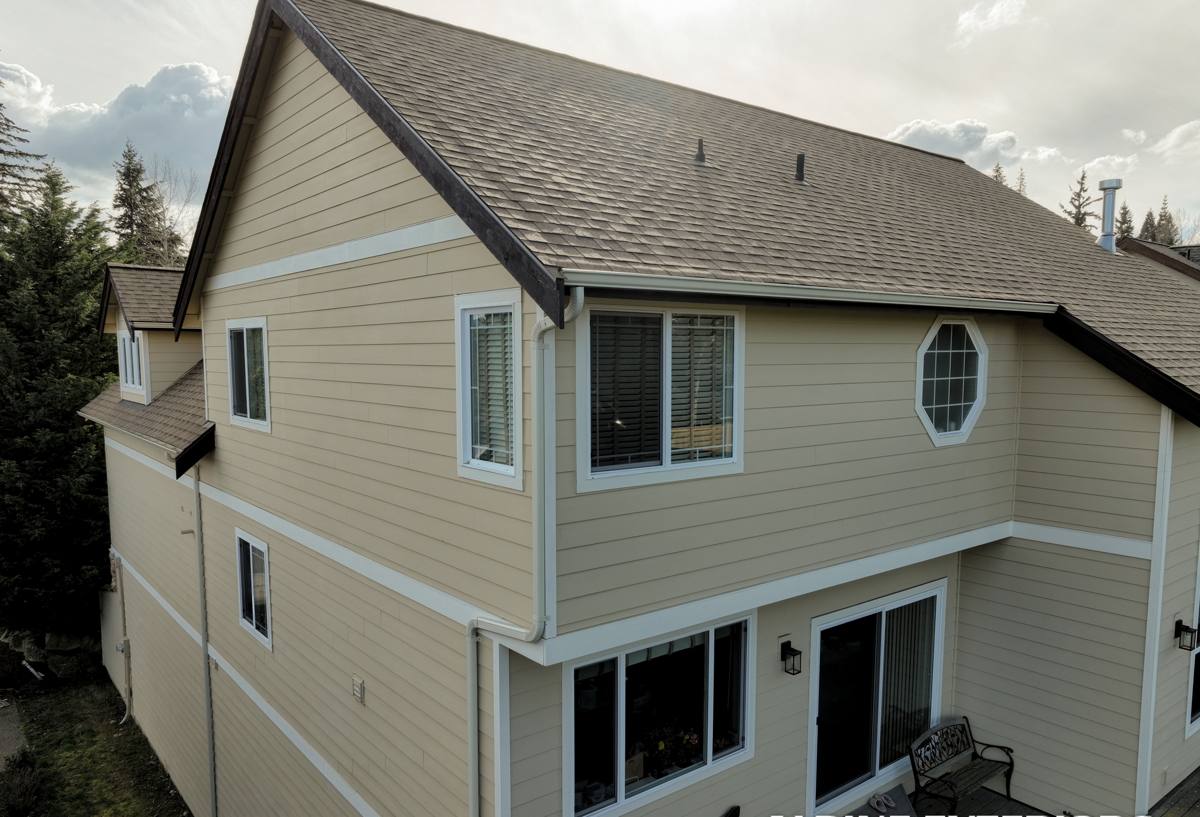
What Bellingham's Weather Actually Does to Windows
Salt air and coastal moisture
Homes closer to the water deal with airborne salt that accelerates corrosion on hardware, fasteners, and some metal window components. Over time this shows up as pitted or stiff locking hardware, streaking on finishes, and premature wear on components that would last much longer a few miles inland.
Driving rain
Bellingham's rain rarely falls straight down. Wind off the water pushes it sideways into window openings, which means flashing and sealant detail around the frame matter as much as the window itself. A well-built window installed with poor flashing will still leak.
The long moss season
Moss and algae need shade and moisture to establish, and York's mature street trees and marine-layer dampness give them plenty of both. On windows, this usually shows up as green or black staining on north-facing sills, tracks, and trim, and it holds moisture against wood and caulking far longer than it should.
Signs Your York Home's Windows Are Costing You Money
Older single-pane windows and early double-pane units that have reached the end of their service life tend to show the same warning signs. If you're seeing any of these, it's worth having the windows looked at before another wet winter:
- Fogging or a milky haze between the panes of a double-pane window — this means the seal has failed and the gas fill is gone
- Cold drafts near the frame even when the window is fully latched
- Condensation forming on the inside of the glass regularly, especially on colder mornings
- Wood trim or sills that feel soft, spongy, or show dark staining
- Difficulty opening, closing, or locking the window — often a sign of a swollen or warped frame
- A noticeable temperature difference standing near the window compared to the middle of the room
- Rising heating bills without a clear cause elsewhere in the home
What a Correct Energy-Efficient Window Installation Involves
The glass and gas fill
Most energy-efficient windows today use double- or triple-pane insulated glass units with a low-emissivity (low-E) coating and an inert gas fill, usually argon, between the panes. The low-E coating reflects heat back into the room in winter and blocks unwanted solar heat in summer, while the gas fill slows heat transfer through the glass itself.
The frame and spacer system
The material connecting the two panes of glass around the edge — the spacer — has a real impact on performance. Older metal spacers conduct heat and cold straight through, creating a cold ring around the edge of the glass where condensation likes to form. Warm-edge spacer technology (foam, composite, or hybrid designs) cuts that heat transfer down significantly, which matters in a climate with as much humidity as ours.
The installation itself
The window unit is only part of the equation. Correct installation means:
- Removing the old window and inspecting the rough opening for hidden rot or moisture damage before anything new goes in
- Installing proper flashing so any water that reaches the opening is directed back out, not into the wall
- Air-sealing the gap between the window frame and the rough opening with the right insulation, not just caulk alone
- Setting the window level, plumb, and square so it operates and seals correctly for its full lifespan
- Sealing the exterior with a weather-resistant sealant rated for the siding material involved
Skipping any one of these steps is how a brand-new, high-performance window ends up with the same leak and rot problems as the window it replaced.
Choosing the Right Window Material for This Climate
Material choice matters more here than it does in a drier inland climate, because every frame material handles constant moisture and occasional salt exposure differently.
| Material | Moisture & Salt-Air Performance | Maintenance | Typical Fit for York Homes |
|---|---|---|---|
| Vinyl | Does not rot or corrode; performs well in coastal moisture | Low — occasional cleaning | Strong value option for most homes |
| Fiberglass | Very stable in temperature swings and humidity; resists warping | Low | Good fit for exposed or higher-wind locations |
| Wood-clad | Interior wood needs protection from indoor humidity; exterior cladding shields from weather | Moderate — clad exterior, but interior wood benefits from monitoring | Best where a wood interior look is a priority |
| Aluminum | Conducts heat and cold readily; can be prone to condensation on the frame itself | Low, but prone to condensation issues | Generally not our first recommendation for energy efficiency in this climate |
We don't install aluminum-frame windows as our standard energy-efficient recommendation, not because aluminum is a bad material outright, but because its thermal conductivity works against the goal of an energy-efficient upgrade in a damp, cool climate like Whatcom County's. Vinyl and fiberglass frames give York homeowners better long-term thermal performance with less maintenance.
How Our Process Works
- On-site assessment. We look at your current windows, the condition of the surrounding trim and framing, and how your home is oriented relative to prevailing wind and rain.
- Measurement and product selection. Every opening is measured individually — older homes rarely have perfectly uniform window sizes — and we walk you through frame material, glazing, and performance ratings that fit your home and budget.
- Removal and opening inspection. Old windows come out carefully so we can check the rough opening for hidden moisture damage before it's covered back up.
- Flashing and air-sealing. This is the step that determines whether a window stays watertight through a wet Bellingham winter, and we don't shortcut it.
- Installation and finish work. Windows are set, sealed, and finished to match your home's existing trim and siding as closely as possible.
- Final walkthrough. We check operation, seals, and cleanup before calling the job done.
What Affects the Cost of a Window Project
Every home is different, but a few factors consistently drive the price of a window replacement project up or down:
| Factor | Why It Matters |
|---|---|
| Number of windows | Per-unit costs generally drop as the total project size increases |
| Frame material | Vinyl, fiberglass, and wood-clad options carry different material costs |
| Glazing package | Double-pane, triple-pane, and specialty coatings each add incremental cost for added performance |
| Insert vs. full-frame replacement | An insert reuses the existing frame where it's sound; full-frame replacement is needed when there's rot or the opening needs correction |
| Access and second-story work | Upper-floor windows and difficult access can add labor time |
| Existing damage | Rot or moisture damage found during removal adds repair scope beyond the window itself |
We give straightforward, itemized estimates so you can see exactly what you're paying for and where the money is going — no inflated "good-better-best" packages designed to upsell you past what your home actually needs.
Why Local Installation Experience Matters in York
A window installer who only occasionally works in Whatcom County can install a technically correct window and still miss the details that matter here — how far to detail flashing given our rain patterns, which sills are prone to moss buildup and need a slightly different sealant approach, or how an older York home's framing tends to have settled or shifted over the decades. A crew that regularly works this neighborhood recognizes these patterns quickly instead of learning them on your house.
There's also a practical scheduling advantage: a contractor already working in and around Bellingham can typically get to a York home for a follow-up adjustment, a warranty check, or a related exterior issue faster than one dispatching from farther away.
Keeping Your New Windows Performing Long-Term
Energy-efficient windows are a long-term investment, and a little seasonal attention keeps them performing the way they should in this climate:
- Clean tracks and weep holes at least twice a year so water drains properly instead of pooling
- Remove moss or algae buildup from sills and trim promptly rather than letting it sit against the frame
- Check exterior caulking annually for cracking or separation, especially after a hard winter
- Wipe down hardware periodically if you're closer to the water, since salt air accelerates wear on metal components
- Watch for condensation between panes, which signals a failed seal even on a relatively new window
- Keep gutters and downspouts clear so overflow doesn't run down onto window heads and trim
None of this is complicated, but skipping it is how even a good window installation loses years off its expected lifespan in a climate this wet.
Get a Straightforward Estimate for Your York Home
If your windows are drafty, fogged, or just past their prime, we're happy to take a look and give you an honest read on what your home actually needs — no pressure, no upsell. Fill out the form below and we'll set up a time to assess your windows and talk through options that make sense for your home and your budget.