 Bellingham Roofing
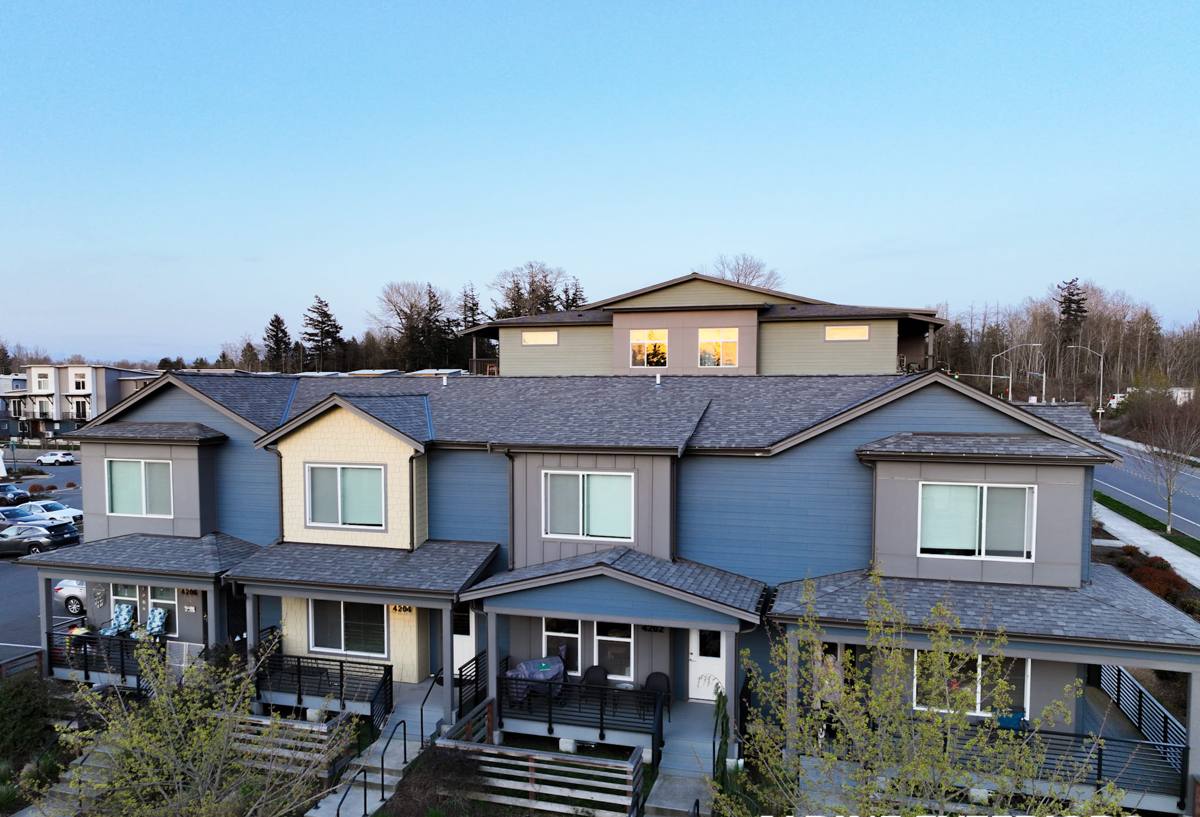
 Puget is a residential pocket of Bellingham, Whatcom County, close enough to Bellingham Bay and the broader Puget Sound basin that its homes take on the marine weather patterns of this part of the Washington coast more directly than neighborhoods set further back from the water. Salt-tinged air, wind-driven rain, and a wet season that can stretch across most of the year all leave their mark on windows here, often years before the same units would show comparable wear in a drier, more sheltered setting.
Window replacement in Puget isn't a one-size job. The right approach depends on how the existing frames and opening have held up, what direction the window faces, and how much of that marine exposure a given wall actually takes on. We treat every Puget window job as its own assessment rather than a standard swap, because the climate here doesn't treat every wall of a house the same way either.
Why Puget's Climate Wears Out Windows Faster
Three conditions do most of the damage. Salt-laden air off the water accelerates corrosion on hardware, fasteners, and lower-grade frame components — locks get stiff, balances bind, and metal components pit faster than they would inland. Driving rain, pushed sideways by wind off the Sound rather than falling straight down, tests window seals and flashing details that a calmer climate would rarely stress. And a moss and mildew season that runs long on this side of the state keeps north- and west-facing sills, trim, and frame corners damp for extended stretches, which is exactly the condition wood rot and failed seals need to take hold.
None of this means windows in Puget fail faster across the board — a well-built, correctly installed window handles this exposure fine. It means the margin for a shortcut installation or a lower-grade product is thinner here than it would be somewhere with milder weather.
Where the Damage Actually Starts
Glass rarely fails first. The weak points are almost always the transition areas — where the frame meets the siding, where the sill meets the wall below it, and where old caulk or flashing has quietly failed and let moisture behind the finish surface. Those are also the areas a rushed installation is most likely to shortcut, because doing them correctly takes real time and isn't visible once the trim goes back on.
Signs a Puget Home's Windows Need Replacing
Some of these show up gradually enough that homeowners adjust to them without noticing. Worth checking for directly:
- Fogging or a milky haze between panes on double-pane units, meaning the seal has failed and the gas or air fill has escaped
- Noticeable drafts near the frame, especially on walls facing prevailing wind and rain
- Sashes that stick, won't stay open, or need force to lock — often a sign of hardware corrosion or a warped frame
- Soft, spongy, or discolored wood at the sill or lower frame corners
- Visible corrosion or pitting on locks, hinges, or balance hardware
- Persistent moss, algae, or dark staining on frames and trim that doesn't clean up and comes back quickly
- Condensation forming on the inside of the glass during cold, wet stretches
- A noticeable jump in heating costs without a clear explanation elsewhere
One or two of these on their own don't always mean full replacement — sometimes it's a repair or a resealing job. Several together, especially paired with soft wood at the sill, usually mean the window and its surrounding opening have taken on water for a while.
Insert Replacement vs. Full-Frame Replacement
This is the first real decision point on most jobs, and it depends more on the condition of the existing frame and opening than on personal preference.
Insert (Pocket) Replacement
An insert goes inside the existing, still-sound frame. It's faster, less disruptive to the surrounding siding and trim, and usually less expensive. It only makes sense when the existing frame and sill are structurally solid and free of rot — putting a new window inside a compromised frame just seals moisture problems in rather than solving them.
Full-Frame Replacement
A full-frame replacement removes the window and its frame down to the rough opening, which allows for a full inspection and repair of the framing, sill, and flashing underneath. It costs more and takes longer, but it's the only correct option once there's rot, failed flashing, or water damage in the opening itself — which, given Puget's exposure, is common enough on older or west-facing windows that we check for it before recommending an insert.
| Factor | Insert Replacement | Full-Frame Replacement |
|---|---|---|
| Best for | Sound frames with no rot or water damage | Frames with rot, failed flashing, or water intrusion history |
| Disruption | Minimal — existing trim and siding largely untouched | Greater — trim and some siding removed to reach the opening |
| Timeline | Faster, often completed in a day per window | Longer, depending on how much repair the opening needs |
| Access to hidden damage | None — problems behind the old frame stay hidden | Full access to inspect and repair sill, framing, and flashing |
| Cost | Lower | Higher, reflecting the added labor and any framing repair |
| Long-term fit for this climate | Fine when the frame is genuinely sound | The safer call on older or heavily exposed openings in Puget |
We won't recommend an insert just because it's the faster sale. If we open up a window and find soft wood or evidence of past leaks, we'll tell you before proceeding, not after the new unit is already in.
What a Correct Installation Involves
Measuring and Assessment
Every job starts with an on-site measurement of the actual opening, not a stock assumption based on the window it's replacing. We also check square, level, and — critically for this area — the condition of the sill and lower frame corners, since that's where moisture damage shows up first.
Removal and Opening Inspection
Once the old window comes out, the opening gets a real look. This is where hidden rot, failed flashing, or past water intrusion gets found — and where the insert-versus-full-frame decision sometimes changes from what was expected during the initial estimate.
Flashing and Weatherproofing
Given how much of Puget's wear comes from wind-driven rain, this step matters more here than it would in a calmer climate. Flashing has to be sequenced correctly — each layer overlapping the one below it — so water is directed out and down, never trapped behind the siding. A window can have excellent glass and hardware and still leak within a few seasons if the flashing behind it was rushed.
Sealing, Insulation, and Finish
The gap between the new window and the framing gets insulated and sealed correctly rather than just packed with extra caulk, which is a common shortcut that fails within a few years. Interior and exterior trim is then reinstalled or replaced to match the surrounding finish.
Frame Material Options for This Climate
Frame material affects how much upkeep a window needs over time, and that trade-off is more pronounced with this much salt air and moisture in play. Vinyl frames handle sustained coastal moisture well and need little ongoing maintenance, which is why they're a common default for Puget homes. Fiberglass costs more upfront but resists expansion and contraction across temperature swings better than vinyl, and holds paint well if you want a color that isn't a standard vinyl option. Wood-frame windows, unless clad in vinyl, aluminum, or fiberglass on the exterior face, need real ongoing maintenance in this climate — repainting or resealing on a schedule — to keep moisture from reaching bare wood. That doesn't rule wood out, especially where the interior look matters, but we'll walk through that maintenance commitment honestly rather than let it be a surprise two winters in.
Our Process, Start to Finish
- On-site assessment — we measure the opening and check the frame, sill, and surrounding trim for hidden moisture damage
- Honest recommendation — insert or full-frame replacement, explained with the reasoning, not defaulted to whichever is faster
- Written estimate — clear scope, materials, and timeline before any work starts
- Removal and inspection — the old window comes out and the opening gets checked before anything new goes in
- Installation and flashing — the new unit is set, shimmed, and flashed to handle wind-driven rain, not just gravity
- Finish and cleanup — trim is matched to the surrounding exterior and the site is left clean
Cost Factors Worth Understanding
What actually moves the price on a Puget window job is fairly consistent: whether the frame allows an insert or needs full-frame replacement, how much hidden repair the opening needs once opened up, frame material, window size and glazing type, and how many windows are being done at once. We won't give a number without seeing the openings in person, but we'll walk through which of these apply to your home before you commit to anything.
Why a Local Puget Crew Matters
Manufacturer installation guidance is written for average conditions in a moderate climate — it doesn't account for wind-driven rain off Bellingham Bay or a moss season that keeps trim damp for months at a stretch. A crew that works this specific part of Bellingham regularly knows which walls in this neighborhood tend to take the worst of the weather, what condition to expect when an older frame comes apart, and where it's worth spending extra time on flashing even when a generic install guide wouldn't call for it.
That familiarity shows up in decisions that don't come up in a sales pitch — how much flashing overlap a given sill needs, whether a stained frame is cosmetic or a sign of rot underneath, when an insert is genuinely fine versus when it's a shortcut that hides a bigger problem. Those calls are what decide whether a window replacement is still performing cleanly in fifteen years or showing drafts and soft trim again in five.
What to Ask Before Hiring for Window Replacement
- Ask how they decide between insert and full-frame replacement, and what they check to make that call
- Confirm current Washington contractor licensing and insurance
- Ask what happens if they find rot or water damage once the old window is out
- Get a written scope of work and timeline before signing anything
- Ask how the window unit and the installation labor are each covered under warranty
If your windows in Puget are drafty, fogged, or showing soft wood at the sill, it's worth having someone look at the actual openings before you start comparing quotes on assumptions. We offer free, no-pressure estimates for window replacement in Puget and the surrounding Bellingham area — use the form below to get a time on the schedule.