 Bellingham Roofing
 Storm Damage Roof Repair for Birchwood Homes
Birchwood sits a few miles inland from Bellingham Bay, but the roofs here take the same beating as anywhere else in Whatcom County when a storm comes through. Wind off the Salish Sea, sideways rain, and the kind of wet, gray stretch that lasts from October into May all put stress on a roof that homes in drier climates never have to deal with. When a storm damages a roof in Birchwood, the repair needs to account for that ongoing exposure — not just patch the spot that failed.
This page covers what storm damage actually looks like on a Bellingham roof, what a correct repair involves, and how we approach the work for homeowners in and around Birchwood specifically.
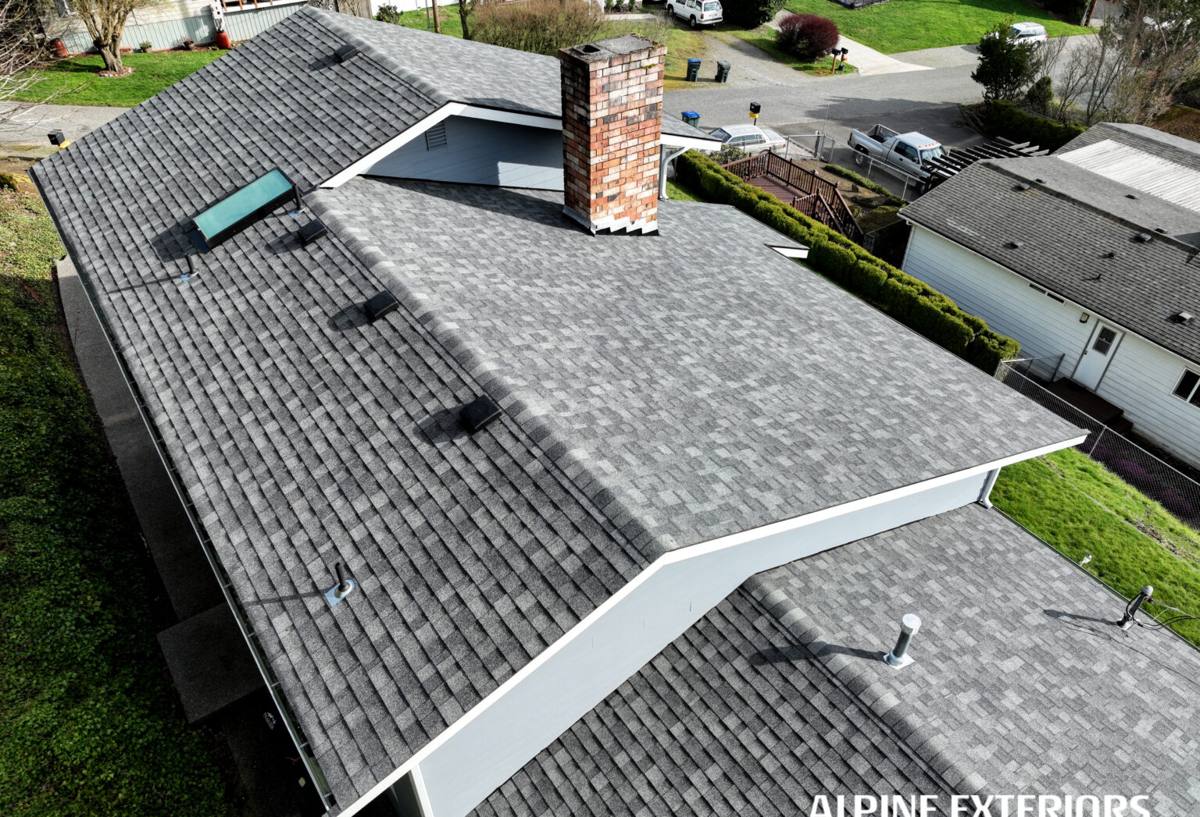
How Local Weather Damages a Roof
Wind and driving rain
Most storm damage we see in this area isn't from hail — it's wind. Gusts lift shingle tabs, work flashing loose, and drive rain sideways under laps that were never designed to shed water horizontally. Once a seal is broken, it doesn't always leak right away. Water can travel under the roofing and show up as a stain on a ceiling well away from where the actual opening is, which is part of why storm damage often gets underestimated until someone looks at it properly.
Salt air and moisture cycling
Proximity to Bellingham Bay means roofs in this part of Whatcom County deal with a slow, steady moisture cycle — damp air, condensation, and salt-laden wind that accelerates corrosion on exposed metal flashing, fasteners, and vents. A storm that pulls flashing loose gives that salt air direct access to metal that used to be sealed underneath the roofing, which speeds up rust and future leaks if it isn't caught and re-sealed correctly.
The long moss season
Because Bellingham stays cool and wet for most of the year, moss and algae get a long runway to establish themselves on north-facing and shaded slopes. Moss holds moisture against the roofing surface long after a storm has passed, which softens shingle mat, works into nail holes, and can mask storm damage underneath a mat of growth. Any storm repair on an older roof here should include a look at moss buildup, not just the obvious damage.
Signs Your Roof Has Storm Damage
Some storm damage is obvious. Most of it isn't. After any significant wind or rain event, it's worth checking for the following:
- Shingles that look lifted, curled, or creased, especially near ridges and edges
- Granules collecting in gutters or at the base of downspouts
- Bent, lifted, or missing flashing around chimneys, vents, or skylights
- New or growing water stains on ceilings or in the attic
- Daylight visible through the roof deck from inside the attic
- Debris, branches, or heavy moss mats that have shifted or torn roofing underneath
- Gutters pulling away from the fascia or sagging under debris weight
- A musty smell in upper rooms after a storm, which often means moisture is getting in somewhere
Any one of these on its own might be minor. Several together usually mean it's time for a proper inspection.
What a Correct Storm Damage Repair Actually Involves
A storm repair done right is more than swapping out the shingles that are visibly torn. It starts with figuring out how the water got in, not just where it's showing up. That means checking the roof deck itself for soft spots or rot, confirming the underlayment is still intact around the damaged area, and inspecting flashing at every penetration nearby — not just the one that looks obviously bent.
Material matching matters too. Shingles fade over a few seasons, so a patch using new material next to weathered roofing will always look slightly different — that's a cosmetic reality we're upfront about, not something we can hide. What we can control is making sure the repair ties into the existing roofing correctly, with proper overlap and fastening, so the patched section performs as well as the rest of the roof rather than becoming the next weak point.
On older roofs, we also flag anything storm damage exposed that wasn't caused by the storm itself — worn flashing, thin spots in the underlayment, or moss damage that had been building for a while. Homeowners deserve to know the difference between "this storm broke it" and "this storm just showed us something that was already wearing out," especially if an insurance claim is involved.
Our Storm Damage Repair Process
- Initial call and triage. We ask what happened and what you're seeing — active leak, missing shingles, damaged gutters — so we know whether temporary protection is needed right away.
- On-site inspection. We check the roof surface, flashing, attic, and gutters, and document what we find with photos before any work starts.
- Honest scope and estimate. We explain what's storm-related, what's pre-existing wear, and what the repair will involve, in plain terms.
- Temporary protection if needed. If there's an active leak or exposed decking, we get it covered and dried out first.
- Permanent repair. Deck repair, underlayment, flashing, and matched roofing material installed to correctly tie into the existing roof.
- Final walkthrough. We show you the completed work and flag anything else worth keeping an eye on going forward.
Matching the Repair Scope to the Damage
Not every storm-damaged roof needs the same level of work. Part of an honest estimate is telling you which category your situation actually falls into.
| Repair Scope | Typical Situation | What's Involved |
|---|---|---|
| Emergency tarp-over | Active leak, storm hit during the visit or overnight | Temporary waterproof cover to stop water intrusion until permanent repair can start |
| Spot repair | Isolated damage — a section of missing shingles, one damaged flashing point | Deck check, underlayment patch, matched shingles, re-flashing as needed |
| Multi-area repair | Wind damage scattered across multiple slopes or edges | Several spot repairs plus a full-roof inspection to rule out related issues |
| Full section replacement | Extensive damage to one slope, or deck rot found under damaged roofing | Tear-off and reroofing of the affected section, tied into the rest of the roof |
Cost Factors for Storm Damage Repair
Every roof and every storm is different, so we don't quote a number until we've actually looked at yours. But the main factors that move the price up or down are consistent:
| Factor | Why It Matters |
|---|---|
| Roof pitch and access | Steeper roofs and difficult access take longer and require more safety setup |
| Extent of decking damage | Rotted or soft decking has to be cut out and replaced before new roofing goes down |
| Material type and age | Matching an older roof, or sourcing a discontinued shingle color, can affect cost and timeline |
| Number of penetrations affected | Chimneys, skylights, and vents each need their own properly re-flashed detail |
| Moss or algae buildup | Heavy growth often needs to be cleared and the deck assessed before repair, adding time |
| Gutter and fascia damage | Storms that damage gutters usually mean added repair or replacement alongside the roof work |
Working With Your Insurance Company
Most storm damage claims come down to documentation. We photograph the damage before touching anything, note what appears storm-related versus pre-existing wear, and provide a written scope you can hand directly to your adjuster. We're not a public adjuster and we don't negotiate your claim for you, but we'll answer an adjuster's questions about the roof directly and make sure our estimate reflects what we actually found — nothing inflated, nothing left out.
Why Hire a Crew That Already Works in Birchwood
A roofer who works this part of Bellingham regularly knows what the local weather does to a roof over time — how fast moss re-establishes on a shaded slope, how salt air affects flashing near the bay, and which older homes in the area were roofed with materials that need particular care during a repair. That local pattern recognition matters when you're trying to figure out whether a leak is a one-time storm event or the start of a bigger problem.
It also means faster response. When a storm comes through Whatcom County, homeowners across Bellingham are calling roofers at the same time. Being able to get someone out to look at active damage quickly — and get a tarp up before more rain gets in — often matters more than the repair itself.
If a recent storm has left you with damage, missing shingles, or a leak you can't quite place, we're happy to come take a look. Fill out the form below for a free, no-pressure estimate — we'll tell you honestly what we find and what it'll take to fix it right.