 Bellingham Roofing
 Why Decks in York Wear Out Faster Than Homeowners Expect
York is one of Bellingham's older, established neighborhoods, and that means a lot of the decks we see there were built decades ago under different codes, with different materials, and often without the flashing details that modern building science calls for. Add in what Whatcom County weather does to exposed lumber year after year, and it's easy to end up with a deck that looks fine from the yard but is quietly failing underneath.
Bellingham's proximity to the water brings salt-laden air that accelerates corrosion on fasteners, joist hangers, and any exposed metal hardware. Combine that with our long stretch of driving rain from fall through spring, and untreated or poorly flashed framing stays damp for months at a time. Add a moss season that can run nearly year-round on north-facing and shaded decks, and you have three separate forces working against wood at once: corrosion, rot, and slip-hazard buildup.
None of this means a deck in York is doomed — it means the replacement has to be built with this climate in mind from the ledger board out, not just re-decked on top of a structure that was never designed for it.
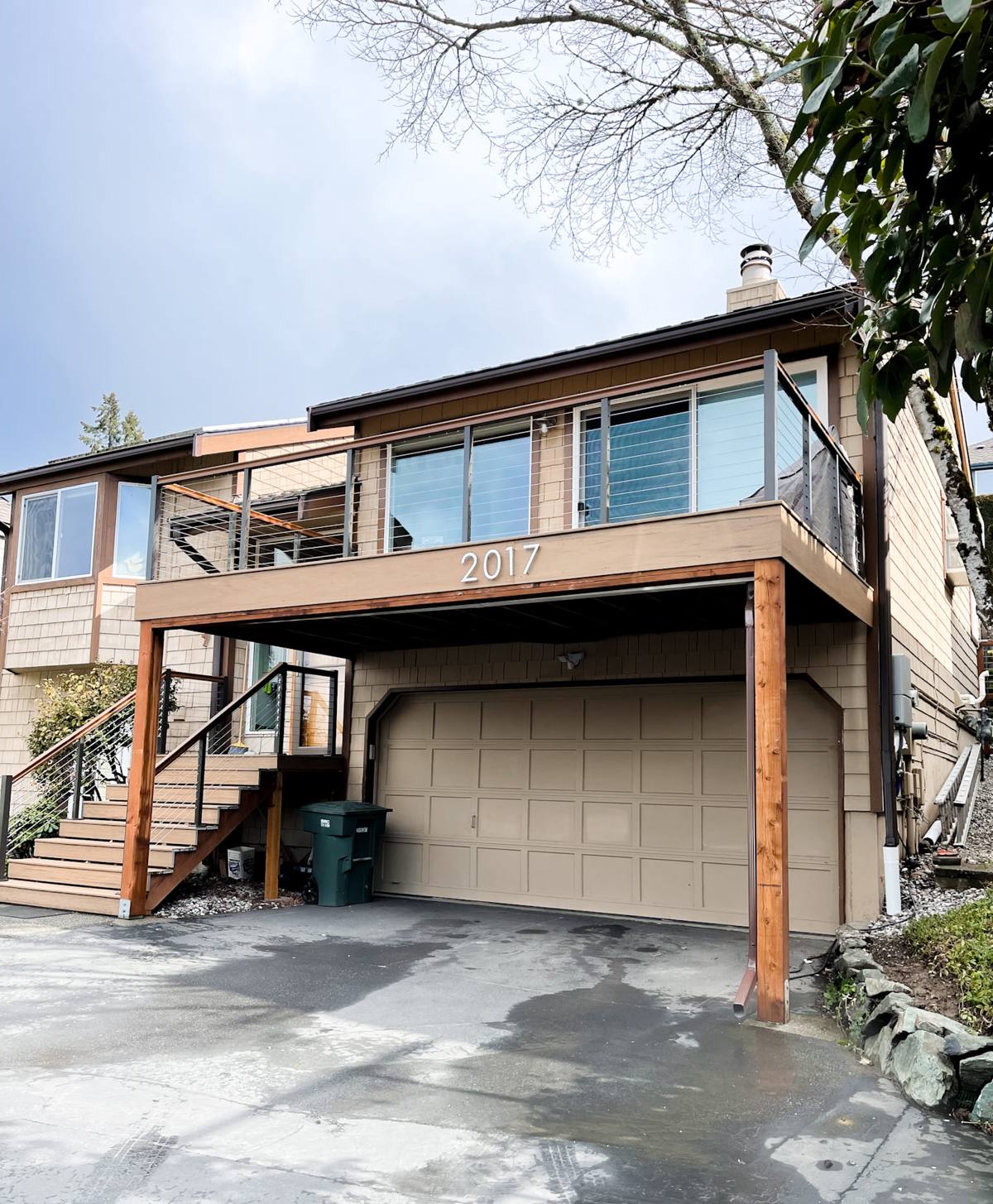
Signs a Deck Needs Replacement, Not Another Repair
We get a lot of calls from York homeowners who've already replaced a few boards or re-screwed a railing, only to find the problem is back within a season. Here's how to tell the difference between a repair situation and a replacement situation.
Repair Territory
- A handful of isolated boards are cupped, splintering, or soft, but the framing underneath probes solid
- Railings are loose at a few connection points but the posts themselves aren't rotted at the base
- Surface graying, moss film, or mildew staining with no soft spots when probed
Replacement Territory
- A screwdriver sinks easily into the ledger board, joists, or posts anywhere you test them
- The deck feels bouncy or springy underfoot, especially near the house or stair stringers
- Ledger board attachment to the house shows staining, gaps, or no visible flashing at all
- Multiple footings have shifted, cracked, or were never poured below frost depth
- Rust streaking is visible below joist hangers or bolt heads, a sign the metal itself is failing
A deck can look structurally fine from above and still have a compromised ledger connection or rotted joist ends — the two failure points most commonly hidden by decking boards.
What a Correct Deck Replacement Actually Involves
Full deck replacement isn't just tearing off old boards and screwing down new ones. Done right, it addresses every layer that determines how long the deck will last in this climate.
Ledger Board and Flashing
This is where most deck failures in our region start. The ledger board bolts directly to the house, and if it isn't properly flashed with a code-compliant water-diverting flashing detail, rain works its way behind it and rots both the ledger and the wall framing behind it. We treat this connection as the single most important detail on the entire project.
Footings and Framing
Footings need to be sized and set to the correct frost depth for our area, on undisturbed soil, not just poured against loose fill. Joists and beams get sized for the actual span and load, not just matched to whatever was there before — a lot of older York decks were framed lighter than current code allows.
Hardware
Every joist hanger, bolt, and screw needs to be rated for the decking material and the corrosive coastal air. Mixing incompatible metals — for example, standard hot-dip galvanized hardware with a decking product that requires stainless — causes accelerated corrosion at every connection point, which is exactly the kind of hidden failure that's expensive to catch too late.
Decking Surface and Drainage
Board spacing, ventilation beneath the deck, and slope away from the house all affect how quickly water and debris clear the surface. A deck that traps standing water or leaf litter is a deck that grows moss and holds rot-friendly moisture against the framing below.
Choosing a Decking Material for This Climate
There's no universally "best" decking material — there's the right material for how a household uses the deck, how much upkeep they want to do, and how much shade and moss exposure the site gets. Here's how the common options actually compare in a wet, moss-prone, salt-air environment like ours.
| Material | Moss & Moisture Behavior | Maintenance | Typical Lifespan |
|---|---|---|---|
| Pressure-treated lumber | Absorbs moisture readily; needs sealing to resist moss staining and cupping | Annual cleaning and re-sealing recommended | 10-15 years with upkeep |
| Cedar | Naturally rot-resistant but still needs surface maintenance to shed moss in shaded areas | Periodic cleaning and finish renewal | 15-20 years with upkeep |
| Composite decking | Won't rot or splinter; some capped composites still need periodic cleaning to prevent surface mold in deep shade | Low — occasional washing | 25-30+ years |
| PVC decking | Fully moisture-resistant surface; performs well in constant shade and moss exposure | Low — occasional washing | 30+ years |
We install all of these based on the homeowner's priorities and budget — our professional standard is matching the framing, flashing, and hardware to whatever surface material is chosen, since a great decking board on a poorly detailed structure will still fail early.
Permits and Code Requirements in Whatcom County
Most full deck replacements in Bellingham require a building permit, particularly when the deck is attached to the house, elevated, or being rebuilt to a different footprint than the original. Permit review typically checks ledger attachment, footing depth and size, guard and stair rail height, and joist spans. Skipping this step on a replacement can create real problems later — unpermitted work often has to be disclosed at resale, and it can complicate insurance claims if there's ever storm or water damage.
We handle the permit application and coordinate inspections as part of the project, so York homeowners don't have to navigate City of Bellingham or Whatcom County requirements on their own.
Our Deck Replacement Process
- On-site assessment. We probe the ledger, framing, posts, and footings to determine the real scope — not just what's visible from the surface.
- Written scope and material selection. You get a clear breakdown of what's being replaced, what materials are being used, and why, before any demolition starts.
- Permit filing. We submit the permit application and structural details required for approval.
- Demolition and disposal. The old deck is removed down to the ledger and posts, with the site protected and debris hauled off.
- Structural rebuild. New footings, framing, ledger flashing, and hardware go in to current code, sized for the actual deck and load.
- Decking, railing, and stairs. The surface material, railing system, and stairs are installed per the agreed scope.
- Final inspection and walkthrough. We schedule the required inspection and walk the finished deck with you before calling the job done.
What Affects the Cost of a Deck Replacement
| Factor | Why It Matters |
|---|---|
| Deck size and height | Larger and elevated decks need more framing, footings, and railing linear footage |
| Decking material | Composite and PVC cost more upfront than pressure-treated lumber but need far less maintenance |
| Ledger and house connection condition | Rot found behind the ledger board can extend into wall framing, adding repair scope |
| Stairs and railing complexity | Multiple stair runs, angled sections, or custom railing add labor and material |
| Site access | Slope, fencing, or tight side-yard access in older York lots can affect equipment and disposal logistics |
We give a written, itemized estimate before any work starts so there are no surprises once demolition uncovers the framing underneath.
Keeping a New Deck Performing in Bellingham's Climate
A correctly built deck still needs a little seasonal attention to get its full lifespan out of it, especially in a moss-prone, high-rainfall area like ours.
- Clear leaves and debris from between boards before fall rains set in
- Rinse or sweep moss growth off the surface before it gets a chance to root into the wood grain
- Check that gutters and downspouts near the deck are directing water away, not onto the structure
- Inspect railing connections and stair treads once a year for looseness
- Re-seal wood decking on the manufacturer's recommended schedule, not just when it looks dry
- Keep planters and rugs from sitting directly on the deck surface for extended periods, which traps moisture underneath
Why It Matters to Hire a Crew That Already Works in York
Every neighborhood in Bellingham has its own mix of lot sizes, tree cover, and house ages, and York's older housing stock means we regularly encounter decks that were framed before current flashing and hardware standards existed. A crew that already works in this neighborhood recognizes those patterns quickly — where moss tends to build up fastest, which older framing details need extra attention, and how to work around the tighter side-yard access common on older lots — instead of learning it for the first time on your project.
Local, permitted experience also means fewer surprises with the City of Bellingham's review process, since we're submitting the same type of application repeatedly rather than guessing at requirements.
If your deck in York is showing rot, soft spots, moss buildup, or you're just planning ahead before the next wet season, we'll come take a look and give you a straight answer — no pressure, no upsell. Fill out the form below for a free estimate.