 Bellingham Roofing
 Silver Beach Homes Face a Specific Kind of Wear
Silver Beach is one of Bellingham's older, more established neighborhoods, with a mix of homes ranging from mid-century construction to newer builds tucked among mature trees near the water. That tree cover and proximity to the water are part of what makes the neighborhood desirable — and part of what makes siding decisions here more consequential than they'd be in a drier, more exposed part of Whatcom County. Shade holds moisture. Moisture holds moss. And moss, left alone, holds even more moisture against whatever material is on the wall behind it.
We've worked on enough homes in and around this part of Bellingham to know that "it looked fine for the first few years" is the most common thing homeowners tell us about the siding they're replacing. Marine air, long wet winters, and short drying windows between rain events don't announce themselves as a problem right away. They show up later, in soft trim, bubbling paint, or siding that's swollen at the bottom edge. The fix isn't a better paint job. It's a material that was engineered to handle this climate in the first place.
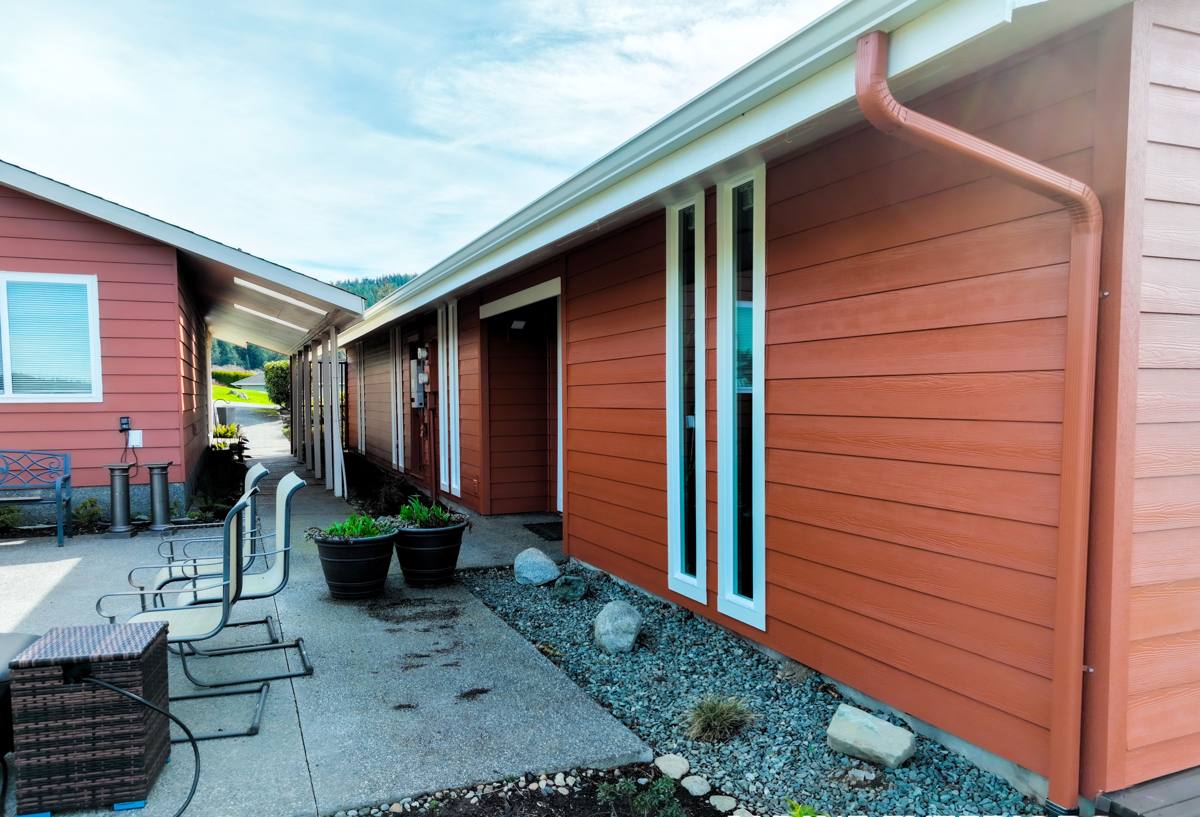
What Bellingham's Climate Actually Does to Siding
Whatcom County sits in a marine climate zone — mild temperatures, but persistent moisture for most of the year. For Silver Beach specifically, three factors compound the problem:
- Driving rain: Wind off the water pushes rain sideways into wall assemblies, not just straight down. Siding with weak seams, poor flashing, or absorbent cores takes on water at joints and corners first.
- Long moss season: Shaded, north-facing walls in wooded lots stay damp for weeks at a stretch. Organic growth on siding isn't just cosmetic — it holds water against the substrate and, on the wrong material, accelerates rot or delamination.
- Salt-influenced marine air: Like much of the Puget Sound region, Bellingham's air carries moisture and mineral content that's harder on fasteners, finishes, and untreated wood than an inland climate would be.
None of this is unusual for the Pacific Northwest. But it's exactly why generic siding advice — the kind written for a dry climate and copy-pasted onto a Bellingham page — doesn't hold up. What performs well in Spokane or Boise is not automatically the right call two blocks from the water in Silver Beach.
Why We Only Install James Hardie
We don't install vinyl, LP SmartSide, primed spruce, cedar, or other fiber cement brands. That's a deliberate standard, not a sales pitch. Every one of those alternatives has a real weakness that shows up faster in a climate like this one:
- Vinyl expands and contracts with temperature swings, and its seams and butt joints are where wind-driven rain finds its way behind the panel. It also can't be painted to refresh a faded color without voiding warranties on most products.
- Wood (cedar, primed spruce) is a beautiful, traditional choice, but it's also organic material in a climate built for moss and rot. It demands a maintenance schedule most homeowners don't keep up with, and once water gets behind a compromised board, replacement is often the only fix.
- LP SmartSide and other engineered wood products use a wood-strand core with a resin coating. It holds up reasonably well when installation is flawless, but any breach at a cut edge, fastener hole, or joint gives moisture a path into a wood-based core — a bad combination in a place that stays wet for months at a time.
James Hardie fiber cement is different because it isn't wood and isn't plastic. It's cement, sand, and cellulose fiber, non-combustible, dimensionally stable, and specifically engineered in climate-matched product lines. For Western Washington, that means the HZ5 product line — Hardie's formulation designed for high-moisture, freeze-and-thaw-adjacent climates. It resists moisture absorption far better than wood-based alternatives and doesn't rely on a factory coating alone to keep water out of the core.
How the Products Compare in This Climate
| Material | Moisture Behavior | Maintenance in Wet Climate | Typical Lifespan Here |
|---|---|---|---|
| James Hardie (HZ5) | Cement-based, doesn't swell or rot; factory-sealed edges | Occasional wash; repaint only if ever desired | 30+ years with correct install |
| Vinyl | Sheds water on face but seams/laps allow intrusion | Low, but cracks and fades; can't repaint | 15-25 years, often less near water |
| Cedar / Primed Wood | Absorbs moisture readily; prone to rot in shaded areas | High — regular sealing, painting, moss removal | 10-20 years without diligent upkeep |
| LP SmartSide | Wood-strand core vulnerable if edges/fasteners are breached | Moderate; caulking and touch-ups matter | 20-30 years if installation is flawless |
The pattern is consistent: materials with a wood or plastic core depend on perfect, ongoing maintenance to keep water out. Fiber cement doesn't need that dependency to survive Bellingham's wet season.
What a Correct Installation Actually Involves
The product only performs as well as the install behind it. A rushed or generic install can undercut even the best siding material, especially in a climate that punishes small gaps. On every Silver Beach project, the details that matter most are:
Drainage Plane and Rainscreen
A code-compliant weather-resistive barrier goes on first, and in most cases we install a furred-out rainscreen gap behind the siding. That gap lets any incidental moisture that gets past the cladding drain and dry out instead of sitting against the wall sheathing — critical in a neighborhood where walls stay damp for days after a storm.
Flashing at Every Penetration
Windows, doors, hose bibs, vents, and roof-to-wall transitions are the places water actually gets in. Proper step flashing, head flashing, and kick-out flashing at rooflines are non-negotiable, not optional upgrades.
Fastening and Joint Treatment
Hardie panels and lap siding need to be fastened per manufacturer spec — correct nail placement, proper clearance from edges, and blind-nailing where called for. Butt joints get treated with a compatible sealant system, not just caulked and hoped for.
Factory-Finished ColorPlus Coating
We install Hardie's ColorPlus finish wherever possible instead of field-painted primed panels. It's baked on at the factory, carries its own finish warranty, and holds color better against UV and marine air than a job-site paint job ever will.
Our Process for a Silver Beach Project
- On-site assessment: We walk the exterior, check for existing moisture damage, note shaded/high-moss areas, and assess trim, flashing, and window details that affect the scope.
- Product and color selection: We help you choose the right Hardie panel or lap profile and ColorPlus color, factoring in sun exposure and how the home sits relative to tree cover and wind.
- Tear-off and inspection: Old siding comes off, and we inspect sheathing for hidden rot before anything new goes up — a step that's easy to skip and expensive to regret.
- Weather barrier and rainscreen installation: The drainage system goes in correctly the first time, since it's invisible once the siding is up.
- Hardie installation to spec: Fastening, flashing, and joint treatment follow manufacturer installation guidelines exactly — this is what keeps the warranty valid and the wall dry.
- Final walkthrough: We review the finished work with you before calling the job done.
What to Look For Before Hiring Anyone for This Work
- Ask whether the crew is factory-trained or certified on James Hardie installation specifications, not just "experienced with siding" generally.
- Ask what rainscreen or drainage plane approach they use, if any — this single detail separates a durable install from one that traps moisture.
- Ask how they handle flashing at windows, doors, and roof lines, and whether that's included in the estimate or treated as an add-on.
- Ask for the manufacturer warranty terms in writing, including whether it's transferable if you sell the home.
- Ask whether they've worked in your specific neighborhood before and understand its shade, wind, and moisture pattern.
Why Local Experience in Silver Beach Specifically Matters
Every neighborhood in Bellingham has its own microclimate quirks — how much sun a wall gets, how the wind moves off the water, how fast a shaded north side dries out after a storm. A crew that's already worked in Silver Beach has seen how the moss forms on this particular mix of tree cover and lot orientation, knows which trim details tend to fail first on older homes here, and doesn't have to learn the neighborhood on your project. That familiarity shows up in fewer surprises during tear-off and a finished install that's built for how this specific pocket of Whatcom County actually behaves, not a generic climate assumption.
If you're weighing a siding replacement in Silver Beach and want a straight answer about what your home actually needs, we're happy to take a look. There's no pressure and no obligation — just a clear read on your home's condition and an honest estimate for doing the job right with James Hardie siding. Use the form below to get started.