 Bellingham Roofing
 Barkley's Climate Is Harder on Siding Than It Looks
Barkley sits close enough to Bellingham Bay to pick up salt-laden air, and far enough into the Pacific Northwest weather pattern to get months of driving, wind-pushed rain every fall and winter. Add in the mature trees and landscaping common throughout the neighborhood, and you get long stretches of shade that keep siding damp well after a storm has passed. That combination — salt exposure, sideways rain, and a moss season that can run from October into April in Whatcom County — is exactly the environment that separates siding products that hold up from siding products that just look good on installation day.
Wood-based siding swells, cups, and eventually rots when it can't dry out between rain events. Vinyl can hold up structurally but shows every wave and gap as it expands and contracts through our temperature swings, and it does nothing to stop moss and algae from taking hold in shaded areas. Fiber cement, installed correctly, is built to shed water, resist the organic growth that thrives in a damp, shady climate, and hold a factory finish instead of a field-applied paint job that starts failing in a few years.
What Fiber Cement Siding Actually Is
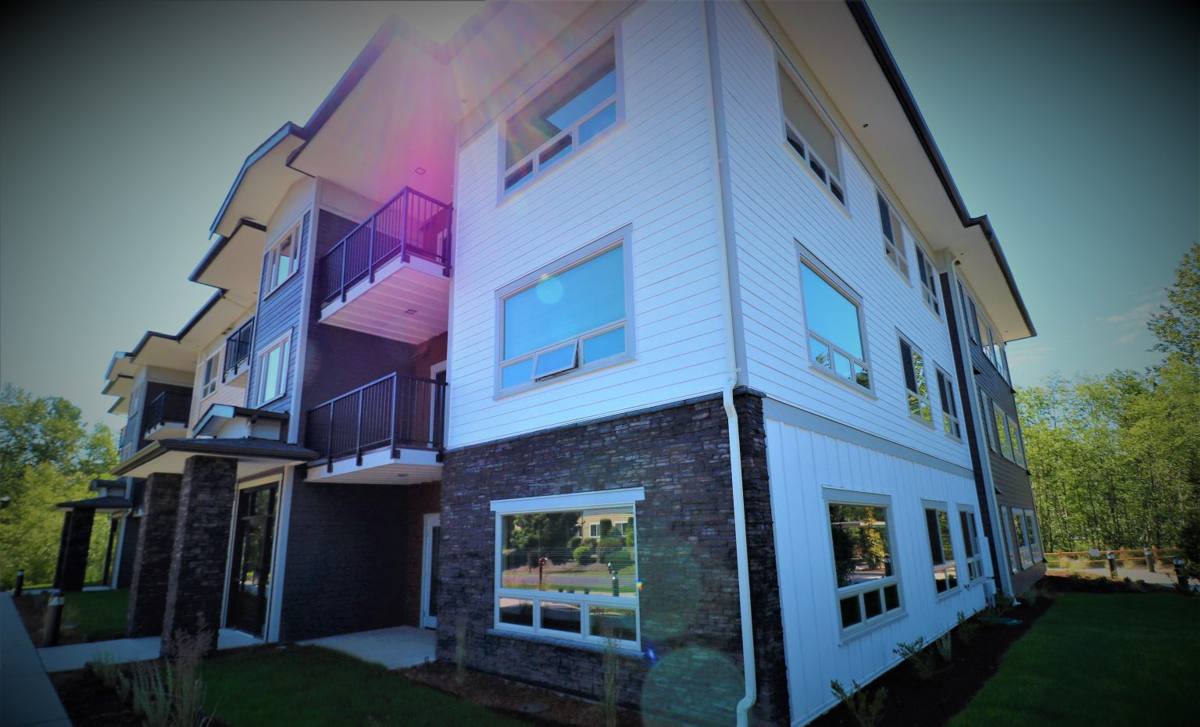
Fiber cement siding is made from a mix of Portland cement, sand, and cellulose fibers, cured into rigid boards and panels. It's non-combustible, doesn't provide a food source for insects, and doesn't absorb and release moisture the way solid wood or wood-based composite products do. Done right, it's one of the few siding materials that genuinely fits the Pacific Northwest's wet-cold-wet cycle instead of just tolerating it.
Why We Only Install James Hardie
Fiber cement is a category, not a single product, and the brands in that category aren't interchangeable. We install James Hardie exclusively — not LP SmartSide, not vinyl, not Cemplank, not Allura, not primed or bare wood siding. That's a deliberate standard, not a sales preference. Hardie engineers regional product lines specifically for climate, backs its boards with a factory-applied ColorPlus finish that's baked on rather than brushed on, and offers a strong, transferable limited warranty that follows the house, not just the original owner. When we put our crew's name behind a siding job, we want it standing on a product system we trust to perform in this exact climate, not just on installation day but fifteen and twenty years out.
Signs a Barkley Home's Siding Is Struggling
Most siding failures don't show up as a dramatic single event — they show up as small warning signs that get ignored for a season or two. In a shaded, damp neighborhood like Barkley, watch for these:
- Green or black staining on north- and west-facing walls, especially near tree cover or fences that block airflow
- Paint that's bubbling, peeling, or chalking well before it should
- Soft spots when you press on the siding, particularly near the bottom courses and around window and door trim
- Visible cupping, warping, or separation at seams on wood or composite siding
- Gaps or cracked caulk at trim joints, corners, and penetrations where water can work its way behind the siding
- Rust streaking from fasteners, which usually means the wrong fastener was used or it wasn't set correctly
Any one of these is worth a look. A few of them together usually means moisture has already gotten behind the siding, and that's a sheathing and framing problem, not just a cosmetic one.
What a Correct Installation Involves
Fiber cement is only as good as the installation behind it. Hardie's own warranty is written around specific installation requirements, and skipping them is the single biggest reason siding jobs fail early — not the material itself.
Flashing and Water Management
Every window, door, and roof-to-wall intersection needs proper flashing and a drainage plane behind the siding so water that gets past the surface can still get out. This is invisible once the job is done, which is exactly why it's the step that gets shortcut on rushed installs.
Fastening and Clearances
Hardie specifies fastener type, spacing, and placement, plus minimum clearances from grade, roof lines, decks, and patios so the bottom edge of the siding never sits in standing water or gets buried by mulch and landscaping. Field-cut edges need to be primed and sealed since they lose the factory finish's protection where they're cut. Butt joints and trim transitions need the right caulk, applied correctly, not just enough to look sealed.
None of this is exotic work, but it's detail-heavy, and it's the difference between siding that performs for decades and siding that looks fine for a year or two before problems start showing up behind the surface.
Choosing the Right Hardie Line and Finish for Barkley
| Product | Best Use | Why It Fits Barkley |
|---|---|---|
| HardiePlank lap siding | Most home exteriors | Traditional lap profile, wide color range, standard for the neighborhood's home styles |
| HardiePanel vertical siding | Accent walls, gables, modern facades | Clean lines for mixed-material designs without sacrificing durability |
| HardieTrim boards | Corners, window and door trim, fascia | Matches the siding's moisture resistance so trim doesn't become the weak point |
| HZ5 engineered product | All of the above, in this region | Hardie's climate zone system builds in extra protection for the freeze-thaw and high-moisture conditions common across Whatcom County |
Hardie's ColorPlus finish is worth understanding before you pick a color: it's a multi-coat, factory-baked finish that resists fading and holds up to UV and moisture far longer than field-applied paint, with a dedicated warranty on the finish itself. For a Barkley home under partial tree cover, that matters — a factory finish doesn't need re-coating on the same schedule a painted wood or repainted composite siding does.
Our Process for a Barkley Siding Project
- On-site assessment — we look at the existing siding, check for moisture damage at the sheathing, and note trouble spots around windows, decks, and grade level.
- Scope and product selection — we walk through Hardie profiles, colors, and trim options based on your home's style and the site conditions.
- Tear-off and sheathing repair — old siding comes off, and any water-damaged sheathing or framing gets repaired before anything new goes back on. Covering up rot is not an option.
- Moisture barrier and flashing — the drainage plane and flashing details go in first, since this is the layer you won't see again once siding is up.
- Hardie installation to spec — correct fastening, clearances, and joint treatment, following Hardie's published installation requirements.
- Trim, caulk, and finish detail — the details that determine how clean the finished job looks and how well it sheds water at every seam.
- Final walkthrough and cleanup — we go over the finished work with you and clear the site.
What Affects the Cost of Fiber Cement Siding in Barkley
| Factor | Why It Moves the Price |
|---|---|
| Home size and number of stories | More square footage and taller walls mean more material, labor, and staging/equipment time |
| Complexity of the exterior | Homes with many corners, gables, and window/door openings take longer to trim and flash correctly than a simple rectangular footprint |
| Condition of existing sheathing | If tear-off reveals water damage, repair work gets added before new siding can go on |
| Product line and finish selected | Panel and trim combinations and specific ColorPlus finishes vary in material cost |
| Site access | Mature trees, tight side yards, and sloped lots — all common in Barkley — can affect staging and labor time |
| Permitting | Depending on scope, siding work may require permitting through the applicable local jurisdiction |
We give straightforward, itemized estimates after seeing the home in person — no ballpark numbers pulled out of thin air, since the factors above genuinely do change the price from one house to the next.
Why Hire a Crew That Already Works in Barkley
Siding work in Barkley isn't identical to siding work on an open, sun-exposed lot across town. Homes here often sit under significant tree cover, which changes how quickly siding dries after rain and how much attention moss and algae need over the life of the siding. A crew that already works this neighborhood knows to check those shaded, low-airflow areas more closely during the assessment, not just at the obvious ground-level spots.
If your property is part of a planned development or has an architectural review process, it's worth checking your specific guidelines on siding material and color before finalizing a scope — a contractor familiar with the area can help you navigate that conversation rather than finding out about it after materials are ordered. And because Whatcom County's coastal, high-moisture climate is consistent across Bellingham, a crew that installs Hardie regularly here already has the flashing, clearance, and fastening details dialed in for exactly the conditions your home is up against.
Living With Fiber Cement Siding After It's Installed
One of the real advantages of a correctly installed Hardie system is how little it asks of you afterward. It doesn't need repainting on the schedule wood does, it won't warp or rot, and it holds up to salt air and driving rain far better than the alternatives. That said, a little routine attention keeps it performing:
- Rinse the siding down once or twice a year, focusing on shaded, moss-prone areas
- Keep landscaping and mulch pulled back from the bottom edge of the siding
- Check caulking at trim and joints periodically and have any cracked sections resealed
- Address any impact damage or chipped finish promptly so the substrate underneath stays protected
If you're weighing a siding replacement or repair in Barkley, we're happy to take a look at your home and put together a clear, no-pressure estimate — use the form below to get started.