 Bellingham Roofing
 Siding Repair in Cordata: What the Climate Puts Your Home Through
Cordata sits in north Bellingham, close enough to Bellingham Bay and the Salish Sea that salt-laden air is a year-round fact of life, not an occasional coastal event. Add in driving rain that comes sideways off the water during fall and winter storms, and siding here takes a different kind of beating than it would in a drier inland climate. Whatcom County's marine air keeps humidity high for most of the year, which means siding doesn't just get wet — it stays damp longer between rain events, giving moisture more time to work into seams, fastener holes, and trim joints.
Then there's moss. Bellingham's moss season isn't a few weeks — it's realistically eight or nine months out of the year on shaded elevations, north-facing walls, and anywhere tree cover keeps siding from drying out between storms. Moss holds moisture directly against the siding surface, and over years that constant dampness is what turns a cosmetic nuisance into a real repair. Any siding repair in this neighborhood has to account for all three of these factors together — salt, rain volume, and moss — not just patch what's visibly broken.
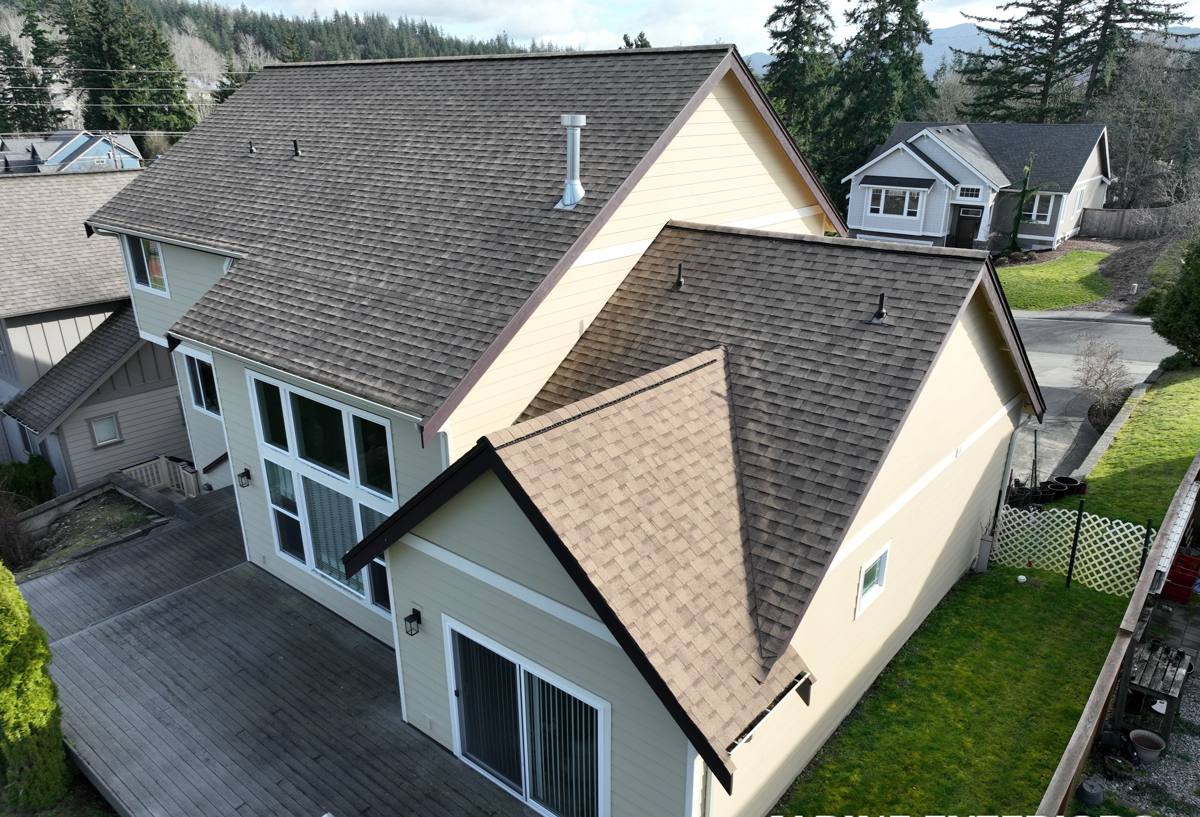
Warning Signs Your Cordata Home Needs Siding Repair
Not every siding issue means a full replacement. Most homes we look at in this area need targeted repair — but catching the problem early is what keeps it that way. Watch for:
- Soft or spongy spots when you press on the siding, especially near the bottom courses or around window and door trim
- Dark streaking or green-black growth that keeps returning within weeks of being cleaned
- Paint or finish that's bubbling, peeling, or flaking in specific spots rather than evenly across the wall
- Visible gaps, cracks, or separation at seams, corners, and trim joints
- Panels that have warped, bowed, or pulled away slightly from the wall
- Interior signs — a musty smell, staining on interior drywall, or a soft spot on interior trim near an exterior wall
- Increased pest activity around the base of the siding, which often points to softened or rotted material underneath
Any one of these on its own is usually a repair, not a replacement. Several of them together, especially with interior signs, is worth a closer look before it spreads.
What Actually Causes Siding Damage in This Neighborhood
Moisture Intrusion at Trim and Seams
The most common failure point isn't the flat face of the siding — it's the transitions: where siding meets trim, where two panels butt together, and around window and door openings. If flashing was installed poorly, or caulking has aged out and cracked, water gets behind the siding instead of running off it. In Bellingham's rain volume, even a small gap becomes a steady drip path over a wet winter.
Moss and Organic Growth
Moss itself doesn't eat through siding, but it changes how water behaves on the surface. Instead of shedding rain, a mossy section holds it, feeding continuous moisture into any weak point below — a nail hole, a hairline crack, a seam with failing caulk. Homes on shaded lots or with mature landscaping tight against the house see this fastest.
How Different Siding Materials Respond to This Environment
What we find behind the siding often depends on what the siding is made of. Wood and primed spruce absorb moisture and can rot from the inside out even when the surface still looks paintable. Vinyl doesn't rot, but it becomes brittle with age and UV exposure, and it can crack or warp where fasteners were driven too tight during the original install. LP SmartSide and similar engineered wood products are more moisture-resistant than raw wood but are still an engineered wood product at the core — if the factory edge seal or field-cut edges aren't properly treated and maintained, they can swell and delaminate at the damaged spot. None of this means every home with these materials is in trouble; it just means the repair approach has to match the material, not just the symptom.
Repair or Replace? How We Make the Call
We don't default to "replace it all" just because it's simpler to quote. The decision comes down to a handful of concrete factors we check during the inspection.
| Factor | Points Toward Repair | Points Toward Replacement |
|---|---|---|
| Extent of damage | Isolated to one or two areas | Spread across multiple walls or elevations |
| Moisture readings behind siding | Localized, sheathing intact | Widespread moisture, soft or delaminating sheathing |
| Age of existing siding | Under two-thirds of its expected service life | At or near end of expected service life |
| Material condition overall | Rest of the siding is sound and stable | Remaining siding is brittle, warped, or chalking heavily |
| Color/profile match available | Matching material can be sourced | Discontinued profile or faded finish won't match |
When the damage is contained and the rest of the wall is structurally sound, a well-executed repair is the honest recommendation — it costs less and doesn't waste serviceable material. When the moisture has traveled or the material itself is failing broadly, patching becomes a short-term fix that just delays the real cost.
What a Correct Siding Repair Job Involves
A repair that actually holds up in this climate goes further than swapping out the damaged piece you can see.
- Confirm the full extent of moisture damage. We check behind the visible damage, not just at it, since water travels downward and sideways before it shows on the surface.
- Inspect the sheathing and framing underneath. If water has reached the wall structure, that gets addressed before any new siding goes back on — covering over compromised sheathing just hides the problem.
- Rebuild the water management detail, not just the siding. Flashing, house wrap, and drainage gaps get corrected at the repair site so the same failure doesn't happen again in the same spot.
- Match the replacement material correctly. Profile, reveal, and finish need to line up with the surrounding siding so the repair doesn't stand out as an obvious patch.
- Seal and finish to spec. Caulking and paint or factory finish get applied per manufacturer guidelines, not just "close enough."
Why We Repair With — and Recommend — James Hardie Fiber Cement
We install James Hardie fiber cement siding exclusively, and that carries into repair work too. When a repair calls for new material and the existing siding is compatible, we use Hardie board and trim rather than mixing in vinyl, LP SmartSide, or raw wood. Fiber cement doesn't absorb water the way wood-based products do, it won't warp or become brittle the way vinyl does over time, and it's non-combustible — a meaningful consideration in a region where wildfire smoke and dry summer stretches have become more common even alongside the wet winters. Hardie's ColorPlus factory finish is also formulated to hold color and resist the kind of fading and chalking that makes patch repairs visually obvious years later.
If your home currently has vinyl, LP SmartSide, cedar, or primed spruce siding and you're dealing with recurring repair issues rather than a one-time problem, that's usually a sign the material itself is working against the climate rather than with it. In those cases we'll always give you an honest repair option first — we're not going to talk you into a full re-side for a fixable problem. But if the damage is symptomatic of a broader material issue, we'll tell you that plainly, and Hardie is what we'd put on the home going forward.
Our Siding Repair Process for Cordata Homeowners
- On-site inspection. We look at the damaged area plus the surrounding wall, checking moisture levels and how the current material and flashing details are holding up.
- Written scope and straight answer. You get a clear explanation of what's actually wrong, what repair versus replacement would involve, and a written quote before any work starts.
- Repair work. Damaged material comes out, the structure underneath gets checked and corrected if needed, and new material goes in matched to the existing wall.
- Water management check. Flashing and sealant details are corrected at the repair site so it holds up through the next wet season, not just until the next inspection.
- Cleanup and walkthrough. We clear debris and walk the repair with you so you know exactly what was done and why.
Why Hire a Crew That Already Works in Cordata
A contractor who works regularly in this part of Bellingham has already seen how homes in the area age — which elevations tend to hold moss longest, which building eras used which siding materials, and what typical flashing shortcuts show up in homes built during different construction booms. That local pattern recognition speeds up diagnosis and avoids guesswork. It also means faster response when weather is the trigger for the call — after a hard windstorm off the bay or a stretch of driving rain, timing matters, and a crew that's already local doesn't add days of travel or scheduling friction on top of the wait.
Working within City of Bellingham and Whatcom County permitting norms also matters for anything beyond a like-for-like patch. A crew unfamiliar with local requirements can slow a project down or miss a step; a crew that already works here handles that as routine.
Keeping Repaired Siding Protected Through Whatcom County's Wet Seasons
Once a repair is done right, a little seasonal attention keeps it that way. Clean gutters and downspouts so water is actually being carried away from the wall rather than overflowing onto siding below. Trim back landscaping that's holding shade and moisture directly against the house, since that's exactly the condition that grows moss fastest. Have moss buildup treated before it's had years to work, not after it's already darkened the wall. And do a quick visual check of caulking and trim joints once a year, ideally before the wet season ramps up in the fall — small gaps are a five-minute fix when caught early and a real repair once they've had a winter to work on them.
If you're seeing soft spots, recurring moss, or damage on your Cordata home's siding, we're happy to take a look and give you a straight, no-pressure assessment of what it actually needs — repair or otherwise. Request a free estimate using the form below and we'll get you a clear answer.