 Bellingham Roofing
 Happy Valley Roofs Take a Different Kind of Beating
Happy Valley sits close enough to Bellingham Bay that salt-laden air is a constant, low-grade stressor on roofing materials, even on days when nothing dramatic is happening weather-wise. Add in the driving rain that comes off Puget Sound storms and the long, damp moss season that Whatcom County is known for, and you've got a roof that's working harder, year-round, than one in a drier inland climate. Storm damage here rarely looks like a single dramatic event. More often it's wind that lifts a few shingle tabs during a fall blow, rain that finds a seam that's been slowly failing, or moss that's held moisture against a roof deck long enough to soften it.
That combination matters when it comes to repair. A crew that treats every storm call the same way — patch what's obviously broken and move on — will miss the moisture and moss-related damage that's usually sitting right next to the wind damage. In this part of Bellingham, the two go together often enough that we look for both every time.
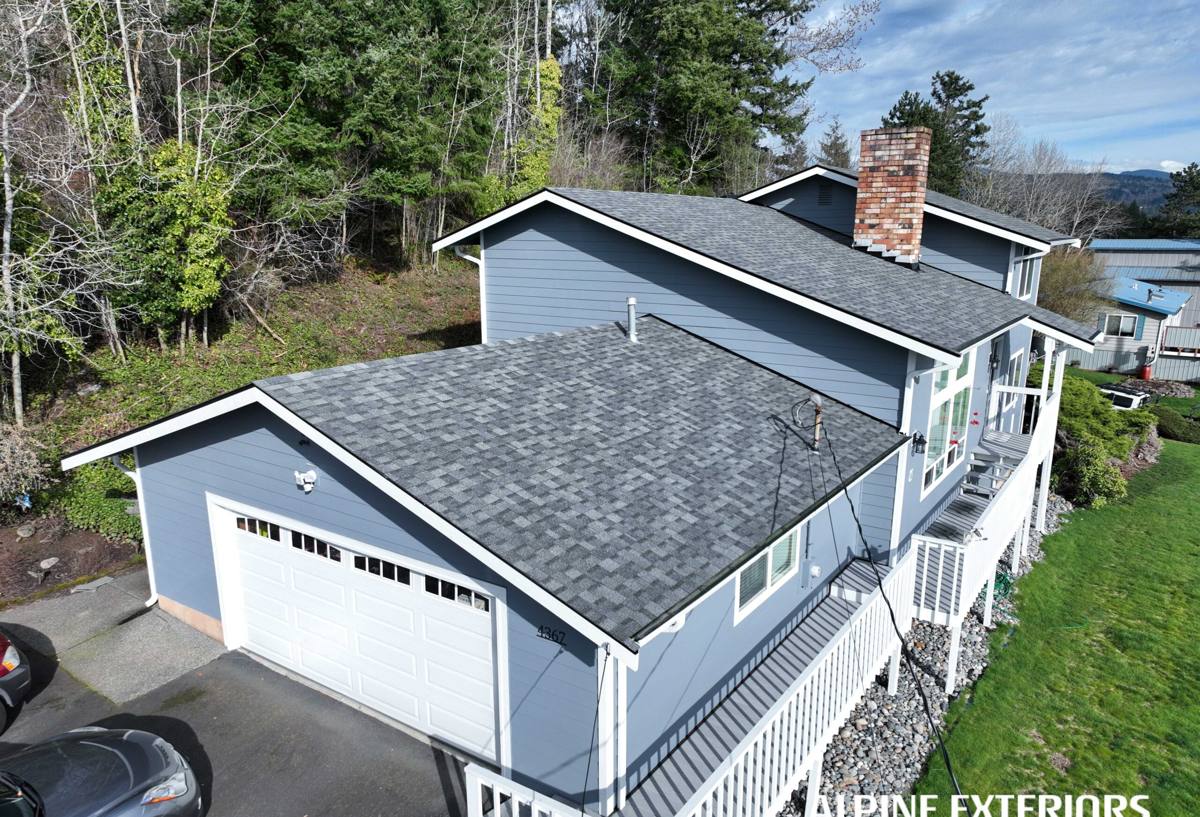
What Actually Counts as Storm Damage
Homeowners in Happy Valley often call us after a windstorm expecting to hear "you need a new roof," and just as often the reality is a contained repair. Understanding what we're actually looking for helps set expectations before we're even on the roof.
Wind Damage
Lifted or creased shingle tabs, shingles blown off completely, and nails that have backed out or torn through are the most common wind-related issues we see. Wind damage tends to start at roof edges, ridges, and any place the roofline breaks — exactly the areas most exposed to gusts coming off the water.
Water Intrusion
Driving rain doesn't need a hole to get in — it needs a gap, a lifted shingle, or a failed seal around a vent or chimney. Water intrusion after a storm often shows up days later as a ceiling stain, which is why we recommend an inspection even when nothing looks obviously wrong from the ground.
Moss and Debris Damage
This one is regional. Moss holds moisture against shingles and roof decking for months at a time during Bellingham's wet season, and a storm can knock loose debris — branches, needles, moss mats — that traps even more water in valleys and behind flashing. We treat moss buildup as a contributing factor to storm damage, not a separate cosmetic issue.
What a Correct Storm Damage Repair Actually Involves
A repair that only replaces the shingles you can see from the driveway isn't a complete repair — it's a patch. Doing this right in a climate like ours means checking underneath the surface layer, not just on top of it.
- Removing damaged shingles and inspecting the underlayment and decking beneath them for moisture, soft spots, or rot
- Checking flashing around chimneys, vents, and valleys, since these are common entry points once a storm has loosened a seal
- Confirming the roof deck itself hasn't taken on moisture — plywood or OSB that's been wet for a while needs to be addressed before new material goes over it, not sealed in
- Clearing moss and organic debris from the repair area so new materials aren't installed over a surface that's already holding moisture
- Matching replacement shingles or materials as closely as possible to the existing roof, both for appearance and so the repair performs the same as the surrounding roof
- Re-checking gutter and downspout function near the repair, since storm debris and wind damage often affect drainage at the same time
Skipping any of these steps doesn't save money in the long run — it just moves the cost of a second repair a few years down the road, usually after the underlying deck has had more time to sit wet.
Our Process for a Happy Valley Storm Repair
1. Assessment
We start with a full roof inspection, not just a look at the reported damage. Storms rarely damage just one spot, and given the moss and moisture conditions typical to this area, we're checking the whole roof while we're up there.
2. Documentation
We document what we find with clear photos and notes, which matters if you're filing an insurance claim. This is a plain accounting of the damage — not an estimate padded to maximize a claim.
3. Scope and Estimate
We give you a written scope that separates what's storm-related from what's pre-existing wear, like moss buildup or aging shingles that were already near the end of their service life. Being upfront about that distinction is part of doing honest work, even when it means telling you a claim might only cover part of the job.
4. Repair
We complete the repair using materials suited to this climate — proper underlayment, correctly lapped flashing, and shingles rated for wind exposure similar to what Bellingham and Whatcom County see. We don't cut corners on the parts of the job that aren't visible once we're done.
5. Follow-Up
We check our own work after the next significant rain where practical, since a repair that looks fine on a dry day sometimes reveals a missed seam the first time it's really tested.
Repair vs. Replacement: What Actually Drives the Decision
Not every storm-damaged roof needs to be replaced, and not every roof that "just needs a patch" is actually a good repair candidate. Here's how we think through it.
| Factor | Leans Toward Repair | Leans Toward Replacement |
|---|---|---|
| Extent of damage | Isolated to one slope or area | Spread across multiple slopes or the whole roof |
| Roof age | Under 10-15 years, in otherwise good condition | Already near or past expected service life |
| Deck condition | Dry, solid decking under the damaged area | Soft or rotted decking found during inspection |
| Moss/moisture history | Minor buildup, no long-term staining | Long-term moss coverage with visible deck staining |
| Material availability | Matching shingles readily available | Discontinued material forcing a full re-roof for a uniform look |
We'll always tell you honestly which side of this table your roof falls on. A repair that's likely to fail again within a year or two isn't a good use of your money, and we'll say so rather than sell a patch we don't believe in.
Insurance Claims: What Happy Valley Homeowners Should Know
Many storm repairs in this part of Bellingham involve a homeowner's insurance claim, and the process goes smoother when the documentation is clear and the scope is realistic. A few things worth knowing going in: insurers distinguish between sudden storm damage and gradual wear (like moss-related deck softening that built up over years), and they'll often want to see that distinction clearly documented. We provide straightforward photos and written scopes that reflect what we actually find — not an inflated damage report — because that's what holds up when an adjuster reviews the claim, and it's simply the right way to do the work.
Why It Matters to Hire a Crew That Already Works Happy Valley
Roofing crews that mostly work drier, inland areas sometimes miss the moisture and moss dynamics that are routine here. A crew that regularly works Happy Valley and the broader Bellingham area already knows to check for softened decking under storm damage, knows which flashing details tend to fail first in salt-air and driving-rain conditions, and isn't guessing at what "normal wear" looks like on a roof that's been through several wet seasons. That familiarity shows up in fewer callbacks and repairs that hold up through the next storm, not just the next dry stretch.
A Quick Post-Storm Checklist for Homeowners
- Walk the property after a storm and look for shingle pieces or granules in gutters, downspouts, or on the ground
- Check the attic (if accessible) for new water stains, damp insulation, or daylight where there shouldn't be any
- Note any new ceiling stains inside the home, even small ones — they often show up days after the storm itself
- Avoid climbing onto the roof yourself to inspect it — storm-damaged roofs can be unstable in ways that aren't obvious from the ground
- Get an inspection promptly, especially heading into or during Whatcom County's wetter months, so any damage doesn't sit open to more rain
- Keep photos and notes of what you observed for your own records, in addition to whatever a contractor documents
If a recent storm has left you with lifted shingles, a new leak, or just a nagging feeling something's not right up there, we're happy to take a look. We offer free, no-pressure estimates for Happy Valley homeowners — you can request one using the form below.