 Bellingham Roofing
 Composite Decking Built for Birch Bay's Waterfront Climate
Birch Bay sits right on the water, and that changes what a deck has to survive. Homes here deal with salt-laden air coming off the bay, wind-driven rain that finds its way into every gap and fastener hole, and a long stretch of fall-through-spring weather where moss and algae get a real foothold on anything horizontal. A deck built for an inland lot doesn't always hold up the same way out here. We've worked on enough decks along the Whatcom County coastline to know what actually needs to change in the materials, the layout, and the build sequence to keep a Birch Bay deck looking and performing well for the long haul.
Composite decking is a strong fit for this environment, but "composite" isn't one product — it's a category with real differences in how boards handle moisture, salt exposure, and freeze-thaw cycling. This page covers what we specifically watch for on Birch Bay jobs, how we build, and why local experience matters more here than it does on a typical inland deck.
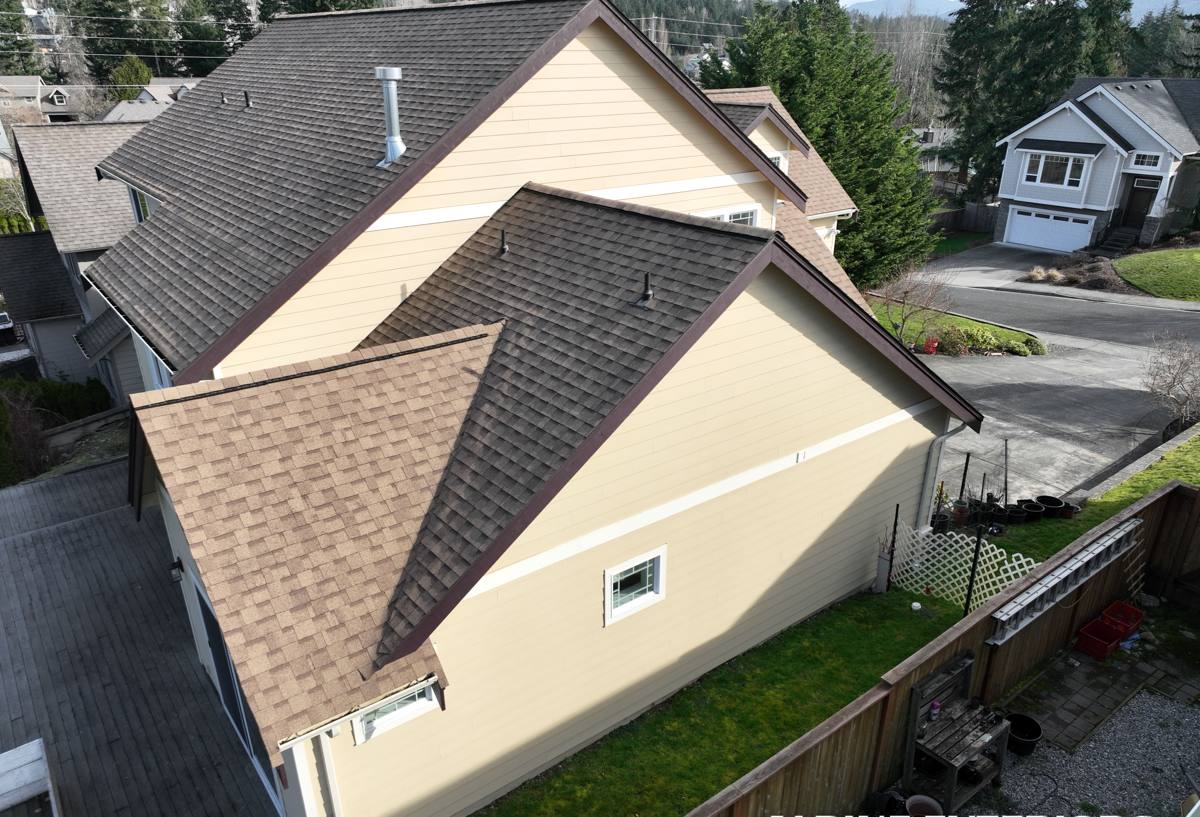
Why Birch Bay's Conditions Are Tougher on Decking Than Most of Bellingham
Bellingham and greater Whatcom County already get a wet, mild marine climate with plenty of gray, damp months. Birch Bay adds a few extra variables on top of that baseline:
- Salt air corrosion: Fasteners, brackets, and any exposed metal hardware are exposed to airborne salt, which accelerates corrosion compared to inland Bellingham lots.
- Driving rain off the water: Wind off the bay pushes rain sideways into railings, stair stringers, and ledger connections, not just straight down onto the deck surface.
- Extended moss and algae season: Shaded, north-facing, and low-airflow deck areas stay damp for months at a stretch, which is exactly what moss and algae need to establish.
- Wind exposure: Open waterfront lots see steadier, stronger wind loads on railings and any pergola or cover structures than more sheltered inland yards.
None of this means composite decking is a bad choice for Birch Bay — it means the details of the install matter more here than they would a few miles inland.
What a Correct Composite Deck Build Involves
Substructure and Framing
The frame underneath a composite deck does most of the real work. We use framing lumber rated for ground contact or exposed exterior use, and we pay close attention to any wood-to-wood or wood-to-concrete connection points where water tends to sit. On a Birch Bay lot, we're also thinking about how the frame handles wind uplift on open, exposed sides of the house, since coastal wind loads on a deck and any attached railing can be meaningfully higher than a sheltered inland yard.
Fasteners and Hardware
This is where salt air does the most damage if it's overlooked. Standard galvanized fasteners can start showing corrosion faster in a salt-air environment than they would inland. We spec stainless steel or coated fasteners rated for coastal/marine exposure on connection points that matter structurally — ledger boards, joist hangers, post bases — not just wherever it's convenient or cheapest.
Ledger Attachment and Flashing
Where the deck ties into the house is the single most common source of hidden water damage on any deck, coastal or not. Proper flashing at the ledger board, correctly lapped to shed water outward instead of behind the siding, is non-negotiable on a driving-rain site like Birch Bay. We flash this connection the same way regardless of budget, because a failure here rots framing you can't see until it's expensive.
Board Spacing and Airflow
Composite boards need consistent gapping for drainage and to allow the material to expand and contract with temperature swings. Too tight, and water sits on the surface longer than it should, feeding moss growth. Too loose, and the deck feels sloppy underfoot and collects debris. We follow manufacturer spec gapping, adjusted slightly for our wetter local conditions.
Under-Deck Ventilation
On decks with any skirting, or decks built low to grade, airflow underneath matters as much as drainage on top. Poor under-deck ventilation traps moisture against the framing long after the surface has dried, which is a slow, invisible way for a substructure to fail years before the composite boards on top show any wear at all.
Composite Board Options: What Actually Differs
Not every composite board is engineered the same way, and the differences matter more in a wet coastal climate than they do somewhere dry. Here's how the main categories compare on the factors that matter for a Birch Bay install:
| Board Type | Moisture Behavior | Maintenance | Typical Fit for Birch Bay |
|---|---|---|---|
| Capped composite (full wrap) | Outer shell resists moisture absorption into the core | Low — occasional wash | Strong fit; handles driving rain and damp shade well |
| Uncapped/lower-tier composite | Core can absorb moisture over time, especially at cut ends | Higher — more prone to staining, mold in damp spots | Riskier here; we generally steer clients away from this tier on waterfront lots |
| Mineral-based composite (PVC-heavy) | Very low moisture absorption | Low | Good option, especially for consistently shaded or low-airflow areas |
| Traditional wood decking | Absorbs moisture readily, needs regular sealing | High — annual maintenance recommended | Requires more upkeep in this climate than most owners want to commit to |
We don't push one brand over another as a rule — the right board depends on your budget, how much shade the deck gets, and how hands-off you want to be with maintenance. What we do steer clients away from is uncapped, budget-tier composite on shaded or low-airflow sections of a waterfront lot, because the moisture exposure here is genuinely harder on that tier of product than it would be on a dry, inland site. That's a maintenance and longevity trade-off we'll walk through honestly, not a knock on any specific manufacturer.
Moss, Algae, and Staying Ahead of the Wet Season
Composite decking resists moss and algae far better than untreated wood, but "resists" isn't "immune." In shaded corners, under furniture, or in areas that don't get direct sun or wind, organic growth can still establish over a long wet Whatcom County winter. A few things reduce this significantly:
- Correct board gapping so water drains through instead of sitting on the surface
- Adequate under-deck airflow so the space stays dry between rain events
- Layout choices that avoid trapping deep shade wherever the site allows it
- Periodic washing — composite still benefits from an occasional rinse or gentle wash in a climate this wet
We design and build with this in mind from the start rather than leaving it to the homeowner to manage after the fact.
Our Process for a Birch Bay Composite Deck
1. On-Site Assessment
We walk the site in person, note sun and shade patterns, wind exposure, drainage direction, and the condition of any existing structure we're replacing or tying into.
2. Honest Product Recommendation
Based on the specific spot on your lot — how sheltered or exposed it is, how much shade it gets, your budget — we'll recommend a board tier and explain the trade-offs plainly, including what we'd steer away from and why.
3. Framing and Structural Work
We build or reinforce the substructure to current code requirements, with attention to ledger flashing, fastener corrosion resistance, and wind load on open coastal sides of the property.
4. Decking Installation
Boards are installed with manufacturer-spec gapping and fastening, adjusted for our wetter regional conditions.
5. Final Walkthrough
We walk the finished deck with you, cover basic care (mainly the occasional wash schedule that makes sense for a waterfront lot), and answer questions before we consider the job done.
Why a Crew That Already Works Birch Bay Matters
A lot of deck problems on the coast don't show up in year one. They show up in year four or five, when a fastener that should have been corrosion-rated starts failing, or a ledger that wasn't flashed correctly finally lets water into the framing. A crew that's used to building inland, in a drier or more sheltered spot, doesn't always think to spec differently for a Birch Bay lot — because most of their jobs don't need it.
We're a Bellingham-based crew, and Whatcom County's coastal conditions, including Birch Bay's, are part of our regular work, not an exception. That means the fastener spec, the flashing detail, and the board recommendation aren't an afterthought — they're just how we build out here by default.
What to Check Before Hiring Anyone for a Coastal Deck
Whether you go with us or someone else, here's a practical checklist worth running through with any contractor bidding a Birch Bay deck project:
- Do they spec stainless or coated coastal-rated fasteners, or just whatever's standard inland?
- Can they explain how they'll flash the ledger board connection to the house?
- Do they ask about sun/shade exposure and airflow before recommending a board tier?
- Are they licensed and insured to work in Washington State, and can they provide proof?
- Do they give you a written scope that specifies fastener type and board brand/tier, not just "composite decking"?
- Are they upfront about maintenance expectations for the specific product they're recommending?
A vague verbal quote with no material specifics is a common source of disappointment down the road — get the details in writing.
Rough Cost Factors for a Birch Bay Composite Deck
Every deck is different, and we don't quote sight-unseen, but the main variables that move the price on a coastal Birch Bay project are worth understanding upfront:
| Factor | Why It Matters Here |
|---|---|
| Board tier chosen | Capped or mineral-based composite costs more upfront than uncapped, but performs better in this climate |
| Fastener and hardware spec | Coastal-rated stainless hardware costs more than standard galvanized, but resists salt-air corrosion |
| Deck size and layout complexity | Multiple levels, stairs, or built-in railings add labor and material |
| Ledger and flashing condition | Replacing or upgrading flashing at the house connection adds cost but is not worth skipping |
| Site access | Waterfront lots can have tighter access or grade changes that affect labor time |
We'll walk through these specifics for your property during an estimate rather than giving a number that doesn't reflect your actual site.
Get a Free Estimate for Your Birch Bay Deck
If you're planning a new composite deck or replacing an aging one in Birch Bay, we're happy to come take a look, walk the site with you, and give you a straightforward, no-pressure estimate that accounts for the actual conditions on your lot. Fill out the form below to get started.