 Bellingham Roofing
 Windows Built for How Columbia Actually Weathers
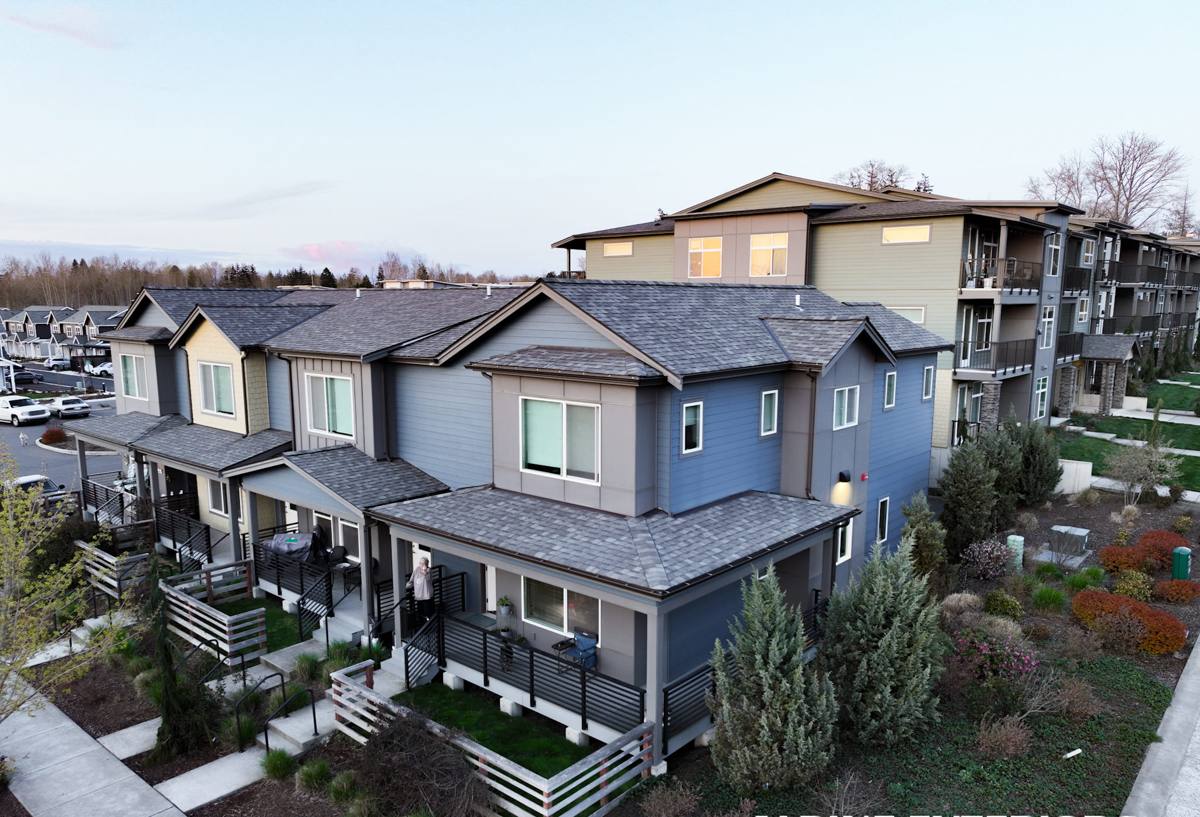
Homes in the Columbia area sit close enough to the water and the weather patterns that roll off Bellingham Bay that windows here work harder than windows do almost anywhere else in Whatcom County. It's not one big storm that wears a window out — it's the slow, repeated cycle of salt-laden air, driving rain that hits glass and trim at an angle instead of straight down, and a moss and mildew season that can run eight or nine months out of the year. A window that's fine in a drier inland climate can start failing here years earlier if it wasn't installed with this specific environment in mind.
When we talk about "custom windows" for a Columbia home, we don't mean fancy shapes or upgraded trim packages as the main selling point. We mean windows and installation details sized, sealed, and flashed to fit your specific openings and your specific exposure — the side of the house that takes the weather, the older frame that's slightly out of square, the sill that's been absorbing moisture for twenty years. Custom, in this context, is really about correctness for your house, not a catalog upgrade.
What Salt Air, Rain, and Moss Actually Do to a Window
Salt Air
Proximity to Bellingham Bay means airborne salt settles on exterior surfaces over time. On windows, that shows up as accelerated corrosion on hardware, screen frames, and any exposed fasteners that aren't rated for coastal exposure. Cheaper hinges, cranks, and latches can start seizing or staining within a few years. It's a slow process, which is exactly why it's easy to overlook until a window won't latch properly anymore.
Driving Rain
Bellingham doesn't just get a lot of rain — a good portion of it comes in sideways during winter storms, driven by wind off the Sound. That matters because a window that only sheds water straight down can still let water intrude when rain is being pushed horizontally into the wall assembly. The flashing details around a window — not just the window unit itself — are what stop that kind of wind-driven moisture from finding its way behind the siding.
The Long Moss Season
Whatcom County's damp, shaded conditions support moss and algae growth on wood, vinyl trim, and even glazing beads for much of the year. On windows, this usually shows up first on north-facing units and anywhere water sits or drains slowly — sills, corners, and under overhangs. Left alone, moss holds moisture against the frame and trim, which speeds up rot in wood components and can degrade sealants faster than sun exposure would.
Signs a Columbia Home's Windows Need Attention
- Fogging or moisture between panes on double-pane units — the seal has failed
- Soft or discolored wood at the sill or lower corners of the frame
- Drafts you can feel even with the window fully latched
- Hardware that's stiff, corroded, or won't lock cleanly
- Visible moss, black streaking, or algae buildup on trim or the glazing bead
- Paint or caulk that's cracked and pulling away from the frame
- Noticeably higher heating bills in a room with older windows
What a Correct Window Installation Involves
The window unit itself gets most of the attention, but in this climate the installation details matter just as much — sometimes more — than the window brand. A well-built window installed with poor flashing will leak. A modest window installed correctly will outperform it for years.
Removal and Opening Inspection
Before a new window goes in, the opening gets checked for hidden rot, water staining, or framing that's settled out of square. On older Columbia-area homes, this step regularly turns up moisture damage that isn't visible from outside — finding it now, rather than after the new window is sealed in, is the difference between a clean install and a repeat problem in a few years.
Flashing and Moisture Barrier
Proper flashing directs any water that gets past the exterior cladding back out and away from the framing, not into it. This includes sill pan flashing at the bottom of the opening, house wrap integration at the sides and top, and correct shingle-style overlap so each layer sheds water onto the layer below it. This is the single most important step for a home taking direct, wind-driven rain.
Setting, Shimming, and Sealing
The window gets shimmed level and plumb, fastened per the manufacturer's schedule, and insulated around the frame gap — not overpacked with spray foam, which can bow a frame out of square. Exterior sealant goes at the joints the manufacturer specifies, not just wherever a gap looks open.
Interior and Exterior Finish
Trim, casing, and interior sill work get finished last, once the window has been checked for square, level, and smooth operation. This is also when we confirm hardware — cranks, locks, and latches — operate cleanly before we call the job done.
Frame Material Comparison for This Climate
| Material | Salt Air / Moisture Performance | Maintenance | Typical Fit |
|---|---|---|---|
| Vinyl | Good — won't rot or corrode; hardware quality varies by manufacturer | Low — occasional cleaning | Most replacement projects, budget-conscious upgrades |
| Fiberglass | Very good — dimensionally stable, resists warping in wet-dry cycles | Low | Homes wanting durability without wood upkeep |
| Wood (clad exterior) | Depends heavily on cladding and sealant quality; exposed wood needs vigilance | Higher — sealant and paint checks matter | Historic or architecturally specific homes |
| Aluminum | Prone to corrosion near salt air unless marine-grade; conducts cold | Moderate | Less common for residential in this area |
We'll talk through which material makes sense for your specific exposure and the look you're going for — a north-facing wall that stays damp most of the year is a different conversation than a sheltered, sun-exposed side of the same house.
Our Process for a Columbia Window Project
- Walkthrough and assessment — we look at each window in question, check the opening and surrounding trim, and talk through what's actually failing versus what's just old
- Honest recommendation — replacement, repair, or a mix, based on what we find, not a one-size-sells-all pitch
- Measuring and ordering — openings get measured precisely; older homes rarely have perfectly standard sizes
- Installation — removal, opening inspection, flashing, setting, and sealing as described above
- Finish work and walkthrough — trim finished, hardware tested, and a final check with you before we consider it done
Why a Crew That Already Works Columbia Matters
Window installation isn't identical everywhere. A crew that mostly works drier, inland climates can do a technically fine install and still miss the details that matter here — the flashing sequence for wind-driven rain, the fastener grade that won't corrode near the bay, the framing quirks common to homes built decades ago in this part of Bellingham. Working in this specific area repeatedly means we're not guessing at how the weather behaves against a given wall orientation — we've seen it play out on homes with the same exposure as yours.
It also means faster, more accurate estimates. We're not learning the neighborhood's housing stock on your job; we already have a sense of what's common in Columbia-area homes, which speeds up both the assessment and the actual installation.
Maintenance That Extends the Life of Your Windows
- Rinse moss and algae buildup off frames and sills a couple times a year, especially on shaded or north-facing windows
- Check exterior caulking annually for cracking or separation and re-seal as needed
- Keep weep holes on vinyl and fiberglass frames clear of debris so water can drain properly
- Lubricate hardware periodically, especially on windows facing the water where salt air accelerates wear
- Address soft wood or paint failure at sills promptly — it's a much smaller fix early than after rot sets in
What Affects the Cost of a Window Project
| Factor | Why It Matters |
|---|---|
| Number and size of windows | Larger openings and full-house projects have different economics than a single replacement |
| Frame material | Vinyl, fiberglass, and wood-clad options carry different upfront costs |
| Condition of the opening | Hidden rot or framing repair adds labor beyond the window unit itself |
| Access and site conditions | Second-story or hard-to-reach windows take more time and equipment |
| Trim and finish scope | Matching existing interior trim or upgrading exterior casing changes the job size |
We'd rather walk your home and give you real numbers than throw out a broad estimate that doesn't hold up once we're actually looking at your openings.
Get a Straight Answer on Your Windows
If you're dealing with drafts, fogged glass, sticking hardware, or just windows that are past their useful life in a Columbia-area home, we're glad to take a look. We'll tell you honestly what's worth fixing, what's worth replacing, and what a correct installation looks like for your specific exposure to Bellingham's salt air, driving rain, and moss season. Fill out the form below for a free, no-pressure estimate.