 Bellingham Roofing
 Storm Damage Roof Repair, Built for Columbia's Conditions
Columbia sits close enough to Bellingham Bay that its roofs take a different kind of beating than homes further inland. Salt-laden air off the water accelerates corrosion on fasteners, flashing, and exposed metal. Wind off the bay drives rain sideways under shingle edges instead of straight down where they can shed it. And the tree cover that gives the neighborhood its character also means a long moss season that keeps roof decks damp for weeks after a storm has passed. None of that shows up on a spec sheet, but it shows up on the roof.
When we get a storm damage call in Columbia, we're not walking into it blind. We know which roof styles in the neighborhood tend to have wind-vulnerable ridge details, which older homes still have underlayment that's past its service life, and where moss buildup has been quietly working against the shingles for longer than the homeowner realizes. That local familiarity changes how fast we can diagnose a problem and how confident we are in the fix.
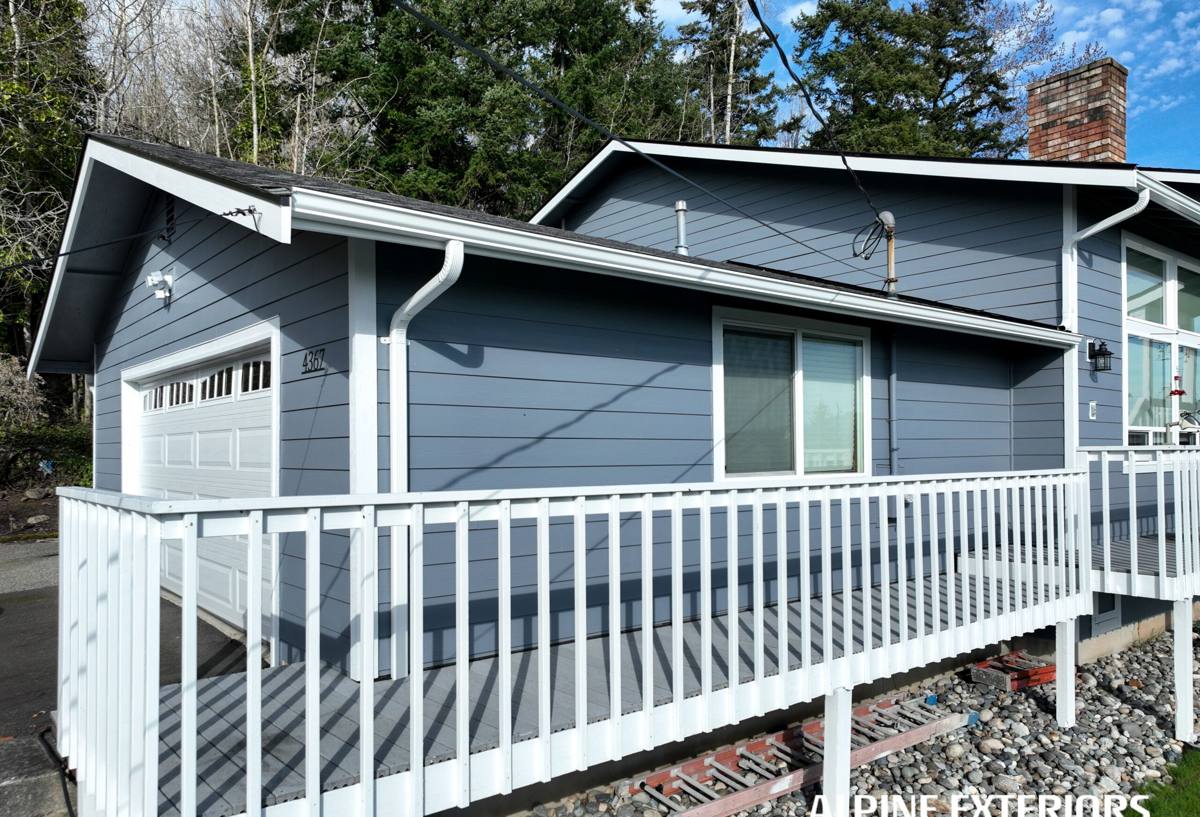
What Storm Damage Actually Looks Like on a Columbia Roof
Storm damage isn't always a dramatic hole in the roof. More often it's a handful of smaller failures that add up to a leak weeks or months later. Here's what we typically find.
Wind and Driving Rain
Whatcom County storms rarely bring straight-down rain. Wind off Bellingham Bay pushes rain at an angle, which means it can get up under shingle tabs, around ridge caps, and behind flashing that would otherwise shed a vertical downpour just fine. Wind can also lift and crease shingle edges without tearing them off completely — the shingle looks intact from the ground, but the seal is broken and water has a way in.
Moss and Trapped Moisture
Columbia's tree canopy is part of why people like living there, but it also means shade, falling debris, and slower drying after every storm. Moss doesn't just sit on top of shingles — it roots into the granule surface and lifts shingle edges, which is exactly where wind-driven rain wants to get in. A roof that looks "just mossy" is often already compromised underneath.
Impact and Debris Damage
Falling branches and wind-blown debris are common after Whatcom County windstorms, especially on lots with mature trees. Impact damage can crack shingles, dent metal flashing or gutters, and knock granules loose in a way that shortens the life of the shingle even if there's no visible puncture.
A Real Repair vs. a Patch
Anyone can seal a visible leak with a tube of roofing cement. Whether that fix lasts a season or several years depends on what happens before the sealant goes on.
Look Past the Visible Leak
Water travels. The spot where it shows up on your ceiling is often several feet from where it actually entered the roof. A correct repair traces the path back to the real entry point — a lifted shingle, failed flashing, a nail hole, or a seam in the underlayment — instead of just treating the symptom. We also check the roof deck itself for soft spots or rot, since a storm that causes visible shingle damage has often let moisture into the sheathing too.
Matching Materials and Flashing Details
A repair that uses mismatched shingle profiles, the wrong underlayment weight, or generic flashing instead of a proper step or counter-flashing detail will usually fail again at the same spot. We match materials to what's already on the roof where possible, and where an older product is no longer available, we use a comparable modern equivalent and rework the surrounding detail so it ties in cleanly rather than just being caulked over.
How We Handle a Storm Repair Call in Columbia
- Assessment. We inspect the full roof, not just the reported leak area, since one storm event usually causes more than one weak point.
- Documentation. We photograph and note the damage in detail, which matters if you're filing an insurance claim.
- Scope and options. We explain what needs to happen now versus what can be monitored, and give you a straightforward repair scope before any work starts.
- Repair. We fix the actual cause — not just the visible symptom — using materials and flashing details appropriate to your roof type and age.
- Follow-up check. On request, we'll take a look after the next significant storm to confirm the repair is holding, especially on older roofs where one weak spot can reveal another nearby.
Repair or Replace? Cost Factors to Weigh
Not every storm-damaged roof needs full replacement, and not every leak is cheap to repair correctly. These are the factors that actually drive the decision.
| Factor | Favors Repair | Favors Replacement |
|---|---|---|
| Roof age | Under roughly 12-15 years, still within expected shingle life | Near or past the shingle's rated lifespan |
| Extent of damage | Isolated to one section or one storm event | Widespread wind lift, multiple leak points, or repeat storm damage |
| Moss and moisture history | Surface moss with no deck softening | Long-term moss growth with signs of decking rot |
| Underlayment condition | Underlayment still intact and pliable | Brittle, torn, or original to a much older roof |
| Insurance scope | Claim covers a defined repair area | Adjuster's scope already includes full slope or full roof |
When a roof is borderline, we'll tell you honestly rather than defaulting to the bigger job. A well-executed repair on a roof with useful life left is money better spent than a premature full replacement.
Working With Your Insurance Claim
Wind and storm damage in Whatcom County is a common enough insurance claim that most carriers have a process for it, but the claim only goes smoothly if the damage is documented well. We provide clear photos, a written scope of what's damaged and why, and are available to walk an adjuster through the roof if that's useful. We don't inflate scopes to chase a bigger payout — our job is to document what the storm actually did and repair it correctly, whether that's covered in full, in part, or out of pocket.
Reducing Storm Damage Risk Going Forward
A few maintenance habits go a long way toward keeping the next storm from doing the same damage:
- Keep gutters and downspouts clear so wind-driven rain has somewhere to go instead of backing up under the roof edge
- Trim back branches that overhang the roof, which reduces both moss buildup and impact risk in high wind
- Have moss treated before it takes hold rather than after it's already lifted shingle edges
- Check attic ventilation — poor airflow keeps the underside of the roof deck damp longer after every storm, which shortens shingle life from below
- Address small flashing or seal issues as soon as they're noticed, since they're cheap to fix now and expensive to fix once they've let water in for a season
After the Next Storm: A Quick Homeowner Checklist
You don't need to get on the roof yourself to spot warning signs. From the ground or a upstairs window, look for:
- Shingle pieces or granules collecting in gutters or on the ground
- Visibly lifted, curled, or missing shingle tabs
- New or spreading ceiling stains, especially near exterior walls or chimneys
- Sagging or soft-looking spots on the roof plane
- Bent, dented, or separated gutters and downspouts
- Debris resting directly on the roof surface after high wind
If you notice any of these, it's worth having it looked at before the next storm rather than after.
Why a Crew That Already Works Columbia Matters
Storm damage repair goes faster and holds up longer when the crew doing it already understands the neighborhood's roof stock, tree cover, and exposure to wind off the bay. We're not guessing at how a particular roof style handles wind-driven rain or how much moss buildup is typical for a shaded lot in this part of Bellingham — we've already seen it on the street over, or the one before that. That familiarity means fewer surprises during the repair and a scope that's realistic from the first inspection.
If your roof took a hit in a recent storm, or you just want a second opinion on whether that patch job someone else did is actually holding, we're happy to come take an honest look. Reach out using the form below for a free, no-pressure estimate — we'll tell you what we find, what it needs, and what it doesn't.