 Bellingham Roofing
 Why Edgemoor Roofs Age Differently Than Roofs Inland
Edgemoor sits close enough to Bellingham Bay that salt-laden air is a constant factor on roofing materials here, not an occasional one. Combine that with Whatcom County's long stretch of driving rain and the heavy tree cover that shades many Edgemoor lots, and you get a roofing environment that's tougher on materials than a typical suburban Bellingham street. Salt air accelerates corrosion on exposed metal fasteners and flashing. Constant moisture and shade extend the growing season for moss and algae. Wind-driven rain off the water finds any gap in flashing or underlayment that a roof in a drier, more open location might never expose.
None of this means Edgemoor homes need exotic solutions. It means the replacement has to be specified and installed with these specific stressors in mind, rather than treated like a generic reroof.
Signs an Edgemoor Roof Has Reached Replacement, Not Repair
Because of the moss and moisture exposure here, roofs in this neighborhood can look worse cosmetically than they actually are underneath, or the reverse — look fine from the ground while the decking underneath is already compromised. A proper inspection looks past the surface. Some signs point clearly toward replacement rather than another round of patching:
- Granule loss heavy enough that you can see bare asphalt on multiple shingles, not just a few
- Moss that has worked under shingle tabs rather than just sitting on the surface
- Soft or spongy decking felt underfoot during inspection, especially near valleys and eaves
- Daylight visible through the roof deck from inside the attic
- Repeated leaks in different spots after previous repairs
- Shingles curling, cupping, or cracking across large sections rather than isolated spots
- A roof approaching or past the manufacturer's expected service life for its material and exposure
If only one or two of these apply and they're isolated, a repair may still make sense. When several show up together, patching becomes a short-term fix on a roof that's already failing structurally.
What a Correct Replacement Actually Involves
Full Tear-Off, Not Overlay
We don't install new shingles over old ones. A layover hides problems instead of fixing them and traps moisture between layers — a real liability in a climate this wet. Full tear-off lets us see and address the decking, not guess at its condition.
Decking Inspection and Repair
Once the old roofing is off, the plywood or board decking underneath gets inspected panel by panel. Any wood that's soft, delaminated, or water-stained through gets replaced before anything new goes down. Skipping this step is one of the most common ways a "new roof" fails early.
Underlayment and Ice/Water Barrier
Given how much rain this area gets and the freeze-thaw swings that hit Whatcom County in winter, we use synthetic underlayment across the full roof and self-adhered ice-and-water membrane at eaves, valleys, and around penetrations — the places water actually collects and backs up.
Flashing
Flashing around chimneys, skylights, walls, and valleys is where most leaks actually originate, not the field of the roof. On Edgemoor homes we pay particular attention to flashing metal choice given salt air exposure, and we replace flashing rather than reuse it during a full replacement.
Ventilation
Balanced intake and exhaust ventilation keeps the attic dry and temperature-stable, which slows moss regrowth on the underside of the roof deck and helps shingles last their full rated life. A roof can be installed perfectly and still underperform if ventilation is wrong.
Choosing a Roofing Material for This Environment
There's no single "correct" material for Edgemoor — it depends on the home's roof pitch, tree cover, budget, and how the homeowner wants to handle long-term maintenance. Here's how the common options actually perform under these conditions:
| Material | Moss & Moisture Resistance | Salt Air Behavior | Maintenance |
|---|---|---|---|
| Architectural asphalt shingle | Good with algae-resistant granules; still needs periodic moss treatment under heavy tree cover | Performs well; fasteners and flashing matter more than the shingle itself | Moderate — periodic cleaning recommended |
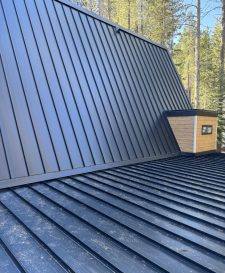
| Standing seam metal | Excellent — moss struggles to gain a foothold on smooth vertical panels | Requires corrosion-resistant coatings and fasteners near the water | Low |
| Cedar shake | Poor without diligent upkeep — moisture and shade are its worst enemy | Salt air speeds weathering of the wood | High |
| Synthetic composite shake/slate | Very good — doesn't absorb moisture like wood | Stable; minimal metal exposure | Low to moderate |
We're honest that cedar shake, while attractive, is a difficult recommendation on shaded, moisture-heavy Edgemoor lots specifically because of upkeep, not because it's a bad product everywhere. Metal and quality architectural shingle tend to be the two materials we install most in this neighborhood because they handle the combination of shade, rain, and salt air with the least ongoing maintenance burden.
Moss and Moisture: The Ongoing Reality Here
Even a correctly installed roof in Edgemoor will see moss activity over time if there's tree cover nearby — that's the tradeoff of the wooded lots that make this neighborhood attractive in the first place. The goal of a good replacement isn't to eliminate moss forever; it's to install materials, flashing, and ventilation that keep moss from working its way under the roofing and causing rot, and to set the homeowner up with a maintenance rhythm that keeps it in check on the surface. We'll walk through that plan as part of the replacement, not leave it as an afterthought.
Our Replacement Process
- On-site inspection — we get on the roof, check the attic, and assess decking condition where visible, not just a look from the ground.
- Written estimate — a clear scope covering materials, tear-off, decking allowance, flashing, and ventilation, with pricing you can actually compare against other quotes.
- Scheduling around weather windows — with this much rain in the forecast most of the year, timing and weather contingency planning matters more here than in drier climates.
- Site and landscaping protection — tarps and plywood to protect mature landscaping, walkways, and any waterfront-adjacent features before tear-off begins.
- Tear-off and decking repair — old roofing removed, decking inspected and repaired as needed.
- Installation — underlayment, ice-and-water membrane, flashing, roofing material, and ventilation installed to spec.
- Cleanup and magnetic nail sweep — full site cleanup, including debris and stray fasteners.
- Final walkthrough — we go over the finished roof with the homeowner before calling the job done.
Why a Crew That Already Works in Edgemoor Matters
Edgemoor's wooded, hilly lots and mature landscaping create real logistical differences from a flat, open roof job — staging materials, positioning equipment, and protecting established plantings all take more planning here than on a standard suburban lot. A crew that's already worked in the neighborhood knows to plan for tighter access, tree-root-protected staging areas, and the extra care that waterfront-adjacent properties call for. That local familiarity shows up in fewer surprises during the job and less risk to the property around the roof itself, not just the roof.
It also matters when it comes to City of Bellingham permitting and any applicable neighborhood or covenant requirements — a contractor who pulls permits regularly in this area moves through that process cleanly instead of treating it as an afterthought.
What Drives Cost on an Edgemoor Roof Replacement
Every roof is different, so exact pricing has to come from an on-site look, but the factors that consistently move the number are the same ones we check during inspection:
| Factor | Why It Matters |
|---|---|
| Roof size and pitch | More surface area and steeper pitches mean more material, labor, and safety setup |
| Decking condition | Rot from long-term moisture exposure means replacing sections of deck, which adds material and labor |
| Material choice | Asphalt, metal, and synthetic products carry different material and installation costs |
| Number of penetrations | Chimneys, skylights, and vents each need proper flashing, which adds time |
| Access and tree cover | Tighter staging areas and overhead branches can slow equipment setup and material staging |
| Layers being removed | Tearing off multiple existing layers takes longer than a single layer |
We'd rather walk a homeowner through these factors honestly during the estimate than give a number over the phone that doesn't hold up once we're actually on the roof.
After the Replacement
A new roof in this climate still needs some attention to get its full service life. Keeping gutters clear so water doesn't back up under the eaves, periodic moss treatment on shaded sections, and a quick visual check after major storms are the main things that keep an Edgemoor roof performing the way it's supposed to for the long haul. We're happy to go over a simple maintenance schedule specific to your home's tree cover and exposure once the new roof is on.
If your Edgemoor roof is showing its age or you just want an honest read on where it stands, we're glad to come take a look. The estimate is free, there's no pressure attached to it, and you'll get a straight answer either way — use the form below to get started.