 Bellingham Roofing
 Silver Beach sits along the shore of Lake Whatcom in Whatcom County, one of Bellingham's older lakeside neighborhoods, where homes range from modest cottages close to the water to newer builds set higher on the slope with a lake view. A roof out here works harder than a roof on a typical inland lot. It sits under marine air carrying a mild salt content off Bellingham Bay and the Strait of Georgia, takes wind-driven rain generated by the lake's own weather pattern, and spends a good part of the year in the kind of shaded, damp conditions that grow moss whether anyone wants it to or not. Roof repair here isn't just patching a leak — it's understanding why that leak started in a climate that's harder on roofing materials than most of the region realizes.
What Lake Whatcom's Climate Does to a Silver Beach Roof
Three conditions specific to this shoreline drive most of the repair calls we get in Silver Beach, and they tend to work together rather than in isolation.
Salt-Tinged Marine Air
Air moving inland off Bellingham Bay carries a mild salt content that reaches well past the immediate coastline and settles into the Lake Whatcom basin along with the lake's own evaporative humidity. That steady exposure is hard on anything metal on a roof — fasteners, flashing, vent stacks, gutter hardware. A fastener that would hold up fine on a drier inland roof can start showing rust streaks or losing its grip years sooner out here, and a rusted fastener head is one of the more common, and more overlooked, sources of a slow roof leak.
Wind-Driven Rain Off the Lake
Lake Whatcom generates enough of its own wind to drive rain sideways into a lake-facing roof slope with more force than the same storm delivers to a sheltered inland lot. That means valleys, chimney flashing, and roof-to-wall transitions on the lake side of a Silver Beach home take a different kind of beating than the uphill or tree-shaded side of the same roof. A repair that only addresses the visible leak point, without accounting for that uneven exposure, often reappears the next time the wind picks up off the water.
A Long Moss Season
Between lake humidity, regular Whatcom County rainfall, and tree cover on many Silver Beach lots, roofs here rarely get a long, uninterrupted dry stretch for much of the year — exactly the environment moss needs to establish itself. Moss isn't just a cosmetic problem. It holds water against the roofing surface, lifts shingle edges as it grows, and can work its way under laps that were sealed correctly when the roof was new. A repair on a moss-heavy roof that doesn't address the moss itself is a repair that's likely to need doing again.
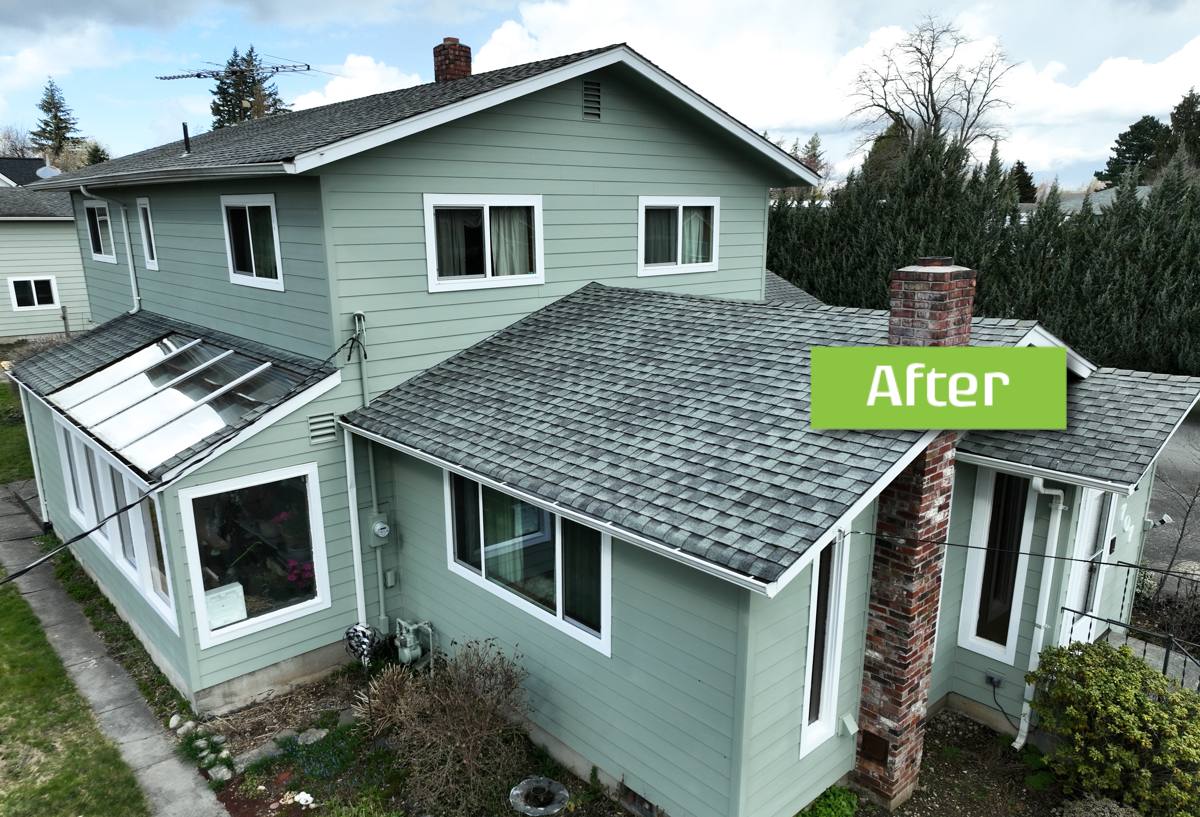
Common Roof Repair Issues We See Around Silver Beach
Not every call is the same, but these are the problems that come up most often on lakeside roofs in this neighborhood:
- Leaks at chimney, skylight, or vent flashing that only show up during wind-driven rain
- Shingles lifted or displaced by moss growth on shaded, north-facing slopes
- Rust staining or failed fasteners at metal flashing and vent stacks
- Valley leaks where debris from overhanging trees has built up and held moisture against the roof
- Soft or discolored roof decking found once a persistent leak is traced back to its source
- Gutter and downspout backups that push water up under roof edges during heavy rain
- Wind or storm damage to individual shingles or roof sections after a lake-driven gust event
Repair or Replace? How We Make That Call
Most roof problems on a Silver Beach home don't require a full replacement. But a repair only makes sense when the roof underneath is still sound enough to be worth repairing. We look at the extent of the damage, the roof's age relative to its material's expected service life, and whether the deck itself is still in good shape before recommending either path.
| Factor | Usually Points to Repair | Usually Points to Replacement |
|---|---|---|
| Number of problem areas | One or two isolated leak points or damaged sections | Multiple, unrelated leak locations across the roof |
| Roof age | Well within the material's expected service life | At or past the manufacturer's rated life for the material |
| Decking condition | Deck is solid where exposed for the repair | Soft, rotted, or water-stained decking found on inspection |
| Moss and staining | Localized, manageable with cleaning and targeted repair | Widespread across most slopes despite past cleaning |
| Overall shingle condition | Surrounding shingles still granulated and flexible | Widespread curling, cupping, or granule loss beyond the repair area |
We'll always tell a homeowner honestly when a repair is the right call versus when it's a short-term fix on a roof that's better served by planning ahead for replacement. There's no upside for us in doing a patch job that fails again in a year.
What a Correct Roof Repair Actually Involves
Finding the Real Source of the Leak
Water rarely enters a roof at the exact spot it shows up on a ceiling — it can travel along rafters or decking before dripping somewhere else entirely. A repair that patches the visible stain without tracing the actual entry point usually just delays the same call. We inspect the full roof section, not just the reported leak spot, before deciding on a repair scope.
Matching Materials and Technique
A repair that doesn't match the surrounding roofing material's type, weight, and installation pattern can create its own weak point — a mismatched patch sheds water differently than the roof around it, and that difference is exactly where the next leak tends to start. We match material where we can and integrate new work with existing courses rather than laying a patch over the top.
Flashing Repair Done Right
Given how often flashing is the actual source of a leak here, we treat flashing repair as more than a bead of sealant over a rust spot. That usually means removing and replacing the damaged flashing section, integrating it properly with the underlayment underneath, and using corrosion-resistant material suited to this air rather than whatever was originally installed.
Addressing Moss Without Damaging the Roof
Moss removal has to be done carefully — aggressive scraping or pressure washing can strip granules and shorten a shingle's remaining life faster than the moss itself would have. We remove moss using methods that don't damage the roofing surface, and where it makes sense, address the conditions that let it grow back, like shade and debris buildup, rather than just cleaning it once and leaving the underlying cause in place.
Our Roof Repair Process
- Inspection. We look at the reported problem area and the full roof section around it, including attic access where a leak's path needs tracing.
- Honest diagnosis. We explain what's actually causing the problem and whether a repair or a broader conversation about replacement makes more sense.
- Written scope and estimate. Before any work starts, the homeowner gets a clear, written explanation of what's being repaired and why.
- The repair itself. Matching materials, proper flashing integration, and attention to the specific exposure of that section of roof.
- Cleanup and debris removal. Old material and any moss or debris cleared during the repair are hauled off, not left for the homeowner to deal with.
- Follow-up. We stand behind the repair and are reachable if anything comes up after the next heavy rain.
Cost Factors for Roof Repair in Silver Beach
We don't quote a number without seeing the roof, since access and the true extent of damage can shift a bid once we're actually up there. These are the variables that tend to move the price:
| Factor | Why It Matters |
|---|---|
| Roof pitch and access | Steeper or harder-to-reach sections take longer and need more safety setup |
| Extent of hidden damage | Rot or soft decking found once shingles come up adds material and labor not visible beforehand |
| Flashing scope | A full flashing replacement at a chimney or valley costs more than a simple shingle swap but prevents a repeat leak |
| Material match | Matching an older or discontinued shingle color or profile can add cost or require a broader repair area |
| Moss remediation | Heavy moss buildup adds cleaning time before the actual repair work can even begin |
Why Hire a Crew That Already Works Silver Beach
A roofer who mostly works drier, more sheltered inland properties isn't wrong about roofing in general — they're just working from a different set of defaults. Fastener choices, flashing details, and moss-handling approaches that hold up fine on a typical inland Bellingham roof are often undersized for what a lake-facing Silver Beach roof deals with year-round. A crew that already works this shoreline has seen which repair shortcuts fail here specifically, not just which ones fail in general.
It also matters that Silver Beach isn't uniform. Two roofs a few houses apart can have very different exposure — one facing directly across open water and taking the brunt of wind-driven rain, another shaded and set back under tree cover with a heavier moss load instead. A crew familiar with the neighborhood adjusts the repair approach to the specific roof in front of them rather than applying one generic fix to every job.
Keeping a Repaired Roof Performing Between Visits
- Keep gutters and downspouts clear so water isn't backing up under roof edges during heavy rain
- Have moss addressed before it spreads across a full slope, not after it's already lifted shingle edges
- Trim back tree limbs that keep a section of roof shaded, damp, or covered in debris
- Have flashing points checked after major windstorms, especially at chimneys and valleys
- Report small leak signs right away rather than waiting to see if they get worse
If you're dealing with a leak, storm damage, or a roof that just needs an honest second look, we're glad to come take a look at your Silver Beach home. Reach out below for a free, no-pressure estimate.