 Bellingham Roofing
 Metal Roofing Built for Barkley's Weather, Not Just Its Curb Appeal
Barkley sits close enough to the water and the tree line that its roofs take a different kind of beating than roofs a few miles inland. Homeowners here deal with salty marine air, wind-driven rain that finds its way under poorly lapped flashing, and a moss season that can stretch nearly eight months out of the year. A roof that's merely "installed" often isn't enough. A roof that's installed correctly, with materials matched to this specific environment, is what actually holds up.
Metal roofing has become a popular answer for Barkley homeowners who are tired of replacing shingles every 15 to 20 years or scraping moss off their roof every spring. Done right, it's one of the most durable options available for this part of Whatcom County. Done wrong — wrong fastener, wrong underlayment, wrong panel for the exposure — it can fail faster than the shingle roof it replaced. This page covers what a Barkley metal roof actually needs, what a correct installation looks like, and how we approach these projects.
What This Climate Does to a Roof Over Time
Salt Air and Corrosion
Bellingham's proximity to Puget Sound and Bellingham Bay means airborne salt is a real factor for roofing materials, even for homes that aren't right on the water. Salt-laden air accelerates corrosion on unprotected or poorly coated metal, attacks exposed fasteners, and eats away at cheap flashing over time. This is one of the main reasons material selection matters more here than it would in a dry inland climate — the wrong metal or coating can start showing rust streaks and fastener failure well before its expected lifespan.
Driving Rain and Water Intrusion
Storms coming off the Sound frequently bring rain sideways, not straight down. That kind of wind-driven rain finds any gap in flashing, any short lap in underlayment, and any fastener that wasn't seated correctly. On a metal roof, water management is almost entirely dependent on the details — seams, flashing, and penetrations — rather than the panels themselves. A metal roof with sloppy flashing work will leak in this climate no matter how good the panels are.
Moss, Debris, and Shade
Barkley's mature tree cover is part of what makes the neighborhood attractive, but it also means shade, falling debris, and a long moss season on north-facing slopes and anywhere organic material collects. Moss holds moisture against a roof surface, and on traditional shingle roofs that moisture retention is a major driver of early failure. Metal roofing doesn't eliminate moss risk entirely, but it gives moss far less to hold onto, which changes the long-term maintenance picture significantly.
Why Metal Roofing Fits Barkley Homes Well
None of this means metal is automatically the right choice for every home, but for Barkley's specific mix of conditions, it solves several problems at once:
- Shorter moss cycles: smooth metal panels give moss and lichen far less surface to grip than shingle granules, reducing how often the roof needs cleaning.
- Better wind-driven rain performance when panels, seams, and underlayment are matched and installed as a system rather than as separate parts.
- Longer service life than asphalt shingles when the correct metal and coating are chosen for a marine-influenced climate.
- Less debris buildup in valleys and at panel seams compared to the rougher texture of shingles, which matters under Barkley's tree canopy.
It's also worth being honest about the trade-offs. Metal roofing costs more upfront than asphalt shingles, installation is less forgiving of shortcuts, and not every roof style or budget calls for it. We'll tell you plainly if a different system makes more sense for your home.
Choosing the Right Metal Panel and Finish
Not all metal roofing is built the same, and in a salt-air, high-rain environment the differences matter more than they would elsewhere. The two big decisions are panel style (how the panels attach to each other) and metal/coating type (how the material resists corrosion).
| Panel Type | How It's Fastened | Typical Lifespan Here | Best Fit |
|---|---|---|---|
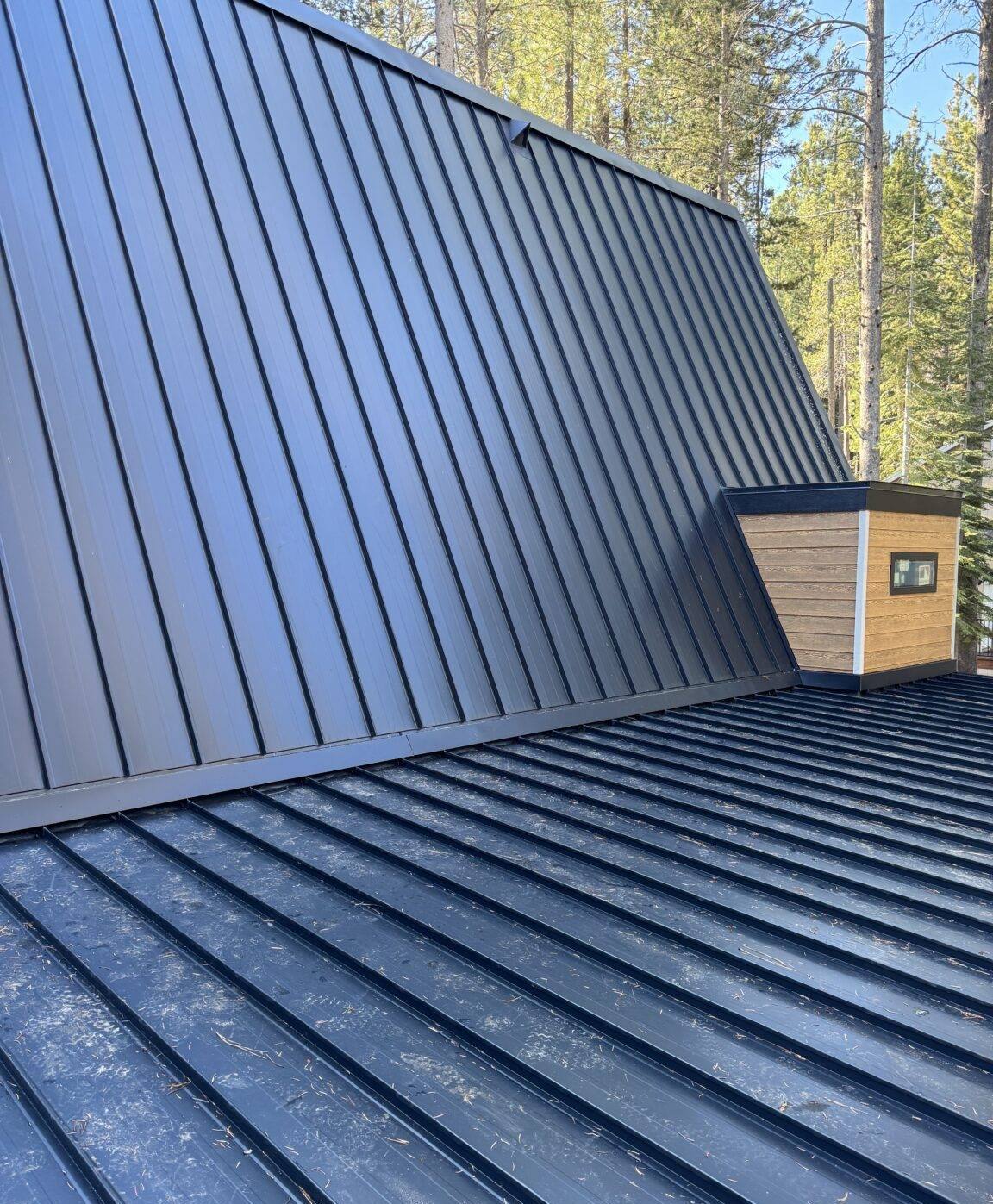
| Standing seam | Concealed clips, no exposed fasteners on the field of the roof | 40–60+ years with correct install | Full re-roofs, homes exposed to driving rain and salt air |
| Exposed-fastener panel | Screws driven through the panel face | 25–40 years, shorter if fasteners aren't maintained | Outbuildings, budget-conscious projects, lower-exposure roof planes |
| Uncoated or thin galvanized | Varies | Shortened significantly near salt air | Not something we recommend for Barkley's exposure |
Standing seam is our default recommendation for most Barkley homes specifically because it has no exposed fasteners for salt air and driving rain to work on over time. Exposed-fastener panels can still be a reasonable choice for detached garages, shops, or lower-slope secondary roofs where budget is the priority — we just make sure the fastener quality and gasket type are upgraded to handle the moisture exposure.
What a Correct Metal Roof Installation Actually Involves
The panels get most of the attention, but the roof's actual performance in this climate comes down to the details underneath and around them. A correct installation includes:
- A synthetic or high-temp underlayment rated for the panel type, lapped and sealed to shed wind-driven rain, not just gravity-fed water.
- Ice-and-water shield or equivalent protection at eaves, valleys, and any low-slope transitions where water can back up.
- Proper solid or spaced sheathing matched to the panel manufacturer's specifications — this isn't optional on standing seam.
- Custom-bent flashing at every wall intersection, chimney, skylight, and roof-to-roof transition, not stock trim pieces forced to fit.
- Fasteners and clips rated for corrosion resistance appropriate to a marine-influenced climate, not generic hardware-store screws.
- Proper attic and roof ventilation, so condensation doesn't build up under the panels from the inside.
- Panel expansion allowed for at clips and trim, since metal moves more with temperature swings than shingles do.
Skipping any one of these doesn't necessarily show up on day one. It shows up two, five, or ten years later as a leak, a rust streak, or a panel that's oil-canned and loose. This is where hiring a crew that's actually installed metal roofing in this specific climate — not just read the manufacturer's instructions — makes the difference.
How We Approach a Barkley Metal Roofing Project
1. On-Site Assessment
We look at the roof's current condition, slope, tree exposure, existing ventilation, and any trouble spots — valleys, chimneys, skylights — before recommending a panel type or finish. A roof shaded most of the day and prone to moss gets different attention than one that's fully exposed to wind off the water.
2. Straightforward Estimate
You get a clear breakdown of panel type, underlayment, flashing work, and any structural or ventilation upgrades needed — not a vague lump sum. If your roof deck needs repair before panels go on, we tell you before the work starts, not after.
3. Correct Installation, in Sequence
Deck repairs and ventilation first, then underlayment and ice-and-water protection, then panels, then custom flashing and trim. We don't shortcut the sequence to save a day, because the sequence is what determines whether the roof actually performs in a Bellingham storm.
4. Cleanup and Walkthrough
Job site cleaned of metal shavings and debris, and a walkthrough so you understand what was done and what maintenance, if any, the roof will need going forward.
Maintenance: What a Metal Roof Actually Needs Here
One of the appeals of metal roofing in Barkley is how little ongoing maintenance it requires compared to shingles, but "little" isn't "none." In this climate we recommend:
- An annual visual check of flashing, sealant points, and any fastener heads (on exposed-fastener panels) for early signs of wear.
- Keeping gutters and valleys clear of needles and leaves, especially under mature tree cover, so water isn't sitting against panel edges.
- Addressing any moss or organic buildup in shaded areas before it holds moisture against seams or trim.
- A prompt look at any scratch or scuff in the finish, since exposed bare metal is where corrosion starts in a salt-air environment.
None of this is heavy maintenance — it's the kind of thing that takes an afternoon once a year — but skipping it entirely is how a well-installed roof loses years off its lifespan.
Why Local Experience in Barkley Specifically Matters
Whatcom County's roofing conditions aren't uniform. A roof in Barkley, with its tree cover and proximity to the water, faces a different combination of shade, moss, and wind exposure than a roof out on more open ground elsewhere in the county. A crew that already works in this neighborhood knows which roof planes tend to hold moss, where wind-driven rain tends to cause problems, and how to sequence a job around Bellingham's wetter months. That local pattern recognition is hard to substitute with a generic install checklist, and it's usually the difference between a roof that performs for decades and one that needs early repairs.
Get a Straightforward, No-Pressure Estimate
If you're weighing metal roofing for your Barkley home, we're happy to walk the roof, talk through what your specific slope, shade, and exposure actually call for, and give you a clear, honest estimate — no pressure, no inflated claims. Use the form below to get started.