 Bellingham Roofing
 South Hill's Siding Problem Isn't Like Other Neighborhoods'
South Hill sits above downtown Bellingham with mature tree canopy, older housing stock, and enough elevation to catch wind coming off Bellingham Bay. That combination is harder on exterior siding than a lot of homeowners realize. Salt-tinged air off the Salish Sea slowly works on fasteners and any exposed wood. Driving rain off the water finds every gap in old caulk and trim. And the same big trees that make South Hill's streets shady and pleasant also mean siding on the north and shaded sides of the house rarely gets a full dry-out between storms — which is exactly what moss and algae need to take hold.
None of this is dramatic on its own. It's cumulative. A house that would hold up fine for decades in a drier, more open location can start showing real siding failure in half that time up here, especially if the original material or installation wasn't suited to a wet marine climate in the first place. That's the case for South Hill specifically, not Bellingham in general — a home two blocks away on a sunnier, more exposed lot can age completely differently.
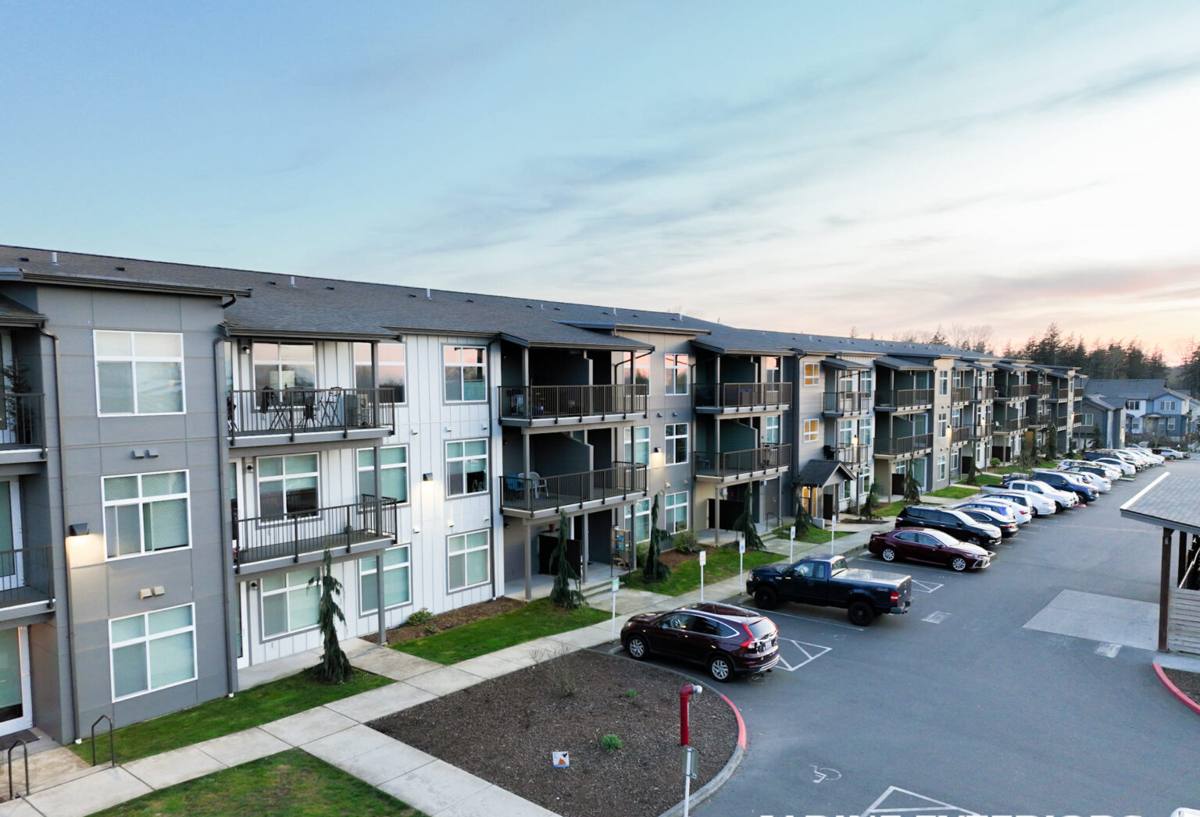
Signs Your South Hill Home Needs Siding Replacement, Not Just a Patch
Homeowners often call us for a repair and end up needing a full replacement once we're up on a ladder. Here's what usually tips that decision:
- Moss or dark algae streaking that comes back within a season or two of being cleaned
- Soft, spongy, or crumbling spots when you press on the siding, especially near the ground, under windows, or where trim meets siding
- Visible cracking, cupping, or warping in wood-based or composite siding boards
- Paint that won't hold — peeling, bubbling, or needing repainting far more often than it used to
- Gaps opening up at seams, corners, or butt joints where caulking has failed
- A noticeable jump in heating bills, which often points to a compromised weather barrier behind the siding, not just the siding itself
- Siding that's original to a home built more than 20-25 years ago, particularly if it's wood, hardboard, or an older composite product
One or two of these on their own might mean a repair. Several at once, or any sign of soft sheathing underneath, usually means the assembly behind the siding has been letting moisture in for a while and patching won't solve the underlying problem.
What a Correct Siding Replacement Actually Involves
Tear-Off and What's Underneath
New siding over damaged sheathing is a common shortcut and a mistake. Once the old siding comes off, we inspect the sheathing, framing, and any window and door flashing for rot or moisture damage. On South Hill, this step matters more than average — homes with heavy shade or years of unmanaged moss growth sometimes have hidden moisture damage that isn't visible from the outside. Any compromised sheathing gets replaced before anything new goes up. Skipping this is how a siding job looks great for a year or two and fails from the inside out.
Weather-Resistive Barrier and Flashing
In a climate that sees sustained rain events, the house wrap and flashing details around windows, doors, and roof-to-wall intersections do as much work as the siding itself. Proper overlap, sealed penetrations, and correctly flashed openings are what actually keep driving rain out — the siding is the visible layer, but it's not the only layer.
Installation to Manufacturer Spec
Fiber cement siding has specific nailing patterns, clearances, and joint treatment requirements. Fastening too tight, leaving insufficient clearance at grade or roof lines, or caulking joints that shouldn't be caulked are common installation errors that shorten the life of an otherwise good product. Correct installation is what turns a quality material into a durable exterior — not the material alone.
Why We Install Only James Hardie Fiber Cement
We don't install vinyl, LP SmartSide, Cemplank, Allura, or bare cedar or primed spruce siding, and that's a deliberate standard, not a limitation of what we're capable of installing. Each of those products has real strengths, but each also has a trade-off that we don't think holds up well against South Hill's specific mix of salt air, sustained rain, and shade-driven moss:
- Vinyl is affordable and low-maintenance, but it can warp in temperature swings, fade over time, and doesn't offer the same fire resistance or impact durability as fiber cement.
- LP SmartSide and other engineered wood products perform well when maintained closely, but as wood-based products they depend more heavily on paint film integrity and clean water management to resist moisture intrusion over time.
- Bare cedar or primed spruce looks great initially but requires a real maintenance commitment — repainting, resealing, and moss management — that most homeowners underestimate until it's overdue.
James Hardie fiber cement is non-combustible, dimensionally stable in wet-dry cycling, and comes factory-finished with ColorPlus technology, which means the color is baked on rather than field-painted and holds up significantly longer against fading and peeling. Hardie also engineers specific product lines (HZ5 being the relevant one for Pacific Northwest marine climates) for how a region actually behaves — freeze-thaw cycling, moisture exposure, and humidity — rather than shipping one generic product everywhere. Combined with a strong transferable warranty, that's the standard we build South Hill jobs around.
Cost Factors for South Hill Siding Replacement
Every quote is specific to the house, but these are the variables that most often move the price up or down on South Hill projects:
| Factor | Why It Matters |
|---|---|
| Home age and sheathing condition | Older South Hill homes more often need sheathing repair or replacement discovered during tear-off |
| Lot slope and access | Hillside lots and tight side-yards can require more staging, scaffolding, or hand-carrying of material |
| Tree cover and moss history | Heavier shade often means more hidden moisture damage behind old siding, found once tear-off begins |
| Trim and architectural detail | Homes with more corners, dormers, and trim take longer to flash and finish correctly |
| Current siding material | Some materials (like old asbestos-cement or multiple layered re-sides) are more involved to remove safely |
| Story count and elevation | Multi-story homes on steep South Hill lots require more equipment and safety setup |
We walk through all of these on-site during the estimate, so what you see in writing reflects your specific house, not a generic per-square-foot number.
Our Process, Start to Finish
Assessment and Estimate
We walk the exterior, check for soft spots and moisture signs, note trim and detail work, and give you a written estimate based on what we actually find — not a phone-quote guess.
Prep and Protection
Landscaping, walkways, and anything near the work area get protected before tear-off starts. On tighter South Hill lots this planning step matters more than on wide-open properties.
Tear-Off and Repair
Old siding comes off, sheathing and framing get inspected, and any damage gets repaired and documented before new material goes up.
Installation
Weather-resistive barrier, flashing, and Hardie siding go on to manufacturer specification, with attention to the clearances and joint details that determine how the job performs over the next several decades, not just how it looks on installation day.
Final Walkthrough
We walk the finished job with you, point out what was done, and answer questions about care going forward before we consider the job complete.
Why Hiring a Crew That Already Works South Hill Matters
South Hill isn't a uniform tract of identical houses — it's a mix of home ages, roof lines, lot slopes, and sun exposure that changes block to block. A crew that regularly works this neighborhood has already seen how a shaded north wall on a hillside lot behaves differently than a sun-exposed south wall two streets over, and adjusts detailing accordingly instead of treating every house the same. That local pattern recognition — knowing where moisture problems tend to hide on these lots, how access typically works on the steeper streets, and what Whatcom County's marine climate actually does to an exterior over ten or twenty years — is the difference between a siding job that looks good at handoff and one that still looks good a decade later.
If your South Hill home is showing moss that won't stay gone, soft spots near the base of the walls, or siding that's simply reached the end of its service life, we're glad to take a look. We'll give you a straightforward, no-pressure assessment of what's actually going on and what it would take to fix it right — use the form below to get started.