 Bellingham Roofing
 Why Decks in the Puget Area Take More Punishment Than the Brochure Suggests
A deck in Puget doesn't live an easy life. Between the salt-laden air coming off the water, the long stretches of driving rain that define a Whatcom County winter, and a moss season that can start in October and not let go until May, the wood and hardware under your feet are working harder than they would almost anywhere inland. Most deck failures we see in this area aren't dramatic structural collapses — they're slow problems. A ledger board that's been quietly rotting behind the siding. Fasteners that corroded from the inside out. A surface so covered in algae that it's genuinely dangerous to walk on in socks. None of that shows up on day one. It shows up in year four or five, after a builder who wasn't thinking about this specific climate cut a corner that doesn't matter in Arizona but matters a great deal here.
A correctly built deck in this part of Bellingham isn't a different product than a deck built anywhere else — it's the same deck, built with the moisture, salt, and shade this location actually gets factored into every decision, from the ledger flashing to the fastener bin.
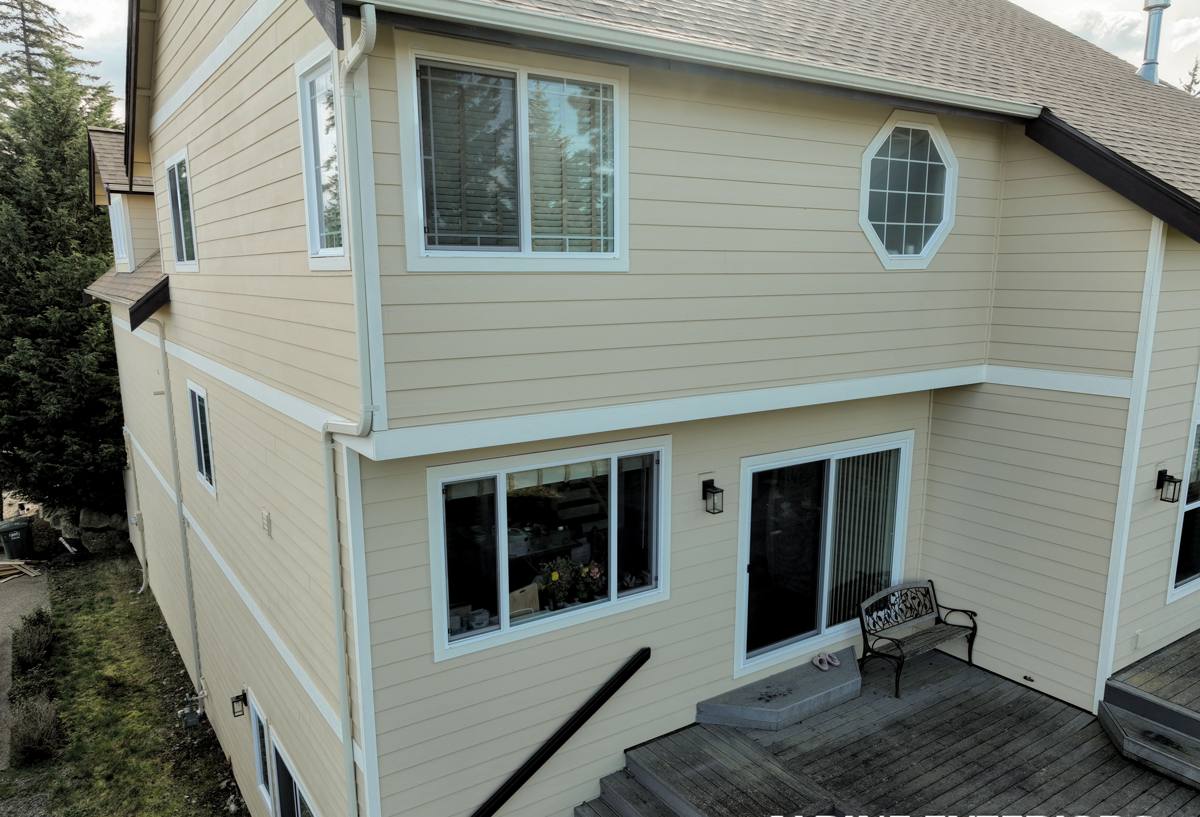
What a Correctly Built Deck Requires in This Climate
Ledger Board Attachment and Flashing
The ledger board — the piece that bolts your deck to the house — is where most long-term deck problems start. If water gets behind it, it doesn't dry out quickly in a climate that stays damp for months at a time, and it rots the band joist and sheathing behind your siding before anyone notices. A correct installation uses proper flashing that directs water out and away from the house, not just a bead of caulk and hope. We treat this as a non-negotiable step, not an upgrade.
Joist and Beam Protection
Untreated cut ends and exposed joist tops absorb water and hold it, which is exactly what encourages rot and, eventually, the kind of moss and algae growth that spreads onto the decking itself. Self-adhering joist tape over the tops of joists and beams, and sealant on every cut end, keeps water from soaking into the framing in the first place. It's a small material cost relative to the whole project and it's one of the easiest things for a crew to skip when they're moving fast.
Choosing Decking Material for Salt Air and a Long Moss Season
There's no single "best" decking material — there's a best material for your budget, your maintenance appetite, and how much shade and moisture your specific lot gets. Here's how the common options actually compare once you factor in this climate:
| Material | Upfront Cost | Moss/Algae Resistance | Maintenance | Typical Lifespan Here |
|---|---|---|---|---|
| Pressure-treated pine | Lowest | Poor without regular cleaning | Stain/seal every 1-2 years | 10-15 years |
| Cedar | Moderate | Fair — naturally rot-resistant, still grows algae if shaded | Oil or stain every 1-2 years | 15-20 years |
| Composite (capped) | Highest | Good — but can still film over in deep shade | Periodic wash, no staining | 25-30 years |
| Composite (uncapped) | Mid-high | Fair — more porous surface than capped boards | More frequent washing | 15-20 years |
In heavily shaded, damp yards — common closer to the water and under mature tree cover — capped composite tends to earn its higher price back in reduced maintenance. On sunnier, more open lots, a well-maintained wood deck holds up fine and costs less to build. We'll walk your specific site with you and tell you honestly which category fits before you spend money on the wrong one.
Framing, Footings, and Whatcom County Code
Deck footings here need to be set below the local frost line and sized to the loads they're carrying — this isn't optional and it isn't a place to guess. Whatcom County and the City of Bellingham both require permits and inspections for most new decks, particularly anything attached to the house or built more than a modest height off grade. That process exists for a reason: an under-sized footing or an unpermitted structural change is exactly the kind of thing that turns into a problem when you go to sell the house. We pull permits as a standard part of the job, not an add-on, and we build to pass inspection the first time.
Post bases matter here too. Wood posts set directly in or on wet concrete wick moisture up into the grain and rot from the base first. A raised, corrosion-resistant post base keeps the wood off standing water and out of direct ground contact, which matters more in a climate that rarely gives a deck a chance to fully dry out between storms.
A Quick Look at What Inspectors Check
- Footing depth and size relative to the deck's span and loads
- Ledger board attachment and flashing at the house connection
- Joist hanger type and fastener size at every connection
- Guard and stair railing height, spacing, and attachment
- Proper post-to-beam and beam-to-footing connections
Designing Out Moss and Algae Before They Start
You can't stop moss spores from landing on a deck in this climate, but you can build in a way that doesn't invite them to stay. Airflow underneath the deck matters — skirting that seals the underside completely traps humidity against the joists and encourages exactly the growth you're trying to avoid. Board spacing, surface texture, and orientation relative to sun exposure all affect how quickly a deck dries out after a rain event, and how quickly moss gets a foothold if it doesn't. On heavily shaded lots, we'll sometimes recommend a slightly more open rail design or a gap in nearby landscaping to get a few more hours of sun and airflow onto the deck surface. It's a design conversation, not an afterthought.
Fasteners and Hardware: The Detail Most Contractors Skip
Most treated lumber sold today uses a chemical formulation that's corrosive to standard galvanized fasteners over time — combine that with salt air and the corrosion clock runs faster, not slower. Fasteners, joist hangers, and structural screws all need to be rated for contact with treated lumber and coastal exposure, which in practice means stainless steel or a heavy-duty coated fastener system, not whatever's cheapest at the box store. This is one of those details that costs a few hundred dollars more on a typical project and is completely invisible once the decking is down — until the day a corroded hanger fails. We don't treat it as optional.
Railings and Stairs Built to Code, Not Just to Look Right
Guard rail height, baluster spacing, and stair rail requirements are set by code for a reason — they're the difference-maker in a fall. Beyond the safety code minimums, in a climate this wet we pay attention to how the railing itself sheds water: horizontal top caps that pool water invite the same moss and rot problems as a poorly drained deck surface. A railing system built for this climate looks good and dries out fast after a storm.
Our Process for a Puget-Area Deck Project
We keep the process straightforward because a deck project shouldn't feel like a mystery:
- Site visit and assessment — we look at your existing structure (if replacing a deck), sun exposure, drainage, and how the new deck will tie into your house.
- Design and material conversation — an honest walk-through of decking options, cost ranges, and maintenance trade-offs based on your specific lot.
- Permit and engineering — we handle the permit submission and any engineering sign-off Whatcom County or the City of Bellingham requires.
- Build — footings, framing, ledger flashing, decking, and railings, built to the standards above rather than the minimum code allows.
- Final inspection and walkthrough — we pass inspection and walk the finished deck with you before calling it done.
Why a Crew That Already Works in Puget Matters
A crew that's built decks around Puget before already knows which lots hold water, which yards stay shaded most of the day, and how the local permit and inspection process actually runs — not in theory, but in practice. That familiarity shows up in fewer surprises during the build and a deck that's designed for the site it's actually sitting on, not a generic template. It also means when you call with a question two years from now, you're talking to a crew that remembers your project and still works in your neighborhood.
Maintenance That Actually Extends the Life of Your Deck
A well-built deck still needs some upkeep in this climate — the good news is that most of it is simple and infrequent if the deck was built right in the first place.
- Sweep debris and standing leaves off the surface regularly, especially in fall
- Rinse or lightly scrub the surface once or twice a year to knock back early algae growth
- Re-stain or re-oil wood decking every 1-2 years depending on sun exposure
- Check the ledger flashing and any visible fasteners for rust or movement annually
- Keep nearby plantings trimmed back to allow airflow and some sun onto the deck
- Clear gutters and downspouts near the deck so runoff isn't draining directly onto or under it
If you're planning a custom deck in the Puget area and want an honest read on materials, cost, and what your specific lot needs, we're happy to walk the site and put together a free, no-pressure estimate — just fill out the form below.