 Bellingham Roofing
 Why Silver Beach Siding Has to Work Harder
Silver Beach sits along Lake Whatcom on Bellingham's southeast side, and that setting creates a siding environment that's different from a typical open-lot subdivision. Many homes here sit under mature tree canopy, on sloped lots, with limited direct sun on at least one elevation. That combination of shade, lake humidity, and Whatcom County's long wet season means siding has to shed water fast and dry out even faster — and a lot of exterior products simply don't hold up to that cycle year after year.
Add in the broader Pacific Northwest marine climate — the salt-tinged, moisture-heavy air that moves inland off Bellingham Bay and the Sound — and you get a coastal-adjacent dampness on top of the lake's own microclimate. Driving rain off the water, condensation on cool mornings, and a moss season that can run eight or nine months out of the year all put steady pressure on whatever material is on the wall.
This page is specifically about fiber cement siding for Silver Beach homes: what the neighborhood's conditions demand, what a correct installation looks like here, and why local experience with this exact kind of lot matters more than it does on a flat, sunny street across town.
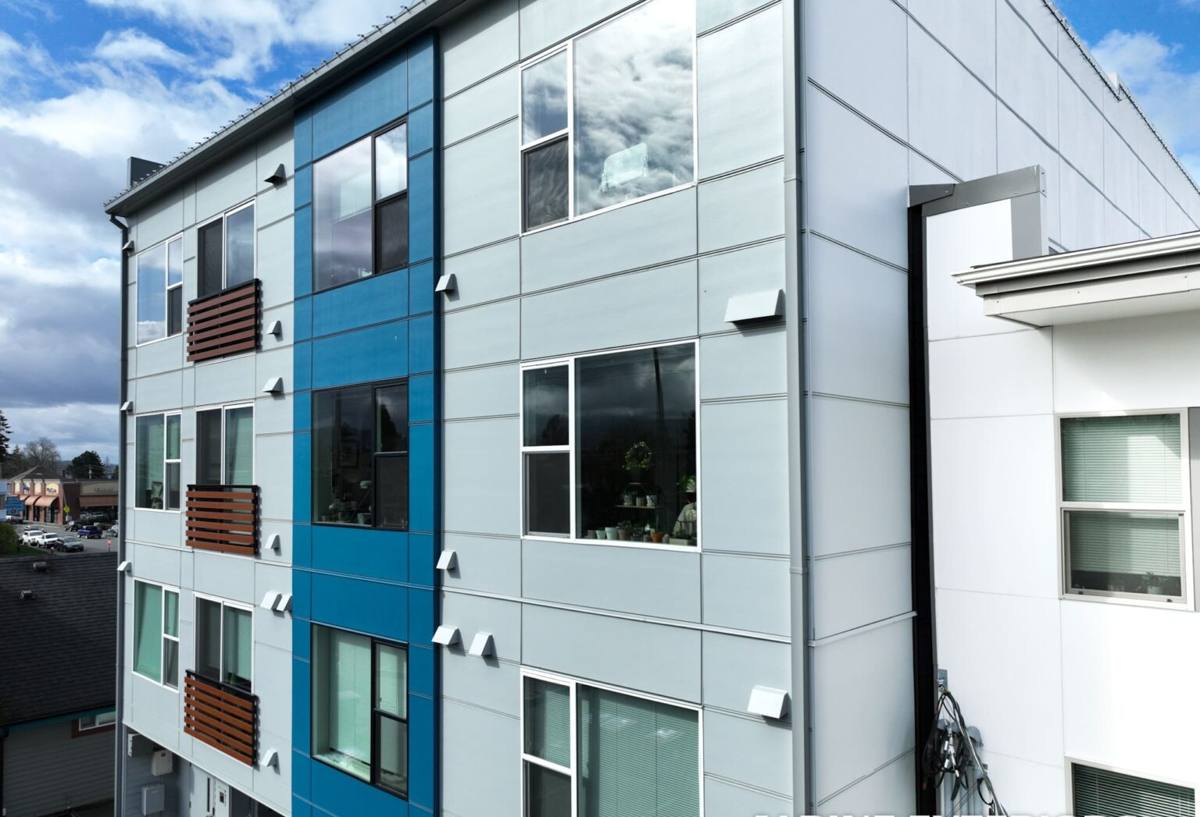
What Shade and Lake Moisture Do to Siding Over Time
Slow-Drying Walls
Wood-based siding products — cedar, primed spruce, and engineered wood products like LP SmartSide — depend on regular drying cycles to stay stable. On a shaded Silver Beach lot, a north- or east-facing wall might not see direct sun for most of the day. Rain sits longer, seams stay damp longer, and any point where water gets behind the cladding has more time to do damage before the wall dries out again.
Moss and Organic Growth
Moss doesn't just grow on roofs and driveways here — it colonizes damp, shaded siding too, especially at trim joints, under eaves, and anywhere debris collects. Beyond the cosmetic issue, moss holds moisture against the surface, which accelerates rot in wood substrates and can degrade paint and caulking faster than it would on a drier, sunnier elevation.
Freeze-Thaw and Swelling Cycles
Whatcom County doesn't get brutal winters, but it does get repeated cycles of saturation, cold snaps, and thaw. Materials that absorb water and swell — untreated wood, some composites — go through more expansion and contraction on a damp lake lot than they would somewhere drier, and that repeated movement is what eventually opens up joints, cracks paint film, and loosens fasteners.
Why Fiber Cement Is the Right Material Here
Fiber cement is a blend of cement, sand, and cellulose fiber, engineered specifically to resist the freeze-thaw, moisture, and rot problems that wood and wood-composite sidings struggle with. We install James Hardie fiber cement exclusively — we don't install LP SmartSide, vinyl, Cemplank, Allura, primed spruce, or cedar — and on a neighborhood like Silver Beach, the reasoning is straightforward:
- Fiber cement doesn't rot, and it's non-combustible, which matters on wooded, tree-shaded lots.
- James Hardie's HardieZone system engineers products for specific climate demands — the HZ5 formulation used in this region is built for damp, temperate marine conditions like ours, not a generic national spec.
- The factory-applied ColorPlus finish resists the fading and moss-staining that plague field-painted wood siding in shaded, damp settings.
- It holds paint and caulk lines longer because the substrate itself isn't swelling and shrinking with every wet-dry cycle.
We're not going to tell you other siding products are junk — vinyl, LP, and cedar all have legitimate uses. But on a shaded, lake-adjacent, high-moisture lot like the ones common in Silver Beach, we've made a professional call: fiber cement is the material we're willing to put our name behind, and James Hardie is the manufacturer whose product line, finish system, and warranty structure we trust to back that up.
What a Correct Installation Involves
Fiber cement siding is only as good as its installation. A rushed or generic install — the kind that ignores local conditions — will fail early even with the right material. On Silver Beach jobs specifically, a few details matter more than they would on a drier, sunnier site:
Rainscreen Gap
A drainage gap between the siding and the weather-resistive barrier lets any water that gets behind the cladding drain and dry instead of sitting against the sheathing. On shaded walls that don't get much sun exposure to help dry things out passively, this gap isn't optional — it's the main defense against trapped moisture.
Flashing and Water Management
Every window, door, and horizontal trim transition is a place water can get behind the siding. Correct head flashing, kick-out flashing at roof-wall intersections, and proper lapping (always working top-down, never relying on caulk alone) are what actually keep a wall dry through a Whatcom County winter.
Fastening and Clearances
James Hardie specifies fastener type, spacing, and minimum clearance from grade, roof lines, and other surfaces for good reason — get those wrong and you create entry points for moisture or stress points that crack panels. On sloped Silver Beach lots, grade clearance is worth double-checking, since regraded or landscaped areas near a foundation can end up closer to the siding than the plans intended.
Caulking and Joint Treatment
Caulk is a backup, not a primary water barrier — but where it's used, it needs to be a product rated for the assembly and applied to manufacturer spec. In a shaded, damp environment, cheap or misapplied caulk fails faster and lets moisture in behind panels that would otherwise be fine.
Our Process on Silver Beach Jobs
Because we already work in this neighborhood, our process starts with an honest look at the specific conditions of your lot rather than a generic quote sheet.
- On-site assessment. We look at sun exposure by elevation, existing moss or moisture staining, current siding condition, and any signs of past water intrusion around windows, trim, or the foundation line.
- Substrate check. Before any new siding goes up, we check the sheathing underneath for rot or soft spots — common on older homes where wood siding has been failing quietly behind the surface.
- Removal and prep. Old siding, trim, and any damaged sheathing come off and get replaced as needed before the weather-resistive barrier and rainscreen system go on.
- Installation to spec. James Hardie panels or lap siding go up with correct fastening, flashing, and clearances — not shortcuts to save a day of labor.
- Finish and cleanup. Trim, caulking, and touch-up finish work are completed, and the site is cleaned of debris and old material.
Common Problems We Find on Silver Beach Homes
Because so many homes in this area were built or last re-sided years ago under different conditions — smaller trees, less shade, different expectations — we regularly find the same handful of issues when we get up close:
| What We Find | Why It Happens Here |
|---|---|
| Rot at bottom courses and trim | Splashback and slow drying on shaded, damp foundation lines |
| Moss buildup at butt joints and under eaves | Shade plus limited airflow keeps those spots wet longer |
| Peeling or chalking paint on wood siding | Repeated wet-dry swelling breaks the paint film faster than on drier lots |
| Warped or cupped boards | Wood-based siding absorbing and releasing moisture unevenly across a shaded elevation |
| Soft sheathing discovered during removal | Slow, hidden water intrusion behind aging siding over many wet seasons |
Living With Fiber Cement in a Moss-Prone Setting
Fiber cement dramatically reduces maintenance compared to wood, but no siding is entirely maintenance-free on a shaded lake lot. A yearly rinse-down to clear moss, pollen, and organic debris — particularly on north-facing walls and anywhere close to overhanging branches — keeps the ColorPlus finish looking right and prevents buildup from holding moisture against the surface. Keeping gutters clear and trimming back vegetation that shades or brushes against the siding also goes a long way, since airflow is one of the best natural defenses against moss in a spot like this.
What to Expect on Cost
Fiber cement siding costs vary by home size, current condition, trim complexity, and how much removal and repair work is needed before installation — on a Silver Beach home with hidden rot or a full tear-off, that prep work can be a meaningful share of the project. As a broad, honest range, homeowners in this region typically see fiber cement siding projects land somewhere in the moderate-to-upper range of exterior remodeling costs, with the final number driven mostly by square footage, trim detail, and substrate repairs rather than the siding material itself. The only way to get a real number is a walk-through of your specific home.
Why a Crew That Already Works Silver Beach Matters
A lake-adjacent, tree-shaded, sloped-lot neighborhood is not the same job as a flat, sunny street, and a crew that mostly works those easier sites can miss things here — inadequate drainage planning, missed flashing details on a shaded wall, or underestimating how much prep a damp, moss-affected wall actually needs. Working in Bellingham and around Whatcom County regularly means we've seen how homes in this specific setting age, what fails first, and what a correct rainscreen and flashing plan needs to look like on a lot like yours before we ever pick up a saw.
What to Look For in a Contractor Here
- Experience with fiber cement installation specifically, not just siding in general
- A clear explanation of how they'll handle drainage and flashing on shaded elevations
- Willingness to check and address substrate condition before covering it back up
- Straight answers about product choice and why they install what they install
- Familiarity with the local permitting and inspection process in Bellingham
If you're weighing a siding replacement on a Silver Beach home, we're happy to take a look, walk the exterior with you, and give you a straightforward, no-pressure estimate — no hard sell, just an honest read on what your home actually needs. Use the form below to get started.