 Bellingham Roofing
 Edgemoor sits close to the water, wrapped in mature tree cover on sloped, shaded lots — which makes it one of the more beautiful places to own a home in Bellingham, and one of the tougher places to keep a roof in good shape. Salt-laden air off the bay, long stretches of driving rain, and shade-grown moss all work on a roof at the same time, year after year. A repair here has to account for all three, not just patch the spot that's leaking.
What Edgemoor's Location Does to a Roof
Most roofing wear is generic — sun, rain, age. Edgemoor adds a few things on top of that. Homes closer to the shoreline get airborne salt that settles on metal flashing, fasteners, and gutter hardware, quietly accelerating corrosion in ways an inland Bellingham roof doesn't experience. The tree canopy that makes the neighborhood so pleasant also means roofs get less direct sun and wind to dry out after storms, so moisture and organic debris sit longer. Add Whatcom County's long wet season and you get a roof that's dealing with three compounding stresses instead of one. None of this means an Edgemoor roof is doomed — it means the repair work has to be matched to the actual conditions, not treated like any other job in town.
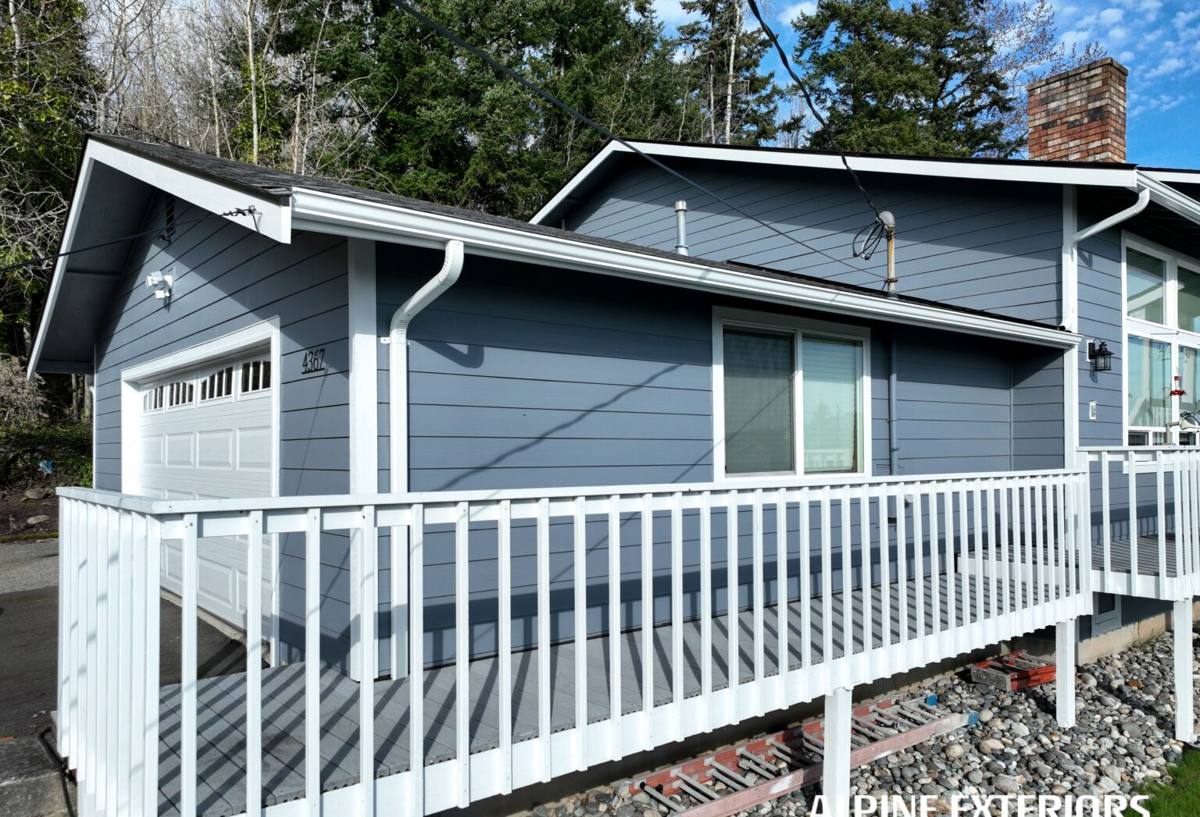
The Real Culprits: Salt Air, Driving Rain, and Moss
Salt Air and Metal Fatigue
Salt accelerates corrosion on exposed fasteners, drip edge, and flashing — the metal components that keep water out of vulnerable joints. On a roof further from the water, cheaper galvanized hardware might last the life of the roof. Closer to the bay, that same hardware can start rusting and losing its seal years earlier. Repairs done without accounting for this often fail again within a few seasons, not because the workmanship was bad, but because the wrong-grade material was used for the environment.
Driving Rain and Wind-Driven Water
Pacific Northwest storms rarely fall straight down. Wind pushes rain sideways and up under laps, shingles, and flashing edges that would stay dry in a calmer climate. That's why leaks in this area often show up at valleys, wall-to-roof transitions, and around penetrations like vents and chimneys rather than in the open field of the roof — those are the spots where wind-driven water finds a way in if the detailing isn't done right.
Moss and Shade
Tree cover keeps roof surfaces damp and shaded longer after every rain, which is exactly what moss needs to establish. Moss isn't just cosmetic — as it grows, it lifts shingle edges, holds water against the roofing material, and traps needles and leaf litter that clog drainage paths. Left unaddressed, a mossy roof section deteriorates faster than a clean one nearby, even if both are the same age.
Signs an Edgemoor Roof Needs Repair, Not Just a Watch-and-Wait
Some issues are worth calling about right away; others are fine to monitor for a season. Here's a practical way to sort them:
- Water stains on ceilings or in the attic, especially near valleys, chimneys, or where an addition meets the main roofline
- Visible moss mats, not just green tinge — thick moss holds moisture against the roof surface
- Granules collecting in gutters or at downspout outlets (a sign of shingle wear, not just normal shedding)
- Rusty streaks below flashing, vents, or fasteners
- Shingles that are curling, cracked, or missing after a windstorm
- Soft or spongy decking felt underfoot near roof edges
- Daylight visible through the roof deck from inside the attic
- Gutters that overflow during heavy rain even when they aren't full of debris
Any one of these on its own might just need monitoring. Two or three together, especially near a valley or wall intersection, usually means active water intrusion that's worth diagnosing properly.
What a Correct Roof Repair Actually Involves
Diagnosing the Real Source, Not Just the Stain
Water travels before it shows itself. A stain on a bedroom ceiling might trace back to a flashing failure several feet away, following a rafter or sheathing seam before dripping down. A repair that just patches the visible spot without tracing the actual entry point often looks fine for a few months and then fails again in the next heavy rain. Correct diagnosis means getting on the roof, checking the attic side where possible, and following the water path — not guessing from the ground.
Flashing and Fasteners Built for Salt Air
Given Edgemoor's proximity to the water, we lean toward corrosion-resistant flashing and fastener choices in repair work — stainless or higher-grade coated materials over bare galvanized where budget allows, particularly on homes with a clear line of sight to the bay. It costs a little more up front. It also means the repair isn't undone by the same corrosion that likely contributed to the original failure.
Matching Materials, Not Just Patching
A repair should tie into the existing roofing system cleanly — matching shingle profile and color where visible, using compatible underlayment, and re-lapping courses correctly so water sheds the way the original installation intended. A mismatched patch can shed water fine for a while and still create a weak point where two different materials meet.
Repair or Replace? Weighing the Factors
Not every roof issue in Edgemoor calls for a full replacement, and we won't push one when a proper repair will hold. The table below outlines how we think through it.
| Factor | Leans Toward Repair | Leans Toward Replacement |
|---|---|---|
| Roof age | Under 15-20 years, materials still sound | Near or past expected lifespan for the material |
| Extent of damage | Isolated to one section, valley, or penetration | Widespread wear, moss, or granule loss across the roof |
| Deck condition | Solid sheathing under the affected area | Soft, rotted, or water-stained decking in multiple areas |
| Leak history | First occurrence or clearly traceable cause | Repeated leaks in different spots over time |
| Moss/organic buildup | Light growth, recently cleaned | Heavy, long-established moss affecting shingle integrity |
When the damage is contained and the roof deck underneath is sound, a well-executed repair is the honest recommendation — both for your budget and because there's no reason to replace a roof that has years of service left in it.
How Our Repair Process Works
We keep the process straightforward, because homeowners dealing with a leak don't need extra steps between them and a dry roof:
- We inspect the roof and, where accessible, the attic to trace the actual water path rather than just the visible symptom.
- We explain what we found in plain terms — what's causing it, what it will take to fix, and whether repair or replacement makes sense for your roof's condition.
- We give you a clear, written scope and price before any work starts, with no pressure to upsell into a full replacement if a repair is the right call.
- We complete the repair using materials suited to Bellingham's marine climate, including corrosion-resistant hardware where the location warrants it.
- We clean up thoroughly and walk you through what we did, so you know exactly what was repaired and why.
Preventing the Next Repair: Moss and Debris Management
Given how much shade and moisture Edgemoor's tree cover produces, ongoing maintenance matters more here than it does on an open, sunny lot. A repair fixes the current problem; a little upkeep afterward keeps the next one from starting.
- Keep gutters and valleys clear of needles and leaf litter, especially heading into fall and winter
- Trim back overhanging branches where practical to reduce shade and debris drop onto the roof
- Have moss growth treated and physically removed rather than just power-washed, which can damage shingle granules
- Check flashing and fastener condition every couple of years, particularly on homes closer to the water
- Address small leaks and stains promptly rather than waiting for them to worsen through another wet season
Why a Crew That Already Works Edgemoor Matters
A roofer who mainly works drier, more open parts of Whatcom County can still do competent work, but they may not default to the corrosion-resistant hardware or moss-aware detailing that Edgemoor's setting calls for — because they don't see it every day. A crew that regularly repairs roofs in this kind of shaded, near-water environment recognizes the failure patterns quickly: where wind-driven rain tends to find its way in, which flashing details hold up under salt exposure, and how much moss buildup is a maintenance issue versus a sign of deeper damage. That familiarity usually means a faster, more accurate diagnosis and a repair that's built for the conditions it actually has to survive.
If you're dealing with a leak, stained ceiling, or a roof that's showing its age under Edgemoor's tree canopy, we're happy to take a look. Fill out the form below for a free, no-pressure estimate — we'll tell you honestly whether it's a repair or something bigger, and what it will take either way.