 Bellingham Roofing
 Roof Repair in Birchwood: A Neighborhood That Wears On Roofs
Birchwood sits inside Bellingham, in Whatcom County, which means every roof here lives under the same weather system that shapes roofing across this whole stretch of the Salish Sea coastline. Moist, salt-tinged air moves in off the bay, rain arrives at an angle as often as it falls straight down, and mild year-round temperatures keep moss and algae growing on shaded roof planes for most of the calendar year. None of that is unusual for this part of Washington, but it does mean a roof repair that would hold up fine somewhere drier or more inland can fail here in a handful of seasons if it wasn't done with this specific climate in mind.
We do roof repair work throughout Birchwood and the surrounding Bellingham neighborhoods, and we treat repair as its own discipline, not a scaled-down version of a full roof replacement. A repair has to solve the actual cause of a leak or damaged area, tie in cleanly with the surrounding roofing, and hold up to the same driving rain and moss pressure as the rest of the roof around it. Get any of that wrong and you're paying for the same repair twice.
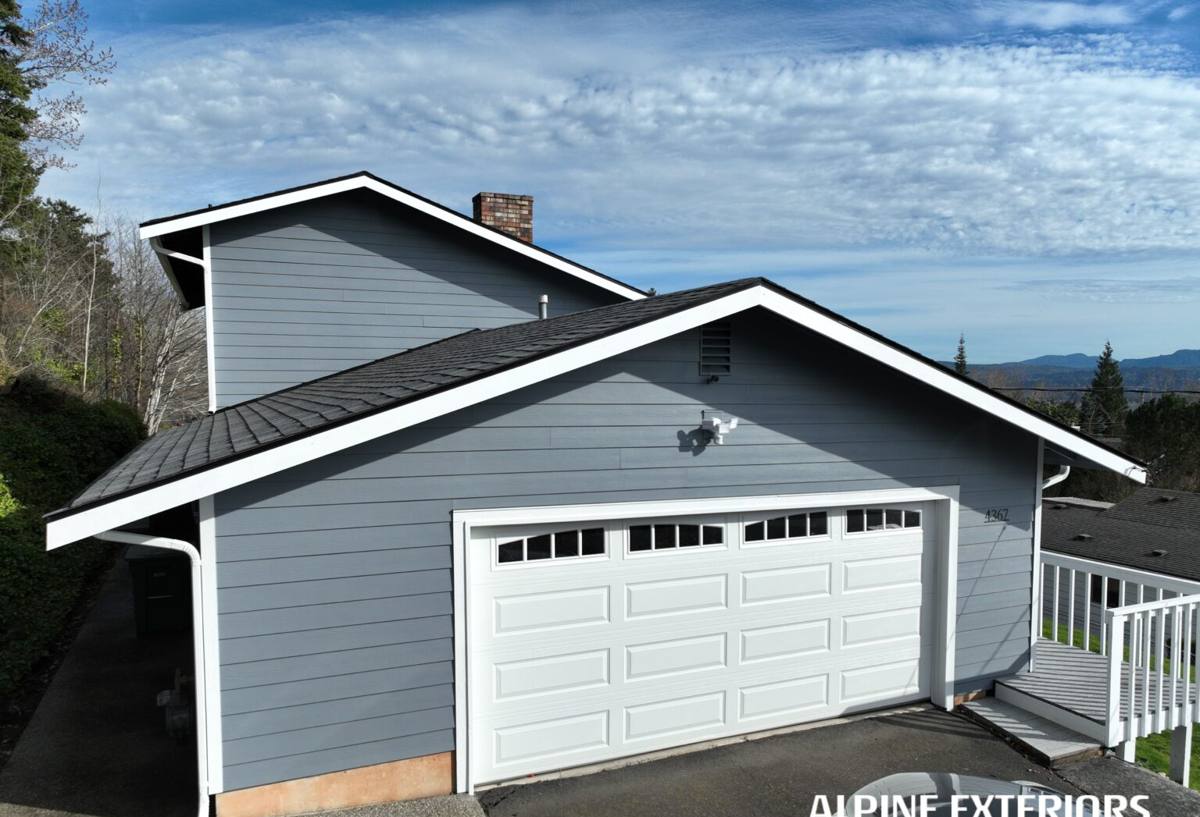
What Birchwood's Climate Does to a Roof
Salt Air and Slow Corrosion
Homes in Birchwood sit close enough to Bellingham Bay that salt-laden air is a constant, low-level presence, not just something that shows up during a storm. Over years, that steady exposure works on exposed fasteners, flashing, and any metal component that isn't rated for a marine-influenced environment. It's a slow kind of damage — a nail head rusting, a flashing seam corroding thin — and it's often invisible until it's already let water in.
Driving Rain and Flashing Failures
Rain in this part of Whatcom County doesn't just fall down onto a roof, it gets pushed sideways by wind off the water. That means water finds its way into valleys, around chimneys and vent pipes, and under flashing edges that would stay dry in a calmer climate. Most of the leak calls we run in Birchwood trace back to a flashing detail somewhere, not to the shingles themselves failing outright.
A Long Moss Season
Shaded roof planes, north-facing slopes, and anything under mature trees hold moisture for most of the year in this climate. That's exactly what moss needs to establish, and once it does, it holds water against the roofing material, works under shingle tabs and shakes, and can lift or loosen roofing faster than sun-exposed sections ever would. A roof repair that doesn't account for regrowth is a repair that's going to need revisiting.
Common Roof Repair Calls We See in Birchwood
Not every roof problem in this neighborhood looks the same, and the right fix depends on what's actually causing it. Here's what we run into most often, and how it typically gets addressed.
| What Homeowners Notice | Usual Cause Here | Typical Fix |
|---|---|---|
| Ceiling stain near an exterior wall or chimney | Failed or corroded flashing letting wind-driven rain in | Remove and rebuild the flashing detail, replace any damaged decking underneath |
| Moss returning quickly after cleaning | Shaded roof plane holding moisture, insufficient airflow | Moss removal plus targeted repair of any lifted or damaged shingles it left behind |
| Granules collecting in gutters | Aging asphalt shingles nearing the end of their service life in this climate | Localized shingle replacement, or a broader conversation if it's spread across multiple slopes |
| Visible daylight or drafts in the attic | Gap in the roof deck or a fully failed section of underlayment | Deck repair and underlayment replacement in the affected area |
| Rusted or lifted metal flashing | Salt-air corrosion on fasteners or thin-gauge metal | Replacement with corrosion-resistant flashing rated for coastal exposure |
Repair or Replace? How We Make That Call
Most roof problems in Birchwood don't require a full tear-off, and we don't default to recommending one. What actually determines the answer is the age of the roof, how much of the surface is affected, whether the underlying deck has moisture damage, and how many times the roof has already been patched. A localized leak on a roof that's otherwise sound is almost always a straightforward repair. A roof nearing the end of its rated life, with moss-related wear spread across several slopes or a deck that's gone soft in more than one spot, is usually better addressed honestly with a replacement conversation instead of another round of patchwork that won't hold. We'll walk you through exactly what we find on your roof and why we're recommending what we're recommending, rather than steering you toward whichever option is easier to sell.
What a Correct Roof Repair Actually Involves
A roof repair that actually lasts in this climate goes past just covering the visible damage. On every repair call in Birchwood, that means:
- Tracing the leak or damage back to its actual source, not just patching where the water showed up inside the house
- Removing enough surrounding material to inspect the roof deck underneath for hidden moisture damage
- Rebuilding flashing at valleys, chimneys, vent pipes, and roof-to-wall transitions with corrosion-resistant materials suited to salt-air exposure
- Matching replacement shingles or roofing material as closely as reasonably possible so the repair blends and performs consistently with the surrounding roof
- Checking attic ventilation near the repair area, since trapped moisture is often part of why the original section failed
- Clearing moss and debris from the surrounding roof plane so the repair isn't undermined by the same growth that caused the original problem
Skipping any of those steps is how a repair turns into a callback. It's also how a fifteen-minute patch job ends up costing more over three years than doing it correctly the first time.
Our Roof Repair Process, Start to Finish
- Inspection. We get on the roof, not just in the attic, and look at the actual condition of the shingles, flashing, decking, and ventilation around the reported problem area.
- Diagnosis. We identify the real source of the leak or damage, which is often several feet from where water actually shows up inside the house, and explain what we found in plain terms.
- Written scope and estimate. You get a clear description of what needs to happen and what it costs before any work starts, not a verbal estimate that shifts once the tarp comes off.
- Repair. We do the work, including any deck or underlayment replacement the inspection turned up, and we don't stop at the visible symptom if the cause extends further.
- Final check. We confirm the repair ties in cleanly with the surrounding roofing and walk you through what we did and what to watch for going forward.
Signs Your Birchwood Roof Needs a Repair Call Now
- Moss buildup in valleys or on shaded slopes that keeps coming back after cleaning
- Curling, cupping, cracked, or missing shingles, especially after a windstorm
- Water staining on interior ceilings or walls near the roofline or a chimney
- Granules collecting in gutters or at the base of downspouts
- Flashing that looks lifted, rusted, or missing sealant around vents or chimneys
- Soft spots or noticeable give when the roof deck is walked on
- Daylight visible through the roof deck when viewed from inside the attic
Any single item on that list is worth a professional look before the next wet season sets in. Caught early, most of these are a contained repair. Left through another season of driving rain, several of them turn into deck damage and a much bigger job.
Why a Crew That Already Works Birchwood Matters
A roofing crew that works this specific stretch of Bellingham through every season learns things that don't show up on a spec sheet: which roof orientations in Birchwood hold moss longer because of tree cover and shade patterns, how much salt-air exposure a given block actually sees, and which flashing details are worth the extra time on a repair so you're not making the same call again in two years. That local pattern recognition is the difference between a repair that treats the symptom and one that treats the actual cause. It also means someone who understands how a Birchwood roof's exposure differs from a roof further inland, rather than applying the same generic approach to every job regardless of where it sits.
Beyond the Repair: When It's Time to Talk Replacement
Sometimes an inspection for a repair turns up more than a single fixable problem — widespread granule loss, moisture damage across multiple sections of deck, or a roofing material that's simply reached the end of what this climate lets it do. When that happens, we'll say so directly and explain what we're seeing, rather than continuing to bill for repairs on a roof that's genuinely past the point where patching makes financial sense. We also work on siding, windows, and decks, so if a roof repair uncovers moisture damage at a wall-to-roof transition or nearby trim, we can address it as part of the same conversation instead of sending you to find a second contractor.
Get a Free, No-Pressure Estimate
If your Birchwood roof has a leak, storm damage, or an area that just doesn't look right anymore, we're glad to take a look and give you a straightforward read on what it actually needs. Reach out using the form below to schedule a free estimate — no pressure, no upsell script.