 Bellingham Roofing
 Roofing Built for Cordata's Weather, Not Just Any Roof
Cordata sits on the north side of Bellingham, close enough to Bellingham Bay and the Salish Sea that salt-laden air reaches every roof in the neighborhood, new construction and older homes alike. Add in Whatcom County's long stretch of driving rain from fall through spring, plus the shade and moisture that tree cover brings to many Cordata lots, and you have a climate that is genuinely hard on a roof. A new roof installation here isn't just about picking a shingle color — it's about choosing materials and installation details that hold up to salt, standing moisture, and months of moss pressure every single year.
A roof that would perform fine in a dry inland climate can fail early in Cordata if it's installed without the right underlayment, flashing, and ventilation for this environment. That's the difference we focus on: not just putting a new roof on your house, but putting on one that's actually built for where you live.
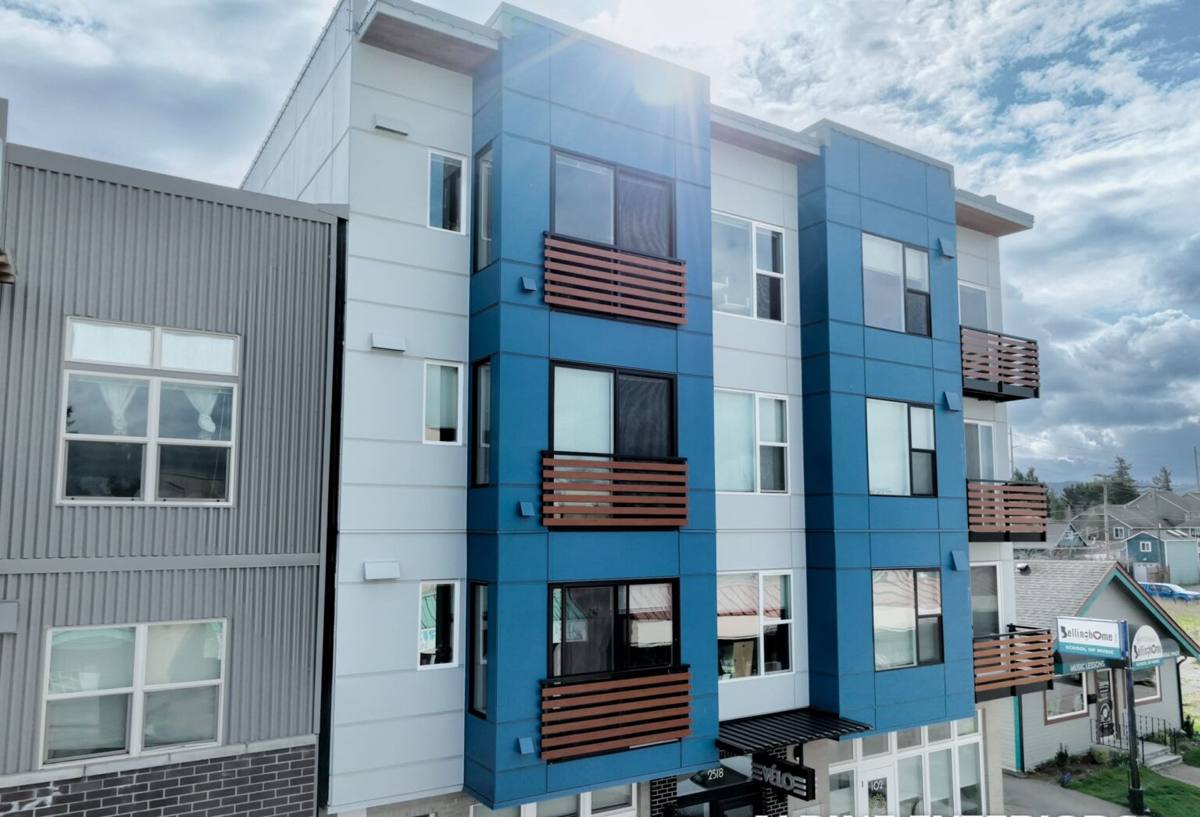
Signs a Cordata Roof Is Ready for Replacement
Most homeowners don't wake up one day and decide they need a new roof — the signs build gradually, and in a wet climate like ours they can be easy to write off as normal weathering. Worth a closer look if you're seeing:
- Granules collecting in gutters or at downspout outlets, a sign the shingle surface is wearing thin
- Shingles that are cupping, curling at the edges, or visibly buckling
- Moss or dark streaking that keeps returning within a season or two of cleaning
- Soft spots, sagging, or a roofline that no longer looks straight
- Water stains on interior ceilings, especially near valleys, chimneys, or skylights
- A roof that's 20+ years old and has never had a full tear-off
Any one of these can sometimes be handled with a repair. But once a roof is showing several of them together, or the decking underneath has taken on moisture damage, patching becomes a short-term fix on a system that's already failing. That's the point where a full replacement is usually the more honest recommendation.
What a Correct New Roof Installation Actually Involves
A roof is a system, not a single layer of shingles. Skipping or shortcutting any one part of that system is where most premature failures in this climate come from. A correct installation includes:
Full Tear-Off and Deck Inspection
We remove the old roofing down to the decking rather than layering over it. That lets us actually see the plywood or OSB underneath, which is where months of hidden moisture damage in a wet climate tends to show up. Any soft, delaminated, or rotted decking gets replaced before anything new goes down — installing new roofing over a compromised deck just hides the problem for the next owner to find.
Underlayment and Ice-and-Water Protection
A synthetic underlayment goes down as the roof's secondary water barrier, and self-adhering ice-and-water shield gets used at the vulnerable points — eaves, valleys, and around any roof penetration — where wind-driven rain is most likely to find a way in.
Flashing at Every Penetration
Chimneys, skylights, vent pipes, and wall-to-roof transitions are where the vast majority of leaks actually originate, not the open field of shingles. New, properly lapped flashing at each of these points matters more to a leak-free roof than almost anything else in the job.
Ventilation That Matches the Roof
Intake and exhaust ventilation need to be balanced so air actually moves through the attic space. We'll cover why this matters so much in this climate below.
The Finish Material Itself
Whatever roofing product you choose — asphalt composition, architectural shingle, or metal — it only performs as well as everything installed underneath it.
Choosing a Roofing Material for a Cordata Home
There's no single "best" roofing material — the right choice depends on your home's roofline, your budget, and how much long-term maintenance you want to take on. Here's how the common options compare for a salt-air, high-moisture climate like ours:
| Material | Typical Lifespan | Moss/Moisture Resistance | Relative Cost |
|---|---|---|---|
| Standard 3-tab asphalt shingle | 15–20 years | Fair — needs algae-resistant granules to hold up well | Lowest |
| Architectural (dimensional) asphalt shingle | 25–30 years | Good, especially with algae-resistant (AR) granules | Moderate |
| Standing seam metal | 40–50+ years | Excellent — sheds moisture and resists moss growth well | Highest |
| Synthetic/composite shingle | 30–50 years | Good to excellent, varies by product | Moderate to high |
For most Cordata homes, we recommend an algae-resistant architectural shingle as the baseline — it strikes the best balance of upfront cost, appearance, and real-world performance against moss and moisture. Metal roofing is worth the higher upfront cost for homeowners planning to stay long-term or who want to essentially remove moss and re-roofing from their maintenance list for decades. We're happy to walk through the honest trade-offs of each option for your specific roof during an estimate rather than push one product across the board.
Ventilation and Moisture: The Part of the Job You Don't See
In a climate with as much sustained damp weather as Whatcom County gets, attic ventilation is not optional — it's one of the biggest factors in how long a roof actually lasts. Without balanced intake and exhaust airflow, moisture from everyday household activity gets trapped in the attic, condenses on the underside of the roof deck, and creates exactly the damp, dark conditions that moss and rot thrive on from the inside out, not just the outside in.
Poor ventilation also traps summer heat, which accelerates shingle aging from below. Getting this right during installation — matching intake vents at the eaves with exhaust at the ridge, sized correctly for your attic's square footage — is a detail that's invisible once the job is done but has an outsized effect on how your new roof holds up over the next two or three decades.
Our Installation Process
- On-site inspection and estimate. We look at your existing roof, attic ventilation, and any problem areas, and give you a written estimate with no pressure to sign on the spot.
- Material selection. We walk through the options that make sense for your roofline, budget, and how long you plan to be in the home.
- Scheduling around weather. Roofing in Whatcom County means working around rain windows. We plan the tear-off and dry-in stages for realistic weather gaps so your home isn't left exposed.
- Tear-off, deck repair, and dry-in. Old roofing comes off, the deck is inspected and repaired as needed, and underlayment goes down the same day whenever possible.
- Flashing, ventilation, and installation. Flashing and ventilation components are installed first, then the finish roofing material.
- Cleanup and final walkthrough. We clear debris, run a magnetic sweep for stray nails, and walk the finished roof with you before calling the job done.
Why It Matters That We Already Work in Cordata
Roofing crews that work regularly in this specific area understand things that don't show up in a generic estimate: which rooflines in Cordata's mix of newer subdivisions and older homes tend to have ventilation shortfalls, how much moss pressure a shaded, tree-lined lot is realistically going to see, and how to sequence a job around Whatcom County's rain patterns instead of guessing. A crew unfamiliar with the area is more likely to underestimate moss and moisture exposure, or schedule around weather that doesn't match how it actually behaves here.
There's also a practical side: familiarity with City of Bellingham and Whatcom County permitting requirements means fewer delays and fewer surprises mid-project. A local crew has a reputation in the neighborhood to maintain, which is a different incentive than a company that's in and out of the area on a one-off job.
What to Ask Before You Hire a Roofing Contractor
Whether you go with us or anyone else, these are the questions worth asking before you sign a contract for a new roof installation in this area:
- Are you licensed and insured to do roofing work in Washington State, and can you provide proof?
- Does the estimate include a full tear-off, or is overlay being proposed?
- What underlayment and ice-and-water shield are being used, and where will they be placed?
- Will attic ventilation be evaluated and addressed as part of the job, not just the shingles replaced?
- What does the manufacturer's warranty cover, and what does your workmanship warranty cover separately?
- What happens if your crew finds rotted decking once the old roof comes off?
- How do you plan and sequence the job around rain?
A contractor who answers these clearly and specifically, without vague reassurances, is a good sign. One who can't or won't is worth a second look elsewhere.
Timeline and What to Expect During the Project
A straightforward single-family roof replacement typically takes one to three days of active work once weather allows, though the deck condition, roof complexity, and material choice all affect that. Expect noise and some vibration throughout the house during tear-off and nailing, a dumpster or debris trailer on-site for the duration, and a work crew moving around your property and yard — we take care to protect landscaping and walk the site for stray debris and nails at the end of each day, not just at the final walkthrough.
Because Whatcom County weather doesn't always cooperate with a fixed calendar, we build in flexibility rather than promising a hard date that a rain system can blow past. We'd rather delay a start by a day than dry-in a roof in the middle of a downpour.
If your Cordata roof is showing its age, or you just want an honest read on whether it needs replacing or can hold on a bit longer, we're glad to take a look. Use the form below to request a free, no-pressure estimate.