 Bellingham Roofing
 Metal Roofing Built for Silver Beach's Waterfront Exposure
Silver Beach sits close enough to Bellingham Bay that the weather here isn't quite the same as it is a few miles inland. Homes along this stretch of shoreline take on salt-laden air moving off the water, wind-driven rain that hits siding and roof edges at an angle instead of falling straight down, and enough shade and dampness through the fall and winter to keep moss growing for months at a time. A roof here has to shed water fast, resist corrosion from airborne salt, and stay clean enough that moss doesn't get a foothold. Metal roofing, installed correctly, handles all three better than most other roofing materials available to homeowners in this part of Whatcom County.
This page is about metal roofing specifically for Silver Beach homes — not a general overview of metal roofing everywhere. The details below reflect what actually matters for a house sitting this close to saltwater.
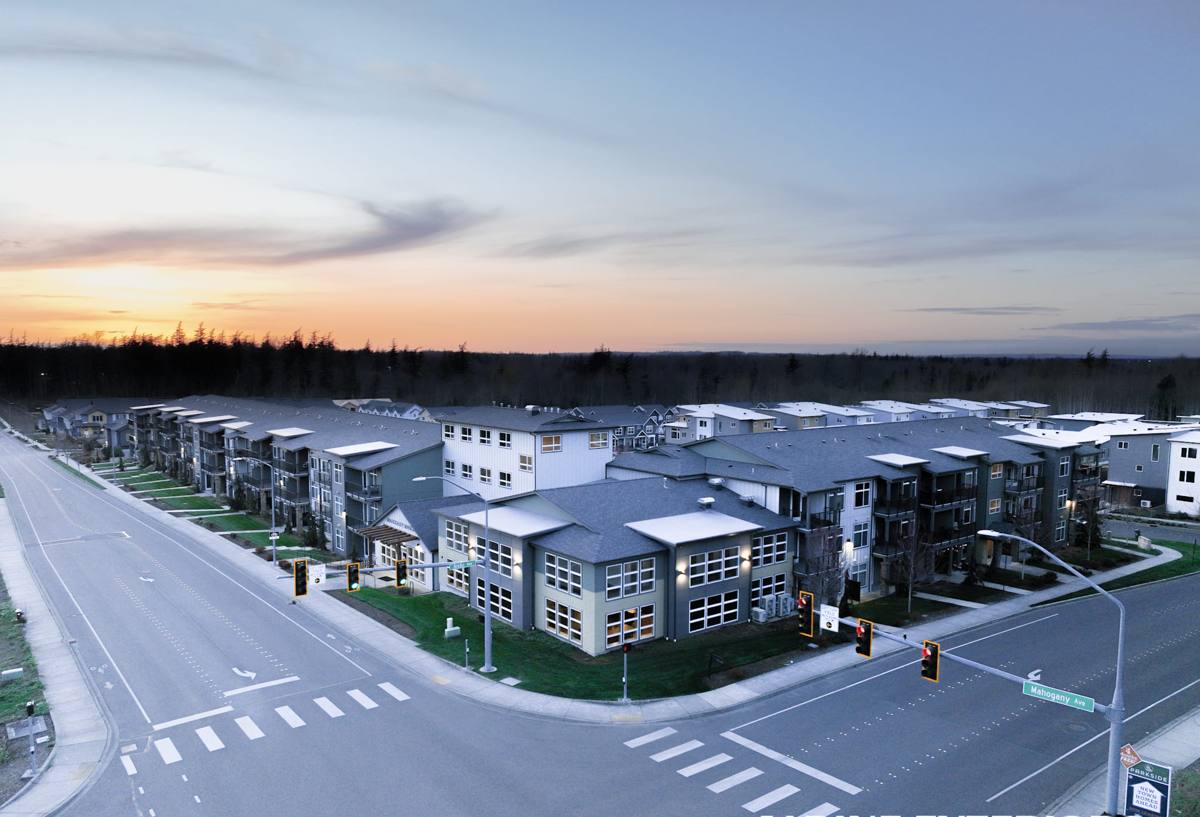
What Salt Air, Driving Rain, and a Long Moss Season Do to a Roof
Each of these conditions stresses a roof in a different way, and in Silver Beach a roof deals with all three at once.
Salt Air
Airborne salt settles on every exterior surface, including the roof. Over years, it accelerates corrosion on any metal that isn't properly coated or that uses the wrong fastener material — this is one of the most common causes of premature failure on metal roofs installed near water. It also degrades cheaper coatings faster than a manufacturer's published lifespan would suggest, especially on the side of a roof that faces the bay directly.
Driving Rain
Wind off the water pushes rain sideways, not just down. That means water can find its way under laps, around penetrations, and behind flashing that would be perfectly adequate on a roof in a more sheltered location. Underlayment quality, seam design, and flashing detail all matter more here than they would on an inland roof with the same pitch.
Moss Season
Whatcom County's wet season runs long, and any roof surface that stays damp and shaded — north-facing slopes, areas under tree cover, valleys where debris collects — will grow moss if given the chance. Moss holds moisture against the roof surface and, on some materials, works into seams and laps over time. It also creates a texture that traps organic debris, which keeps the surface wet even longer.
Why Metal Roofing Makes Sense for This Kind of Exposure
A properly installed metal roof gives Silver Beach homeowners a smooth, hard, largely non-porous surface. Water runs off quickly instead of soaking in, there are far fewer places for moss to anchor compared to a textured roofing surface, and the panel materials and coatings available today are specifically rated for corrosion resistance in marine and coastal environments. None of that means a metal roof is maintenance-free near saltwater — it isn't — but it starts from a much better position than materials that absorb moisture or provide more surface for organic growth to grip.
The trade-off is that not every metal roofing product or installation approach is suited to this environment. Getting the material, coating, and detailing right is what separates a metal roof that performs for decades from one that shows corrosion or leaks within a handful of years.
Choosing the Right Metal System for a Silver Beach Home
Panel Style
Standing seam panels, with their raised, mechanically or hydraulically locked seams, are generally the strongest choice for a home in a driving-rain environment. The seams sit above the water plane and there are no exposed fasteners for wind-driven rain to work against over time. Exposed-fastener panel systems can still be appropriate on some structures — garages, outbuildings, certain roof pitches — but they require more attention to fastener material and gasket condition over the life of the roof, since every exposed screw is a potential entry point.
Coating and Corrosion Resistance
Steel panels need a corrosion-resistant substrate coating (such as a zinc-aluminum alloy coating) plus a quality paint finish, and near saltwater that substrate matters as much as the paint color. Aluminum is naturally corrosion-resistant and is often a strong option for homes that sit very close to the water, since it doesn't rely on a coating layer to resist salt exposure the way steel does. The right choice depends on the specific home, its distance from the bay, and its exposure — we'll walk through the trade-offs honestly rather than defaulting to whatever's easiest to install.
Fasteners and Flashing
Every fastener, clip, and piece of flashing on a metal roof should be compatible with the panel material to avoid galvanic corrosion — mixing incompatible metals is a common shortcut that causes staining and pitting well before the panels themselves would otherwise wear out. In a driving-rain environment, flashing at valleys, penetrations, and roof-to-wall transitions needs to be detailed generously, not just to code minimums, since wind can push water uphill against a marginal flashing lap.
Metal Roofing vs. Other Options for a Waterfront Bellingham Home
Every roofing material has a place. Here's how the common options generally compare for a home dealing with salt air, driving rain, and heavy moss pressure like Silver Beach sees.
| Factor | Metal (Standing Seam) | Asphalt Composition Shingle | Cedar Shake |
|---|---|---|---|
| Resistance to moisture absorption | Very low — sheds water, doesn't absorb it | Moderate — granule surface can hold moisture | Higher — wood absorbs and releases moisture |
| Moss resistance (untreated) | Good — smooth surface, few anchor points | Fair — textured surface holds debris and moisture | Poor — organic material, favors moss and rot |
| Performance in driving, wind-blown rain | Strong when seams and flashing are detailed correctly | Adequate, but vulnerable at edges and laps in high wind | Requires diligent maintenance to stay watertight |
| Salt air / corrosion considerations | Needs correct alloy, coating, and fastener match | Not a corrosion concern, but granule loss accelerates near salt spray | Not a corrosion concern; decay risk increases with moisture |
| Typical maintenance burden | Low to moderate — periodic inspection and debris clearing | Moderate — algae/moss treatment, granule loss monitoring | High — regular treatment, more frequent replacement of individual shakes |
Cost is the other factor homeowners ask about. Metal roofing carries a higher upfront material and labor cost than asphalt shingles, but the gap narrows over the life of the roof once you account for how much less maintenance and how many fewer replacement cycles a well-installed metal roof needs in this climate. We'll give you a specific, honest number for your home and roof size during the estimate — we don't quote ranges we can't back up.
How We Approach a Metal Roofing Project in Silver Beach
The process is straightforward, but the details are where the quality of the finished roof gets decided.
- On-site assessment. We look at your existing roof, deck condition, ventilation, pitch, and exposure — including which sides of the roof face the bay directly and which are more sheltered — before recommending a system.
- Material and coating recommendation. Based on that assessment, we recommend a panel type, gauge, and coating suited to the exposure, and explain the trade-offs so you're choosing with full information, not guessing.
- Deck and underlayment prep. Any deteriorated decking gets replaced, and we install underlayment rated for the wind and moisture conditions the roof will actually see, not just a code-minimum product.
- Panel installation and flashing. Panels are installed with the correct fastener and clip spacing for the wind exposure, and flashing at every penetration, valley, and transition is detailed to handle wind-driven rain, not just water falling straight down.
- Final walkthrough. We go over the finished roof with you, cover what maintenance it needs going forward, and make sure you know what to watch for.
Keeping a Metal Roof Performing in This Climate
A metal roof near Bellingham Bay isn't maintenance-free, but the maintenance it needs is manageable if it's done on a regular schedule. Here's what we recommend:
- Clear debris from valleys, gutters, and any low-slope sections at least once or twice a year, since trapped debris holds moisture against the panel surface
- Have any moss or algae growth addressed early, using methods appropriate for coated metal — pressure washing and harsh chemical treatments can damage coatings and should be avoided
- Inspect flashing and sealant at penetrations (vents, chimneys, skylights) periodically, since these are the first places wind-driven rain will exploit if a detail starts to fail
- Watch for scratches or chips in the coating after storms or any work near the roof (satellite installs, gutter guards, solar mounts) — exposed base metal is where corrosion starts
- Keep overhanging branches trimmed back where practical to reduce shade, debris, and moss pressure on north-facing slopes
Why Hiring a Crew That Already Works in Silver Beach Matters
Roofing near saltwater isn't the same job as roofing five or ten miles inland, even within the same city. A crew that regularly works this shoreline knows which exposures actually need the extra coating grade, which flashing details hold up against wind off the bay and which don't, and where moss tends to build up fastest on this type of coastal roof. That local pattern recognition — built from doing this specific work in this specific area, not from a general roofing background — is what keeps small details from turning into callbacks or premature failures a few years down the line.
It also means we're not learning on your roof. We already know the difference between a roof detail that works fine in a drier part of Whatcom County and one that needs to be built tighter because it's facing open water.
Get a Straight Answer for Your Roof
If you're weighing metal roofing for a Silver Beach home, we're happy to take a look and give you an honest assessment — what your current roof's condition actually calls for, which metal system fits your home's exposure, and a real number to plan around. There's no pressure and no obligation. Fill out the form below and we'll set up a time to come take a look.