 Bellingham Roofing
 Metal Roofing Built for Puget's Weather, Not Just Any Weather
Puget sits close enough to the water and under enough tree cover that its roofs take a different kind of beating than roofs ten miles inland. Salt-laden air off the Sound works on metal and fasteners in ways dry-climate roofing never has to deal with. Driving, wind-blown rain finds every weak seam. And a long, wet moss season settles into anything that holds shade and moisture. Metal roofing can handle all three of these conditions better than most other roofing materials — but only when the system, the fasteners, and the installation details are chosen with this specific climate in mind. A metal roof installed the same way you'd install one in a dry inland town will not perform the same way here.
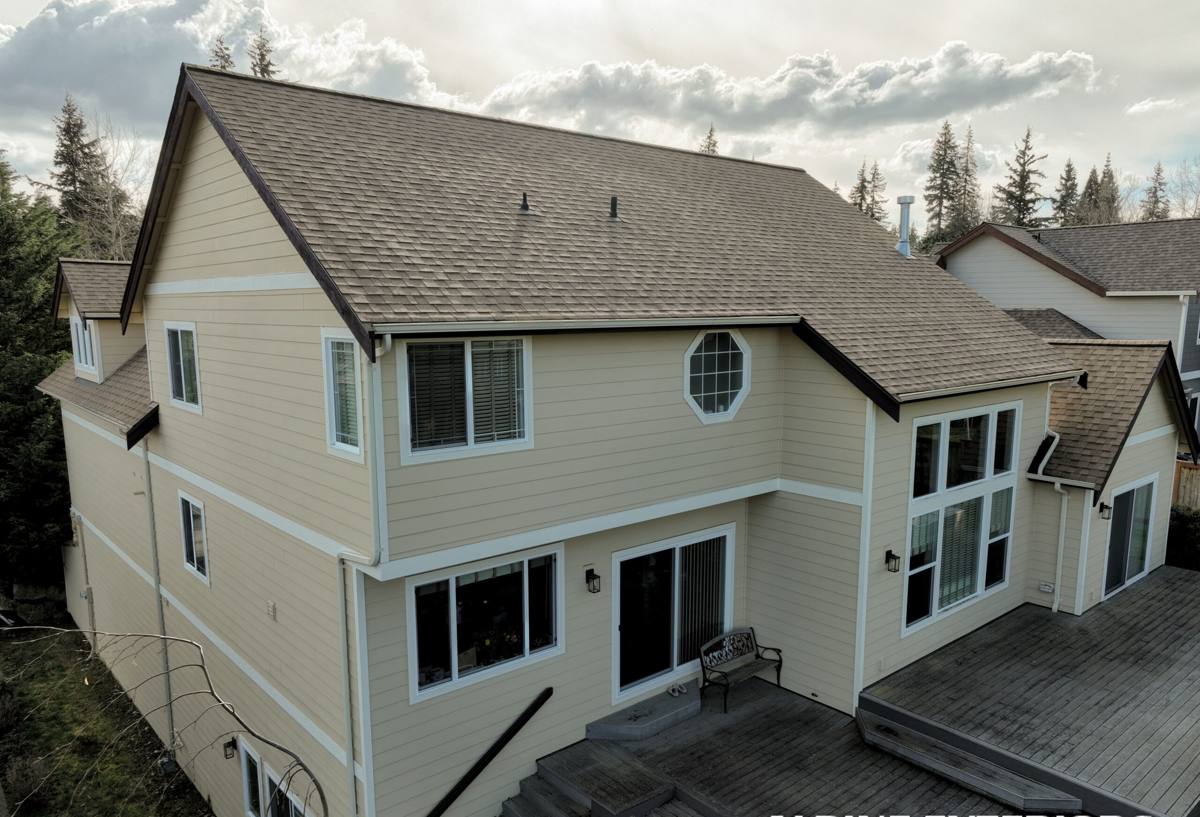
What Salt Air Actually Does to a Roof
Homes near Bellingham Bay and the broader Puget Sound shoreline live in a marine environment, and marine air carries salt that accelerates corrosion on exposed metal — especially at cut edges, fastener heads, and any spot where two dissimilar metals touch. This doesn't mean metal roofing is a bad fit here; it means the metal, coating, and hardware all have to be chosen to resist that exposure rather than just to look good on install day.
Where corrosion starts
- Exposed cut edges that weren't properly sealed or capped
- Fasteners with a coating that doesn't match the panel's corrosion resistance
- Galvanic reaction where incompatible metals or flashing meet
- Low spots where salt spray and moisture sit instead of draining
Choosing a panel finish and fastener package rated for coastal exposure — and detailing every cut edge and penetration correctly — is the difference between a metal roof that still looks sharp in fifteen years and one that starts showing rust streaks in five.
Driving Rain and the Details That Actually Keep It Out
Whatcom County rain doesn't always fall straight down. Wind off the water pushes it sideways, which means it can work its way under panels, around flashing, and into fastener penetrations that would stay dry in a calmer climate. A metal roof's watertightness comes almost entirely from its details — seam type, underlayment, flashing laps, and fastener sealing — not from the panel material itself. Get those details right and metal roofing sheds wind-driven rain better than almost anything else on the market. Get them wrong and you'll get leaks in exactly the storms you bought the roof to handle.
Moss Season: The Slow Threat Metal Handles Differently
Puget's tree cover and consistent moisture create a long moss season that most local roofs deal with every year. Moss doesn't just sit on top of a roof — on shingles it roots into the surface and holds moisture against it. Metal roofing gives moss almost nothing to grip, which is one of its biggest long-term advantages here. But metal isn't moss-proof by default:
- Debris and needle litter can still build up in valleys and against roof-to-wall transitions, holding moisture even on a metal surface
- Shaded, low-slope sections still need enough pitch and clean flashing to actually drain that debris away instead of trapping it
- Panel seams and closures should be detailed so organic matter can't pack in and hold water against the metal
A metal roof designed with Puget's shade and moisture pattern in mind will still need occasional debris clearing, but it won't need the moss treatments, scraping, and premature replacement that shaded shingle roofs in this area often do.
Choosing the Right Metal System for This Area
Not every metal roofing product performs the same way under salt exposure and heavy rain. We steer Puget homeowners toward systems that hold up well in this specific environment, and we're upfront about the trade-offs of each option rather than pushing whatever's easiest to install.
| System | Best For | Coastal & Moisture Considerations |
|---|---|---|
| Standing seam (concealed fastener) | Full roofs, especially near the water or under tree canopy | No exposed fastener heads to corrode; seams shed wind-driven rain well; higher upfront cost, lowest long-term maintenance |
| Exposed-fastener metal panel | Budget-conscious full roofs, secondary structures | Lower cost, but fastener gaskets wear over time and need occasional inspection near salt air |
| Metal shingle/shake panels | Homes wanting a traditional look with metal's durability | Good moss resistance; interlocking seams need careful detailing at valleys and eaves for driving rain |
For most Puget homes, we recommend standing seam where budget allows, specifically because it minimizes the exposed hardware that salt air attacks first. Where cost is a bigger factor, exposed-fastener systems still perform well as long as the fastener package and inspection schedule account for coastal wear.
What a Correct Metal Roof Installation Involves
The panels get the attention, but most metal roof failures we're called to fix trace back to details underneath and around them, not the metal itself.
The details that matter most here
- Underlayment: A high-temp synthetic or self-adhered underlayment suited to metal's thermal movement and this area's rainfall volume
- Fastener compatibility: Hardware matched in metal type and coating to the panel, to avoid galvanic corrosion
- Flashing at every transition: Valleys, walls, chimneys, and skylights properly lapped and sealed for sideways rain, not just straight-down rain
- Edge treatment: Cut panel edges sealed or capped so salt air can't start corrosion at the weakest point
- Ventilation: Balanced intake and exhaust so trapped moisture under the panels doesn't condense and cause problems from the inside
- Fastener torque and spacing: Correct, consistent spacing and torque so seals stay watertight through wind events
Any one of these done wrong can undercut an otherwise good panel system. This is why the installation crew's attention to detail matters as much as the product line they're installing.
Our Process, Start to Finish
- On-site assessment: We look at your roof's exposure — how close to the water, how much tree cover, current drainage — before recommending a system.
- Honest system recommendation: We walk through panel and finish options for your specific exposure and budget, including trade-offs, not just the upsell.
- Tear-off and deck check: We remove the old roofing and inspect the deck for rot or moisture damage before anything new goes down — a step that matters more under a wet climate than a dry one.
- Underlayment and flashing installation: Done to the standard this climate requires, not the minimum code allows.
- Panel installation: Correct fastening, seam engagement, and edge treatment for coastal and moss-season conditions.
- Final walkthrough: We review the finished roof and drainage paths with you and clean the site before we leave.
Why a Crew That Already Works Puget Matters
A crew that mainly works dry, inland roofs doesn't automatically know to spec coastal-rated fasteners, seal every cut edge, or plan drainage around a shaded, moss-prone roofline. Those aren't things you learn from a manufacturer's install manual — they're things you learn from doing roofs in exactly this kind of weather, repeatedly, and seeing what does and doesn't hold up over years of Bellingham winters. We bring that local experience to every metal roof we install in Puget, which shows up less in how the roof looks on install day and more in how it's still performing five, ten, and twenty years later.
Cost Factors Worth Understanding
| Factor | Why It Affects Price |
|---|---|
| Panel system chosen | Standing seam costs more upfront than exposed-fastener panels or metal shingles |
| Roof complexity | More valleys, penetrations, and transitions mean more flashing labor and material |
| Deck condition | Rot or moisture damage found at tear-off adds repair cost before new roofing goes on |
| Coating and fastener grade | Coastal-rated finishes and hardware cost more but last significantly longer near the water |
| Existing roof removal | Full tear-off versus a simpler re-cover changes both labor and disposal cost |
Exact pricing depends on your roof's size, pitch, and condition, but a metal roof is a meaningful investment that, done right for this climate, should outlast one or more shingle roof cycles.
Maintenance: Keeping a Metal Roof Performing in This Climate
- Clear needles, leaves, and debris from valleys and roof-to-wall transitions at least once a year
- Do a visual check after major windstorms for lifted fasteners or panel edges
- Watch for early rust streaking near cut edges or fasteners, and address it before it spreads
- Keep gutters and downspouts clear so water isn't backing up against roof edges
- Trim back overhanging branches where practical to reduce shade and debris load
A well-installed metal roof in Puget needs far less maintenance than a shingle roof under the same conditions, but "low maintenance" doesn't mean "no maintenance" — a little attention each year protects the investment.
If you're weighing metal roofing for a home in Puget, we're happy to take a look and give you a straight answer on what your roof actually needs — no pressure, no upsell. Use the form below to request a free estimate.