 Bellingham Roofing
 Siding Built for Puget's Specific Climate Challenges
Puget sits close enough to the water that salt air is a daily fact of life for the homes here, not an occasional nuisance. Add in the driving, wind-blown rain that comes through Whatcom County for much of the year and a moss season that can stretch from fall through spring, and you have a combination that punishes siding materials that aren't built for it. We install James Hardie fiber cement siding in this area specifically because it holds up to all three of those pressures at once, and we've built our process around what actually keeps a Puget home dry and looking good for the long haul.
This page is about one thing: what James Hardie siding needs to look like and be installed like on a Puget home, and why the details matter more here than they would somewhere inland and dry.
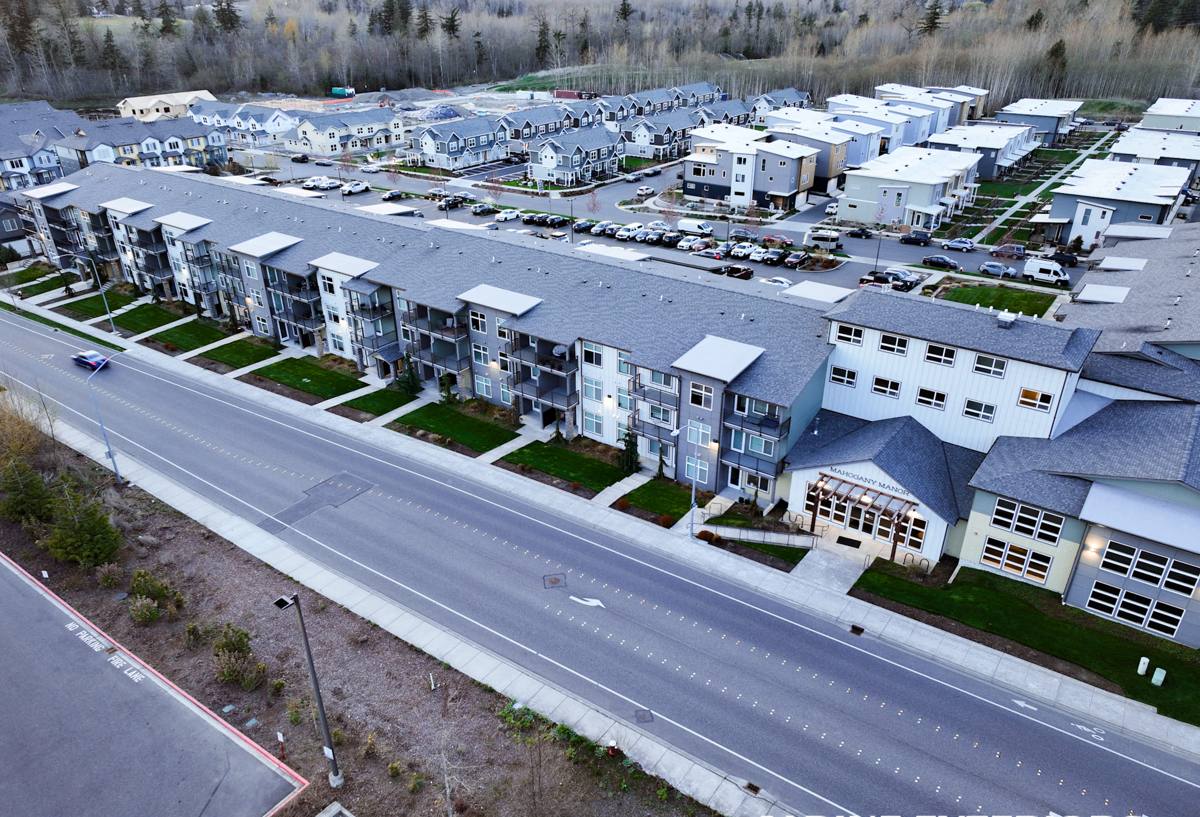
What Salt Air Does to Siding Over Time
Salt-laden air accelerates corrosion on anything metal and breaks down cheaper coatings faster than manufacturers' lab tests usually account for. On vinyl siding, salt air combined with UV exposure tends to speed up fading and brittleness. On wood or engineered wood products, the moisture that rides in with salt air gets into any exposed edge or seam and starts the rot clock early.
James Hardie fiber cement isn't organic material, so it doesn't feed rot, and it isn't a metal, so salt doesn't corrode it. The bigger factor in a salt-air environment is the factory-applied ColorPlus finish, which is baked on under controlled conditions and holds color and integrity far longer than a field-applied paint job would. That matters in Puget because a finish that's already marginal in a dry climate gets tested hard here.
Why the Fasteners and Flashing Matter Just as Much as the Panels
Homeowners tend to focus on the siding material itself, but in a salt-air, high-moisture area like Puget, the metal components tied into the siding system are just as important. Fastener choice, flashing material, and trim hardware all need to be corrosion-resistant, not just the cheapest option that will physically hold. We spec fasteners and flashing rated for coastal exposure on every Puget job, because a siding job with premium panels and undersized fasteners is a job that fails at the connection points first.
Driving Rain and Why Water Management Comes Before the Siding Goes Up
Whatcom County rain isn't always gentle straight-down rain — a good share of it comes in sideways, driven by wind off the Sound. That kind of weather finds every gap in a house's water management system: unsealed seams, missing kick-out flashing, house wrap that wasn't lapped correctly, or J-channel that traps water instead of shedding it.
The siding itself is the last line of defense, not the first. Before any Hardie panel or plank goes on a Puget home, the water-resistive barrier underneath has to be right. That means:
- Continuous, properly lapped house wrap with no gaps at seams or penetrations
- Flashing at every window and door head, not just a bead of caulk
- Kick-out flashing everywhere a roofline meets a wall, so runoff is diverted away from the wall assembly instead of behind it
- Correct rain-screen gap or drainage plane per Hardie's installation instructions, so any moisture that does get behind the panel has somewhere to go
James Hardie's HardiePlank and HardiePanel products are engineered to handle wet climates, but that engineering only works if the assembly behind them is built correctly. This is where a lot of siding jobs — regardless of brand — actually fail, and it's the part of the job that doesn't show up in a driveway estimate.
Moss, Algae, and a Siding System That Doesn't Feed Them
A long moss season means constant low-level moisture sitting on north-facing walls, under eaves, and in any spot that doesn't get much direct sun. Organic siding materials — cedar, primed spruce, and to a lesser extent some engineered wood products — give moss and algae something to grow on and into. Once moss gets a foothold on wood siding, it holds moisture against the surface and accelerates decay underneath.
Fiber cement doesn't feed organic growth the way wood-based products do. Moss and algae can still form on the surface in a shaded, damp spot — that's a function of the local environment, not the siding material — but on Hardie panels it stays a cosmetic surface issue that washes off, rather than something that's degrading the substrate underneath. That distinction is worth understanding before choosing a siding product for a shaded Puget lot.
Site-Specific Factors We Check on Every Puget Estimate
Because Puget properties vary in exposure — some closer to open water and wind, some more sheltered by trees or terrain — we don't quote every home the same way. Before we price a job, we look at:
- How exposed the home is to prevailing wind and salt spray
- Which walls get the least sun and are most likely to hold moisture and moss
- The condition of existing trim, fascia, and flashing that will interact with the new siding
- Any signs of past moisture intrusion at windows, doors, or roof-to-wall transitions
Why We Only Install James Hardie
We get asked fairly often why we don't offer LP SmartSide, vinyl, or one of the other fiber cement brands as a lower-cost option. The honest answer is that we standardized on James Hardie because it's the product we're confident will still be performing correctly in this climate fifteen and twenty years out, and we don't want to sell a Puget homeowner something we'd have reservations about installing on our own home.
Vinyl is inexpensive and easy to install, but it's a plastic product that becomes more brittle with UV and temperature swings over time, and it doesn't hold up structurally the way fiber cement does — a hard impact can crack or dent it in a way that's difficult to blend a repair into. Engineered wood products like LP SmartSide have improved their moisture resistance over the years, but they're still wood-based, which means any breach in the factory coating — a saw cut, a fastener hole, an impact — creates a point where moisture can get into the substrate. In a climate with this much sustained dampness, that's a real long-term maintenance liability, not a hypothetical one.
James Hardie is non-combustible, doesn't feed rot or insects, and comes with a factory finish and a transferable warranty backed by a manufacturer with decades in fiber cement specifically. For a Puget home dealing with salt air, driving rain, and moss season all at once, that combination is what we're willing to stand behind.
Comparing Common Siding Options for a Puget Home
| Factor | James Hardie Fiber Cement | Vinyl | Engineered Wood (e.g. LP SmartSide) | Cedar / Primed Spruce |
|---|---|---|---|---|
| Moisture behavior in wet climate | Does not rot; engineered for wet-climate exposure | Won't rot but can trap moisture behind panels if installed poorly | Moisture-resistant coating, but vulnerable at cuts and fastener points | Absorbs moisture readily; needs consistent maintenance |
| Salt air / coastal exposure | Not affected by salt corrosion; factory finish holds up well | Can fade and become brittle faster near salt air and UV | Coating can degrade faster with salt exposure | No inherent resistance; relies entirely on maintenance |
| Moss / algae resistance | Doesn't feed organic growth; surface growth is cosmetic | Doesn't feed growth but shows staining | Wood substrate can support growth if coating is compromised | Highly susceptible; moss can accelerate decay |
| Impact resistance | Dense, durable panel; resists dents | Can crack or dent from impact | Moderate; can dent | Can dent, split, or crack |
| Finish longevity | Factory ColorPlus finish, long fade resistance | Color molded in but fades with UV over years | Factory primed or finished; repaint intervals vary | Requires repainting/staining on a regular cycle |
| Fire resistance | Non-combustible | Combustible plastic material | Combustible (wood-based) | Combustible |
Our Installation Process on Puget Jobs
1. Site Assessment
We walk the exterior, note exposure direction, existing moisture damage, and the condition of trim and flashing, and take measurements for an accurate material and labor estimate.
2. Tear-Off and Substrate Inspection
Old siding comes off and we inspect the sheathing underneath for rot or damage before anything new goes on. This is often where problems from the old siding system surface, and it's better to find and fix them now than to seal them behind new panels.
3. Water-Resistive Barrier and Flashing
We install or verify the house wrap, flashing at every penetration, and a proper drainage plane, sized for the driving rain this area gets.
4. Hardie Panel Installation
Panels and trim go on per James Hardie's fastening and clearance specifications — correct nail placement, proper gaps at butt joints, and correct clearance from grade, roofing, and other transitions.
5. Final Walkthrough
We inspect caulking, trim lines, and finish quality before calling the job done, and go over basic care with the homeowner.
What Correct Installation Looks Like — A Homeowner's Checklist
Whether you're evaluating our estimate or someone else's, these are the things worth asking about on any Puget siding job:
- Is the crew using fasteners and flashing rated for coastal/high-moisture exposure?
- Is there a documented plan for a drainage gap or rain-screen behind the siding?
- Will kick-out flashing be installed at every roof-to-wall intersection?
- Are butt joints and panel clearances being installed to the manufacturer's published spec, not just "close enough"?
- Is the substrate being inspected for existing moisture damage before new siding goes on?
- Does the warranty cover both material and workmanship, and is it transferable if you sell the home?
Why a Crew That Already Works in Puget Matters
Installation quality is what determines whether any siding product performs the way it's supposed to, and that's especially true in a climate with this much sustained moisture and salt exposure. A crew that's worked on homes in this specific area already knows which walls tend to take the worst weather, where past installations in the area have failed, and what flashing and drainage details actually hold up here versus what looks fine on paper. That local pattern recognition is hard to substitute for, and it's a big part of why we focus our work in Whatcom County rather than spreading thin across unfamiliar climates.
Get a Straight Estimate for Your Puget Home
If your siding is showing its age, holding moss, or you're just planning ahead for a home that can handle what this climate throws at it, we're happy to walk your property, look at your specific exposure and existing conditions, and put together a straightforward, no-pressure estimate for James Hardie siding. Use the form below to get started.