 Bellingham Roofing
 James Hardie Siding for Lynden Homes
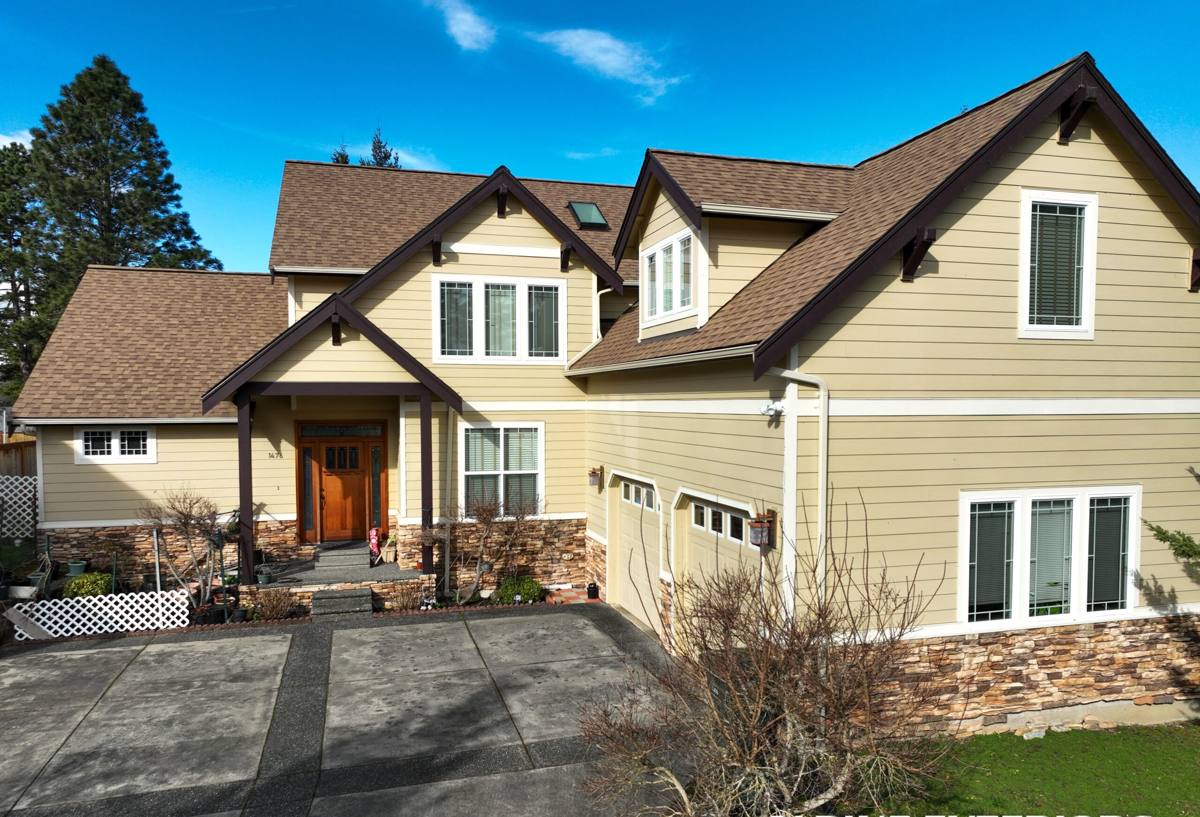
Lynden sits in the open, low-lying farm country of northern Whatcom County, close enough to the coast to pick up salt-laden marine air and close enough to the Canadian border to sit squarely in the same wet, mild Pacific Northwest weather pattern that shapes exterior work across this whole region. Homes here face driving rain pushed sideways by wind off open fields, a moss and mildew season that can run most of the year on shaded or north-facing walls, and the slow corrosive drip of salt air on fasteners and trim. We install James Hardie fiber cement siding on Lynden homes specifically because it holds up to that combination better than the alternatives, and we do it as our only siding product — not one option among several.
This page is about James Hardie siding for Lynden specifically: what the local climate demands from a siding system, what a correctly installed job actually involves, how we run the work from first assessment to final walkthrough, and why it matters that the crew doing it already works this area regularly.
What Lynden's Climate Asks of a Siding System
Salt Air and Corrosion
Even set back from the immediate shoreline, homes in this part of Whatcom County get a steady dose of salt-influenced air moving in off the Sound. Salt accelerates corrosion in fasteners, flashing, and any lower-grade metal trim, and it works on a siding system continuously, not just during storms. That's a reason to spec corrosion-resistant fasteners and flashing details as a baseline, not an upgrade.
Wind-Driven Rain Over Open Ground
Lynden's farmland and open lots don't offer the wind-blocking that comes from denser tree cover or tighter neighborhood lots closer to Bellingham. Rain here often arrives at an angle, driven sideways by wind with less to slow it down before it hits a wall. That matters because sideways-moving water finds its way into laps, joints, and penetrations that a straight-down rain would never reach — which is exactly where a siding installation lives or dies on detail work.
A Long Moss and Mildew Season
Mild temperatures and consistent moisture add up to moss and mildew growth that can persist most of the year on shaded siding, especially on north-facing walls or anywhere tree cover keeps a surface from drying out between rains. Any siding material that's porous, or that holds moisture against its own substrate, becomes a long-term growth surface. That's a maintenance burden homeowners in Lynden deal with regardless of siding choice, but it's far worse on materials that absorb water than on ones that don't.
Why James Hardie Fits This Climate
James Hardie fiber cement is a cement-and-cellulose composite, engineered and factory-finished specifically to resist the conditions Lynden's climate creates. A few specifics matter more here than in a drier region:
- HZ5 formulation: Hardie makes region-specific formulations, and HZ5 is built for climates with significant moisture exposure and freeze-thaw cycling — a good match for northern Whatcom County's winters.
- Non-combustible core: Fiber cement doesn't feed a fire the way wood-based siding products can, which matters for both safety and, in many cases, insurance considerations.
- Factory-applied ColorPlus finish: The finish is baked on under controlled conditions rather than brushed on in the field, which resists fading and moisture intrusion at the surface far longer than site-applied paint.
- Dimensional stability: Fiber cement doesn't swell, cup, or warp the way engineered wood products can after repeated wetting, which matters through a wet Whatcom County fall and winter.
- Strong transferable warranty: Hardie backs the product with a warranty structure that holds up well against the rest of the industry — provided the installation follows their published spec.
We don't install LP SmartSide, vinyl, Cemplank, Allura, primed spruce, or cedar. Each of those has a place in the market, and plenty of homeowners are satisfied with them. We've made a professional call that in a climate that pushes this much sustained moisture and salt exposure at a house, we'd rather install and stand fully behind one system than offer a cheaper product that quietly shifts maintenance risk onto the homeowner a few years down the road.
James Hardie Product Lines for Lynden Homes
James Hardie isn't a single product — it's a system of profiles, and the right one depends on the house.
| Product Line | What It Looks Like | Where It Fits Well |
|---|---|---|
| HardiePlank lap siding | Traditional horizontal lap, several exposure widths | Farmhouse, craftsman, and traditional Lynden homes |
| HardiePanel vertical siding | Large-format vertical panels with battens | Modern builds, accent walls, gable ends |
| Board & batten | Vertical boards with battens over the seams | Farmhouse and rural-style exteriors common in the area |
| HardieTrim boards | Corner boards, fascia, window and door trim | Finishing detail on any of the above |
Color selection runs through Hardie's ColorPlus line — factory-finished options in shades like Iron Gray, Arctic White, Aged Pewter, and Boothbay Blue, among others, all backed by the same factory-cured finish rather than a field-applied topcoat. We walk homeowners through which profiles and colors suit their specific house rather than pushing a single default look.
What Correct James Hardie Installation Involves
Hardie's product warranty is tied to installation following their published specifications — and that's the part that separates a job that lasts from one that doesn't, regardless of what material is on the wall.
The Details That Actually Matter
- A weather-resistive barrier installed continuously behind the siding, lapped correctly at every seam and penetration
- Proper clearance between the bottom of the siding and grade, roof lines, decks, and patios so water can't wick upward
- Correct fastener type, spacing, and placement — over-driven or under-driven nails are one of the most common failure points on fiber cement
- Butt joints and panel seams treated per Hardie's spec, not just butted and caulked as an afterthought
- Flashing integrated at every window, door, and wall penetration before siding goes on, not patched around it after
- Gapping and sealant at trim and penetrations sized to Hardie's spec, since fiber cement expands and contracts with temperature differently than wood or vinyl
Manufacturer Spec vs. Shortcuts
Fiber cement is a forgiving material in a lot of ways, but it's not forgiving of certain shortcuts. Face-nailing where blind-nailing is called for, skipping the gap at trim, or leaving out flashing at a wall penetration won't show up as a visible problem on install day — it shows up two or three wet seasons later, as staining, soft trim, or a warranty claim that gets denied because the installation didn't follow Hardie's own published requirements. Doing it right the first time costs the same in materials and only a modest amount more in labor attention.
Our Process for a Lynden Siding Project
- Assessment: We walk the home, check the existing siding and sheathing condition, and look specifically for moisture damage that tear-off will reveal.
- Tear-off and substrate check: Old siding comes off and we inspect the sheathing underneath before anything new goes up — this is where hidden rot from a previous, poorly detailed installation often surfaces.
- Weather-resistive barrier and flashing: A continuous barrier goes on first, with flashing integrated at every window, door, and penetration before the first piece of siding is hung.
- Installation to Hardie spec: Fastener pattern, clearances, and joint treatment follow Hardie's published installation guide, not a generic fiber-cement approach.
- Trim, caulking, and touch-up: Corners, trim boards, and any factory-finish touch-up are completed with Hardie-matched materials so the finish reads as one continuous system.
- Final walkthrough: We go over the finished job with the homeowner before calling it done.
Signs Your Current Siding Needs Attention
- Moss or dark staining that returns quickly after cleaning, especially on shaded or north-facing walls
- Soft or spongy siding, particularly low on the wall or around window and door trim
- Visible warping, cupping, or peeling paint on wood-based or engineered wood siding
- Cracking or brittleness in vinyl siding, especially near corners and trim
- Rust staining running down from fasteners or metal trim
- Gaps opening up at butt joints or trim where caulking has failed
Why a Bellingham-Based Crew That Works Lynden Regularly Matters
A crew that installs siding across Whatcom County day to day sees how salt air, wind-driven rain, and moss actually behave on real houses over a full year, not just how a spec sheet describes performance. That shows up in practical decisions on a Lynden job specifically — allowing for the fact that open farmland offers less wind protection than tighter, tree-sheltered lots closer to Bellingham, paying closer attention to fastener corrosion resistance given the salt exposure, and knowing which wall orientations on a rural lot stay wet longest and need the most careful flashing. A crew installing its first Hardie job in this climate is learning those lessons on your house. A crew that already works this area has learned them elsewhere first.
Get a Free, No-Pressure Estimate
If your Lynden home needs new siding, or you're not sure whether what's on the wall now is doing its job, we're glad to take a look and give you a straightforward assessment of what James Hardie siding would involve for your specific house. Use the form below to schedule a free estimate — no pressure, no upsell script.