 Bellingham Roofing
 Fiber Cement Siding Built for Ferndale's Climate
Ferndale sits low and close to the water, in the mix of tidal flats, farmland, and river-bottom terrain that defines this stretch of Whatcom County. That location comes with a specific set of exterior stresses: salt-tinged marine air drifting in off Bellingham Bay, rain that gets driven sideways into walls rather than falling straight down, and a moss and mildew season that runs long on shaded and north-facing siding. Any exterior material has to hold up against all three at once, year after year, not just look good on install day.
Fiber cement siding, specifically James Hardie's product line, is the material we install on Ferndale homes because it's engineered to handle exactly this combination. This page covers what fiber cement does well in this climate, what a correct installation actually involves, and why we install this one product exclusively rather than offering a menu of siding options.
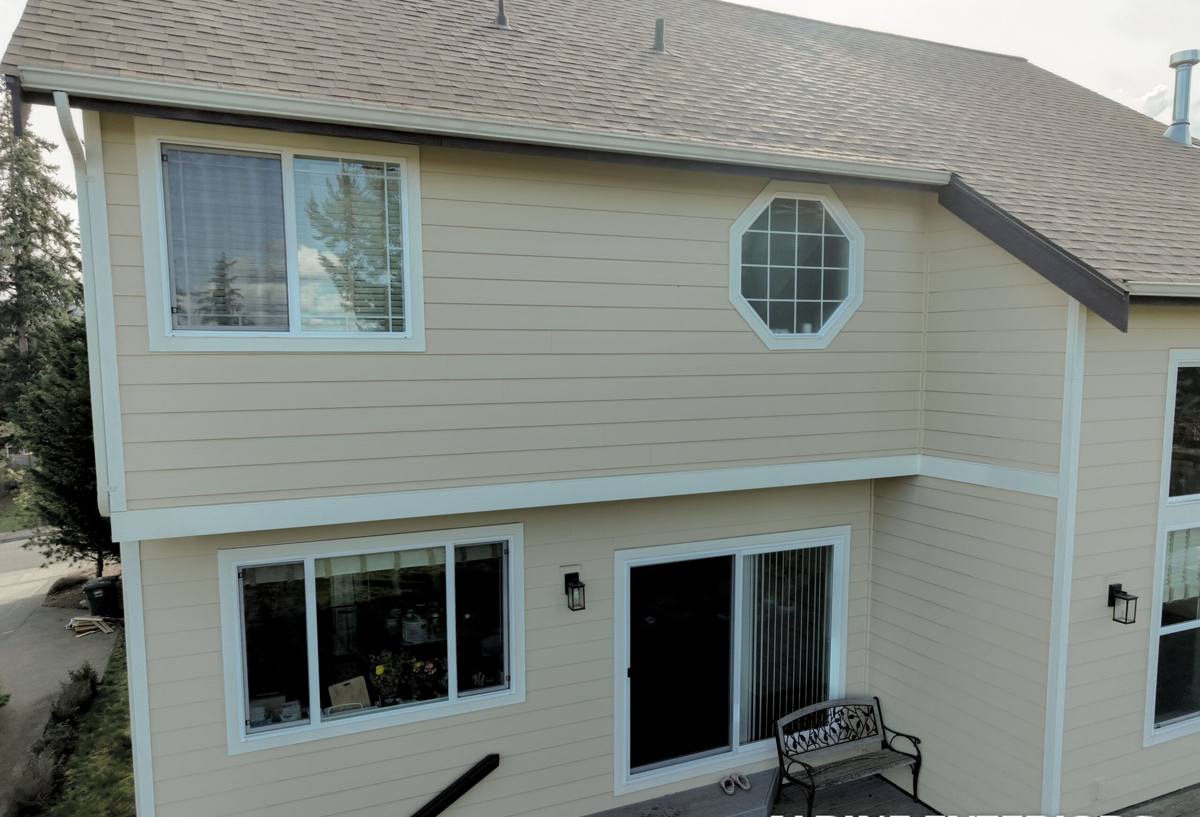
What Fiber Cement Is and Why It Holds Up Here
Fiber cement siding is made from a blend of Portland cement, sand, and cellulose fiber, cured into rigid boards and panels. That composition is what gives it three properties that matter most in Ferndale's climate: it doesn't absorb and swell with moisture the way wood-based products can, it won't feed a fire the way some organic siding materials do, and it holds its shape through repeated wet-dry and freeze-thaw cycling instead of cupping, warping, or splitting. None of that is exotic engineering — it's the reason fiber cement has become the standard replacement material in coastal and high-moisture regions across the country.
What matters just as much as the base material is the specific product line and the quality of the factory finish, which is why brand and formulation aren't interchangeable details — they're the whole point.
Why We Install Only James Hardie Fiber Cement
We used to offer a broader range of siding products. We narrowed to one after paying attention to what actually held up on tear-offs and service calls in this exact climate, versus what looked comparable on a spec sheet. James Hardie is what we settled on, for reasons specific to what a Ferndale home needs from its exterior:
- Non-combustible core: Fiber cement won't feed a fire the way wood-based siding can, which matters for both household safety and, in many cases, insurance underwriting.
- Factory-applied ColorPlus finish: Color is baked on under controlled factory conditions, not brushed on in the field, so it resists fading, chalking, and moisture intrusion far longer than site-applied paint.
- Climate-engineered HZ5 formulation: Hardie's HZ5 product line is specifically engineered for regions with heavy, sustained moisture exposure and freeze-thaw cycling — a fair description of coastal Whatcom County.
- Dimensional stability: Fiber cement doesn't swell, cup, or warp the way engineered wood siding can after repeated wet-season moisture cycles.
- A strong, transferable warranty: Hardie backs its material with one of the more robust warranty structures in the industry, provided installation follows the manufacturer's specifications.
What We Won't Install, and Why That's a Standard, Not a Slogan
We don't install LP SmartSide, vinyl siding, Cemplank, Allura, primed spruce, or cedar. Every one of those products has a legitimate place in the market, and plenty of homeowners elsewhere are satisfied with them. Our decision isn't a claim that they're defective — it's a professional judgment about trade-offs in this specific climate. Engineered wood products like LP SmartSide need diligent edge-sealing and ongoing maintenance to keep moisture out of their wood-strand core, which is a harder standard to maintain through a Whatcom County winter than in a drier region. Vinyl can crack in cold snaps and fade unevenly under UV exposure, and it doesn't offer the fire-resistance profile fiber cement does. Cedar and primed spruce are wood, full stop, which means ongoing paint and sealant maintenance to keep moisture out — a maintenance burden that's harder to stay ahead of with this area's rain totals and mold-friendly humidity. We'd rather stand fully behind one system we trust than offer a lower-cost option that quietly shifts maintenance risk onto the homeowner a few years down the road.
Matching the Right Hardie Product to a Ferndale Home
James Hardie isn't a single product — it's a system with several lines, and picking the right one depends on the home's style and exposure. HardiePlank lap siding is the most common choice for traditional and craftsman-style homes and comes in several width and texture options. HardiePanel is used for vertical siding and board-and-batten looks, popular on more modern or farmhouse-influenced designs common around Whatcom County. HardieShingle replicates a cedar-shake look without the maintenance burden of actual cedar shakes, and HardieTrim finishes out corners, window and door casing, and fascia in a material that matches the siding's moisture and finish performance rather than introducing a weaker wood trim detail into an otherwise solid system.
ColorPlus Finish vs. Field-Applied Paint
The finish matters as much as the board itself. Hardie's ColorPlus technology applies color in multiple coats under factory-controlled conditions, then bakes it on, which produces a far more consistent and durable bond than paint applied on-site after installation. In a climate with this much sustained moisture and salt exposure, that difference shows up over years, not days — factory finishes hold their color and resist peeling and chalking longer than field-applied paint typically can, which means fewer repaint cycles over the life of the siding.
What a Correct Fiber Cement Installation Actually Involves
The product only performs the way it's engineered to if the installation follows Hardie's specifications closely. That includes a correct fastening pattern and fastener spacing, proper clearances from grade, roof lines, and decks so the siding never sits in standing water or snow, correctly lapped and caulked joints, and house wrap and flashing details that work together as a drainage system rather than in isolation. Skipping any one of those steps is one of the most common ways a good product develops problems that get blamed on the material instead of the installation.
Installation Mistakes That Shorten a Job's Life
The failures we see most often on service calls trace back to a handful of repeated shortcuts: nailing too tight so boards can't move slightly with temperature changes, insufficient clearance where siding meets a deck or patio surface, joints butted without backer flashing or sealant, and house wrap that's taped or lapped incorrectly so water tracks behind the siding instead of draining out. None of these show up on the day the job is finished — they show up two or three wet seasons later, which is exactly why installation detail matters as much as the material spec.
Our Process, From Estimate to Finished Siding
A fiber cement re-side on a Ferndale home generally follows the same sequence, though the details shift with the home's condition and layout:
- Walkthrough and estimate: We look at the existing siding, trim, and any visible moisture damage in person before quoting anything, since a real number depends on what's actually on the wall.
- Tear-off or overlay decision: Depending on the condition of the existing siding and substrate, we'll recommend a full tear-off or, in limited cases, an overlay — and explain the trade-offs either way.
- Substrate inspection and repair: Once old siding comes off, we check sheathing and framing for hidden moisture damage before anything new goes up.
- House wrap and flashing: Correct water-resistive barrier and flashing sequencing goes in first, since this layer does more to prevent future leaks than the siding itself.
- Hardie installation: Boards or panels go up to manufacturer spec, with attention to fastening, clearances, and joint treatment.
- Trim, caulking, and final inspection: Trim details get finished out and the full job gets walked before we call it done.
Cost Factors for Fiber Cement Siding in Ferndale
| Factor | What It Affects | Why It Matters in Ferndale |
|---|---|---|
| Home size and wall complexity | Total material and labor | More corners, dormers, and trim joints mean more places for wind-driven rain to find a way in |
| Tear-off vs. overlay | Labor scope and substrate access | Tear-off reveals hidden moisture damage that's common under older siding in this climate |
| Substrate condition | Repair costs before new siding goes on | Years of trapped moisture behind failing siding can rot sheathing and framing |
| Product line and profile | Material cost | HardiePlank, HardiePanel, and HardieShingle carry different material and labor costs |
| Trim and color selection | Material cost and finish longevity | Factory ColorPlus finishes hold up longer against salt air and UV than field-painted trim |
| Site access | Labor time and equipment needs | Larger lots, fencing, or tree-shaded properties can add setup and staging time |
Exact numbers depend on the specific home, which is why we walk the property in person rather than quoting off a generic price-per-square-foot figure.
Signs a Ferndale Home's Siding Needs Attention
- Moss or dark staining that returns quickly after cleaning, especially on shaded or north-facing walls
- Soft or spongy siding, particularly low on the wall or around window and door trim
- Peeling paint, bubbling, or visible warping on siding boards
- Cracked, chipped, or missing sections after wind and storm events
- Visible gaps at seams, corners, or trim joints where water can track in
- A noticeably higher heating bill that may point to a wall assembly that's no longer sealing properly
Why a Crew That Already Works Ferndale Matters
A crew that installs siding and roofing across Whatcom County day in and day out learns how salt air, wind-driven rain, and moss actually behave on real houses over a full year, not just how a product performs on a manufacturer's spec sheet. That experience shapes practical decisions on install day: where extra flashing attention pays off, which wall orientations stay wet the longest, and which details are worth the extra time so a homeowner isn't dealing with a callback two winters later. Because we handle roofing as well as siding, we can also catch problems that cross trades — a leaking roof valley or poorly flashed step flashing can show up as siding damage well below the actual source, and a crew that only looks at walls in isolation can miss it.
If your Ferndale home's siding is aging, showing moisture damage, or you're planning ahead for a replacement, we're happy to walk the property and give you a straight answer about what it needs. Reach out below for a free, no-pressure estimate.