 Bellingham Roofing
 Building Decks for Ferndale's Coastal Conditions
Ferndale sits close enough to the water that salt air is a real factor in how a deck ages, and Whatcom County's long wet season means any outdoor structure here spends more months damp than dry. A deck that would hold up fine in a drier inland climate can start showing problems within a few years in Ferndale if it wasn't built with this environment in mind. That means paying attention to fastener corrosion, wood moisture content, drainage under the structure, and how quickly moss and algae take hold on any horizontal surface that doesn't get much direct sun.
None of this is exotic engineering. It's mostly about not cutting corners in the places that don't show up until year three or four — flashing details, fastener grade, ventilation under the deck, and spacing that lets water actually get off the boards instead of sitting on them. We build decks for homes throughout the Bellingham area, and Ferndale's mix of coastal exposure and heavy seasonal rain is one of the more demanding combinations we plan around.
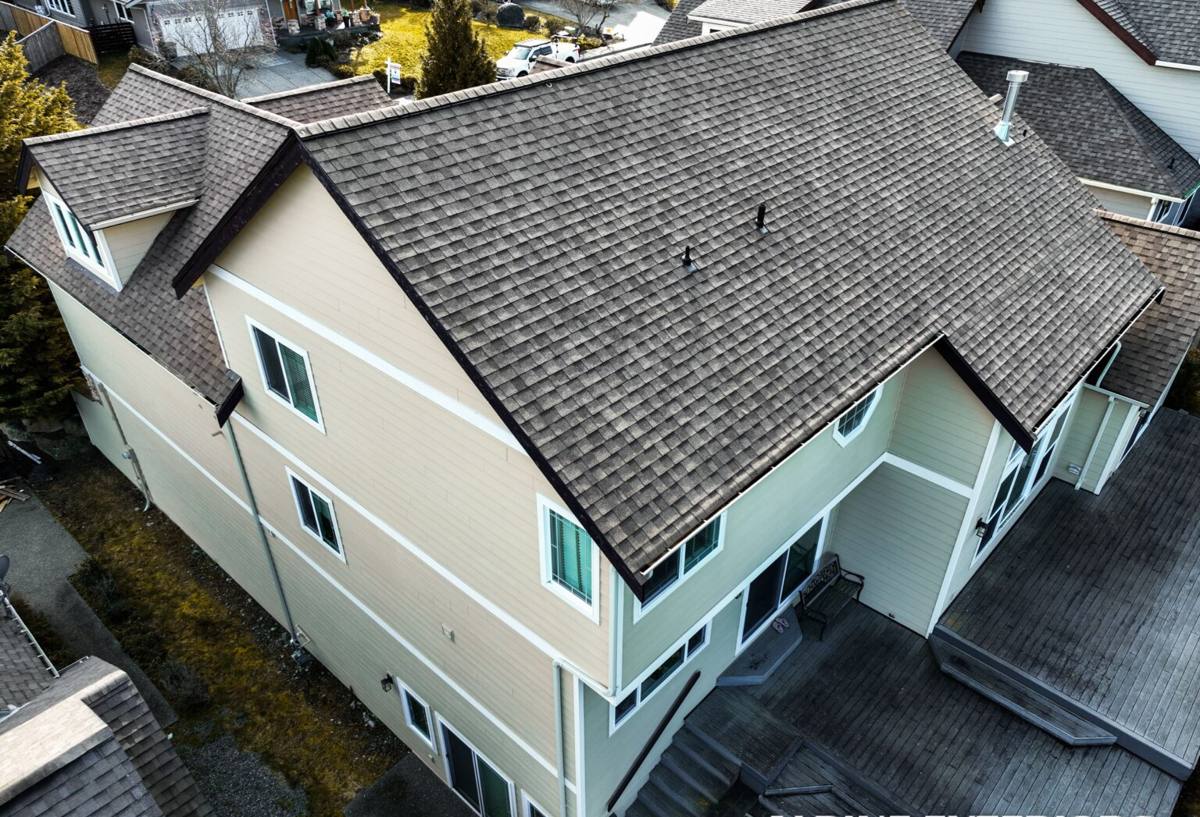
What Salt Air and Moss Season Actually Do to a Deck
Salt-laden air accelerates corrosion on any exposed metal — nails, screws, joist hangers, bolts. Standard galvanized fasteners can start rusting years before they would in a drier, inland setting, and once a fastener corrodes it loses grip and can streak or stain the wood around it. This is a slow problem, which is exactly why it's easy for a builder to skip the upgrade and have it not matter until the deck is already out of warranty.
Driving rain is a different kind of problem. It doesn't just fall straight down — wind pushes it sideways and up under lap joints, around ledger boards, and into any gap that wasn't properly flashed or sealed. Water that gets behind a ledger board or into end-grain cuts doesn't dry out quickly in our climate, and that's where rot usually starts, hidden from view until a board or a whole section starts to feel soft.
Then there's moss. Bellingham and Whatcom County have a moss season that can run from fall through spring, and any deck surface that stays shaded or doesn't get good airflow will grow moss and algae on the boards. Beyond looking bad, wet moss on decking is genuinely slippery and holds moisture against the wood, which shortens the life of the finish and the boards underneath it.
Choosing the Right Decking Material for This Climate
There's no single "correct" decking material — it depends on your budget, how much upkeep you want to do, and how much shade or moss exposure the deck's location gets. Here's how the common options compare for a Ferndale-area deck specifically:
| Material | Moisture & Moss Behavior | Maintenance | Typical Lifespan |
|---|---|---|---|
| Pressure-treated wood | Resists rot with proper sealing, but grain still holds moisture and grows moss/algae if shaded | Needs cleaning and re-sealing every 1-2 years | 15-20 years with upkeep |
| Cedar | Naturally rot-resistant, ages to gray if unfinished, still needs cleaning in moss season | Periodic cleaning; staining/sealing if you want to keep the color | 15-25 years with upkeep |
| Composite decking | Doesn't absorb moisture the way wood does, but algae/moss can still grow on the surface film and needs washing off | Occasional washing, no sealing or staining | 25-30+ years, varies by product |
Composite decking has become popular for coastal and heavy-rain climates because it removes the sealing and staining cycle entirely, though it still needs to be washed periodically to keep moss and algae from building up on the surface. Wood decks cost less up front and can look great, but they ask more of the homeowner over time — that's an honest tradeoff, not a reason to avoid wood if you're willing to keep up with it. We'll walk through the real cost and maintenance picture for your situation rather than pushing one product across the board.
Framing, Footings, and What's Underneath the Boards
The decking itself is the part everyone sees, but the framing underneath is what determines whether the deck is still solid in fifteen years. A few things matter more here than in a milder climate:
Footing depth
Footings need to be dug to the frost depth required by local code, and set on solid, well-draining soil. Whatcom County's building department reviews footing depth and placement as part of the permit process, and skipping or shortcutting this is one of the most common causes of a deck that shifts or settles unevenly over time.
Ledger board flashing
Where the deck attaches to the house is the single most important waterproofing detail on the whole structure. Proper flashing — installed correctly with the house's existing water-resistive barrier, not just caulked over — keeps driving rain from working its way into the rim joist and wall framing behind the ledger.
Joist protection and airflow
Joist tape or a protective cap over the top of each joist keeps water from soaking into end grain and fastener holes, which is where rot most often starts. Just as important is making sure there's enough clearance and airflow underneath the deck so the framing can actually dry out between rain events instead of staying damp all season.
Fasteners and Hardware: Where Corners Get Cut
This is the detail that separates a deck built for coastal conditions from one that just looks similar on installation day. We use stainless steel or heavily coated, marine-rated fasteners and joist hangers in Ferndale builds specifically because standard galvanized hardware corrodes faster this close to salt air. It costs more per fastener, but replacing corroded hardware later means tearing into finished decking — it's far cheaper to get it right the first time.
Our Deck Building Process
- On-site assessment — we look at sun exposure, drainage, existing grade, and how the deck ties into the house before recommending a layout or material.
- Design and material selection — we go over decking, railing, and hardware options with honest pros and cons for your budget and how much maintenance you want to take on.
- Permit handling — we prepare and submit what's needed for your jurisdiction and schedule the required inspections.
- Footings and framing — footings are set to code depth, framing is built with corrosion-resistant hardware and joist protection throughout.
- Decking, railing, and stairs — installed with attention to fastener spacing, board gapping for drainage, and code-compliant guardrail and stair details.
- Final walkthrough — we go over the finished deck with you, including what maintenance to expect and when.
Permits and Code for Ferndale Decks
Most decks above a certain height or attached to the house require a permit in Whatcom County and within Ferndale city limits, along with inspections at the footing and framing stages. Guardrails are required above a specific height threshold, stair rise and run have to meet code, and ledger attachment has specific fastening requirements when the deck is attached to the house rather than freestanding. We handle the permit submission and inspection scheduling as part of the build so you're not tracking that down yourself, and so the finished deck is one that will pass a future home inspection or insurance review without surprises.
Keeping a Ferndale Deck in Good Shape Year to Year
A well-built deck still needs some seasonal attention in this climate — the goal is to catch small issues before moss, moisture, or corrosion turn into structural problems. A simple yearly routine covers most of it:
- Sweep off leaves and debris regularly in fall so they don't trap moisture against the boards
- Wash down decking and railings at least once a year to remove moss and algae buildup before it gets slick
- Check fasteners and hardware for early signs of rust or loosening, especially near the ledger
- Re-seal or re-stain wood decking on the schedule appropriate to the product used
- Confirm gaps between boards are clear so water keeps draining rather than pooling
- Look underneath the deck once a year for any signs of standing water or blocked airflow
Why a Crew That Already Works Ferndale Makes a Difference
A lot of the details above — fastener grade, flashing technique, footing depth, moss-conscious layout — aren't things you can spot on a finished deck by looking at it. They show up years later, in the form of either a deck that's still solid or one that's starting to fail early. A crew that regularly builds in Ferndale and the surrounding Bellingham area already knows which corners not to cut for this climate, already has a working relationship with local permitting, and isn't guessing at what the salt air and rain will do to a given material over time. That local familiarity is worth more than it sounds like on paper.
If you're planning a new deck or replacing one that's showing its age, we're happy to take a look and put together a straightforward, no-pressure estimate — just fill out the form below.