 Bellingham Roofing
 Why Edgemoor's Setting Is Hard on Siding
Edgemoor sits close to the water, tucked into a wooded, elevated stretch along Bellingham Bay. That location is beautiful, but it's also a tough combination for exterior siding. Homes here deal with salt-laden air coming off the bay, driving rain that hits west- and south-facing walls at an angle during winter storms, and heavy tree cover that keeps north-facing walls and lower siding courses shaded and damp for long stretches of the year. That shade, combined with Whatcom County's mild, wet winters, is exactly the recipe that grows moss, algae, and mildew on siding that isn't built or installed to shed moisture quickly.
None of this is unique to any one house in the neighborhood — it's a function of geography. Homes closer to the bluff or with more open exposure to the water take more direct salt spray and wind-driven rain. Homes further back under tree canopy fight more moss and slower drying. Either way, the siding on an Edgemoor home works harder than siding on a home in a drier, more open part of the county, and it needs to be chosen and installed with that in mind.
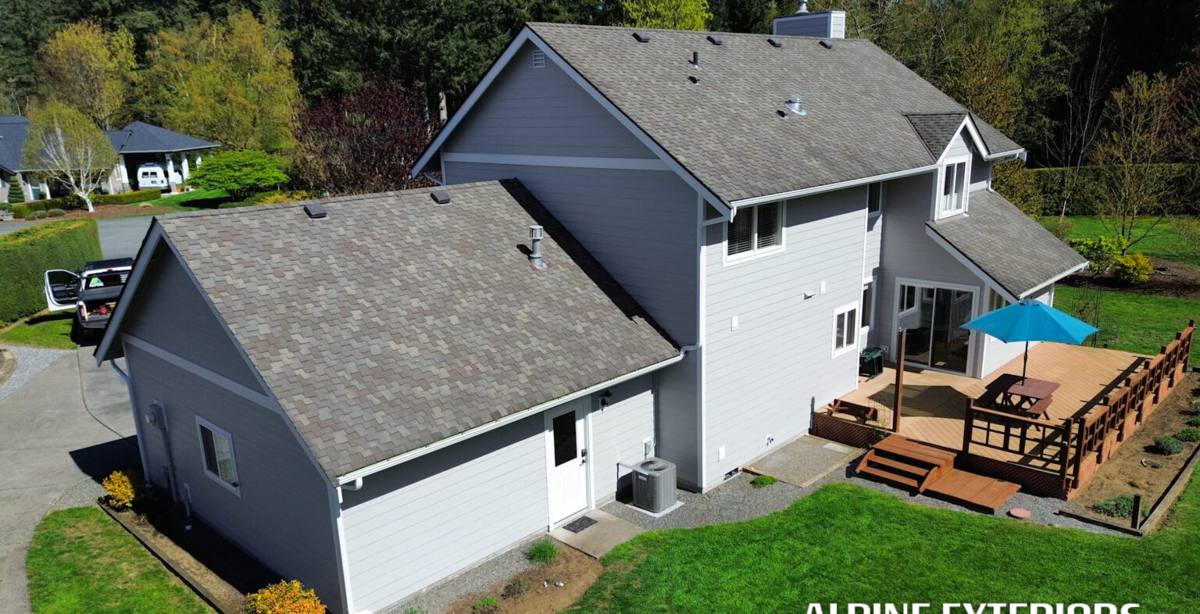
Why We Only Install James Hardie
Bellingham Roofing Company installs James Hardie fiber cement siding exclusively. We don't install vinyl, LP SmartSide, Cemplank, Allura, primed spruce, or cedar. That's not a marketing line — it's a standard we hold because of what we've seen happen to other siding materials in exactly the kind of climate Edgemoor sits in.
Wood-based products, including engineered wood siding, rely on a factory coating and careful field sealing of every cut edge to keep moisture out. In a shaded, salt-air, high-rainfall environment, any gap in that protection — a missed cut edge, a nail that wasn't sealed, a joint that opens up as the material moves — becomes an entry point for water, and once wood-based siding takes on moisture repeatedly, it swells, delaminates, or rots from the inside out. Vinyl siding doesn't rot, but it's not rigid, it fades and becomes brittle under UV and salt exposure over time, and it can't be painted to refresh its look without voiding what warranty it has. James Hardie fiber cement is non-combustible, doesn't swell or rot from moisture exposure the way wood-based products do, and its ColorPlus factory finish is baked on with a warranty that follows the material, not just the installation. That's the trade-off math that led us to standardize on it.
What Correct Installation Involves in This Climate
James Hardie makes a durable product, but the siding is only as good as the installation behind it. In a wet, moss-prone environment like Edgemoor, a handful of details separate a siding job that lasts decades from one that causes problems in five years:
- A drainage plane (weather-resistive barrier) installed correctly behind the siding, with proper shingle-lap sequencing so water is directed out and down, never trapped
- A rainscreen gap where the wall assembly and budget call for it, so siding can dry on both sides instead of sitting flush against a damp sheathing surface
- Correct fastener placement and type — Hardie specifies fastener spacing, embedment depth, and corrosion-resistant fasteners, and getting this wrong is one of the most common causes of premature failure
- Properly flashed and sealed penetrations at windows, doors, hose bibs, and vents, since these are the spots water actually finds a way in
- Correct minimum clearance between the bottom of the siding and grade, decks, roofs, and walkways, so splash-back and standing water don't sit against the material
- Factory-cut and sealed edges wherever possible, with any field cuts primed and sealed per manufacturer specification before installation
Every one of these is a Hardie installation requirement, not an optional upgrade. Skipping any of them can void the manufacturer warranty, and in a climate that delivers this much moisture and shade, the consequences show up faster than they would in a drier region.
Choosing the Right Hardie Product Line for an Edgemoor Home
James Hardie's product lines are engineered for different climate zones, and homes in Whatcom County fall into Hardie's HZ5 climate zone designation, which accounts for freeze-thaw cycling, extended damp periods, and coastal exposure. Within that, homeowners still have real choices to make based on the style of the home and how much of it faces prevailing wind and rain.
| Product Line | Best Fit | Why It Works Here |
|---|---|---|
| HardiePlank Lap Siding | Traditional and craftsman-style homes | Classic horizontal lap profile sheds water efficiently; most common choice in the neighborhood's residential streets |
| HardieShingle | Homes wanting a cedar-shake look | Delivers the shingle aesthetic without the moisture vulnerability of real cedar shakes under tree cover |
| HardiePanel | Modern builds, accent walls, gable ends | Clean vertical lines for contemporary designs; fewer horizontal joints on high-exposure walls |
| HardieTrim | Corner boards, window and door trim | Matches the durability of the field siding so trim doesn't become the weak point |
For homes with significant western or southern water exposure, we often recommend leaning on lap siding profiles with tighter reveal spacing and extra attention to flashing details, simply because those walls take the brunt of driving rain. For heavily shaded, tree-covered elevations, the product choice matters less than making sure the wall can actually dry — that's where the rainscreen detail and gutter/drainage planning around the house carry more weight than which Hardie line is on the wall.
Color and Finish in a Wooded, Waterfront Setting
James Hardie's ColorPlus finish is baked on in a controlled factory environment and backed by its own finish warranty, which matters in a climate where sun exposure is inconsistent — some walls get filtered light through trees, others get direct salt-air exposure, and a field-applied paint job weathers unevenly across those conditions. A factory finish weathers consistently because it isn't dependent on job-site temperature, humidity, or application technique the way a field paint job is.
Color choice is mostly personal preference, but homes set against heavy tree cover often read well in colors with enough contrast to stand out rather than disappear into the landscape, while homes with more open water views tend to hold up visually well in either deeper, richer tones or classic neutrals that complement the coastal setting. We're happy to walk through physical color samples on-site, since lighting under tree canopy versus open exposure can make the same color look noticeably different.
Our Process, Start to Finish
Assessment and Moisture Check
Before we talk product or price, we look at the existing siding and the wall assembly behind it. On older Edgemoor homes especially, we check for hidden moisture damage, undersized or missing flashing, and drainage issues around grade, decks, and downspouts — problems that need to be corrected as part of the job, not painted over.
Product and Detail Plan
We walk the homeowner through product line, reveal, trim details, and color, and we lay out exactly which flashing, rainscreen, and fastening details apply to that specific home based on its exposure.
Installation
Installation follows James Hardie's published fastening, clearance, and sealing specifications, with extra attention on any wall that takes direct rain or sits in permanent shade.
Final Walkthrough
We walk the finished job with the homeowner, checking reveals, caulking, trim, and touch-up before calling it complete.
What Affects the Cost
Every home is different, but the factors that move the price on an Edgemoor siding project are fairly consistent:
| Factor | Why It Matters |
|---|---|
| Existing wall condition | Rot or moisture damage found during tear-off requires sheathing repair before new siding goes on |
| Home size and complexity | Multiple stories, dormers, and cut-up rooflines add labor and material waste |
| Product line and trim package | Panel, plank, and shingle profiles carry different material costs; trim upgrades add cost |
| Access and site conditions | Wooded lots, slopes, and limited staging space can slow installation and require extra site protection |
| Rainscreen and drainage upgrades | Adding a proper rainscreen system where one doesn't exist is a worthwhile upgrade in this climate, but it adds labor |
We give every homeowner a written estimate that breaks these out so there's no guessing where the money is going.
Living with Hardie Siding in Edgemoor: Maintenance Reality
Even the right product installed correctly still lives in a wet, shaded, salty environment, and a little routine attention keeps it looking and performing its best:
- Rinse siding annually, focusing on shaded and north-facing walls where moss and algae take hold first
- Keep gutters and downspouts clear so water isn't overflowing onto siding below the roofline
- Trim back tree branches and shrubs that keep siding constantly shaded and damp against the wall
- Inspect caulking at trim, windows, and joints every year or two and re-seal where it's cracked or pulled away
- Address any touch-up paint needs promptly rather than letting bare fiber cement sit exposed
This is meaningfully less maintenance than wood-based siding requires, since there's no repainting the whole house on a cycle and no risk of rot from a missed spot — but "low maintenance" isn't "no maintenance," especially in a climate this wet.
Why a Crew That Already Works Edgemoor Matters
A contractor who's worked this specific stretch of Bellingham knows which elevations on a typical Edgemoor lot take the worst of the weather, understands how tree cover on a given street affects drying time, and has already made the judgment calls about rainscreen, flashing, and reveal that get skipped by crews treating every job the same regardless of location. That local pattern recognition is the difference between a siding job that's technically installed to spec and one that's actually built for the conditions on that particular wall.
James Hardie siding, installed correctly, is a long-term investment in a home that already deals with more moisture exposure than most. Getting the details right the first time — the flashing, the drainage, the fastening — is far cheaper than fixing them later.
If you're planning a siding project for your Edgemoor home, we're glad to walk the property, take a look at the existing siding and wall condition, and put together a free, no-pressure estimate with no obligation.