 Bellingham Roofing
 Deck Building in Columbia: Built for the Neighborhood, Built for the Weather
Columbia is one of Bellingham's older, established neighborhoods, with a housing mix that ranges from early-1900s bungalows to mid-century remodels and newer infill construction near the waterfront side of town. A lot of the homes here already have a deck of some age on them, or an owner who's been eyeing that back slope or side yard for years and finally wants to do it right. Whatever the starting point, building a deck in this part of Bellingham means designing and building for Whatcom County's specific brand of wear: salt-laden air rolling in off Bellingham Bay, long stretches of driving rain, and a moss season that seems to run longer every year. A deck built the same way you'd build one in Spokane or Boise simply won't hold up the same way here.
This page covers what we actually do differently when we build a deck for a Columbia property — the material choices, the framing details, the drainage thinking, and the process we walk every client through before a single post goes in the ground.
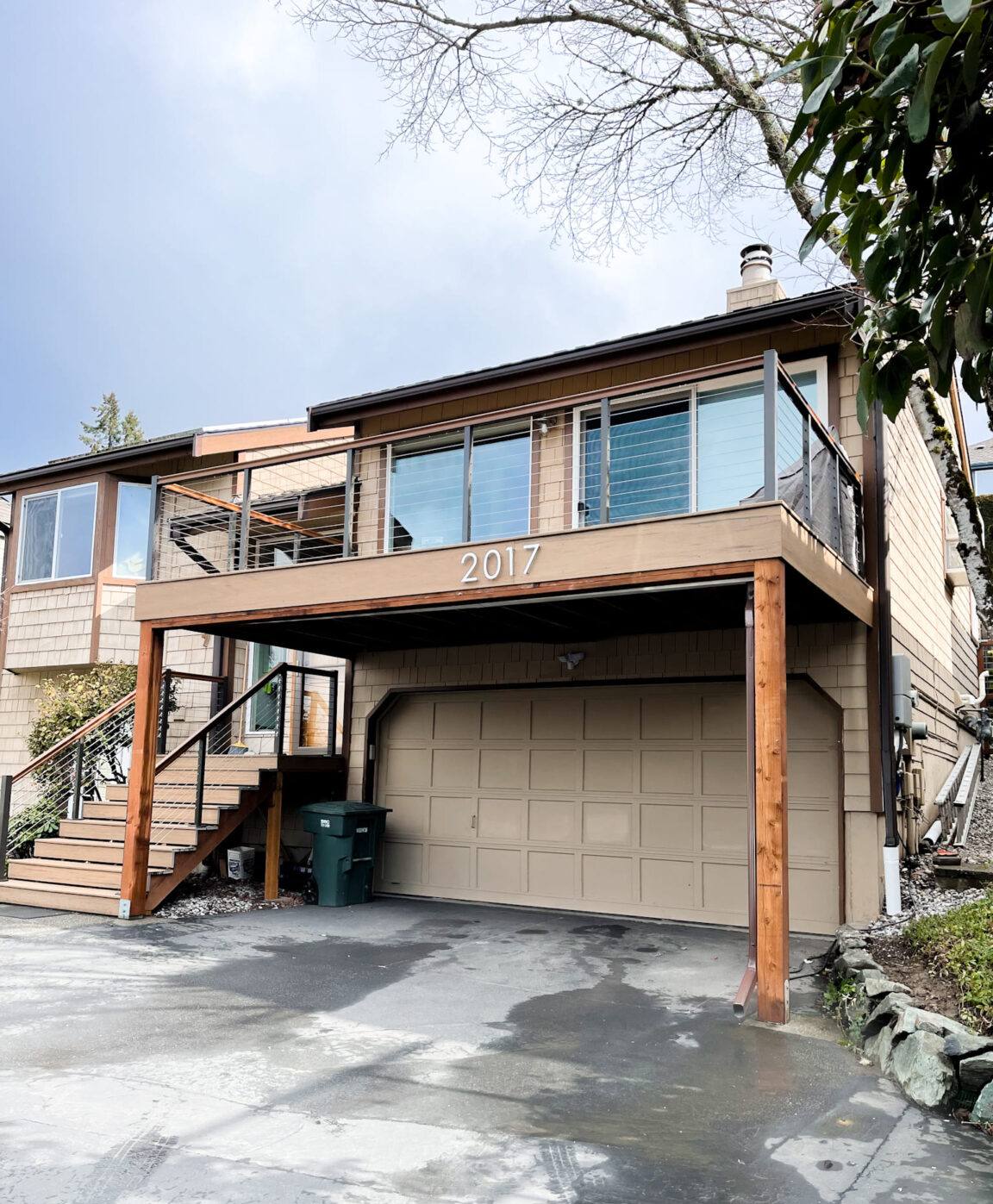
What Columbia's Climate Actually Does to a Deck
Homeowners often assume rain is the main enemy of an outdoor structure. Rain matters, but it's the combination of factors that does the real damage over time:
- Salt air: Columbia's proximity to the bay means a fine layer of salt-bearing moisture settles on exposed wood and metal fasteners more than most inland Whatcom County neighborhoods experience. Over years, this accelerates corrosion on the wrong hardware and speeds up UV/moisture breakdown on unprotected wood surfaces.
- Driving rain: Bellingham's rain rarely falls straight down. Wind-driven rain gets pushed sideways into ledger connections, under railing caps, and into end-grain cuts that aren't sealed — exactly the spots where rot starts and is hardest to spot early.
- Moss and organic buildup: Our moss season stretches long into the year. Moss and algae hold moisture against decking boards far longer than open air ever would, which is why north-facing or heavily shaded sections of a deck almost always show wear first.
- Freeze-thaw cycling: It's not extreme here, but Whatcom County still gets enough cold snaps that trapped moisture in footings or fasteners can expand and contract, loosening connections over several seasons.
None of this means a deck can't last decades in Columbia. It means the build has to account for these forces from the framing stage forward, not just at the surface with a coat of stain.
Where We See the Most Failures on Existing Decks
When we're called out to look at an aging deck in this neighborhood before a rebuild, the failure points are consistent: ledger boards without proper flashing, fastener corrosion where the wrong screws were used near the bay-influenced air, soft spots on shaded boards where moss sat undisturbed, and railing posts that were never properly isolated from standing water at the base.
What a Correctly Built Deck Involves
A deck that's going to hold up in this environment isn't just "posts, joists, boards." Every layer has a job to do against moisture and salt exposure.
Structural Framing
We use pressure-treated or naturally rot-resistant framing lumber rated for ground contact where posts meet grade, with post bases set to keep wood off standing water and concrete. Joist spacing is set to the decking material's actual span rating, not stretched to save a few boards — sagging and bounce almost always trace back to under-spec'd framing, not the decking itself.
Ledger Attachment and Flashing
Where a deck attaches to the house, the ledger board connection is one of the most common rot points we find in this region. Proper flashing — installed correctly behind the siding and sloped to shed water away from the house — is non-negotiable on every attached deck we build. This is the detail that's invisible once the deck is finished, and it's the one that determines whether the connection is still sound in fifteen years.
Fasteners and Hardware
Given the salt air common closer to the bay side of Bellingham, we use corrosion-resistant, coated or stainless fasteners and structural hardware rated for exterior and ground-contact use. Mixing incompatible metals (the wrong screw in the wrong bracket) is a quiet cause of premature hardware failure, and it's an easy mistake to avoid with the right parts on the truck.
Decking Material Choice
There's no single "best" decking material — it's a set of honest trade-offs between upfront cost, maintenance, and how the material behaves in a wet, mossy climate.
| Material | Upfront Cost | Maintenance in Our Climate | Notes |
|---|---|---|---|
| Cedar / Pressure-Treated Wood | Lowest | Annual cleaning and periodic re-sealing recommended | Needs consistent upkeep to resist moss and moisture; skipping maintenance shortens lifespan noticeably here |
| Composite Decking | Mid to High | Low — periodic washing to clear moss/algae film | Doesn't absorb water like wood, but surface can still get slick with algae if shaded and never cleaned |
| PVC Decking | Highest | Lowest | Fully synthetic, very resistant to moisture and organic growth; higher material cost offsets long-term upkeep |
Railings and Fasteners at the Surface
Railing post connections and cap details are another spot where driving rain finds its way in. We detail railing bases to shed water rather than trap it, and we're selective about cap and post materials for the same salt-air and moisture reasons that drive our decking choices.
Our Deck Building Process
Every Columbia project follows the same general sequence, adjusted for the specific lot and structure:
- On-site assessment: We look at the grade, drainage patterns, sun/shade exposure, and (for rebuilds) the condition of any existing structure before recommending anything.
- Design and material discussion: We walk through decking and railing options honestly, including what each choice will actually require in upkeep given the site's exposure to rain, shade, and salt air.
- Permitting: Deck projects of a certain size or height typically require permitting through the City of Bellingham or Whatcom County depending on the property's location. We handle this coordination as part of the project.
- Site prep and footings: Footings are set below frost depth and positioned to manage water flow away from the structure, not just placed for convenience.
- Framing, ledger, and flashing: This is where the long-term durability of the deck is actually decided, and where we spend the most care.
- Decking, railing, and finish work: Final surface installation, hardware torque checks, and a walkthrough with the homeowner.
A Few Signs Your Current Deck Needs Attention
- Soft, spongy, or discolored decking boards, especially in shaded areas
- Visible rust or staining around fasteners and brackets
- Gaps, movement, or cracking sounds at the ledger connection to the house
- Persistent moss or algae buildup that returns quickly after cleaning
- Railing posts that wobble or feel less rigid than they used to
Why a Crew That Already Works in Columbia Matters
Building a deck that's meant to hold up in Bellingham's marine climate isn't the same skill set as building one in a dry inland climate, and it's not something you learn from a general contracting background alone. A crew that regularly works this specific part of Whatcom County already knows which corners of a Columbia lot tend to hold moisture longest, which orientations get hit hardest by driving rain off the bay, and which hardware and material choices are worth the extra upfront cost versus which corners genuinely don't matter. That local pattern recognition shows up in fewer callbacks and a deck that's still solid well past the point where a poorly detailed one would already be showing rot.
Maintenance That Actually Matters Here
Whatever material you choose, a few habits make the biggest difference in this climate:
- Clear moss and organic debris from boards and gaps at least once a year, more often on shaded sections
- Keep gutters and downspouts near the deck clear so runoff isn't dumping extra water onto or under the structure
- Inspect ledger flashing and fastener condition every couple of years, especially after a hard winter
- Re-seal wood decking on the manufacturer's recommended schedule rather than waiting until it looks obviously weathered
Get an Honest Look at Your Deck Project
Whether you're planning a new deck for a Columbia property or dealing with an aging one that's showing its age faster than it should, it helps to have someone look at the actual site conditions before assuming what's needed. We're happy to walk the lot, talk through material trade-offs honestly, and give you a straightforward estimate — no pressure, no upsell. Use the form below to request a free estimate and we'll get back to you.