 Bellingham Roofing
 Roofing in Cordata: What the Climate Actually Does to Asphalt Shingles
Cordata sits in north Bellingham, close enough to Bellingham Bay and the Strait of Georgia that salt-laden air is a constant factor on every roof in the neighborhood, not just the ones with a water view. Add Whatcom County's long wet season, wind-driven rain off the water, and heavy tree cover in many of the older and newer subdivisions alike, and you get a set of conditions that asphalt shingles have to handle every single month of the year, not just during a storm.
None of this makes asphalt shingles a poor choice for Cordata. It just means the installation details matter more here than they would in a drier, sunnier climate. A shingle roof installed with dry-climate assumptions — thin underlayment, minimal ventilation, standard nailing patterns — tends to show problems early in a place like this: curling edges, granule loss, dark streaking, and soft decking under valleys and low-slope sections. A shingle roof installed correctly for this climate, on the other hand, is a genuinely durable, low-maintenance, and cost-effective option for decades.
Why Asphalt Shingles Still Make Sense for Cordata Homes
Fits the Housing Stock
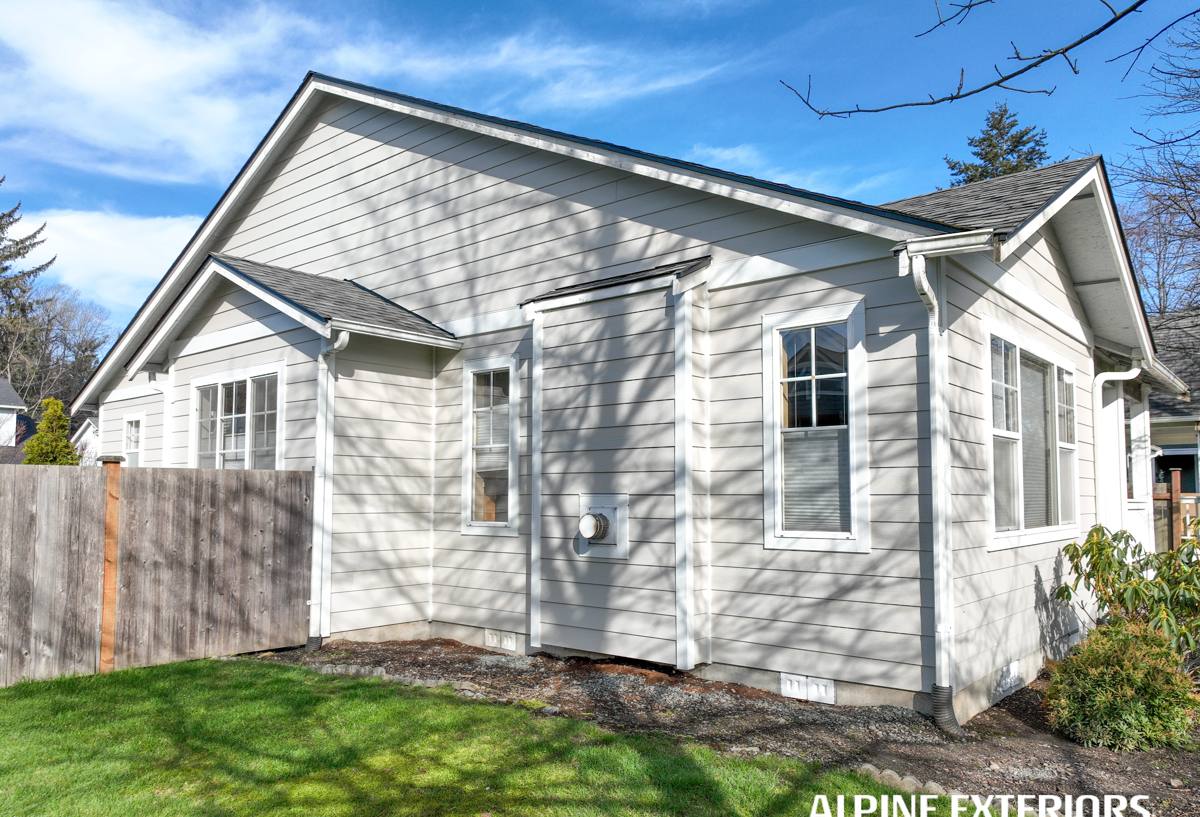
Cordata has a lot of newer construction mixed with homes from the last few decades — moderate to standard rooflines, typical residential pitches, and straightforward gable and hip designs. Asphalt shingles are well suited to this kind of architecture. They handle standard pitches well, they're available in colors and profiles that match both newer builder-grade homes and more traditional styles, and they don't require the specialized structural review that heavier roofing materials sometimes do.
Budget and Repairability
Compared to metal, tile, or slate, asphalt shingles remain the most budget-accessible roofing material for a full residential re-roof, and they're the easiest to repair in sections if a tree branch, wind event, or isolated leak damages part of the roof without affecting the whole system. That matters in a wind-and-rain climate where localized damage — a lifted ridge cap, a cracked shingle near a vent — is more common than whole-roof failure.
Where They Fall Short (Honestly)
Asphalt shingles are not the longest-lived roofing material available, and in consistently shaded, damp areas they need more attention to moss and algae growth than metal or tile. We tell Cordata homeowners this upfront rather than oversell the product — it's a matter of matching the material to the property, the budget, and how much roof maintenance the homeowner wants to take on.
What a Correct Installation Involves in This Climate
The visible shingle layer is the smallest part of what actually protects a Cordata home from water intrusion. Underneath it, several details determine whether the roof performs for its full expected life or starts failing early.
- Ice-and-water shield at vulnerable points — valleys, eaves, and roof-to-wall transitions get a self-adhering waterproof membrane, not just standard felt, because these are the spots where wind-driven rain gets pushed uphill under normal shingle laps.
- Synthetic underlayment across the field — a durable, water-resistant layer between the deck and the shingles that keeps the home dry even if a shingle is damaged or lifted before it's noticed.
- Balanced attic ventilation — intake at the eaves and exhaust at the ridge, sized correctly for the attic volume. In a damp climate, poor ventilation traps moisture against the underside of the deck, which shortens shingle life from below and invites rot regardless of how good the shingles on top are.
- Proper flashing at every penetration — chimneys, plumbing vents, skylights, and sidewall intersections are where the majority of roof leaks actually originate, not the open shingle field. Flashing gets replaced, not reused, on any full re-roof.
- Nailing pattern and fastener count matched to wind exposure — Cordata's exposure to storm systems moving in off the water calls for full compliance with the shingle manufacturer's high-wind nailing specification, not the minimum fastener count.
Shingle Tiers: What's Worth Paying For Here
Not every home needs the top-tier product, but in a climate this demanding, the cheapest option often costs more over time in maintenance and early replacement. Here's how the common tiers compare for a Cordata property specifically.
| Tier | Typical Lifespan | Wind Rating | Best Fit |
|---|---|---|---|
| 3-tab (economy) | Shorter end of the range | Lower | Budget-driven projects, secondary structures, short-term ownership plans |
| Architectural / dimensional | Mid-to-long range | Higher, with proper fastening | Most Cordata homes — good balance of durability, appearance, and cost |
| Premium / algae-resistant designer | Longer range | Highest | Heavily shaded lots, homes near the water, owners planning to stay long-term |
For most Cordata homes we recommend at least an architectural shingle with algae-resistant (AR) granules. The upgrade cost over 3-tab is modest relative to the whole project, and the AR granules directly address the blue-green algae streaking that shows up on north-facing and shaded slopes throughout Whatcom County.
Moss, Algae, and Shade: The Cordata-Specific Maintenance Reality
Roof moss and algae aren't cosmetic issues here — they hold moisture against the shingle surface, and over a long moss season that constant dampness accelerates granule loss and can work its way under shingle tabs and around fasteners. Homes on lots with mature conifers or that sit in the shadow of neighboring structures for much of the day are at the highest risk, and that's a common pattern in parts of Cordata with established tree cover.
What Actually Helps
- Algae-resistant shingles with copper or zinc-infused granules, which slow regrowth on the roof surface itself.
- Keeping gutters and valleys clear so water sheds instead of sitting against the shingle edge.
- Trimming back overhanging branches where practical, to reduce shade and debris buildup.
- Gentle, low-pressure moss removal rather than power-washing, which can strip granules and shorten shingle life faster than the moss itself.
Our Process, Start to Finish
- On-site inspection — we walk the roof and attic, check ventilation, decking condition, flashing, and document what we find with photos.
- Honest scope and options — repair versus full replacement, shingle tier options, and a straightforward explanation of why each recommendation is on the list.
- Written estimate — clear line items, no vague allowances.
- Tear-off and deck inspection — old material removed, decking checked and any soft or rotted sections replaced before anything new goes down.
- Underlayment, flashing, and ventilation installed to spec — the details covered above, done the same way regardless of whether it's visible in the finished product.
- Shingle installation with full-spec fastening — matched to the wind exposure of the specific site.
- Cleanup and magnetic sweep — job site and yard cleared of debris and stray fasteners.
- Final walkthrough — before we consider the job done, you do.
Cost Factors on a Cordata Re-Roof
We don't publish blanket pricing because roofs vary too much for that to be honest, but these are the factors that actually move the number on a typical Cordata project.
| Factor | Why It Matters | Impact |
|---|---|---|
| Roof size and pitch | More surface area and steeper pitches take more material, labor, and safety setup | High |
| Number of existing layers | Removing multiple old layers adds labor and disposal time versus a single-layer tear-off | Medium-High |
| Decking condition | Rotted or soft plywood found during tear-off requires replacement before shingles go down | Variable |
| Roof complexity | Valleys, dormers, skylights, and multiple penetrations each add flashing and labor time | Medium |
| Shingle tier selected | Material cost scales with tier, though the gap is smaller than most homeowners expect | Medium |
| Access and site conditions | Tree cover, tight lot lines, or limited staging space affect equipment and labor time | Low-Medium |
Why a Crew That Already Works Cordata Matters
A roof in this part of Whatcom County has to be built for the specific combination of salt exposure, wind-driven rain, and shaded, moss-prone conditions found here — not for a generic climate zone. A crew that regularly works Cordata roofs already knows which slopes on a given lot tend to hold moisture longest, how the local weather pattern typically drives rain into valleys and wall intersections, and what ventilation setup actually keeps attics dry through the wet months. That local pattern recognition shows up in fewer callbacks and a roof that performs the way it's supposed to from year one.
It also means straightforward, responsive service — someone who can get to your property quickly for an inspection or a storm-damage check, without a long drive from outside the area factored into the timeline.
Signs Your Cordata Roof Needs a Look
- Granules collecting in gutters or at the base of downspouts
- Dark streaking or green-black patches, especially on shaded or north-facing slopes
- Curling, cracked, or missing shingles after a windstorm
- Daylight visible through the attic roof deck
- Soft or spongy spots when the roof is walked
- Water stains on interior ceilings, especially near valleys or chimneys
If you're seeing any of these, or it's simply been a long time since your Cordata roof was inspected, we're happy to take a look. The estimate is free, there's no pressure to sign anything on the spot, and you'll get a straightforward answer about whether you're looking at repair, replacement, or just a maintenance item — use the form below to get started.