 Bellingham Roofing
 Building a Deck That Actually Holds Up in Birchwood
Birchwood is a residential neighborhood with a real mix of lot types — some homes sit under mature tree canopy that keeps yards shaded and cool most of the year, while others sit more open to sun and wind. Whatever the lot looks like, every deck built here has to deal with the same underlying climate: salt-tinged marine air drifting up from Bellingham Bay, rain that gets driven sideways rather than falling straight down, and a moss season that runs long through the cooler, wetter months. A deck doesn't have the benefit of a roofline or siding to shed that weather away from the structure. It sits outside, fully exposed, in exactly the conditions that wear exterior work down fastest.
A well-built deck for a Birchwood home isn't just a matter of picking a nice-looking board and screwing it to some joists. It's a set of material and construction decisions — framing, fasteners, drainage, and footing work — made specifically for this stretch of Whatcom County, not a generic deck plan that happens to get built here. This page covers what that actually looks like: what the local climate demands, what a correct build involves, and how we run the project from first visit to final walkthrough.
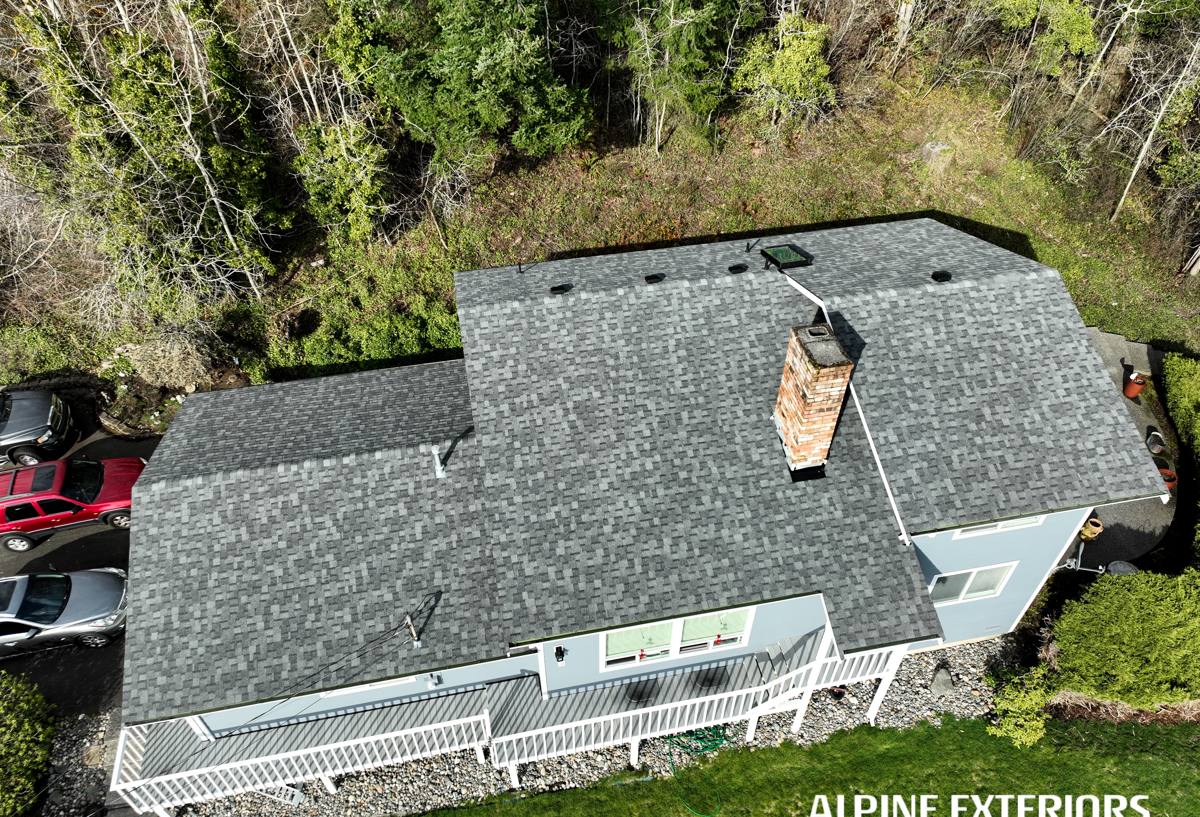
What Birchwood's Weather Actually Puts a Deck Through
Marine Air and Corroding Hardware
Salt-laden air moving inland off the bay works on any exposed metal over time, and a deck has a lot of it — structural screws, joist hangers, post brackets, railing hardware. Unlike flashing tucked under a roofline, deck hardware sits in the open on every side, which means it takes that exposure directly and continuously. A fastener that's starting to corrode loses holding strength well before it looks visibly bad, and on a structure people walk across and lean on, that's a safety detail, not a cosmetic one.
Wind-Driven Rain and Trapped Moisture
Storms here rarely just fall straight down and run off. Wind pushes rain sideways and up, forcing it under railings, into the ledger connection where the deck ties into the house, and between deck boards that aren't gapped the right way. A deck surface that looks like it drains fine on a calm day can still trap water at the ledger or under the railing posts the moment wind gets involved — and in this area, wind is involved often enough that it has to be designed around, not treated as an exception.
A Long Moss Season on a Flat, Exposed Surface
A deck is horizontal, which means it holds water differently than a wall or roof plane does — moisture sits flat on the surface and takes longer to dry between rain events. On the shaded, tree-covered lots common in parts of Birchwood, that dampness barely lets up through the wetter months, and moss or algae film takes hold fast on any decking product with real surface porosity. Beyond looking bad, a mossy or algae-slick deck surface is a genuine slip hazard, which makes moss resistance a functional concern here, not just a maintenance nuisance.
Matching Decking Material to This Climate
The three material categories most Birchwood homeowners weigh are pressure-treated or cedar wood, capped composite, and cellular PVC. Each behaves differently under sustained moisture and salt exposure, and the gap between a well-suited product and a poorly-suited one shows up faster here than it would in a drier inland town.
Wood
Cedar and pressure-treated lumber are the traditional choice and look great fresh out of the box, but both need regular sealing or staining to hold their own against sustained moisture, and both are more vulnerable to fastener corrosion issues over the years. Left unmaintained even one wet season, wood decking in this climate is usually the first material to gray, soften, and grow moss.
Capped Composite
Capped composite boards wrap a wood-fiber composite core in a plastic shell, which resists moisture absorption, staining, and fading far better than uncapped composite or raw wood. In a climate with this much sustained dampness, that cap layer is doing genuine work — it's the difference between a deck that needs an occasional rinse and one that needs ongoing sealing to keep looking decent.
Cellular PVC
PVC decking has no wood fiber at all, so it doesn't absorb moisture the way even capped composite can at a cut edge or fastener hole. It typically costs more and can flex a little more under heavy point loads, but for a heavily shaded deck or one that stays damp most of the year, some homeowners decide the added moisture resistance is worth the extra cost.
| Material | Moisture & Salt Air Handling | Moss/Slip Resistance | Typical Upkeep |
|---|---|---|---|
| Cellular PVC | Excellent — no wood fiber to absorb moisture | Strong, smooth non-porous surface | Occasional rinse |
| Capped composite | Strong — cap layer resists moisture and staining | Good on most current product lines | Occasional rinse |
| Uncapped composite | Moderate — some absorption at exposed fiber | Fair; more prone to buildup over time | Periodic cleaning |
| Cedar | Moderate — natural resistance, but needs sealing | Fair when sealed and maintained | Regular oiling or sealing |
| Pressure-treated wood | Weak against sustained salt exposure over time | Poor without regular treatment | Regular sealing or staining |
What a Correctly Built Deck Involves in Birchwood
The decking surface gets most of the attention when homeowners picture a new deck, but the framing, fasteners, and footings underneath are what actually decide how long it lasts in this climate. A build done right here includes:
- Footings sized and set to Whatcom County frost-depth and load requirements, not just deep enough to "seem solid"
- Framing lumber rated for sustained ground and moisture contact, sized correctly for the actual span and expected load
- Stainless steel or coastal-grade corrosion-resistant structural screws and hardware throughout, rather than standard fasteners that begin corroding within a few seasons of salt exposure
- Ledger board flashing installed correctly where the deck ties into the house — one of the most common points where moisture gets into a poorly built deck
- Joist tape or a comparable moisture barrier on cut framing surfaces, protecting the wood at its most vulnerable exposed edges
- Correct board spacing for drainage and material movement, so wind-driven rain can actually clear the surface instead of pooling between boards
- Railing posts and connections sized for the wind exposure the specific lot sees, which varies more across Birchwood than a single standard spec would account for
- Grading and airflow underneath the deck so moisture doesn't sit trapped against the framing between storms
Skip any one of these and the deck usually still looks fine the first year. The consequences tend to show up two or three winters later — a soft joist, a loosening railing post, or corrosion staining bleeding through the boards above it.
Design Decisions That Depend on the Lot
Beyond material and structure, a handful of site-specific questions shape a deck that actually fits a Birchwood property. A heavily shaded, tree-covered lot needs different moss-resistance priorities and airflow planning than an open, sun-exposed yard, and that affects both decking color choice and how much clearance a design leaves for cross-ventilation underneath. Wind exposure on more open lots affects how solid a railing design can be versus how much a partial screen or glass panel helps cut wind without blocking a view. Grade and slope around the house drive drainage design, stair placement, and how much attention the substructure needs to keep standing water from collecting underneath. None of these are decisions with one correct answer across the whole neighborhood — they depend on the specific lot, which is exactly why a design built around your property performs differently than a stock layout dropped onto any site.
What Drives the Cost of a Birchwood Deck Project
Two bids for what looks like the same deck can land far apart in price, and the gap is almost always real differences in scope rather than one contractor simply padding a number. Knowing what actually drives cost makes it much easier to compare estimates that look nothing alike side by side.
| Factor | What It Affects |
|---|---|
| Footing and foundation type | Structural stability and how well the deck resists frost heave and shifting over time |
| Framing material and sizing | Long-term structural life and how the deck handles moisture and load |
| Decking material tier | Moisture resistance, moss resistance, appearance, and expected maintenance |
| Fastener and hardware grade | How well the deck resists salt-air corrosion over its lifespan |
| Railing style and code requirements | Guard height, baluster spacing, and wind-load resistance on elevated or exposed decks |
| Site access and grade | Labor time, equipment needs, and demolition scope if an old structure has to come out first |
A written estimate that breaks these components out separately is worth far more than a single lump-sum number. It's reasonable to ask any contractor to walk you through exactly what's included, line by line, before you weigh two prices against each other.
How Our Process Works
- Site visit and design conversation: We look at the actual lot — grade, sun and shade patterns, existing structure condition if it's a replacement — and talk through how the space will really get used.
- Permitting: We handle the permit process through the applicable local jurisdiction, including setback, footing depth, and guard rail requirements, rather than leaving that for you to sort out.
- Written estimate: You get an itemized bid covering footings, framing, decking material, fasteners, railing, and cleanup — not one vague number covering "the deck."
- Footings and substructure: Footings go in to spec first, followed by framing sized and fastened for the site's actual moisture and wind exposure.
- Decking, railing, and stairs: The visible surface goes on last, built to the manufacturer's spacing and fastening specification rather than a shortcut method.
- Final walkthrough: We review the finished deck with you and go over exactly what your specific material choice needs going forward, which is usually minimal but not nothing.
Keeping a Birchwood Deck in Good Shape Year After Year
Even a correctly built deck in a well-matched material needs some routine attention in this climate to reach its full lifespan. Worth keeping in mind:
- Rinse the deck surface periodically to clear salt residue, pollen, and organic buildup before it works into the surface or cap layer
- Keep the gaps between boards clear of leaves and debris, especially heading into fall, so water and air can move through the way the design intends
- Check railing hardware and footings once a year for early corrosion or movement, particularly after a stretch of hard windstorms
- Trim back overhanging branches on shaded decks to cut down on moisture and moss pressure and let more airflow across the surface
- Treat any soft framing, loose posts, or standing water underneath as a structural issue to address right away, not something that improves on its own
Why It Matters That We Already Build Decks in Birchwood
A crew that mostly builds decks elsewhere can still put one together competently, but a Birchwood project has variables that don't come up the same way in every town — the mix of heavily shaded, tree-covered lots against more open ones on the same street, salt-air corrosion requirements tied to proximity to the bay, and a moss season that runs longer here than it does further inland. Working this neighborhood regularly means we're not guessing at those requirements on your project. We've seen which decking products actually hold up against Birchwood's specific combination of shade, moisture, and salt exposure, and which fastener grades and footing details are worth the extra time rather than an unnecessary upsell.
That familiarity also matters after the job is finished. A workmanship warranty only means something if the company behind it is still around and reachable years later, which is part of why an established local presence is worth factoring into who you hire, not just the number on the bid.
A Practical Checklist Before You Hire a Deck Builder
- Do they carry current WA contractor licensing, liability insurance, and workers' compensation coverage?
- Does the estimate itemize footings, framing, decking material, and railing separately rather than one lump total?
- Is ledger board flashing specifically addressed in the bid, not just assumed?
- Do they specify fastener and hardware grade, or just say "screws and brackets"?
- Can they point to actual recent work in Birchwood or elsewhere in Bellingham?
- Does the bid clearly separate the manufacturer's material warranty from their own workmanship warranty?
If you're weighing a new deck, a replacement, or just want a straight answer about what your Birchwood property actually needs, we're happy to come take a look and walk you through the options in plain terms. Use the form below to request a free, no-pressure estimate.