 Bellingham Roofing
 Roofing in Birchwood: A Different Set of Demands
Birchwood sits close enough to the water and the tree cover that its roofs age differently than roofs a few miles inland. Homes here deal with a combination most other neighborhoods don't get all at once: salt-laden air drifting in off the bay, long stretches of driving rain through fall and winter, and a moss season that can run eight months out of the year thanks to shade from mature trees and persistent Pacific Northwest damp. None of these factors is dramatic on its own. Together, over years, they're what actually shortens a roof's working life in this part of Whatcom County.
A roof replacement here isn't just about swapping old shingles for new ones. It's about specifying and installing a system that's matched to this specific combination of exposure, moisture, and biological growth. That's the lens we bring to every Birchwood project.
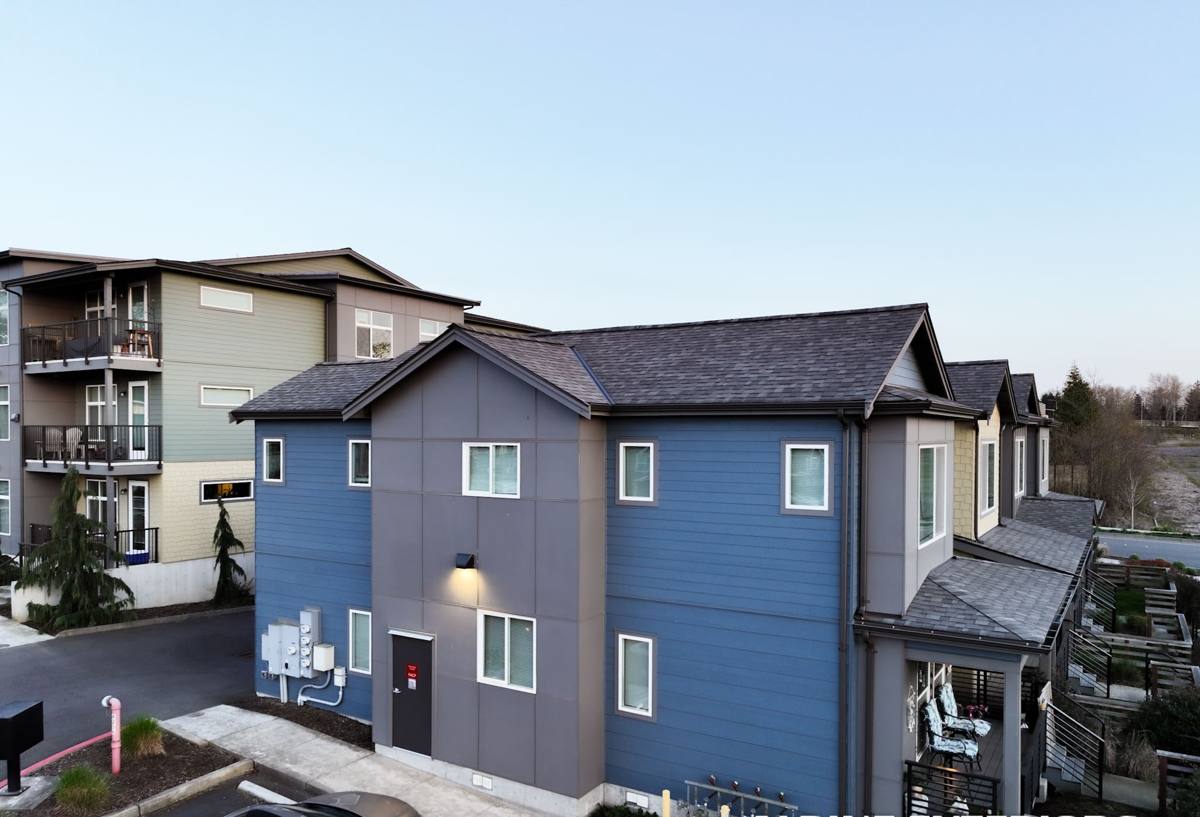
Why Roofs Wear Out Faster Here Than the Manufacturer's Numbers Suggest
Salt Air and Metal Fatigue
Airborne salt accelerates corrosion on any exposed metal — flashing, fasteners, vent caps, gutter hardware. It's slow and unglamorous, which is exactly why it gets missed. A roof can look fine from the ground while its flashing and fastener heads are quietly corroding underneath. Over a couple of decades, that corrosion becomes the actual point of failure, not the shingles themselves.
Driving Rain and Wind-Driven Water
Bellingham doesn't just get rain — it gets rain pushed sideways by wind coming off the water. That matters because wind-driven rain finds weaknesses that vertical rain never would: lap seams, valley transitions, and anywhere flashing depends on gravity alone to shed water. A roof system designed for a drier or calmer climate can perform fine on paper and still leak here.
Moss, Shade, and Moisture Retention
Moss doesn't just look bad. It holds moisture against the roofing surface for extended periods, works its way under shingle tabs and granules, and can lift edges enough to let wind and rain in. Neighborhoods with heavier tree cover and less direct sun exposure — which describes a lot of Birchwood — see moss establish faster and regrow faster after cleaning. A roof replacement that doesn't account for this will need moss remediation again within a couple of seasons.
What a Correctly Built Replacement Looks Like Here
The visible roofing material is maybe a third of what determines how long a roof actually lasts in this climate. The rest is in the details most homeowners never see once the job is done.
- Ice-and-water shield at vulnerable zones — eaves, valleys, and around penetrations, not just where code requires it
- Corrosion-resistant flashing and fasteners — matched to salt-air exposure rather than generic-grade hardware
- Balanced intake and exhaust ventilation — to control the moisture load inside the attic, which matters more in a persistently damp climate
- Underlayment rated for extended wet exposure — since installation windows here often involve intermittent weather
- Proper valley and transition detailing — the areas most exposed to wind-driven rain
- A moss-resistance strategy built into the install — not left as an afterthought maintenance task
Skip any one of these and the roof may still look correct for a few years. The failures that show up in this climate tend to be slow — a soft spot in the decking, a stain on an interior ceiling, corrosion at a flashing seam — which is exactly why the installation details matter more here than in drier regions.
Material Choices for a Birchwood Roof
There's no single "best" roofing material for every home — it depends on the roof's pitch, sun exposure, tree cover, and the homeowner's budget and maintenance tolerance. Here's how the common options actually perform under Bellingham's specific conditions.
| Material | Performance in Salt Air / Rain | Moss Resistance | Typical Lifespan Here |
|---|---|---|---|
| Architectural asphalt shingle | Good, with corrosion-resistant flashing and fasteners | Moderate — benefits from algae/moss-resistant granules | 20–30 years |
| Standing seam metal | Very good if properly coated and fastened | High — sheds moisture and debris well | 40–50+ years |
| Composite/synthetic shingle | Good — engineered to resist moisture absorption | Moderate to high depending on product | 30–50 years |
| Cedar shake | Requires diligent maintenance in this climate | Low without regular treatment | Highly variable — maintenance-dependent |
We're upfront about the trade-offs on every material we install, including the ones we recommend less often. Cedar shake, for example, can look great, but in a shaded, damp neighborhood it demands a maintenance schedule that most homeowners underestimate — regular cleaning and treatment to manage moisture retention and biological growth. That's a legitimate choice for someone who wants the look and is committed to the upkeep. It's just not what we'd default to on a low-maintenance replacement.
Our Process for a Birchwood Roof Replacement
1. On-Site Assessment
We walk the roof and the attic, not just the ground-level view. We're checking decking condition, ventilation balance, existing moisture damage, and how the current roof has actually held up against this neighborhood's specific exposure — sun angle, tree cover, and how much wind-driven rain the elevations typically catch.
2. A Straightforward Scope and Estimate
You get a written scope that spells out material, underlayment, flashing approach, and ventilation plan — not just a single number. If there are trade-offs worth discussing (material choice, moss-prevention add-ons, ventilation upgrades), we walk through them before any contract is signed.
3. Scheduling Around Weather
We plan tear-off and dry-in around realistic weather windows rather than hoping for the best. In a climate where a surprise squall is always possible, protecting the open deck during installation isn't optional — it's standard practice.
4. Tear-Off and Deck Inspection
Once the old roofing is off, we inspect the decking directly. Any soft, rotted, or delaminated sheathing gets flagged and replaced before anything new goes down — this is where hidden moisture damage from years of driving rain or moss retention typically shows up.
5. Installation
Underlayment, flashing, and the roofing material go on in that order, with extra attention at valleys, penetrations, and eaves — the zones that take the brunt of this area's weather.
6. Final Walkthrough
We walk the finished roof with you, cover what maintenance (if any) the material requires, and make sure you understand the warranty coverage before we consider the job done.
Why a Crew That Already Works Birchwood Matters
Roofing crews that split time across very different climates tend to default to generic specs — the fastener grade, flashing detail, or ventilation setup that works fine in a dry inland market but underperforms here. A crew that regularly works Birchwood and the surrounding Bellingham neighborhoods has already seen which details hold up against local salt air and moss season and which ones don't. That's not a marketing point — it shows up in fastener selection, flashing sequencing, and how conservatively we treat moisture-prone areas like valleys and shaded slopes.
It also means faster, more realistic scheduling. We're not guessing at weather windows from a forecast app — we know how Whatcom County's fall and winter weather typically behaves and plan tear-off accordingly.
Maintenance After Replacement: What Actually Matters
A new roof in this climate isn't maintenance-free, but it also shouldn't need constant attention if it was installed correctly. Reasonable upkeep includes:
- Periodic moss and debris removal, especially on shaded slopes
- Keeping gutters clear so water isn't backing up under the eave line
- A visual check after major windstorms for lifted shingles or displaced flashing
- Trimming back overhanging branches that keep a section of roof shaded and damp
If a roof needs more than that to stay watertight, something in the original installation likely wasn't matched to the climate.
Cost Factors Worth Understanding Before You Get Quotes
Pricing varies enough by roof size, pitch, material, and existing damage that a single number isn't honest to quote without seeing the roof. In general, expect the biggest cost swings to come from material choice (asphalt shingle sits at the lower end, standing seam metal and premium composites at the higher end), the amount of decking replacement needed once tear-off reveals the roof's actual condition, and how much flashing and ventilation work is required beyond a straight material swap. A contractor who gives you a real number after walking the roof — not a phone-quote estimate — is giving you a more useful figure, even if it takes a little longer to get.
If you're weighing a roof replacement for a Birchwood home, we're glad to come take a look and give you a straight, no-pressure estimate — free of charge, and with no obligation to move forward. Use the form below to get started.