 Bellingham Roofing
 Siding Repair in Barkley: A Different Kind of Job Than It Looks Like
Homeowners in Barkley usually call us about one thing: a soft spot near the bottom of a wall, a stain that keeps coming back after it's painted over, or a strip of siding that's started to bow or separate at the seams. What starts as a small, localized concern is rarely just cosmetic. In this part of Whatcom County, siding damage is almost always a symptom of ongoing exposure to moisture, wind-driven rain, and the kind of persistent dampness that Bellingham's climate produces for a good chunk of the year. Repairing it correctly means understanding why it happened, not just patching the spot that shows.
Barkley sits close enough to Bellingham Bay and the broader Puget Sound air flow that homes here deal with a mix of salt-laden air, sustained rain events, and long stretches of overcast, humid weather that never quite lets siding dry out completely. Whether your home is part of one of Barkley's newer built streets or an older section of the neighborhood, the exterior is working against the same conditions — and siding that isn't repaired the right way tends to fail again in the same spot within a season or two.
What Bellingham's Climate Actually Does to Siding
It helps to understand the three specific stressors at play, because they each cause different kinds of damage:
- Salt air: Proximity to the bay means airborne salt settles on exterior surfaces and accelerates corrosion of fasteners, trim flashing, and any exposed metal components tied into the siding system.
- Driving rain: Pacific storms here don't just fall straight down — wind pushes rain sideways into seams, laps, and butt joints that were never designed to handle water moving in that direction. This is where most hidden moisture intrusion starts.
- Extended moss season: Cool, damp, shaded conditions for much of the year let moss and algae establish on north-facing and tree-shaded wall sections. Moss holds moisture directly against the siding surface for weeks at a time, which is a very different exposure than a rainstorm that comes and goes.
Combined, these three conditions mean siding in Barkley ages differently than siding in a drier inland climate. Problems tend to show up first at the lowest courses, around window and door trim, at inside corners, and anywhere caulking has started to fail.
Signs a Barkley Home's Siding Needs Repair
Most siding damage gives warning signs well before it becomes a structural issue. If you're noticing any of the following, it's worth having it looked at:
- Soft, spongy, or crumbling material when pressed near the bottom of exterior walls
- Paint that's bubbling, peeling, or repeatedly failing in the same spot
- Visible gaps, warping, or separation at panel seams and butt joints
- Dark streaking or staining that returns after cleaning
- Thick moss or algae growth that doesn't come off with a light rinse
- Musty odors or visible staining on interior walls that back up to exterior siding
- Fasteners that are rusting, backing out, or leaving streaks below them
Any one of these on its own might be minor. Several together, especially clustered on a north-facing or shaded wall, usually point to sustained moisture getting behind the siding rather than just weathering on the surface.
How Different Siding Materials Hold Up Here
Not all siding responds to Bellingham's climate the same way. This matters because the right repair approach — and how long it lasts — depends heavily on what material you're working with.
| Material | Common Failure Point in This Climate | Repair Considerations |
|---|---|---|
| Vinyl | Warping and cracking from moisture cycling; seams open under wind-driven rain | Individual panels are replaceable, but color-matching aged material is difficult and won't stop water from continuing to enter behind it |
| Cedar | Moss retention, rot at end grain and fastener points, repeated repainting needs | Damaged sections often need full removal since rot can travel along the grain past the visible damage |
| Primed spruce / engineered wood | Swelling and edge deterioration if the factory coating is compromised at cut edges or fastener points | Repairs require re-sealing every cut edge or the same failure returns quickly |
| James Hardie fiber cement | Far more resistant to moisture absorption and moss-driven surface breakdown; issues are usually tied to installation details, not the material itself | Repairs typically focus on flashing, caulking, and correcting installation gaps rather than material failure |
We only install James Hardie fiber cement siding, and that standard shapes how we approach repairs, too — even on homes where other materials are already on the wall. If we're patching cedar or spruce, we're honest about the fact that we're extending the life of a material that's fighting this climate on borrowed time. If we're repairing Hardie, the failure is almost always something correctable in the installation, not the board itself.
What a Correct Siding Repair Actually Involves
Diagnosing the Real Problem First
A repair that only addresses what's visible from the outside often misses the cause. Before we replace anything, we check what's happening behind the siding — whether the house wrap or weather barrier is intact, whether flashing above windows and trim is doing its job, and how water has actually been moving through the wall assembly. Cutting out a damaged section without understanding this usually means the same spot fails again.
Matching Material and Finish
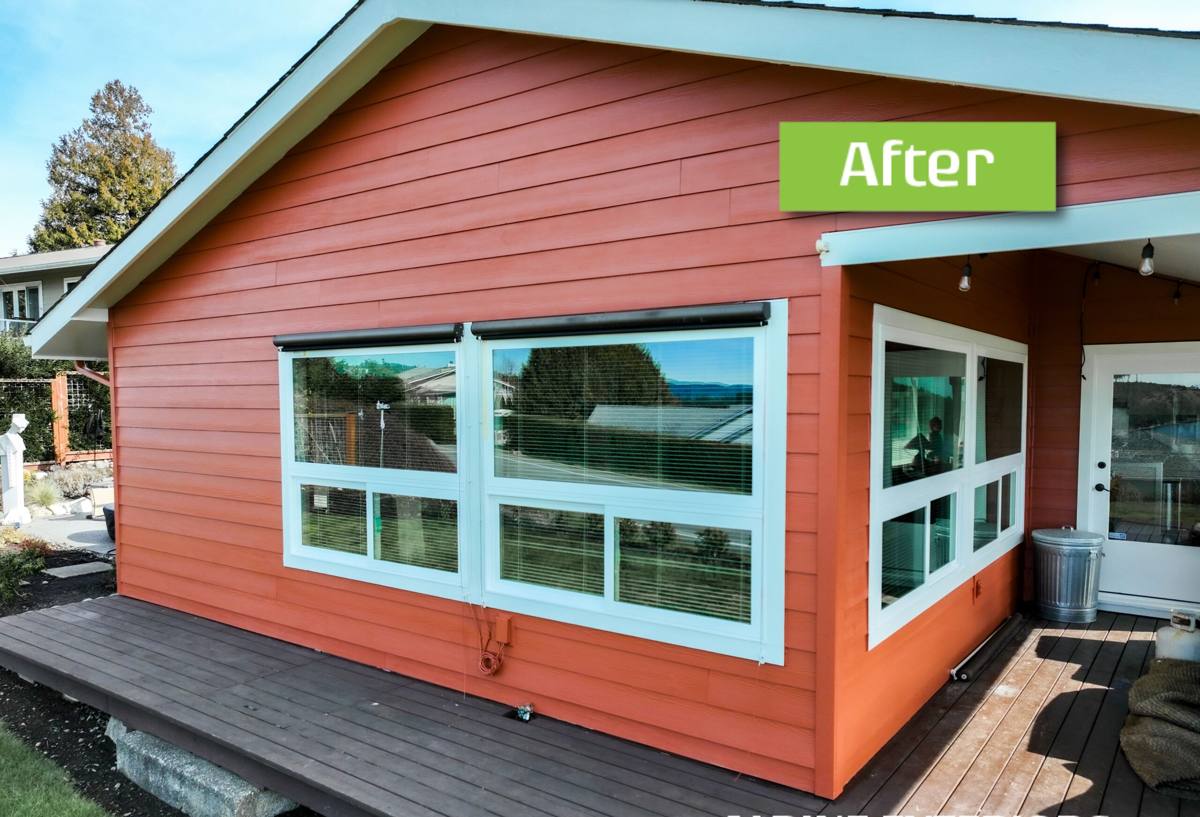
On a Hardie repair, matching the existing ColorPlus factory finish and board profile matters — mismatched patches are one of the most obvious signs of a rushed repair job. We work to match plank width, texture, and color line so the repaired section blends rather than standing out as a patch.
Fixing the Cause, Not Just the Symptom
This is the step that separates a lasting repair from a temporary one. If moisture got behind the siding because of a missing kick-out flashing, a caulk joint that failed, or a fastening pattern that didn't seat properly, we correct that underlying detail as part of the repair — not just swap the damaged board and move on.
Repair or Replace? How We Help You Decide
Not every siding issue needs a full re-side, and we're not going to tell you it does. The honest answer usually comes down to a few factors:
- How localized the damage is — a few affected boards on one elevation is very different from moisture damage spread across multiple walls
- What's causing it — a single failed flashing detail is a repair; systemic moisture intrusion behind aging material across the whole house is a replacement conversation
- The age and material of the existing siding — repairing a 20-year-old cedar or vinyl system buys limited time; repairing Hardie siding that's otherwise sound is usually the right call
- What's underneath — if the sheathing or framing has taken on water damage, that has to be addressed regardless of what siding goes back up
We'll tell you plainly which situation you're in. If a repair is the right call, that's what we'll recommend and price. If we're seeing signs that the whole system is past the point where patching makes sense, we'll explain exactly why — and if replacement does become the right move, James Hardie fiber cement is what we install, for the same reasons it holds up better against this climate in the first place.
Our Process for Barkley Siding Repairs
Inspection and Honest Assessment
We start by looking at the full elevation where the damage is showing, not just the one spot you called about. Moisture problems in this climate often extend further than what's visible on the surface, and it's worth knowing the full scope before pricing anything.
The Repair Work
Once we know what we're dealing with, we remove damaged material back to sound substrate, correct whatever let water in, and install matched replacement material with proper flashing and sealant detail — the same standards we'd hold a new installation to.
Cleanup and Walkthrough
We walk the finished work with you before we consider the job done, and clean up fully — no debris, no leftover materials, no surprises after we've left.
Why We Use James Hardie for Repairs and Patch Work
We made the decision to install James Hardie fiber cement exclusively, and that same standard guides our repair recommendations. It's non-combustible, engineered specifically for climates like ours, holds its factory ColorPlus finish far longer than field-painted materials, and comes with a strong transferable warranty when installed to spec. When we're patching Hardie siding, we're usually correcting an installation detail — not fighting a material that's inherently vulnerable to moss, rot, or moisture cycling the way cedar, primed spruce, or vinyl can be in this climate. That's a meaningfully different repair, and it's part of why we're comfortable standing behind the work.
Why Local Experience in Barkley Matters
Siding repair isn't a one-size-fits-all trade. A crew that's worked on homes throughout the Bellingham area already understands how salt air, wind-driven rain, and a long moss season show up on specific elevations and details — which corners fail first, which trim details tend to trap water, and which repairs actually hold up through another Whatcom County winter versus which ones are back on the schedule in two years. That local pattern recognition saves time diagnosing the problem and helps us get the repair right the first time.
If you're seeing signs of siding damage on your Barkley home — or just want an honest opinion on whether a repair or a bigger fix is the right move — we're happy to take a look. Use the form below to request a free, no-pressure estimate.