 Bellingham Roofing
 Asphalt Shingle Roofing Built for York's Conditions
Homes in York sit close enough to the water and tree cover that roofs here take a different kind of beating than roofs on the drier side of Whatcom County. Salt-laden air works on exposed metal and fasteners. Driving rain off Bellingham Bay finds every weak lap and nail pop. And the long, damp shoulder seasons give moss months to get established before a homeowner even notices it. Asphalt shingle roofing can handle all of that, but only when it's specified and installed with this specific mix of conditions in mind — not installed the same way you'd install it in a dry inland climate.
This page is about one service, in one part of Bellingham: asphalt shingle roofing for York homes. Not a general overview of shingle types, and not a citywide pitch. What follows is what we actually look at, specify, and do differently on a York roof.
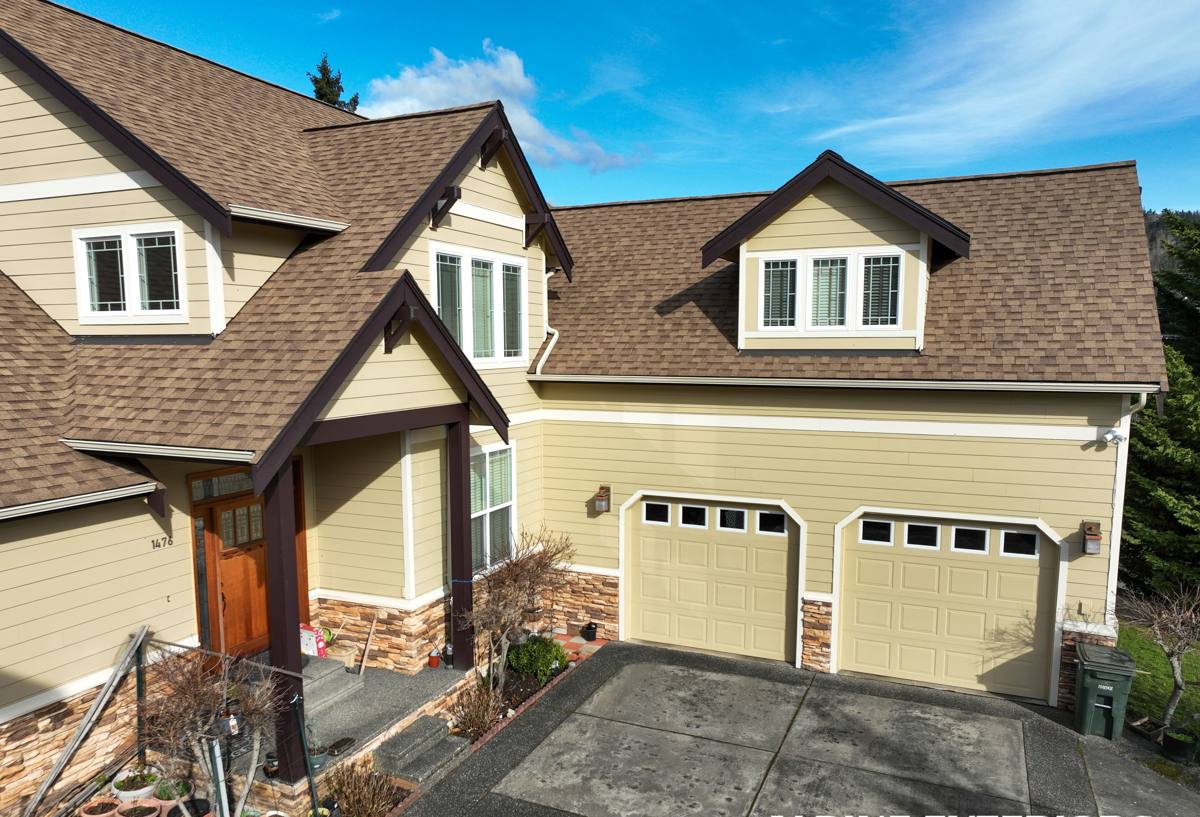
What York's Climate Actually Does to a Shingle Roof
Salt Air and Metal Components
Shingles themselves are fairly inert against salt exposure, but the metal parts of a roofing system — flashing, drip edge, nails, vent stacks, and any exposed fasteners — are not. Standard electro-galvanized fasteners can start showing surface corrosion years before a comparable roof further inland. Once a fastener corrodes, it loses holding power long before it visibly fails, which is part of why we treat fastener and flashing spec as a real decision on this job, not an afterthought.
Driving Rain and Wind-Driven Water
Rain that comes in sideways off the water doesn't behave like rain falling straight down. It gets pushed up under shingle tabs, into open laps at valleys and hips, and around any flashing that's slightly short or poorly lapped. A roof that would be fine in calmer weather can leak in York specifically because the wind direction and rain angle expose gaps that never get tested elsewhere.
Moss and Extended Damp Season
Bellingham's moss season runs long, and York's tree cover and moisture levels make it longer still. Moss holds water against the shingle surface, works its way under tabs as it grows, and — if left unaddressed — lifts shingles enough to let water underneath. It also adds weight and traps debris that clogs valleys and gutters. A roof that isn't detailed or maintained with moss in mind will age faster here than the exact same roof on a dry, sun-exposed lot a few miles away.
What a Correct Asphalt Shingle Job Looks Like Here
The shingle itself is only one part of the system. On a York roof, we pay particular attention to the parts of the installation that determine whether the roof actually performs in local conditions:
- Underlayment: a synthetic or self-adhered underlayment suited to prolonged damp exposure, not just a minimum-code product
- Ice-and-water shield at eaves, valleys, and around every penetration, where wind-driven rain is most likely to find a way in
- Flashing metal and fasteners specified for coastal-adjacent exposure rather than the cheapest standard-grade option
- Proper lap and nailing pattern matched to local wind exposure, not just manufacturer minimums
- Ventilation sized correctly so moisture from inside the attic isn't adding to what the roof is already dealing with from outside
Skipping any one of these doesn't necessarily show up on day one. It shows up in year four or five, as a leak at a valley, a lifted shingle at an eave, or premature granule loss where moss has been sitting.
Our Process for a York Roofing Project
1. On-Site Assessment
We walk the roof and the attic, not just the ground. That means checking existing ventilation, looking for signs of past moss damage or granule loss, and noting how the house sits relative to prevailing wind and rain direction — which matters more in York than it would on a more sheltered lot.
2. Honest Scope and Estimate
We tell you what we found, what needs to be replaced versus what can stay, and why. If the decking underneath has soft spots or old damage from a slow leak, we'll show you rather than just quote a number.
3. Tear-Off and Deck Inspection
Full tear-off lets us actually see the deck, not guess at its condition from above. Any damaged sheathing gets replaced before anything new goes down — installing new shingles over bad decking just moves the same problem a few years down the road.
4. Underlayment, Flashing, and Ventilation First
These get installed and detailed before a single shingle goes on, because they're the layer that actually keeps water out when a shingle lap gets overwhelmed by wind-driven rain.
5. Shingle Installation
Nailing pattern, lap alignment, and starter course detail are done to spec, with extra attention at valleys, hips, and eaves — the areas most exposed to York's rain angle and the first places moss tends to establish.
6. Final Walkthrough
We review the finished roof with you, including what maintenance will help it hold up in this specific climate, before we consider the job done.
Choosing Materials: What Actually Matters Here
Not every asphalt shingle line performs the same way in a damp, salt-adjacent, moss-prone environment. Algae resistance, granule adhesion, and wind rating all matter more in York than they would in a drier part of the county. We steer homeowners toward products with a real algae-resistant granule treatment and a wind rating suited to exposed lots, rather than the base-grade option that technically meets code but is more maintenance-heavy in this specific climate.
Cost Factors for a York Shingle Roof
| Factor | Why It Affects Price |
|---|---|
| Roof size and pitch | More surface area and steeper pitches take longer and require more safety setup |
| Existing deck condition | Rot or soft sheathing found during tear-off adds material and labor |
| Number of valleys, hips, and penetrations | Each one needs extra flashing and labor time to detail correctly |
| Shingle grade and algae resistance | Higher-grade shingles cost more upfront but hold up better against moss and salt exposure |
| Ventilation upgrades | Adding or correcting attic ventilation is sometimes needed and adds to scope |
| Access and site conditions | Tree cover, tight lot lines, and steep driveways common in York can affect staging and labor time |
We don't quote a flat per-square number sight unseen, because these factors vary enough from one York property to the next that a generic number isn't honest.
Maintenance That Actually Extends a York Roof's Life
A well-installed roof still needs some upkeep in this climate. The following is worth doing on a regular basis, especially on lots with tree cover:
- Keep gutters and valleys clear of needles and debris so water isn't pooling against the shingle edge
- Address moss growth early, using methods that don't damage the granule surface, before it lifts shingles
- Have flashing and fastener condition checked periodically, since salt-air corrosion is gradual and easy to miss from the ground
- Check attic ventilation isn't blocked by insulation or debris, since poor airflow accelerates moisture problems from the inside
- Schedule a roof inspection after major windstorms, which are common off the bay, to catch lifted or damaged shingles early
Why Hiring a Crew That Already Works in York Matters
A roofing crew that mostly works inland jobs may default to standard specs that are fine in a dry climate but underperform here. A crew that regularly works York and similar Bellingham neighborhoods already knows which details need upgrading — the flashing grade, the underlayment choice, the fastener spec — because they've seen what happens when those details are skipped on a roof exposed to this much rain and salt air. That local pattern recognition is the difference between a roof that's technically up to code and one that's actually built for where it sits.
It also means faster, more accurate estimates. Because we've worked on roofs throughout York and greater Bellingham, we're not starting from scratch on assumptions about wind exposure, tree cover, or typical deck conditions in the area — we're applying what we already know about how houses here actually perform.
Signs Your York Roof May Need Attention
A few warning signs are worth acting on rather than waiting out:
- Granules collecting in gutters or at downspout outlets, which signals shingle wear
- Moss or dark streaking establishing on north-facing or shaded slopes
- Curling, cupping, or lifted shingle edges, especially near valleys and eaves
- Water stains on interior ceilings after a windy rainstorm
- Visible rust or corrosion on flashing, vent stacks, or exposed fasteners
Any one of these on its own isn't necessarily an emergency, but in combination, or left unaddressed through another wet season, they compound.
Get a Straightforward, No-Pressure Estimate
If you're dealing with an aging roof, moss buildup, or a leak that shows up only in certain wind conditions, we're glad to come take a look and give you an honest read on what's actually going on — no pressure, no inflated scope. Use the form below to request a free estimate for your York home.