 Bellingham Roofing
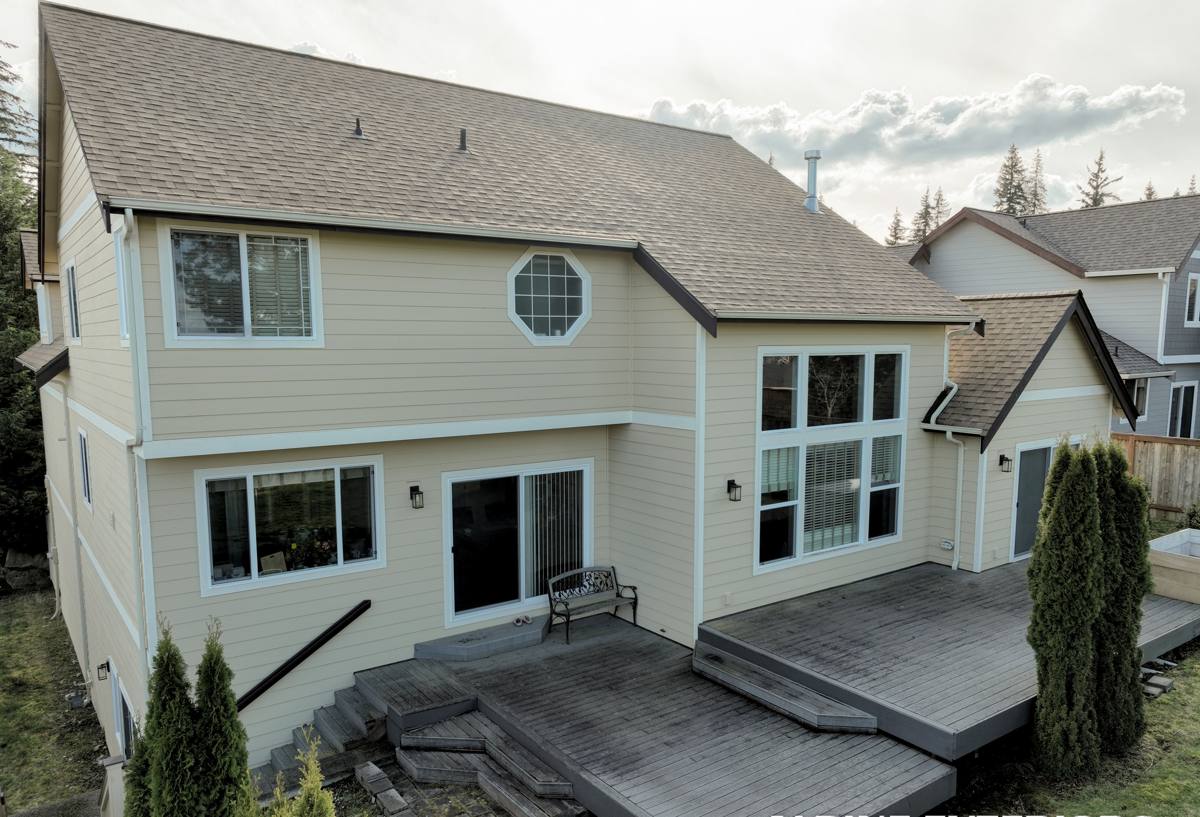
 Deck Building for York Homes, Built for the Weather We Actually Get
York is one of the older, established residential pockets close to the heart of Bellingham, and the housing stock reflects that — a mix of mid-century homes, updated bungalows, and newer infill construction, many with mature trees, tight side yards, and decks that have seen a few decades of Whatcom County weather. If you're planning a new deck or replacing one that's finally given up, the build needs to answer to our climate first and your design preferences second. A beautiful deck that traps moisture or was fastened with the wrong hardware will look tired within a few seasons, no matter how nice the boards looked on install day.
We build and rebuild decks throughout the York area and the surrounding Bellingham neighborhoods, and the patterns are consistent: framing that was never designed to shed water properly, ledger connections that were never flashed correctly, and decking choices that didn't account for how much shade and moss pressure a Pacific Northwest yard actually produces. A correctly built deck in this area isn't a different product than a deck built somewhere dry and sunny — it's the same product built with more attention to water, air movement, and material choice.
What Bellingham's Climate Does to a Deck
Whatcom County sits close enough to the Puget Sound and the Strait of Georgia that salt-laden air is a real factor for homes in York and nearby, especially on decks facing open exposure or prevailing wind. Combine that with our long stretch of driving rain from fall through spring, and a low sun angle that keeps shaded corners damp for days after a storm, and you get three compounding problems:
- Corrosion: salt air accelerates rust on fasteners, joist hangers, and any exposed metal hardware that isn't rated for coastal exposure.
- Moisture retention: driving rain doesn't just fall straight down — it gets pushed sideways into railings, under boards, and into end grain, so drainage and airflow underneath the deck matter as much as the surface.
- Moss and algae growth: our moss season runs long, often eight months or more in shaded or north-facing areas, and it doesn't just look bad — moss holds moisture against wood and composite surfaces and makes boards dangerously slick.
None of this means a deck can't last decades here. It means the framing, fastener selection, and surface material all need to be chosen with these three factors in mind from the start, not patched in after the fact.
Why Ledger and Flashing Details Matter More Here
The single most common failure point we find on older decks in this area is the ledger board connection — where the deck attaches to the house. If that joint wasn't flashed to shed water away from the house's sheathing, years of driving rain will find their way behind the ledger and rot both the deck framing and the wall structure behind it. This is invisible from the surface until it's a serious repair. Correct flashing, proper fastener spacing, and a small air gap between the ledger and siding are non-negotiable details on every deck we attach to a house.
Decking Material Options for a York-Area Deck
There's no single "right" material for every home — it depends on your budget, how much upkeep you want to take on, and how much shade and moss exposure your yard gets. Here's how the common options actually compare once you factor in our climate, not just showroom appearance.
| Material | Moss/Moisture Resistance | Maintenance | Typical Lifespan Here |
|---|---|---|---|
| Pressure-treated fir/pine | Fair — needs sealing regularly | Annual cleaning and re-sealing | 15-20 years with upkeep |
| Cedar | Good natural resistance, but surface still hosts moss in shade | Periodic cleaning, oil or stain every 2-3 years | 20-25 years with upkeep |
| Composite (capped) | Very good — non-porous surface resists moisture uptake | Periodic washing to prevent surface moss film | 25-30+ years, manufacturer-backed |
| PVC/vinyl decking | Excellent — fully non-porous | Low; occasional rinse | 25-30+ years |
We install all of these depending on what a homeowner wants, but we'll always tell you honestly where a material's weak points are for our climate specifically — for example, uncapped composite from years past had real moisture-absorption issues in wet climates, which is why we only spec fully capped composite or PVC products today when a homeowner wants a low-maintenance surface. Wood decks are still a great option for York homes that want a traditional look and are willing to do yearly upkeep.
Framing and Substructure: Where Longevity Actually Comes From
The decking boards get all the attention, but the framing underneath determines whether your deck is standing in twenty years. For homes in this area, we treat these as standard, not upgrades:
- Stainless or coated hot-dip galvanized fasteners and joist hangers rated for treated lumber and coastal air exposure
- Proper joist spacing for your chosen decking material's span rating — composite and PVC often require tighter spacing than wood
- Ledger flashing with a drainage gap, installed to current code, not just caulked and hoped for
- Post bases set above grade and away from standing water, with concrete footings sized for Whatcom County frost depth
- Joist tape or a comparable protective barrier on top of framing members to slow water intrusion at the most vulnerable point
Skipping any of these to save money up front is the most common reason we get called out to rebuild a deck that's only ten or twelve years old.
Ventilation Underneath the Deck
Low decks built close to grade, or decks enclosed with skirting, need real thought given to airflow underneath. Without it, the space beneath becomes a permanently damp, shaded pocket — exactly the environment moss, mold, and rot favor. We build in ventilation gaps and grade the ground beneath the deck to drain, rather than let water pool against the framing.
Railings, Stairs, and Code Requirements
Railing height, baluster spacing, and stair geometry are governed by Washington state building code, and Whatcom County enforces these consistently on permitted deck work. Beyond meeting code, railing material matters for the same reasons decking material does — metal railing components need to be rated for coastal air, and wood railings need the same maintenance commitment as wood decking. We handle permitting and inspection scheduling as part of the build, so you're not chasing down the county yourself.
Our Process for a York Deck Project
- On-site assessment: we look at sun exposure, drainage patterns, existing structure (if replacing a deck), and how the space connects to your house.
- Design and material selection: we walk through material trade-offs honestly, based on your budget and how much maintenance you actually want to do.
- Permitting: we handle the paperwork and inspections required by the City of Bellingham or Whatcom County, depending on your address.
- Demolition (if replacing): old material removed and hauled off, substructure inspected for hidden rot before we build on top of it.
- Framing: built to the standards above — proper flashing, corrosion-resistant hardware, correct footing depth.
- Decking, railing, and finishing: installed per manufacturer spec for the material chosen, with final inspection scheduled once complete.
Maintenance: What Actually Keeps a Deck Looking Good Here
Regardless of material, a few habits make the biggest difference in our climate:
- Sweep leaves and debris off the deck surface regularly in fall — trapped organic matter feeds moss and holds moisture against the boards
- Wash the surface at least once a year with a deck-safe cleaner to break up early moss and algae film before it establishes
- Keep gutters and downspouts near the deck clear so runoff isn't dumping directly onto or under the structure
- For wood decks, reapply sealant or stain on the manufacturer's recommended schedule — don't wait until it visibly needs it
- Check railing hardware annually for early rust, especially on decks with more open or coastal-facing exposure
None of this is complicated, but it's the difference between a deck that looks good at year fifteen and one that needs early replacement.
Why Hire a Crew That Already Works in This Area
Deck framing and material choices that work fine in a drier climate can fail early here, and a crew unfamiliar with York's mix of mature-tree shade, tight lots, and older home connections can miss details that matter — like how much moss pressure a north-facing yard actually sees, or how a particular street's drainage tends to behave after heavy rain. We're a Bellingham-based crew that works in this neighborhood regularly, understands the permitting process with the city and county, and builds decks to hold up against salt air and our long wet season, not just to look good on install day.
If you're planning a new deck or need an honest assessment of whether your current one is worth repairing or replacing, we're happy to take a look. There's no pressure and no obligation — just a straightforward estimate based on what your yard and your home actually need. Reach out through the form below to get started.