 Bellingham Roofing
 Board & Batten Siding Built for York's Weather, Not Just Its Look
Board and batten has become one of the most requested siding profiles in York, and it's easy to see why — the vertical lines, deep shadow reveals, and clean modern-farmhouse look suit both the older homes tucked along York's streets and the newer infill going up nearby. But board and batten is also one of the least forgiving profiles when it's installed wrong. The vertical battens create dozens of extra seams and fastener points compared to standard lap siding, and every one of those seams is a potential entry point for water. In a neighborhood that sits close enough to the water to catch salt-laden air, gets driving rain off Puget Sound weather systems, and stays damp and shaded enough in winter to grow moss on anything that holds moisture, those seams matter a lot more than they would in a drier climate.
This page is specifically about board and batten siding for York homes — what the local climate demands from the material and the install, what a correct job actually involves, and why a crew that already works this neighborhood is worth choosing over a company that's never been west of the Guide Meridian.
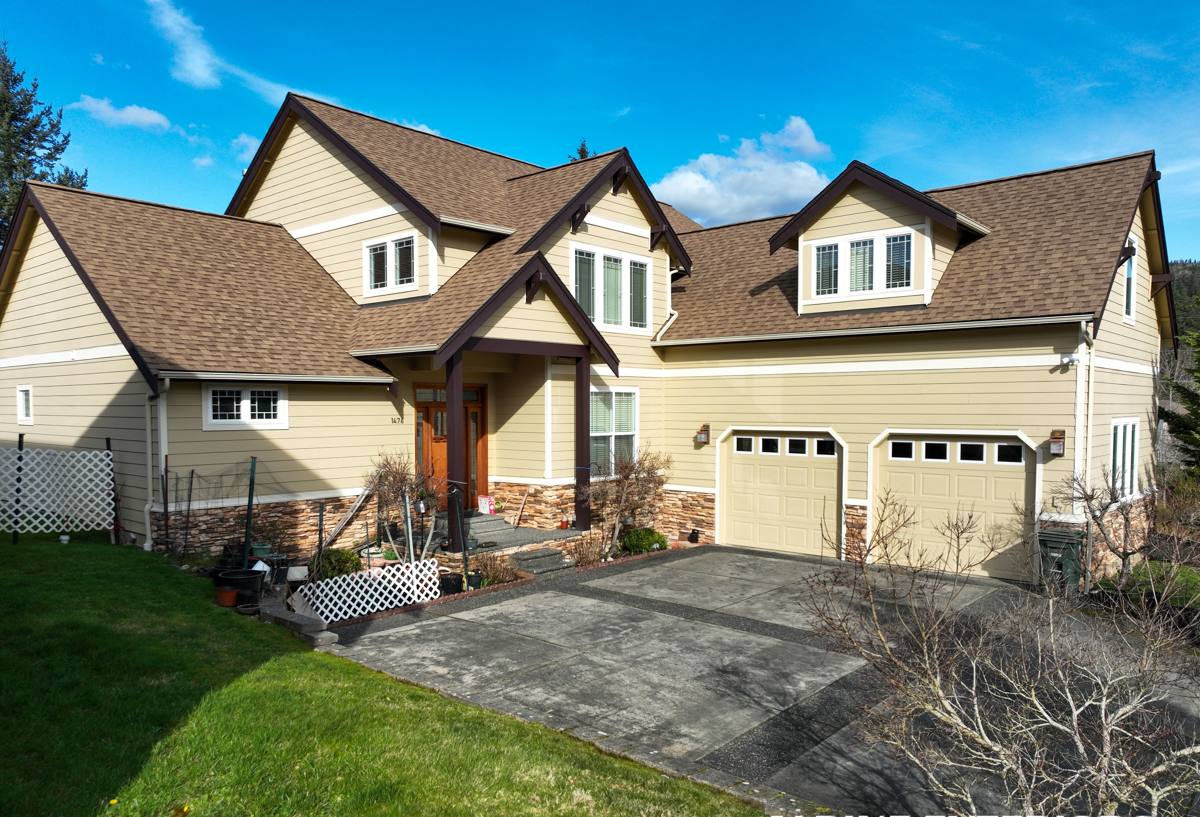
What York's Climate Actually Does to Board & Batten Siding
Salt Air
Homes closer to Bellingham Bay deal with a slow, steady mineral load in the air that settles on siding, fasteners, and trim. Over years, that salt exposure accelerates corrosion on anything less than fully corrosion-resistant hardware, and it degrades cheap or unfinished wood fiber faster than an inland home would ever see. It's rarely dramatic — it's a slow erosion of paint film and a fastener that starts to weep rust down the face of a batten.
Driving Rain
Whatcom County doesn't just get rain, it gets wind-driven rain that hits siding at an angle instead of falling straight down. Board and batten is more exposed to this than flat lap siding because the battens themselves catch wind and rain on both faces. If the water-resistive barrier and flashing details behind the boards aren't done correctly, driving rain will find the gap.
Moss Season
York gets enough shade and dampness through fall, winter, and spring that moss and algae growth on north-facing and shaded walls is normal, not a sign of neglect. The question isn't whether your siding will see moss pressure — it's whether the material and finish can handle sitting damp for weeks at a time without swelling, cupping, or losing paint adhesion.
Why Board & Batten Is Higher-Risk Than Standard Lap Siding — If Installed Wrong
Every vertical batten creates a fastening point that has to be planned around blocking, furring, and drainage — not just nailed to whatever's behind it. A batten installed flush to a wall without a rainscreen gap behind it traps moisture against the substrate every time it rains, and in a neighborhood with York's moisture load, that trapped water doesn't get a chance to dry out between storms the way it might in a drier climate. The result over time is soft sheathing, stained interior walls, and siding that has to come off years before it should.
None of this means board and batten is a bad choice for York — it means the install has to be done to spec, every time, with materials that can actually take the exposure. That's the whole reason we standardized on one product system instead of offering whatever's cheapest.
Why We Only Install James Hardie for Board & Batten
We don't offer LP SmartSide, vinyl board and batten panels, Cemplank, Allura, or primed wood battens. That's a deliberate standard, not a lack of options. Here's the honest reasoning:
- Vinyl board and batten looks the part from the street but is a thin plastic panel system — it doesn't hold paint (it isn't meant to be repainted), it can warp in direct sun exposure, and its seams and channels are a place for wind-driven rain to work its way behind the panel over time.
- Primed wood or engineered wood battens (like LP SmartSide) perform fine when kept dry and maintained, but they rely on an intact paint film to keep moisture out. In a moss-season climate where shaded walls stay damp for extended stretches, any nick, gap, or missed caulk joint becomes a path for water into wood-based substrate, which can swell or rot faster than fiber cement.
- Cemplank and Allura are also fiber cement and are reasonable products on paper. We simply don't stock, warranty, or install them — we've standardized on one manufacturer's system so every crew member knows the exact fastening pattern, gap requirements, and finish specs cold, rather than juggling different manufacturers' installation instructions from job to job.
James Hardie fiber cement is non-combustible, dimensionally stable when properly installed, and comes with a factory-applied ColorPlus finish that's baked on rather than field-painted — which matters directly for York's salt air and moss exposure, since a factory finish resists fading and holds up to repeated wet-dry cycling far better than a field-primed board waiting on a paint crew. Hardie's HZ5 product line is engineered for the kind of freeze-moisture cycling and high-moisture exposure the Pacific Northwest sees, which is the specific climate category this region falls into.
What Board & Batten Looks Like in Hardie
Hardie's board and batten options give you the same vertical-line look homeowners want, built from fiber cement panels and trim boards instead of vinyl or engineered wood. It's available with the ColorPlus factory finish in a range of colors, so the batten and panel color match is done at the factory rather than blended on a ladder.
What a Correct Board & Batten Install Involves
The visible result — clean vertical lines and consistent shadow reveals — is the easy part to judge from the curb. The part that actually determines whether the siding lasts happens behind the boards, and it's the same on every wall regardless of how nice the paint color is:
| Step | Why It Matters in York |
|---|---|
| Water-resistive barrier, properly lapped and taped | The backup layer that has to stop driving rain if any seam or fastener leaks |
| Rainscreen gap or furring behind battens | Lets moisture that does get behind the siding drain and dry instead of sitting against sheathing through moss season |
| Correct fastener type and spacing | Salt air accelerates corrosion on the wrong fastener — spec-correct, corrosion-resistant fasteners are non-negotiable this close to the water |
| Flashing at windows, doors, and penetrations | These are the most common failure points on any siding job, board and batten included |
| Proper gapping and caulking at panel/batten joints | Fiber cement needs room to move seasonally; sealing it wrong causes cracking |
| Factory-finished boards installed per manufacturer spec | Keeps the ColorPlus warranty intact and avoids field-painting inconsistencies |
Our Process for a York Board & Batten Project
- On-site assessment. We look at existing siding condition, sheathing condition where accessible, sun/shade exposure on each wall, and any moss or moisture staining already present.
- Detail plan for the tricky spots. Window and door flashing, any wall penetrations, and transitions to trim get planned out before install starts, not improvised on the fly.
- Rainscreen and WRB install. This is the layer nobody sees once the project is done, and it's the layer that determines whether the job holds up through a decade of York winters.
- Hardie panel and batten install to manufacturer spec. Correct fastener spacing, gapping, and corrosion-resistant hardware throughout.
- Final walkthrough. We go over the finished work with you before calling the job done.
What to Check Before You Hire Anyone for This Job
- Do they specify a rainscreen or drainage gap behind the battens, or just nail straight to the wall?
- Do they know and follow the manufacturer's exact fastener and gapping specs, or eyeball it?
- Are they using corrosion-resistant fasteners appropriate for near-water, salt-air exposure?
- Do they have a specific plan for window, door, and penetration flashing before they start?
- Is the finish factory-applied, or will it rely on field paint and caulk to keep water out long term?
Why a Crew That Already Works York Is Worth Choosing
York isn't a uniform tract of identical homes — lot shading, proximity to the water, and how exposed a given wall is to prevailing wind and rain all vary block to block. A crew that's worked the neighborhood already has a feel for which walls in this area tend to hold moss, which orientations catch the worst of the driving rain, and what kind of moisture problems tend to show up on homes of a certain age in this part of Bellingham. That's not something you get from a general contractor who treats every siding job the same regardless of where it sits in Whatcom County.
Maintenance After Installation
Correctly installed Hardie board and batten is low-maintenance, not no-maintenance. In York's climate that means an occasional gentle wash to keep moss and algae from building up on shaded walls, a periodic look at caulk joints around windows and trim, and prompt attention if you ever notice a stain or soft spot — which, on a properly installed system, shouldn't happen, but is worth catching early if it ever does.
If you're planning a board and batten project in York and want a straight answer on what your home actually needs, we're happy to take a look and walk the property with you. The estimate is free, there's no pressure, and you'll get a clear explanation of what we see — good or bad — before any work starts.