 Bellingham Roofing
 Building Decks for Blaine's Coastal Conditions
Blaine sits right where the Strait of Georgia meets Drayton Harbor and Semiahmoo Bay, and that location shapes everything about how an outdoor deck ages here. Homes close to the water deal with salt-laden air that corrodes metal fasteners and connectors faster than it would ten or twenty miles inland. Add Whatcom County's long stretch of driving rain each fall and winter, plus a moss season that can run from October well into spring on shaded, north-facing decks, and you have a set of conditions that punishes decks built to a generic spec. A deck that would hold up fine in a dry inland climate can start showing rot, corrosion, or slick moss growth within a few seasons if it wasn't built with Blaine's specific weather in mind.
This page covers what a deck built for Blaine actually needs, what a correct build involves from the ground up, and how our process works when we take on a project in this area.
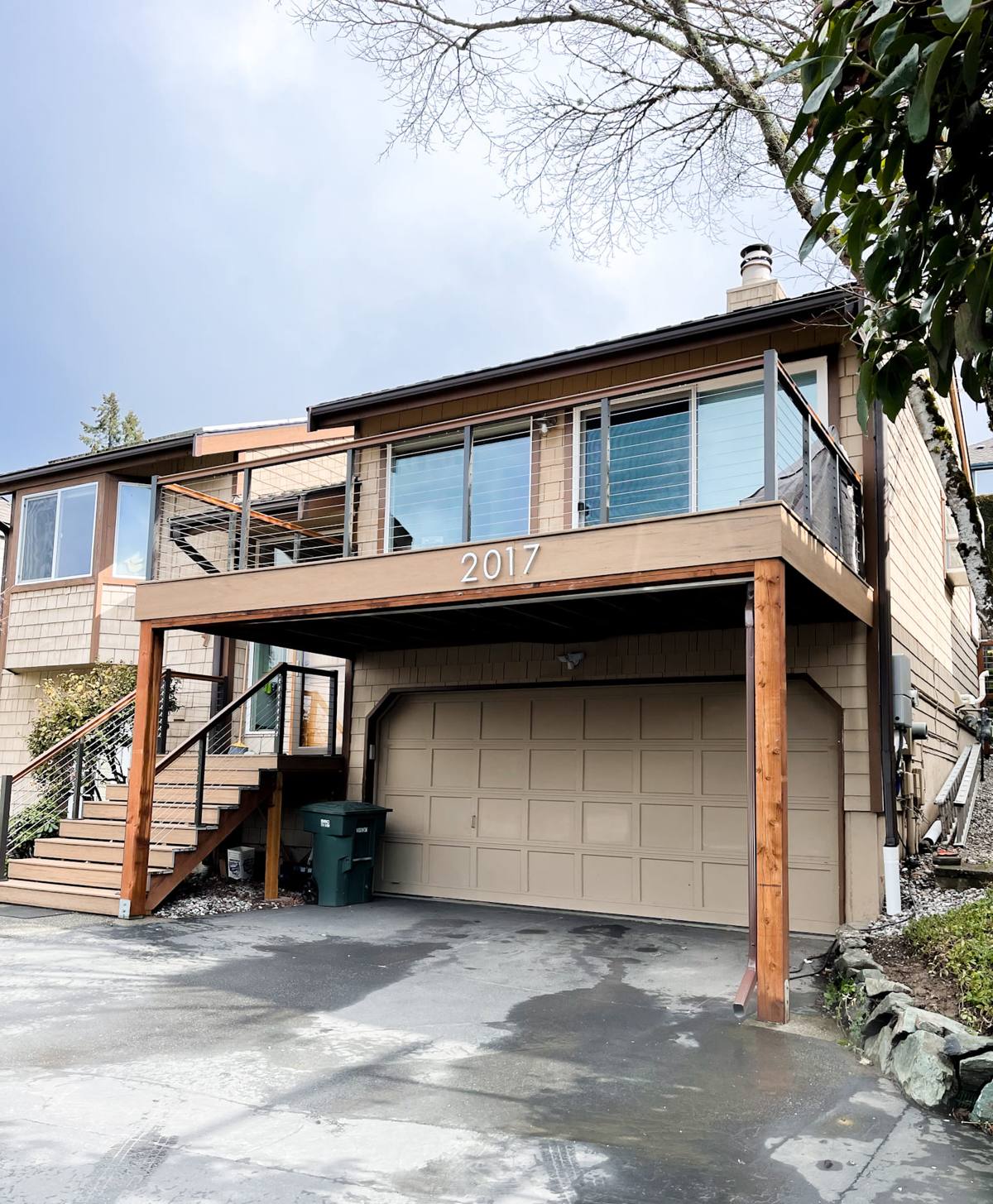
What Blaine's Climate Actually Does to a Deck
Salt Air and Metal Fasteners
Standard galvanized fasteners and hangers are rated for general outdoor use, but they weren't designed with salt-air exposure in mind. Close to the water, salt in the air settles on exposed metal and accelerates corrosion, especially at joist hangers, screw heads, and any connector that stays damp between rain events. Once a hanger starts rusting, it loses holding strength long before it looks obviously bad, which is part of why so many older decks near the water develop hidden structural weakness that isn't visible from the top.
Driving Rain and Hidden Moisture
Rain in this part of Whatcom County doesn't fall straight down as often as it drives sideways, pushed by wind off the water. That matters most at the ledger board — the point where a deck attaches to the house — and at any spot where decking meets siding or trim. If flashing and gaps aren't detailed correctly, wind-driven rain gets pushed behind the boards instead of running off them, and that moisture has nowhere to go. It sits against the house framing and the deck structure, which is where rot usually starts.
Moss Season
Shaded decks, decks under tree cover, and north-facing decks in Blaine can stay damp for weeks at a time during the fall and winter. That dampness is exactly what moss and algae need to take hold on horizontal wood or composite surfaces. Beyond the cosmetic issue, moss holds moisture against the decking material and turns a deck surface slick and genuinely dangerous underfoot, especially on stairs.
Choosing the Right Decking Material for a Blaine Property
There's no single "best" decking material for every home — the right choice depends on how close the property is to the water, how much shade the deck gets, and how much upkeep the homeowner actually wants to do. Here's how the common options compare under Blaine's conditions:
| Material | Salt Air Resistance | Moss/Moisture Behavior | Maintenance | Typical Lifespan |
|---|---|---|---|---|
| Cedar | Good with proper fasteners and finish | Needs regular cleaning and re-sealing to resist moss and graying | High — annual cleaning, periodic sealing | 15-20 years with upkeep |
| Pressure-Treated Fir/Pine | Fair — depends heavily on fastener quality | Prone to moss if not cleaned; can cup or split if it dries unevenly | Moderate to high | 15-25 years with upkeep |
| Composite (capped) | Very good — resists corrosion issues on the board itself | Resists rot but can still grow surface moss if never cleaned | Low — occasional washing | 25-30+ years |
| PVC decking | Excellent — fully synthetic, no wood decay risk | Best moisture resistance; still benefits from periodic washing to keep moss off | Low | 30+ years |
Whatever the surface material, the framing underneath matters just as much. We build the structural frame — joists, beams, posts, and connectors — to hold up under Blaine's moisture and salt exposure regardless of which decking product goes on top, because a beautiful deck surface on a compromised frame is a short-term fix.
What a Correctly Built Deck Involves
A deck that's going to hold up near the water needs several things done right, not just one. These are the details that separate a deck built to last from one that looks fine for a couple of years and then starts causing problems:
- Proper ledger flashing — a metal flashing detail that directs water away from the house at the point where the deck attaches, critical given how much wind-driven rain this area gets
- Corrosion-resistant fasteners and hardware — stainless steel or heavy-duty coated connectors at hangers, ledger bolts, and structural screws, especially on decks within a mile or two of the water
- Footings set below the frost line and sized for the actual load of the deck, not just guessed at
- Proper joist spacing and blocking for the decking material chosen — composite and PVC often require tighter spacing than solid wood
- Airflow underneath the deck — enough clearance and ventilation that the structure can dry out between rain events instead of staying damp
- Gapping between boards sized correctly for drainage and for the specific material's expansion and contraction
- Railing and stair connections built to code, since these take repeated stress and are a common failure point on older decks
Skipping any one of these doesn't necessarily show up right away. It shows up two, five, or ten years later as soft spots, rust streaks, or a railing that's gone loose — usually at the worst possible time to discover it.
Our Process for a Blaine Deck Project
1. On-Site Consultation
We walk the property, look at sun exposure, drainage, proximity to the water, and how the deck will connect to the house. This is where we talk through material options honestly, including trade-offs in cost, maintenance, and how each option handles Blaine's climate specifically.
2. Design and Permitting
Deck projects in Blaine typically require a building permit through the City of Blaine or Whatcom County, depending on the property's location, along with attention to setback requirements. We handle the permitting process as part of the job so the homeowner isn't left navigating it alone.
3. Demolition and Site Prep (if applicable)
For replacement decks, we remove the old structure and inspect the ledger connection and any framing behind it for hidden moisture damage before building anything new. This step matters — building a new deck on top of an already-compromised ledger area just repeats the same problem.
4. Framing
Footings, posts, beams, and joists go in first, built with the fastener and hardware standards described above. This is the stage that determines how the deck will actually perform over time, even though it's the part homeowners see the least of once the project is finished.
5. Decking, Railing, and Finish Work
Decking boards, railings, stairs, and any finish or sealing go on last. We double-check fastener patterns, gap spacing, and railing attachment before calling the job complete.
6. Final Walkthrough
We walk the finished deck with the homeowner, cover basic care for the specific material installed, and answer questions about maintenance timing for this climate.
Maintenance That Actually Matters Here
Every decking material benefits from some upkeep in Blaine's climate, but the amount varies a lot by material choice:
- Sweep debris and standing leaves off the deck regularly, especially in fall — trapped organic matter holds moisture and speeds up moss growth
- Rinse or lightly scrub surfaces showing early moss or algae before it gets established and slick
- Check railing connections and stair stringers once a year for looseness
- For wood decks, plan on re-sealing on a regular cycle rather than waiting until the finish has visibly failed
- Keep gutters and downspouts near the deck clear so runoff isn't dumping extra water onto or under the structure
None of this is complicated, but skipping it in a climate like this one shortens a deck's usable life noticeably faster than it would somewhere drier.
Cost Factors for a Blaine Deck Project
Deck pricing varies enough by project that we don't quote firm numbers without seeing the site, but these are the factors that move the price the most:
| Factor | Why It Affects Cost |
|---|---|
| Decking material | Composite and PVC cost more upfront than wood but require less long-term maintenance |
| Deck height and railing requirements | Taller decks need more substantial framing, footings, and code-required railing |
| Site access | Difficult access for equipment or materials adds labor time |
| Ledger and flashing complexity | Homes with tricky siding transitions need more careful flashing work |
| Stairs and multiple levels | Each added stair run or level adds material and labor |
| Proximity to the water | Salt-air exposure often justifies upgrading to stainless hardware, which costs more but avoids early corrosion issues |
Why a Local Crew Matters for This Job
Deck building isn't the same job everywhere. A crew that mostly builds in a dry inland climate can still frame a structurally sound deck, but they may not default to the flashing details, fastener grades, and drainage planning that a coastal Whatcom County property actually needs. Working in and around Blaine regularly means we already know which hardware holds up near the water, how local permitting works, and what kind of moss and moisture problems show up on decks in this specific area a few years after they're built. That's the difference between a deck built to a generic standard and one built for the conditions it will actually face.
If you're planning a new deck or need to replace one that's showing its age, we're happy to take a look and talk through honest options for your property. Request a free, no-pressure estimate using the form below.