 Bellingham Roofing
 Storm Damage Roof Repair Built for Blaine's Exposed Coastline
Blaine sits about as close to open water as a home in Whatcom County can get, and that position changes what "storm damage" usually means here compared to a roof a few miles inland. Wind off the water has less to slow it down before it reaches a roofline, rain gets driven sideways instead of falling straight down, and the salt-tinged marine air that moves through town keeps working on exposed metal and fasteners long after any one storm has passed. A shingle or two lifted after a windstorm is rarely just a cosmetic problem in Blaine — it's usually the first visible sign that water has already found a way past the underlayment somewhere on the roof.
This page covers what storm damage roof repair actually involves for a Blaine home: how to tell real storm damage from ordinary wear, what a correct repair looks like once damage is confirmed, and how we run the job from the first call to the final walkthrough.
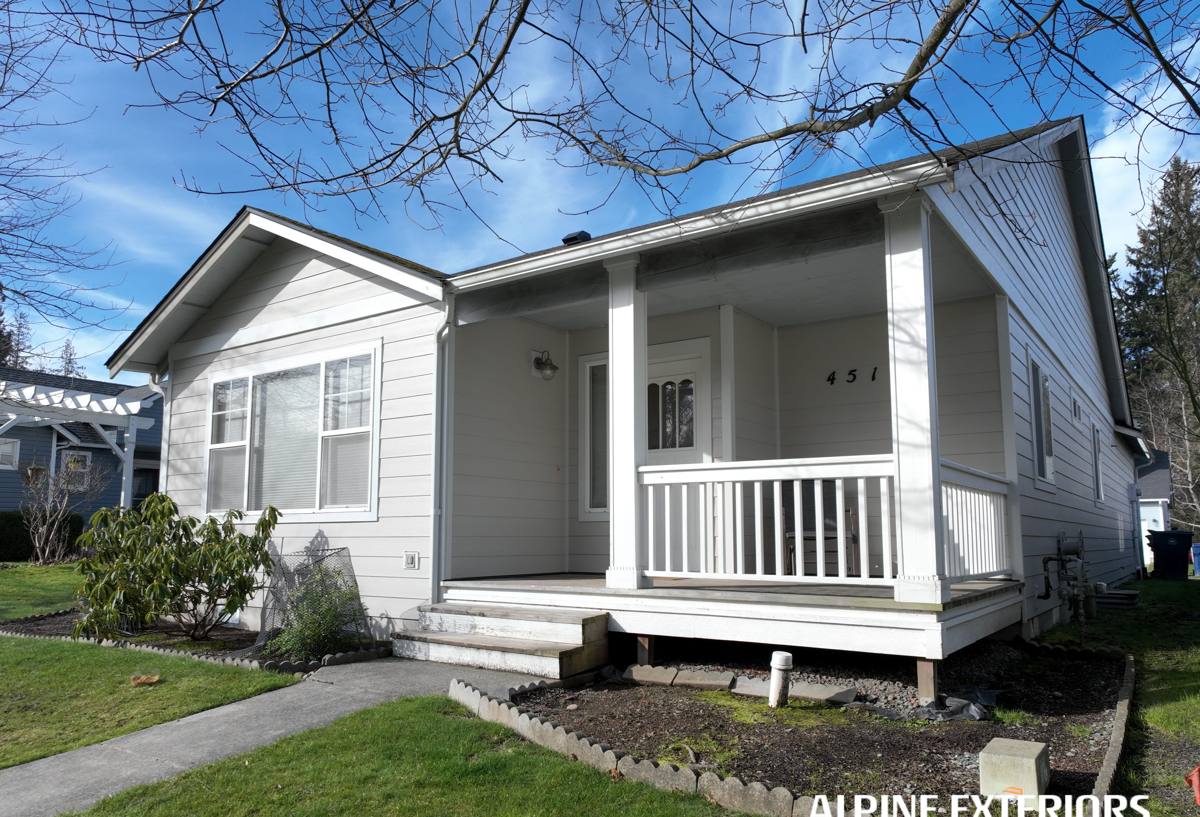
What Blaine's Storms Actually Do to a Roof
Storm damage in this part of Whatcom County rarely looks like the dramatic, obvious kind you'd see after a tornado or hailstorm further inland. It's usually quieter than that — a section of ridge cap that lifted in a gust, a valley that took on more water than the flashing was built to handle, a handful of granules stripped off a shingle field that now ages faster than the rest of the roof. Understanding the specific forces at work is the first step in knowing what to actually check for afterward.
Wind and Uplift
Because Blaine has more open exposure than towns set further back from the water, wind gusts during a storm system reach roofs here with less tree cover and terrain to break them up first. That extra force concentrates at roof edges, ridges, and corners — the places shingles are most likely to lift, crack at the seal line, or tear off completely. A roof that looked fine from the ground the week before a storm can come out of it with a dozen small lift points that won't announce themselves until the next heavy rain.
Wind-Driven Rain Intrusion
When rain is being pushed sideways and even upward by wind rather than simply falling and running off, it finds paths into a roof system that gravity alone would never test — under shingle tabs, behind step flashing, and through nail penetrations that were sealed adequately for normal weather but not for a sustained sideways soaking. This is why storm damage often shows up as an interior leak days after the wind has died down, once enough water has worked its way through a compromised spot.
Salt Air and Corrosion After the Storm
Storm damage and salt air exposure compound each other in a way that's easy to miss. Once a storm has cracked a seal, bent a piece of flashing, or exposed a fastener head, the salt-laden air common to Blaine's waterfront location gets to work on that damage faster than it would on an undisturbed roof. A repair that isn't buttoned back up correctly doesn't just sit there — it actively deteriorates faster in this environment than the same damage would in a drier, inland climate.
Recognizing Storm Damage — What to Look For
Most storm damage isn't visible from the driveway. It takes a deliberate look at specific areas of the roof and attic to catch it before it turns into a bigger repair.
- Shingles that are cracked, torn, creased, or missing entirely, especially near ridges, edges, and corners
- Granules collecting in gutters or at downspout outlets shortly after a storm, beyond normal gradual wear
- Lifted or visibly bent flashing at valleys, chimneys, skylights, or wall intersections
- Soft spots or noticeable give when the roof deck is walked
- Water staining, discoloration, or a musty smell in the attic or on interior ceilings following heavy weather
- Debris, branches, or dents consistent with wind-blown impact rather than normal aging
If more than one of these shows up after a storm, it's worth having the roof looked at directly rather than waiting to see if a leak develops. Some of the most costly repairs we see started as damage that was visible right after the storm but went unaddressed for months.
Emergency Mitigation Comes First
When a roof has active or likely water intrusion, the first job isn't the permanent repair — it's stopping further damage. That usually means a tarp system, sound board-up at any breached section, and, where needed, clearing debris that's holding water against the roof surface. Mitigation done correctly protects the interior of the home and the roof deck itself while a full repair is scoped and scheduled, and it buys time to do the permanent fix right instead of rushing it.
Mitigation is temporary by design. It is not a substitute for the repair itself, and a tarp left in place too long through Blaine's wet stretches becomes its own source of moisture problems underneath it.
What a Correct Storm Repair Involves
Full Damage Assessment, Not Just a Patch
A storm repair that only addresses the obviously missing shingles misses the point. We check the surrounding field for wind-lifted seals that haven't fully torn loose yet, inspect flashing at every valley and penetration near the damaged area, and go into the attic to look for moisture that's already tracked in from a spot that isn't visible from the roof surface. Damage from a single storm is very often spread across more of the roof than what's obvious from the ground.
Matching Materials and Deciding Repair Scope
Where the existing shingles are still in good condition and a matching product is available, a scoped repair to the affected section is often the right call. Where shingles are already aged, brittle, or a matching product can't be sourced, patching a small section can leave a visibly mismatched roof and doesn't address the fact that the rest of the roof is nearing the end of its service life anyway. Being honest about which situation applies is part of doing the job right.
Flashing and Valley Repair
Storm damage concentrates at flashing points more often than in the open shingle field, because those are the places already relying on lapped metal and sealant rather than a continuous surface. Any storm repair worth doing rebuilds damaged flashing to spec — properly lapped and integrated with the underlayment — rather than resealing a bent or corroded piece back into place with caulk.
Repair or Replace? What Actually Decides It
| Factor | Favors Repair | Favors Full Replacement |
|---|---|---|
| Age of existing roof | Roof is under roughly half its expected service life | Roof is already near or past its expected lifespan |
| Extent of damage | Damage is isolated to one section or slope | Damage is spread across multiple roof planes |
| Material availability | A closely matching shingle is still available | Original product is discontinued or badly weathered elsewhere |
| Underlying deck condition | Deck is sound where damage occurred | Rot or soft decking found during assessment |
| Prior storm history | This is the roof's first significant storm event | Roof has taken repeated storm damage over recent years |
None of these factors decide the question alone. We walk through them with you honestly after the assessment, because a repair that's the right call for one Blaine roof can be the wrong call for another that's outwardly similar.
Working With Your Insurance Company on a Storm Claim
Most storm damage claims move faster and settle more accurately when the damage is documented thoroughly and specifically, not described in general terms. We photograph and note damage by location and cause at the time of assessment, which gives you something concrete to submit rather than relying on an adjuster's single pass over the roof to catch everything. We're glad to walk an adjuster through what we found directly if that's useful, and to provide a written scope that itemizes materials and labor the same way any other roofing estimate would.
We work for you, not for the insurance company. Our job is to document what actually happened to the roof and give you an honest repair scope — what gets submitted and negotiated from there is between you and your carrier.
How Our Process Works
- Initial call and mitigation if needed: If there's active water intrusion, we prioritize a tarp or board-up before anything else.
- In-person damage assessment: We inspect the roof surface, flashing, and attic ourselves, and document everything we find with photos.
- Written repair scope: You get an itemized estimate that separates materials, labor, and any deck repair, along with our honest read on repair versus replacement.
- Insurance documentation, if applicable: We provide the detail your claim needs and can speak directly with your adjuster if that helps move things along.
- Repair work: Damaged materials come out, flashing is rebuilt where needed, and new materials go in to manufacturer specification.
- Final walkthrough: We review the completed repair with you in person before considering the job finished.
Why Hiring a Crew That Already Works in Blaine Matters
A crew that regularly repairs roofs in Blaine has already seen how wind off the water concentrates damage at ridges and edges, how far wind-driven rain can travel under a lifted shingle before it shows up as a stain inside, and how quickly an unrepaired storm breach starts corroding in the salt air here. That's the kind of judgment that comes from doing this specific work in this specific place, not from a general familiarity with roofing.
It also matters that we're still here after the job is done. Storm repairs sometimes reveal a small issue that needs a follow-up visit, and a crew with an ongoing presence in Whatcom County is one you can actually reach when that happens.
A Practical Checklist Before You Hire a Storm Repair Contractor
- Do they inspect in person before writing an estimate, rather than quoting from a phone call alone?
- Is the estimate itemized by material and labor, not a single lump sum for "storm repair"?
- Do they carry current WA contractor licensing, liability insurance, and workers' compensation?
- Are they willing to document damage in the detail an insurance claim actually needs?
- Can they point to an established, ongoing presence in Blaine or nearby Whatcom County, not just a truck that showed up after the storm?
- Does the estimate clearly separate the repair scope from an upsell to a full replacement you may not need?
If your roof took damage in a recent storm, we're glad to come take an honest look and put together a written estimate you can compare against anything else you've received. Use the form below to request a free, no-pressure storm damage assessment.