 Bellingham Roofing
 Why Storms Hit Puget Roofs Differently
Bellingham sits where the Puget Sound lowlands meet marine weather rolling in off the water, and homes in the Puget area feel that combination more than most people expect. It usually isn't one dramatic storm that wears a roof out here. It's the steady accumulation of salt-laden air, driving rain that comes in sideways off the water, and a moss season that runs longer than most homeowners realize. By the time a windstorm finally causes visible damage, the roof underneath it has often already been softened up by months of that slower wear.
Salt Air and Moisture, Working Together
Homes close to the water pick up airborne salt that settles on roofing metal, fasteners, and flashing. On its own, that's a slow process. Combined with the near-constant moisture Whatcom County sees for much of the year, it speeds up corrosion on exposed nails, drip edge, and valley flashing well before the shingles themselves show their age. A storm that would cause only minor cosmetic damage on a drier, inland roof can tear loose flashing or fasteners that were already weakened.
Moss Season's Slow, Quiet Damage
Bellingham's moss season is long, and it does its work quietly. Moss holds moisture against the shingle surface, works into butt joints, and gradually lifts shingle edges. A roof with an established moss problem is far more vulnerable when wind and rain arrive, because the shingles are no longer laying flat and sealed the way they were designed to. What looks like sudden storm damage in Puget is often the final event on a roof that moss had already been undermining for a season or two.
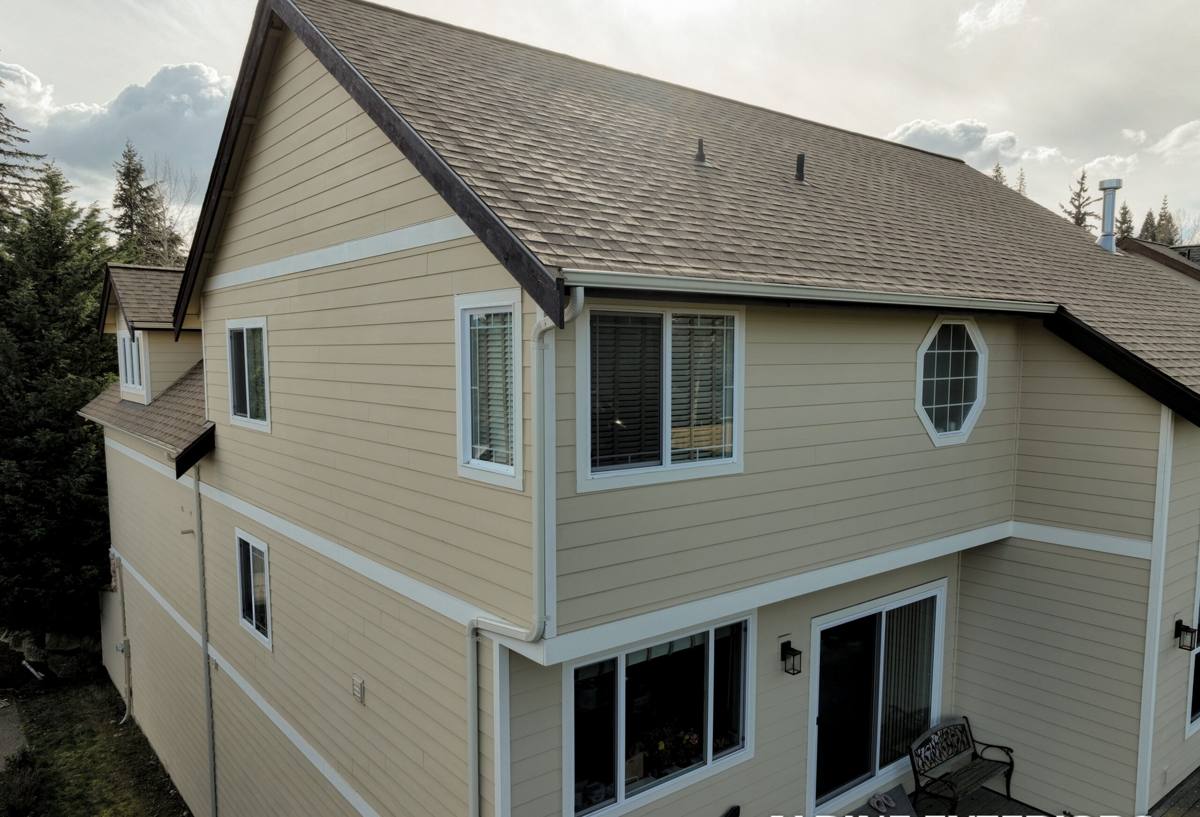
What Storm Damage Actually Looks Like
Storm damage isn't always a hole in the roof. Most of what we deal with after a wind or rain event is less obvious and easy to miss from the ground.
Wind and Uplift
Wind off the Sound doesn't need to be extreme to cause damage. Gusts can lift shingle tabs, break the factory seal along the edges, or tear shingles loose in valleys and near ridgelines where wind pressure concentrates. Once a shingle's seal is broken, it may still look fine from the driveway but won't reseal on its own — it becomes a repeated entry point for wind-driven rain in every storm after that.
Impact Damage
Falling branches and wind-blown debris are common during Whatcom County storms, especially on properties with mature trees nearby. Impact damage can crack shingles, dent metal flashing, or knock granules loose in ways that shorten the life of the roofing material even when there's no visible hole.
Water Intrusion Points
Most storm-related leaks trace back to a handful of predictable spots: flashing around chimneys and vents, valleys where two roof planes meet, and any point where the roofline is interrupted. Driving rain finds these weak points fast, and a small gap that would barely register in a light shower can push real water into the attic during a Puget storm.
What a Correct Storm Damage Repair Involves
A storm repair done right isn't just about covering the spot that's obviously damaged. It starts with finding out how far the damage actually extends, because wind and water rarely limit themselves to one shingle or one flashing detail.
That means checking the decking underneath for soft spots or water staining, not just patching the surface layer. It means inspecting the underlayment in the affected area, since torn or saturated underlayment will keep leaking even after new shingles go down. It means matching replacement materials as closely as possible to what's already on the roof, both for appearance and so the repair performs the same way the surrounding roof does in the next storm. And it means checking flashing, not just shingles, since flashing failures account for a large share of the Puget-area leaks we get called out for.
A patch job that only addresses the visible damage without checking these things tends to fail again in the next storm, which usually ends up costing more than doing it right the first time.
Our Storm Damage Repair Process for Puget Homes
We keep this straightforward, because a homeowner dealing with storm damage doesn't need extra steps added to an already stressful situation.
- We inspect the roof, including areas around the visible damage, not just the spot that prompted the call.
- We document what we find with clear photos and notes, which is useful whether or not you end up filing an insurance claim.
- We walk you through what we found in plain language and give you an honest recommendation, including whether a full section replacement makes more sense than a patch.
- We complete the repair using materials that match your existing roof as closely as possible.
- We clean up the site fully and do a final walkthrough with you before we consider the job done.
Storm Damage vs. Ordinary Wear and Tear
Homeowners often ask how to tell the difference between damage from a specific storm and roofing that's simply reaching the end of its service life. The distinction matters both for the repair approach and, often, for insurance purposes.
| Sign | More Likely Storm Damage | More Likely Age-Related Wear |
|---|---|---|
| Pattern of damage | Concentrated in one area, one slope, or near where debris fell | Spread evenly across the whole roof |
| Shingle condition | Torn, creased, or missing shingles with sharp edges | Curling, cracking, or granule loss with rounded, worn edges |
| Timing | Appears right after a known wind or rain event | Develops gradually over years |
| Flashing and fasteners | Bent, torn loose, or displaced | Corroded or loosened slowly over time |
| Moss involvement | May have accelerated the failure but isn't the root cause | Often the primary driver of the damage |
What Drives the Cost of a Storm Repair
Every roof and every storm is different, so we don't quote a number without inspecting the damage first. The factors below are what actually move a repair estimate up or down.
| Factor | How It Affects the Repair |
|---|---|
| Extent of hidden damage | Wet or soft decking under the visible damage adds material and labor beyond a simple shingle swap |
| Roof pitch and access | Steeper roofs and limited access points take longer and require more safety setup |
| Material match | Discontinued or uncommon shingle colors and styles can take longer to source |
| Flashing involved | Chimney, valley, and vent flashing repairs generally cost more than shingle-only fixes |
| Pre-existing moss or rot | Any decking replacement needed because of prior moss damage adds to the scope |
Why It Matters That We Already Work in Puget
A contractor who already works Puget roofs isn't guessing at how salt air, moss, and driving rain interact on this stretch of Bellingham. We know which flashing details tend to fail first in this area, which roof orientations take the worst of the wind off the Sound, and roughly how long moss has typically had to work on a roof before a storm exposes the damage underneath it. That local pattern recognition means a faster, more accurate diagnosis and a repair built for what actually happens here — not for generic storm conditions somewhere else.
It also means a faster response. Being local to Whatcom County lets us get out to inspect storm damage quickly, and that matters — a leak that sits uninspected for a week does a lot more damage than the same leak addressed within a day or two.
After the Storm: A Homeowner's Checklist
- Do a visual check from the ground or a window — do not climb onto a wet or storm-damaged roof yourself.
- Check the attic and upper-floor ceilings for new water stains, damp insulation, or drips.
- Look at gutters and downspouts for shingle granules, which can indicate accelerated wear even without a visible hole.
- Note the date and general conditions of the storm in case you need it for an insurance claim.
- Avoid temporary fixes like caulk or tarps unless they're needed to stop active water intrusion, since they can mask the real extent of the damage.
- Call for an inspection promptly — a small gap left open through several more storms tends to grow into a larger repair.
Keeping the Next Storm From Doing the Same Damage
Repairing the current damage is only half the job if the underlying conditions that caused it are still in place. Clearing established moss growth, keeping gutters and downspouts flowing freely so water doesn't back up under the roof edge, and having flashing checked periodically all reduce how much damage the next storm can do. For homes in Puget, an annual inspection before the wet season ramps up is one of the more useful, low-cost habits a homeowner can keep — it catches small failures before a storm turns them into leaks.
If you have storm damage now, or just want a straight answer on the condition of your roof before the next system rolls in off the Sound, we're happy to take a look. Reach out for a free, no-pressure estimate using the form below.