 Bellingham Roofing
 South Hill's Siding Problem Isn't Just Cosmetic
South Hill sits close enough to Bellingham Bay to catch salt-laden air off the water, and its tree-covered, elevated lots keep a lot of the neighborhood in shade for long stretches of the year. That combination — salt air, driving rain off the Sound, and shaded, damp conditions that feed moss and mildew — is a tougher environment for exterior siding than most homeowners realize. Whatcom County's wet season runs long, and siding here doesn't get much of a chance to fully dry out between storms.
Over time, that moisture cycle is what actually damages a house. It isn't one big storm; it's months of siding staying damp, freezing overnight in the colder stretches, and never getting a real dry-out period. Products that aren't built for that cycle swell, delaminate, or hold moss and mildew against the wall long enough to cause rot underneath. On a South Hill home, siding choice and installation quality matter more than they would somewhere drier.
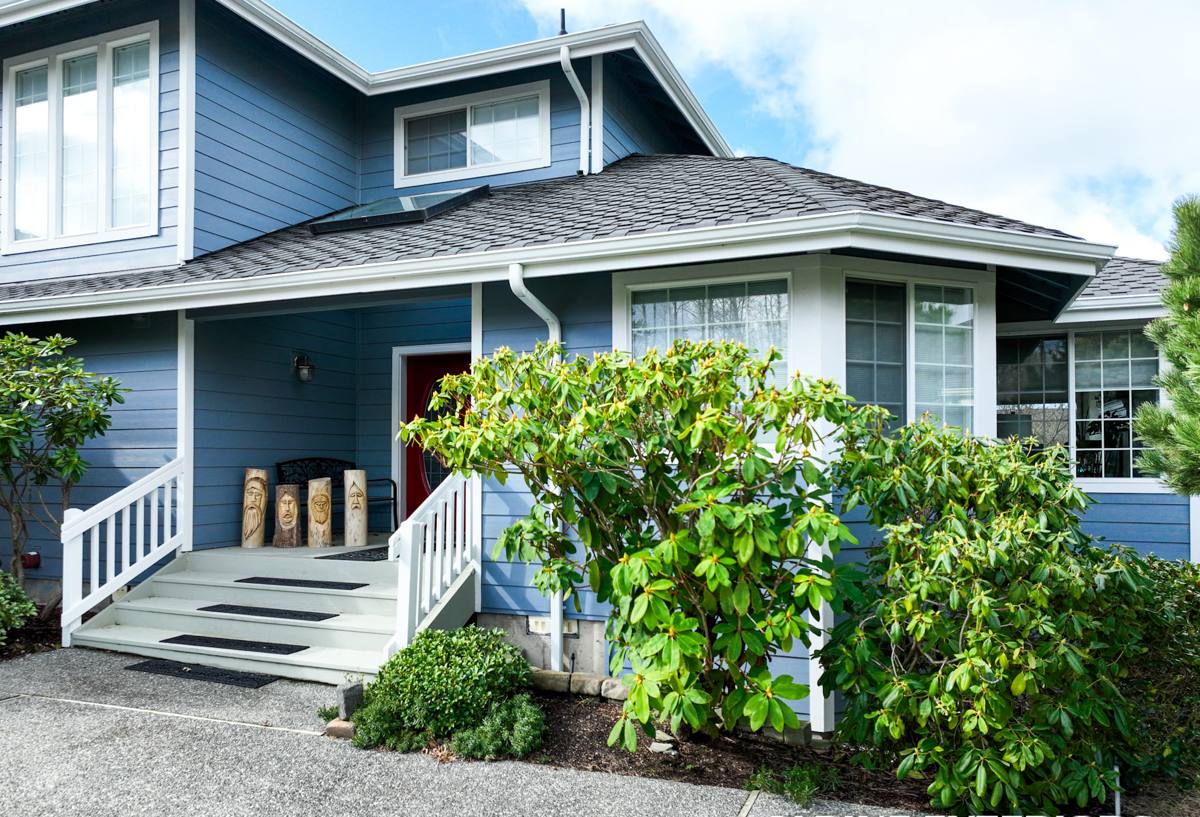
Why We Install James Hardie Here — and Nothing Else
We standardized on James Hardie fiber cement siding for every job we do, including South Hill, because it's engineered to handle exactly this kind of climate. Hardie's HZ5 product line is formulated for regions with heavy moisture exposure — it resists moisture intrusion, doesn't swell or delaminate the way wood-based or wood-composite sidings can, and it's non-combustible, which matters as wildfire smoke and dry-season fire risk have become a bigger concern even in the Pacific Northwest.
ColorPlus Factory Finish
Most South Hill jobs we do use Hardie's ColorPlus finish — a baked-on factory coating that's more UV- and moisture-resistant than field-applied paint, and it holds color and sheen far longer in a climate where siding rarely gets a chance to dry between rain events. That matters on shaded lots especially, where a field-painted finish tends to show wear, chalking, and moss staining faster.
Why We Don't Install the Alternatives
We get asked why we don't offer vinyl, LP SmartSide, or other fiber cement brands. Vinyl can warp and doesn't hold up well against the freeze-thaw and moisture cycling common here. Wood-based composite sidings like LP SmartSide use engineered wood with resin-treated strand board — well-made, but wood-based products are more sensitive to sustained moisture exposure than fiber cement, and a shaded, damp lot is a demanding place for any wood product to prove itself over decades. We'd rather install one product correctly, backed by a strong warranty, than offer options we don't fully stand behind in this specific climate.
What a Correct James Hardie Installation Actually Involves
Fiber cement siding is only as good as the installation behind it. Most siding failures we see on older Bellingham homes aren't a materials problem — they're a moisture-management problem from an installation that skipped steps. On a house exposed to South Hill's rain and shade, these details aren't optional:
- A code-compliant weather-resistant barrier installed with proper lapping, so water sheds outward instead of tracking behind the siding
- Correct rainscreen or furring strip application where conditions call for it, creating a drainage gap and airflow channel behind the siding
- Manufacturer-specified fastener placement and nailing patterns — under- or over-driven nails are one of the most common causes of early siding failure
- Proper clearance between the siding's bottom edge and grade, decks, and roof lines, so splash-back and standing water don't sit against the material
- Correctly flashed and caulked window, door, and penetration details, since these are the highest-risk points for water intrusion
- Tight, factory-mitered or properly sealed butt joints and trim work, especially on horizontal lap siding where every seam is a potential entry point
Skip any one of these and you can still end up with moisture problems behind brand-new Hardie board. That's why installation quality matters as much as the product decision itself.
Choosing the Right Hardie Product for a South Hill Home
South Hill has a mix of older character homes and newer construction, and the right Hardie product depends on the home's style, exposure, and existing trim details. We typically work with three of Hardie's product lines here:
| Product | Best Fit | Why It Works Here |
|---|---|---|
| HardiePlank lap siding | Most South Hill homes, traditional and updated styles | Classic horizontal profile, wide color range, proven long-term moisture performance |
| HardiePanel vertical siding | Accent walls, modern additions, gable ends | Clean vertical lines that pair well with mixed-material exteriors |
| HardieShingle siding | Character homes wanting a shingle-style look without cedar's maintenance | Replicates a shingled aesthetic with fiber cement's moisture resistance |
We walk each South Hill homeowner through which line and profile fits their home's existing lines and trim before we ever talk installation scheduling — the product choice should match the house, not the other way around.
Moss, Mildew, and Salt Air: What Ongoing Care Looks Like
Even the right siding, installed correctly, still lives in South Hill's climate. Shaded, north-facing walls are the areas most likely to develop surface moss or mildew growth over a wet winter. This is almost always a surface issue on properly installed Hardie board — the ColorPlus finish and the fiber cement substrate underneath aren't being damaged by it — but it's worth addressing before it builds up and holds moisture against the wall longer than it should.
A simple soft wash on shaded elevations once a year, along with keeping nearby vegetation trimmed back so walls get some airflow and light, goes a long way. Homeowners near the water should also expect to rinse salt residue off siding periodically, particularly after storms — it's a light maintenance habit, not a repair.
How Our Process Works on a South Hill Job
Every South Hill project starts with an on-site walkthrough, not a phone estimate. We look at sun exposure, tree cover, existing moisture damage, and how water currently moves around the house before we recommend a product line or scope of work.
- Site walkthrough and moisture/damage assessment on the existing exterior
- Product and color selection based on the home's style and exposure
- Written scope covering tear-off (if needed), weather barrier, flashing details, and fastening schedule
- Removal of old siding and inspection of the sheathing underneath for hidden rot or damage
- Weather-resistant barrier and drainage plane installation
- Hardie board installation to manufacturer fastening and clearance specifications
- Trim, flashing, and caulking at all penetrations and joints
- Final walkthrough with the homeowner before we consider the job done
Because we only install one product system, our crews aren't relearning specs between jobs — the fastening schedules, flashing details, and joint treatments for Hardie board are what they do every day.
What Affects the Cost of a South Hill Siding Job
There's no honest flat number for a siding job without seeing the house, but a few factors consistently move the price on South Hill projects:
| Factor | Why It Matters |
|---|---|
| Tear-off vs. new construction | Removing old siding and dealing with what's underneath adds labor and sometimes sheathing repair |
| Hidden moisture or rot damage | Older, shaded South Hill homes more often need sheathing or framing repair before new siding goes on |
| Product line and profile | HardiePlank, HardiePanel, and HardieShingle carry different material and labor costs |
| Trim and detail complexity | Multiple gables, dormers, and window trim add cutting, fitting, and flashing time |
| Access and site conditions | Steep or wooded lots common on South Hill can affect staging and scaffolding needs |
We put all of this in writing before work starts — no surprise line items once the crew is on site.
Why a Crew That Already Works South Hill Matters
Siding work on a shaded, elevated South Hill lot is different from a flat, open one. Access is often tighter, drainage patterns around the foundation are less obvious, and existing moisture damage tends to be more common simply because the conditions are harder on a house year-round. A crew that's done this work in this specific neighborhood knows to check for it before it becomes a bigger problem hidden behind new siding.
Hiring locally also means someone accountable is reachable after the job — not a call center, and not a crew that's moved on to another state. For a product backed by a long transferable warranty, that local accountability is part of what you're actually paying for.
Ready to Talk About Your South Hill Home?
If your South Hill home's siding is showing moss buildup, moisture staining, or you're just planning ahead for a replacement, we're happy to take a look and give you an honest read on what it needs. Reach out for a free, no-pressure estimate using the form below.