 Bellingham Roofing
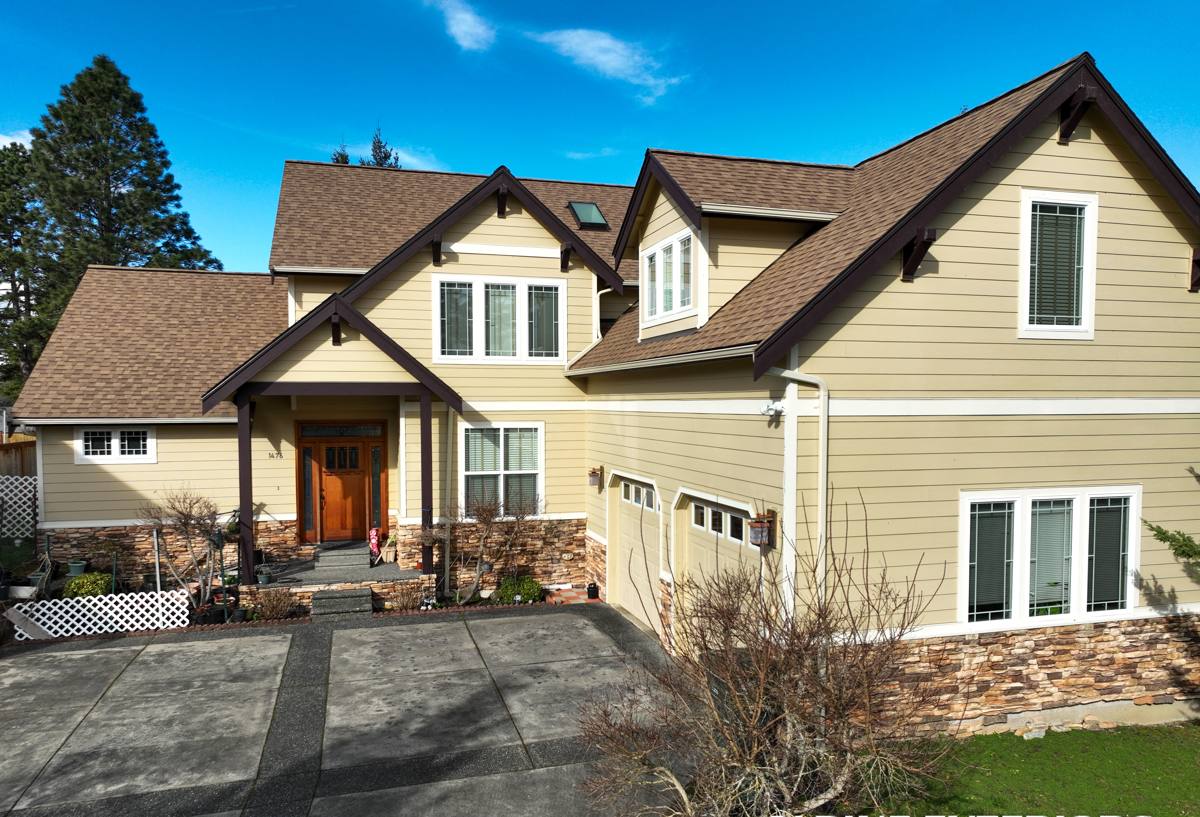
 South Hill is one of Bellingham's older hillside neighborhoods, and its housing stock reflects that: larger, architecturally distinct homes on elevated lots, many of them built well before window manufacturers standardized the sizes and shapes that fill a big-box catalog today. Add in the view-oriented picture and bay windows that a hillside overlooking Bellingham Bay tends to invite, plus additions and remodels layered onto older framing over the decades, and "custom windows" stops being a specialty upsell here and becomes a fairly common necessity. A stock replacement window simply doesn't fit a lot of the openings on this hill, and pretending otherwise is how homeowners end up with gaps, shims, and a window that never seals the way it should.
Why South Hill Homes Need Custom Windows More Than Most
Three things stack up in this neighborhood. First is age: a meaningful share of South Hill's homes predate modern window sizing standards, so a straight swap for a stock unit often means the new window is smaller than the opening, larger than the opening, or an awkward shape the manufacturer never anticipated. Second is elevation and view exposure — homes positioned to take advantage of a hillside outlook toward Bellingham Bay were often built with picture windows, bay windows, or oversized openings that were custom from day one and need to stay that way when it's time to replace them. Third is the renovation layer: additions, dormers, and remodeled rooms built onto older framing create openings that don't match anything else on the house, let alone a catalog size.
None of that makes a project unusual for us. It does mean the job starts with careful measurement and an honest conversation about what the opening actually allows, rather than assuming a stock unit will drop in and look right.
What Bellingham's Climate Does to Windows on an Exposed Hillside
Whatcom County's marine climate is hard on windows generally, and a hillside site like South Hill sees a more concentrated version of that stress than a sheltered lot further inland.
Wind and Elevation
Higher, more open positions on the hill catch more direct wind than homes tucked into a valley or surrounded by mature tree cover. That matters for windows specifically because wind load pushes against glass and frame, and it drives rain into gaps and seams that would stay dry in calmer conditions. A window rated fine for average conditions can still leak on an exposed hillside if it wasn't installed with that added exposure in mind.
Salt Air Off Bellingham Bay
Homes with a view toward the water are also within reach of the salt-laden air that drifts off Bellingham Bay. It's a slow, background effect rather than a dramatic one — it works on hardware, fasteners, and lower-grade finishes over years, showing up eventually as pitted hardware, degraded weatherstripping, or a finish that's chalked out well ahead of its expected life.
Driving Rain at the Transitions
Rain in this part of Whatcom County doesn't reliably fall straight down. Wind pushes it sideways into wall assemblies, and the places it finds a way in are almost always the transition points: where a window frame meets siding, where a sill meets the wall below it, where a bay window's roof ties into the main structure. A custom or oversized window has more of these transitions to get right than a small stock unit does.
A Long Moss and Mildew Season
Shaded, north-facing, or tree-covered spots on South Hill's older lots stay damp for much of the year, and that supports a moss and mildew season that can run longer here than in a drier inland market. Moisture held against a sill or trim board by moss growth is a slow but steady way for wood components to start failing well before the glass or frame ever would.
Types of Custom Windows We Build For in South Hill
- Non-standard replacement sizes — matching openings in older homes built before modern sizing conventions existed
- Bay and bow windows — projecting units that add interior space and view, and require their own small roof and support structure
- Picture and large-format windows — fixed units built to maximize a bay or hillside view, with more glass area and structural load to account for
- Arched, angled, and specialty shapes — architectural details common on older South Hill homes, each requiring custom-cut units and matching custom flashing
- Egress and code-driven openings — bedroom or basement conversions where the required opening size is set by code, not convenience
- Matched sets for additions or remodels — new windows that need to sightline correctly with a home's existing, often older, window openings
Working With Older Window Openings
A lot of South Hill's older homes have window openings that were framed by hand to whatever dimensions made sense for that house at the time. That means we're frequently choosing between building a true custom unit to match the existing opening or reframing the opening to accept something closer to a standard size. Reframing has its own cost and disruption, so we'll walk through both paths honestly rather than defaulting to whichever is easier for us.
What a Correct Custom Window Installation Involves
The window unit itself is only part of the job. On a hillside site with real wind and rain exposure, the installation details around it decide whether the window performs for decades or starts leaking within a few years.
Measurement and Order Accuracy
Custom units are built to order, not pulled from stock, so there's no room for a measurement error to get corrected later with a shim and some caulk. We measure the opening carefully, account for any out-of-square condition in older framing, and confirm dimensions before anything is ordered.
Flashing and Water Management
This is where most window failures actually start, custom or not. Flashing has to be layered correctly — sill pan, jamb flashing, head flashing — so that any water that does get past the window sheds down and out rather than pooling or tracking behind the wall assembly. A bay window's roof-to-wall transition and a picture window's wide sill both need extra flashing attention because they have more perimeter and more horizontal surface for water to sit on.
Structural Considerations for Larger Units
Bay windows, bow windows, and oversized picture windows sometimes need added framing support that a standard window opening never required. We evaluate that as part of the estimate, not as a surprise change order once the old window is already out of the wall.
Sealant and Finish Detail
Exterior sealant and trim work are what most homeowners actually see, but they're also a place where a rushed install cuts corners that don't show up as a problem until a wet season or two has passed. We treat this step with the same care as the flashing underneath it.
Frame Material Considerations for a Hillside Marine Climate
Frame material matters more on a custom or larger unit, because more exposed surface area means more opportunity for salt air and sustained moisture to work against it. We'll talk through the honest trade-offs for your specific opening rather than steering everyone toward the same product.
| Frame Material | Strengths | Trade-Offs on an Exposed Hillside Site |
|---|---|---|
| Vinyl | Cost-effective, low maintenance, widely available in custom sizes | Can flex or warp under extreme temperature swings; quality varies significantly between manufacturers |
| Fiberglass | Very stable dimensionally, holds up well to sustained moisture and salt air | Higher upfront cost than vinyl; fewer color and finish options in some lines |
| Wood-clad | Interior wood look with an exterior weather-resistant cladding | Cladding and flashing details must be executed correctly, since any breach exposes the wood substrate underneath |
| All-wood | Traditional appearance that suits many of South Hill's older homes | Requires ongoing painting or sealing; the maintenance schedule is easy to let slip in this climate, which shortens real-world lifespan |
For weather-facing custom installs on exposed hillside lots, we lean toward fiberglass or a well-detailed wood-clad unit, but the right call depends on the specific opening, the home's architecture, and how much ongoing maintenance a homeowner actually wants to take on.
Cost Factors on Custom Window Projects
We won't quote a number without seeing the opening, but the factors that consistently move price on custom work are the same ones worth understanding before you start pricing.
| Factor | Why It Matters |
|---|---|
| Size and glass area | Larger units cost more to manufacture and are heavier and more labor-intensive to set |
| Shape complexity | Arched, angled, or curved units require specialty manufacturing and more flashing labor to install correctly |
| Structural work | Bay and bow windows sometimes need added framing support before the unit goes in |
| Opening condition | Rot, prior flashing failures, or out-of-square framing in an older home add repair work ahead of installation |
| Frame material | Vinyl, fiberglass, and wood-clad options differ in both upfront cost and long-term maintenance |
| Number of units | A matched set for an addition or remodel typically has better per-unit economics than a single window |
Our Process, Start to Finish
- On-site assessment: we look at the actual opening, the home's age and construction, and the site's wind and moisture exposure before talking specifics
- Honest options: we lay out what's possible for that opening — true custom, reframed to a standard size, or a hybrid approach — along with realistic cost and lead time for each
- Precise measurement and ordering: since custom units are built to order, accuracy at this stage prevents delays and mismatches later
- Removal and prep: the old window comes out and the opening gets inspected for hidden rot or past flashing failures before anything new goes in
- Installation with full flashing detail: sill pan, jamb, and head flashing installed as one integrated water-management system, not separate steps done in isolation
- Finish work and walkthrough: exterior trim and sealant completed, and we walk the finished opening with you before calling the job done
Why It Matters That We Already Work South Hill
Manufacturer installation guides are written for average conditions, not for a hillside lot exposed to wind off Bellingham Bay or an opening framed by hand seventy or more years ago. A crew that's already worked this neighborhood knows which of those manufacturer instructions are non-negotiable here and where extra time on flashing or sealant is worth spending even when it's not strictly required in a calmer, more sheltered part of Whatcom County. That experience shows up in decisions that never make it into a sales pitch — how much lap a flashing course needs on an arched opening, when a sill needs a sloped composite cap instead of relying on caulk, how a bay window's roof ties into the wall above it. Those choices are what separate a custom window that's still performing cleanly in fifteen years from one that's showing rot and drafts in five.
Signs an Existing Window May Need Custom Replacement
Not every window problem on an older South Hill home calls for a full custom replacement, but a few signs are worth taking seriously rather than patching over.
- Visible daylight, drafts, or a noticeable temperature difference near the window frame
- Soft or discolored wood at the sill, jamb, or surrounding trim
- Difficulty opening, closing, or latching a window that used to operate normally
- Condensation forming between panes on a double- or triple-glazed unit, which usually means a failed seal
- Visible gaps between the window frame and the surrounding wall or siding
- Persistent moss or mildew buildup on the sill or trim that keeps returning after cleaning
If you're planning an addition, dealing with an older window that's reached the end of its service life, or thinking about a bay or picture window to make more of a hillside view, it's worth having someone look at the actual opening before you start pricing units. We offer free, no-pressure estimates for custom window projects on South Hill and throughout the surrounding Bellingham area — use the form below to get a time on the schedule.