 Bellingham Roofing
 Board & Batten Siding Built for South Hill's Weather
South Hill sits up above much of Bellingham, with open exposure toward Bellingham Bay and the Salish Sea. That elevation and exposure is part of what makes the neighborhood attractive, but it's also what puts extra load on exterior siding. Homes here take a steady mix of salt-laden air, wind-driven rain coming off the water, and the long, low-sun moss season that defines a Whatcom County winter. Board and batten siding, with its crisp vertical lines and strong shadow lines, is a popular choice for South Hill's mix of older character homes and newer builds — but only if it's installed with this specific climate in mind. A board and batten job that would hold up fine in a drier inland climate can fail early here if the details are wrong.
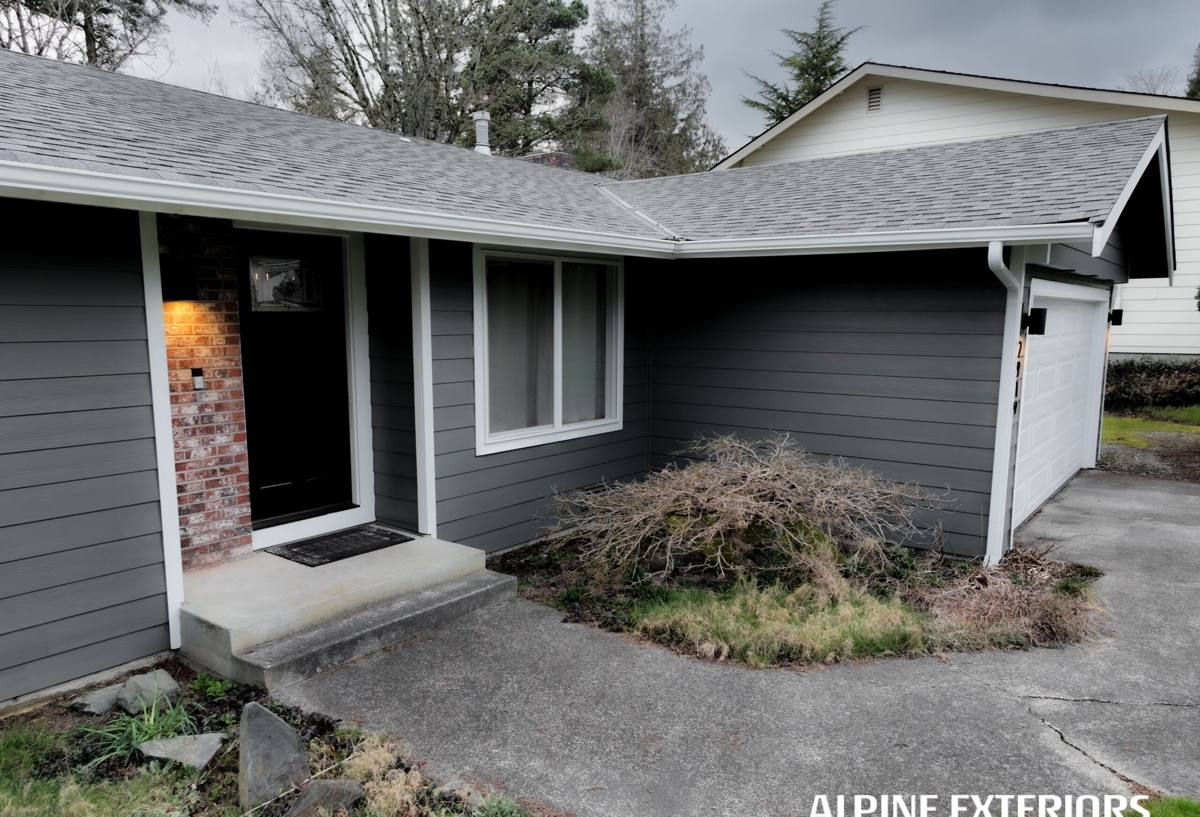
What Bellingham's Climate Actually Does to Vertical Siding
Salt Air and Fastener Corrosion
Proximity to Bellingham Bay means airborne salt is a real factor, even a mile or more inland and up in elevation. Salt air accelerates corrosion on anything metal — nail heads, flashing, trim fasteners — faster than most manufacturers' generic installation guides assume. On a board and batten wall, the vertical boards and the battens that cover the seams both get fastened directly into the wall assembly, which means there are more exposed fastener points than on a standard lap siding job. Every one of those points is a potential rust streak or a loosening fastener if the wrong hardware goes in.
Wind-Driven Rain and Moisture Intrusion
Vertical siding patterns, board and batten included, rely heavily on correct water-shedding detail because the seams run up and down the wall rather than lapping horizontally. In a climate where rain regularly comes in sideways off the water, any gap in the drainage plane, any batten installed without a gap behind it, or any missed flashing point becomes a direct path for water to get behind the siding. Once moisture gets trapped behind vertical panels, it has nowhere to go, which is how sheathing rot and hidden water damage start.
Moss, Shade, and the Long Wet Season
Whatcom County's wet season runs long, and shaded north- and east-facing walls on hillside lots like the ones common on South Hill stay damp for extended stretches. That's ideal growing conditions for moss and algae. Siding that can't handle sustained moisture exposure on its surface, not just behind it, will show staining and organic growth years before it should.
Why Board & Batten Fits South Hill's Architecture
South Hill's housing stock is a mix of older character homes and newer construction, and board and batten reads well on both. On older homes it echoes a traditional Pacific Northwest farmhouse look; on newer builds it pairs cleanly with modern trim and larger window openings. It also works well as an accent — many homeowners in this area use board and batten on a gable end, dormer, or entry feature rather than the whole house, paired with lap siding elsewhere. Whichever approach you're considering, the climate demands listed above apply the same whether it's a full-house application or an accent wall.
What a Correct Board & Batten Installation Actually Involves
Board and batten looks simple from the street — vertical boards, battens over the seams — but the assembly behind that simple look is where the job succeeds or fails. A correct installation in a climate like Bellingham's includes:
- A weather-resistive barrier installed and lapped correctly behind the entire wall assembly, with all seams taped or shingled to shed water downward
- A rainscreen gap (a furring strip or drainage mat) behind the siding so any moisture that does get past the surface can drain and dry out instead of sitting against the sheathing
- Correct flashing at every horizontal transition — window and door heads, roof-to-wall intersections, and the base of the wall where it meets the foundation
- Fasteners sized, spaced, and rated to the manufacturer's specification, driven into structural framing rather than just sheathing
- Battens installed with enough gap or venting behind them so they aren't trapping water against the boards underneath
- Factory-finished panels and trim so the field crew isn't relying on field-applied paint to hold the line against moisture
Skip the rainscreen gap or get the flashing sequence wrong at even one window, and the rest of the installation quality doesn't matter — water will find that one weak point.
Rainscreen vs. Direct-Applied Installation
| Factor | Direct-Applied (No Gap) | Rainscreen (Gapped) Installation |
|---|---|---|
| Moisture that gets behind siding | Sits against the sheathing, slow to dry | Drains and dries through the gap |
| Performance in wind-driven rain | Marginal in exposed coastal locations | Built for exactly this exposure |
| Upfront cost | Lower material and labor cost | Modest added cost for furring/mat and labor |
| Long-term risk on a hillside, view-exposed lot | Higher — trapped moisture is harder to detect | Lower — assembly is designed to release moisture |
Why We Install Only James Hardie for This Application
We standardized on James Hardie fiber cement for every siding job we take on, board and batten included, and we don't install vinyl, LP SmartSide, primed spruce, cedar, or other fiber cement brands. That's not a marketing position — it's a decision based on what holds up in this specific climate over the long run.
Fiber cement doesn't absorb water the way engineered wood products can, which matters directly for a wet, moss-prone climate like Whatcom County's. James Hardie's HZ5 product line is engineered specifically for climates with freeze-thaw cycles and heavy moisture exposure, which describes a South Hill winter well. The ColorPlus factory finish process bakes color onto the board under controlled conditions, which holds up better against UV and moisture than field-applied paint and reduces how often the siding needs repainting. Fiber cement is also non-combustible, which matters in a region where wildfire smoke and fire risk have become a bigger part of homeowner concerns even west of the Cascades. And Hardie's transferable warranty gives homeowners real backing if something goes wrong with the product itself.
None of this means other products are unusable — vinyl, engineered wood, and other fiber cement brands all have a place in the market. We simply won't put our name on an installation using a product we don't think earns its keep against this climate over 20-plus years, so we don't offer those options.
Our Process on South Hill Projects
Every board and batten project starts with an on-site assessment of the specific wall or walls in question — orientation, sun and shade exposure, existing moisture damage, and how the current siding (if any) has performed. From there:
- We remove the existing siding down to the sheathing and inspect for any hidden rot or damage before covering it back up
- We repair or replace any damaged sheathing and framing found during tear-off
- We install a new weather-resistive barrier and rainscreen gap system suited to the wall's exposure
- We flash every window, door, and transition point before a single board goes up
- We install the James Hardie boards and battens to manufacturer fastening specifications, using corrosion-resistant fasteners appropriate for a marine-influenced climate
- We do a final walk-through with the homeowner to review the completed work before we consider the job finished
Because we work in South Hill and the surrounding Bellingham neighborhoods regularly, we've seen how homes at this elevation and exposure actually perform over time, not just how a spec sheet says they should perform.
Board & Batten vs. Other Siding Options for This Setting
| Option | How It Handles This Climate | Our Position |
|---|---|---|
| James Hardie Board & Batten | Non-combustible, factory-finished, HZ5-engineered for wet/marine climates | What we install |
| Vinyl vertical panel | Can warp or fade with UV and temperature swings; seams can loosen over time | Not installed by our crew |
| Engineered wood (LP SmartSide, etc.) | Vulnerable to moisture intrusion at cut edges and fastener points if not maintained closely | Not installed by our crew |
| Primed wood or cedar board & batten | Authentic look, but needs frequent repainting/sealing to resist this area's moss and moisture | Not installed by our crew |
Living With Board & Batten Siding on South Hill
Even correctly installed siding needs some homeowner attention in this climate. A short seasonal checklist goes a long way toward protecting the investment:
- Rinse pollen, salt residue, and road grime off the siding once or twice a year, especially on walls facing the water or the street
- Trim back vegetation and tree limbs that keep any section of wall in constant shade — that shade is what feeds moss growth
- Walk the exterior after major windstorms and check for any loosened battens, trim, or caulking, particularly around windows and doors
- Keep gutters and downspouts clear so roof runoff isn't dumping extra water directly onto a wall section
- Address any caulking cracks at trim and flashing joints promptly rather than waiting for a full repaint cycle
James Hardie's factory finish reduces how much of this falls on the homeowner compared to field-painted wood siding, but no siding product is entirely maintenance-free in a climate this wet.
Why Hiring a Crew That Already Works South Hill Matters
A siding crew that mostly works inland or in drier parts of the state will default to standard installation details that are fine in a milder climate but leave gaps here. A crew that regularly works South Hill and the rest of Bellingham already accounts for the elevation exposure, the salt air, and the moss season in how they sequence flashing, choose fasteners, and plan the rainscreen gap. That local pattern recognition is the difference between a board and batten wall that looks right for a few years and one that actually performs correctly for decades.
If you're considering board and batten siding for a home on South Hill, we're glad to take a look and walk you through what a correct installation would involve for your specific wall exposure — no pressure, no obligation. Reach out using the form below to schedule a free estimate.