 Bellingham Roofing
 Decks Near Silver Beach Take a Different Kind of Beating
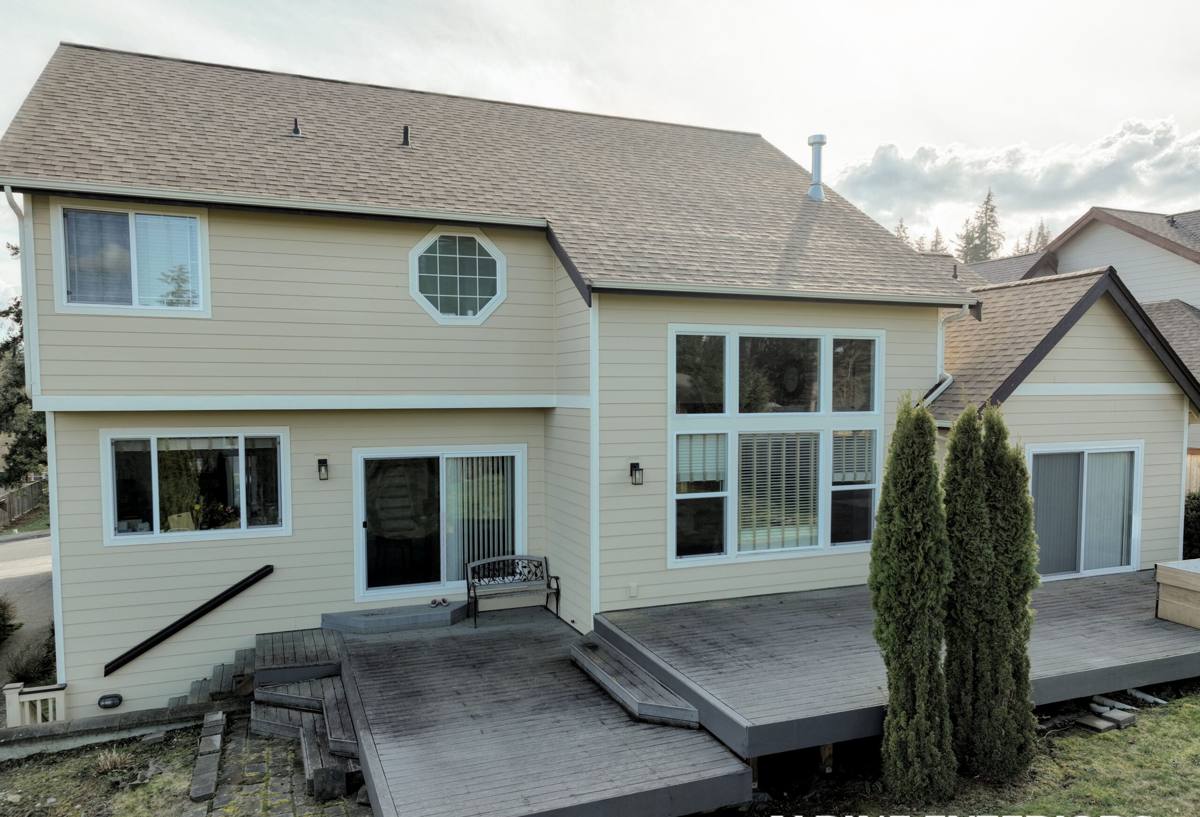
Silver Beach is one of Bellingham's older lake-side neighborhoods, and a lot of the decks out here were built decades ago under very different assumptions about wood, fasteners, and drainage. Many lots slope toward the water, tree cover is heavy, and afternoon sun is limited on a good chunk of the property. That combination doesn't ruin a deck overnight, but it does mean decks in this part of Bellingham age differently than a deck sitting in an open, sunny yard across town.
We work throughout Whatcom County, but Silver Beach shows up on our schedule often enough that we've stopped treating it like a generic "deck job." The shade, the moisture, and the way water moves across these lots all change what a correct replacement looks like — not dramatically, but in ways that matter for how long the new deck lasts.
What the Local Climate Actually Does to a Deck
Bellingham and Whatcom County sit in a marine-influenced climate — long stretches of damp, overcast weather, driving rain off and on for months, and a moss season that can run from fall through spring. Add a shaded, tree-covered lot like a lot of Silver Beach properties have, and the drying-out time between rain events gets even shorter. That's the real problem: it's rarely a single storm that damages a deck, it's wood and fasteners staying wet for days at a stretch, over and over, for years.
Where the damage actually starts
- The ledger board connection — where the deck attaches to the house is the single most common failure point we find, usually from water getting behind the ledger with no flashing or improperly installed flashing.
- Fasteners and hardware — nails, screws, and joist hangers that aren't rated for constant moisture will corrode and lose holding strength years before the wood around them looks obviously bad.
- Joists and beams underneath — hidden from view, these can be quietly rotting while the decking boards on top still look fine.
- Decking surfaces — moss and algae build up fastest on shaded boards that don't get direct sun, turning a walking surface slick and, over time, holding moisture against the wood fibers.
- Footings and posts — on sloped lots, drainage around post bases matters more than people expect; standing water at the base of a post accelerates rot from the ground up.
Signs a Deck Needs Replacing, Not Just Patching
Not every tired-looking deck needs a full tear-out. But there's a point where repairing board by board stops making sense, especially once the structure underneath is in question. Here's what we actually check before recommending replacement over repair:
- Soft, spongy, or springy spots when you walk across the deck
- Any movement or give at the ledger board where the deck meets the house
- Visible rot, splitting, or delamination in joists or beams (not just the top boards)
- Rust staining or loose fasteners at joist hangers and connectors
- Persistent moss or algae that comes right back within weeks of cleaning
- Railings that feel loose or flex when pushed on — a safety issue, not a cosmetic one
- Posts that show rot or softness at or near ground contact
- A deck older than 20-25 years that has never had the substructure inspected
If most of the problems are surface-level — a few cupped boards, some cosmetic graying — repair or resurfacing can be the honest answer. If the structure itself is compromised, replacement is the only option that's actually safe.
Choosing Materials for a Shaded, Damp Lot
Material choice matters more on a lot like a typical Silver Beach property than it does in a drier, sunnier yard. Whatever you pick has to tolerate long stretches of dampness and reduced sun exposure without becoming a maintenance headache or a slip hazard.
| Material | How It Handles Shade & Moisture | Maintenance Load | Typical Lifespan Here |
|---|---|---|---|
| Pressure-treated lumber | Handles moisture well when properly sealed; needs regular upkeep in low-sun areas | High — annual cleaning and periodic sealing | 15-20 years with upkeep |
| Cedar decking | Naturally rot-resistant, but still needs sealing in shaded, damp spots to prevent graying and moss | Moderate to high | 15-20 years with upkeep |
| Composite decking | Doesn't absorb moisture like wood; still needs periodic cleaning where moss and algae can take hold | Low — cleaning only, no sealing/staining | 25-30+ years, manufacturer-dependent |
| PVC/vinyl decking | Fully moisture-resistant surface; performs well in shaded, wet conditions | Low | 25-30+ years, manufacturer-dependent |
We're not going to tell a homeowner that wood is a bad choice — plenty of people want the look and feel of real lumber, and a well-built, well-maintained wood deck can last a long time. But on a shaded, moisture-heavy lot, we're upfront that it means committing to a real maintenance schedule. If low maintenance is the priority, composite or PVC decking earns its higher upfront cost back in time you're not spending sealing and re-staining every year or two.
What a Correct Deck Replacement Actually Involves
A deck replacement is more than pulling up old boards and screwing down new ones. The parts nobody sees are the parts that determine whether the new deck lasts 10 years or 30.
Structure first
We inspect and, where needed, replace joists, beams, and posts — not just the decking surface. Any hardware going back in is corrosion-resistant, rated for exterior ground-contact or moisture exposure as appropriate.
The ledger connection done right
Since this is the most common failure point we see, we install proper flashing between the ledger and the house, with the flashing lapped correctly so water sheds outward instead of behind the board. This one detail prevents more hidden rot than almost anything else on the job.
Joist protection
Self-adhering joist tape over the tops of joists and beams keeps water from soaking into end grain and cut surfaces — cheap insurance against exactly the kind of slow, hidden rot that's common under shaded decks.
Footings and drainage
On sloped lots, we pay attention to how water moves under and around the deck, not just at the surface. Post bases are set to avoid standing water, and footings are sized and placed to current code, not just matched to whatever was there before.
Guardrails and stairs
Railing height, baluster spacing, and stair geometry all get built to current code — worth flagging because a lot of older Bellingham decks were built under standards that have since changed.
Permits and Code in Bellingham
Deck replacement in the City of Bellingham and unincorporated Whatcom County typically requires a permit once you're doing more than a like-for-like resurfacing job — especially when structural elements like footings, framing, or guardrails are involved. We handle the permit process as part of the job so the work is inspected and signed off properly, which also protects you if you ever sell the home and a buyer's inspector looks at the deck.
What we walk you through before work starts
- Whether your project needs a permit based on scope
- Setback and property line considerations for your specific lot
- Any structural upgrades required to meet current guardrail and stair code
- Material selection based on your sun exposure, tree cover, and maintenance preference
Our Process
- On-site evaluation — we inspect the existing deck's structure, not just its surface, including areas that are hard to see like under the ledger and around post bases.
- Honest recommendation — repair, partial replacement, or full tear-out, based on what we actually find, along with material options suited to your specific lot's sun and moisture conditions.
- Permitting — we handle the paperwork with the city or county so the job is done and inspected to code.
- Tear-out and rebuild — old structure removed, framing and footings addressed, ledger flashing and joist protection installed correctly, then decking, railings, and stairs built out.
- Final walkthrough — we go over the finished deck with you, including what maintenance (if any) your chosen material needs going forward.
Why Local Experience in This Neighborhood Matters
A crew that's worked lake-side, tree-covered lots around Bellingham before knows to look for the ledger rot before it's visible from the top, knows which fasteners hold up under this area's near-constant moisture, and doesn't need to relearn how sloped, shaded lots handle water. That's not a marketing point — it's the difference between a deck that gets re-inspected in five years for the same rot problem and one that doesn't.
We also know what permitting in this area actually requires, so there's no guessing or delay waiting on approvals mid-project.
Keeping Your New Deck Ahead of Whatcom County Weather
Even a properly built deck benefits from a little seasonal attention, especially in a neighborhood with heavy tree cover and shade:
- Clear debris and standing leaves off the decking surface before wet weather sets in each fall
- Rinse or scrub moss and algae off the surface periodically rather than letting it build up over a full winter
- Keep gutters and downspouts near the deck clear so runoff isn't dumping extra water onto or under the structure
- Check railings and stair connections annually for any looseness
- If you have wood decking, plan on resealing on the manufacturer's recommended cycle rather than waiting until it visibly grays
If your deck in Silver Beach is showing soft spots, loose railings, or persistent moss that won't quit, it's worth a straightforward look before it becomes a bigger repair. We offer free, no-pressure estimates — walk us through what you're seeing and we'll tell you honestly what it needs, whether that's a repair or a full replacement, using the form below.