 Bellingham Roofing
 Custom Decks for Silver Beach: Built for the Climate, Not Just the View
Silver Beach homeowners don't need to be told what the weather does to outdoor structures — they see it every fall when the first green film shows up on the walkway, and every spring when they check the underside of the railing for soft spots. A deck in this part of Bellingham isn't a fair-weather feature. It gets used, and weathered, in almost every month of the year, which means it has to be built differently than a deck going into a dry inland climate.
We build and replace custom decks for homes in Silver Beach and the surrounding Bellingham area, and the same handful of problems show up again and again: framing that was never protected from moisture, fasteners that rust and streak the boards, and decking material that was never sized to shed water and dry out between storms. None of that is complicated to solve — it just has to be planned for from the start, not patched later.
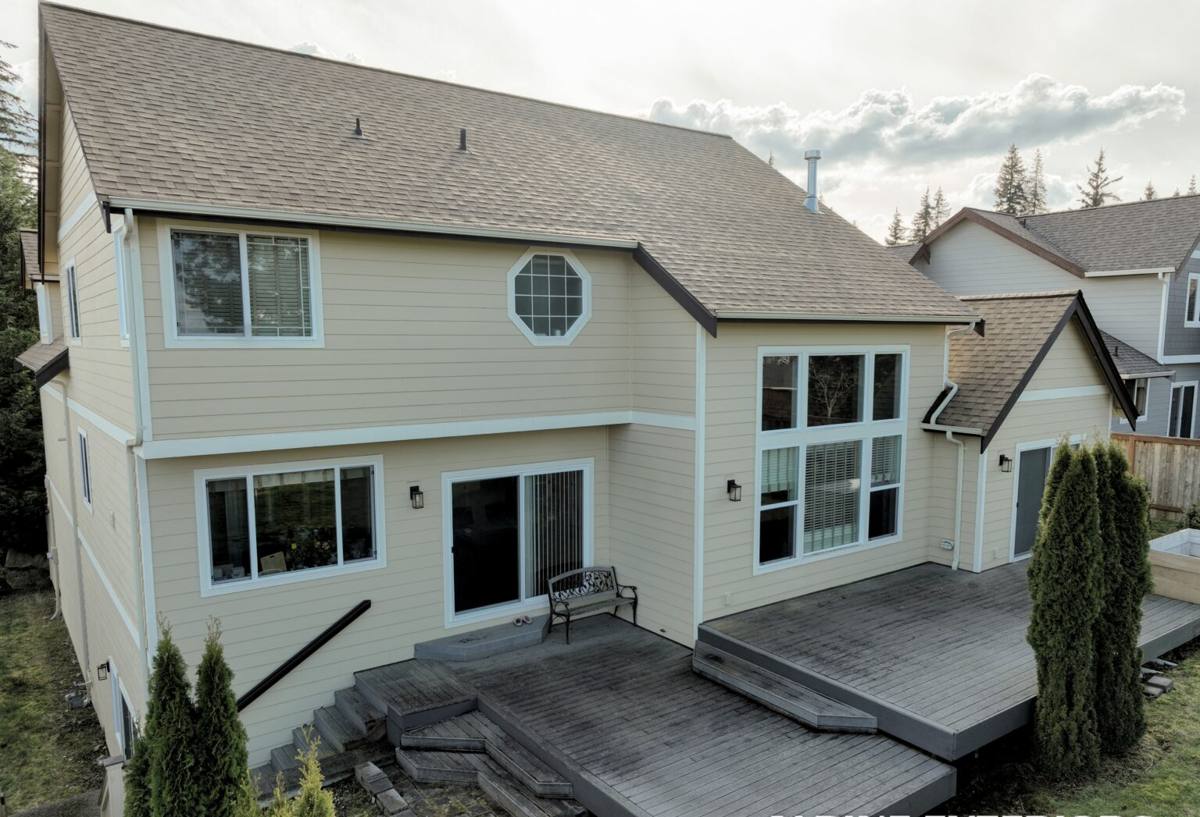
What Bellingham's Climate Does to an Ordinary Deck
Whatcom County's marine climate is mild compared to a lot of the country, but "mild" doesn't mean gentle on a wood or composite structure. The combination that matters most for decks is moisture that never fully goes away, salt-tinged air drifting in off the Sound, and long stretches of shade and tree cover that keep surfaces damp far longer than they would be somewhere sunnier and drier.
Moss and Algae
Moss season in this region can run from early fall through late spring. On a deck, moss and algae don't just look bad — they hold moisture against the board surface, make the deck slick and genuinely dangerous underfoot, and accelerate wear on any finish or coating. A deck that's shaded by trees or sits close to grade will grow moss faster than one with more sun and airflow, which is a real factor in how we lay out steps, spacing, and drainage.
Rot at the Framing and Ledger
The point where a deck attaches to the house — the ledger board — is the single most common failure point we see on older decks in this area. Driving rain gets pushed sideways by wind and works its way behind poorly flashed ledgers, and once water gets into that connection, it can sit there for months without drying. The result is hidden rot in framing that looks fine from the outside.
Corrosion
Salt air accelerates corrosion on fasteners, brackets, and hardware. Standard galvanized screws and joist hangers that would last for decades in a drier inland climate can start streaking and weakening years earlier here. This is a case where the fastener spec matters as much as the decking material on top of it.
Choosing the Right Decking Material
There's no single "best" decking material — there's a best material for a given budget, maintenance appetite, and site condition. For Silver Beach, we weigh moisture behavior and maintenance heavily, since a low-maintenance choice pays for itself in a climate where moss and mildew show up every year.
| Material | Upfront Cost | Maintenance | How It Handles This Climate |
|---|---|---|---|
| Pressure-treated wood | Lowest | Annual cleaning and re-sealing recommended | Prone to moss growth and graying without upkeep; needs consistent sealing to resist moisture |
| Cedar or other natural wood | Moderate | Regular oiling or sealing | Naturally more rot-resistant than treated pine but still needs upkeep in a wet, shaded yard |
| Capped composite | Higher | Occasional washing | Resists moisture absorption well; some entry-level composites can still stain or grow surface mildew without cleaning |
| PVC / cellular decking | Highest | Lowest — soap and water | Doesn't absorb moisture, so it's the most resistant option to moss and rot, at a higher material cost |
We install all of these depending on what a homeowner wants, but we'll always tell you honestly where a lower-maintenance option will save you work over the life of the deck versus where a traditional wood look is worth the extra upkeep to you. Our job is to lay out the real trade-offs, not steer you toward whatever's easiest for us to install.
What a Correctly Built Deck Includes
A deck that holds up in this climate isn't about a fancier material on top — it's about what's underneath and behind the visible surface. Every deck we build, regardless of decking material, follows the same underlying standards:
- Ledger flashing that directs water away from the house band board, not into it
- Joist tape or flashing on the tops of all framing members to keep fasteners from sitting in standing water
- Footings sized and set to current frost and load requirements for the site, not just "what was there before"
- Corrosion-resistant fasteners and structural hardware rated for exterior and coastal-influenced use
- Board spacing and layout that accounts for drainage and airflow underneath, not just what looks tight and clean
- Proper clearance and grading below the deck so water doesn't pool against posts and footings
None of this is visible once the deck is finished, which is exactly why it's the part that gets skipped on a rushed or underpriced job. It's also the part that determines whether you're dealing with a soft ledger board or a rotted joist in eight years instead of twenty-five.
Railings, Fasteners, and Hardware
Railings take a lot of abuse in this climate — they're the part of the deck most exposed to driving rain and wind, and on sloped or view lots they're also doing real structural work, not just decoration. We match railing hardware and fastener grade to the site: homes with more direct wind and rain exposure get a higher corrosion-resistance spec on brackets, screws, and post connections, because replacing a rusted-out railing post is a much bigger job than specifying the right hardware the first time.
The same logic applies to stair stringers and any structural connectors — hidden hardware needs to outlast the decking on top of it, since replacing framing under a deck that still looks fine on the surface is disruptive and expensive.
Permits and Site Considerations
Most new decks and significant deck replacements in the Bellingham area require a building permit, and elevated decks or those tied into an existing structure typically need engineered footing and attachment details. Sloped lots, which are common around Silver Beach, add another layer of planning — footing depth, post height, and drainage all need to account for grade change, and setback requirements still apply even on an oddly shaped or sloped parcel.
We handle the permitting process as part of the job rather than leaving it to the homeowner, because a deck built without the right permit and inspection can turn into a real problem at resale — buyers' inspectors and lenders both check for it.
Our Process
- Site visit and assessment — we look at grade, drainage, existing structure (if replacing a deck), sun and shade exposure, and how the space will actually be used
- Design and material selection — we walk through decking, railing, and layout options with honest cost and maintenance trade-offs for your situation
- Permitting — we prepare and submit the paperwork, including any engineering the city requires
- Build — proper flashing, footings, framing, and fastener spec first, decking and railing second
- Final walkthrough — we go over the finished deck with you, including basic care so you get the maintenance-free years you paid for
Living With a Deck Through Moss Season
Even a well-built deck needs some basic seasonal care in this climate. A once or twice a year cleaning — more often in heavily shaded yards — keeps moss and algae from getting established and staining the surface. Keeping gutters and downspouts clear so they're not dumping extra water onto or near the deck matters more here than in drier climates. And checking the ledger flashing and any visible fastener heads periodically catches small issues while they're still small.
None of this is a substitute for correct construction — it's what keeps a properly built deck looking good, not what saves a poorly built one.
Why Local Build Experience Matters
A deck built to a generic national spec sheet can still fail early in a climate like ours if it doesn't account for how much moisture this area actually sees, how long moss season really lasts, and what salt-tinged air does to hardware over time. Crews that work Silver Beach and the greater Bellingham area regularly aren't guessing at footing depths, flashing details, or fastener grades — they've seen what happens when those details get skipped, and they build accordingly the first time.
If you're planning a new deck or replacing one that's showing its age, we're glad to take a look and walk you through what your specific site and layout would need. There's no pressure and no obligation — just a straightforward assessment and a free estimate using the form below.