 Bellingham Roofing
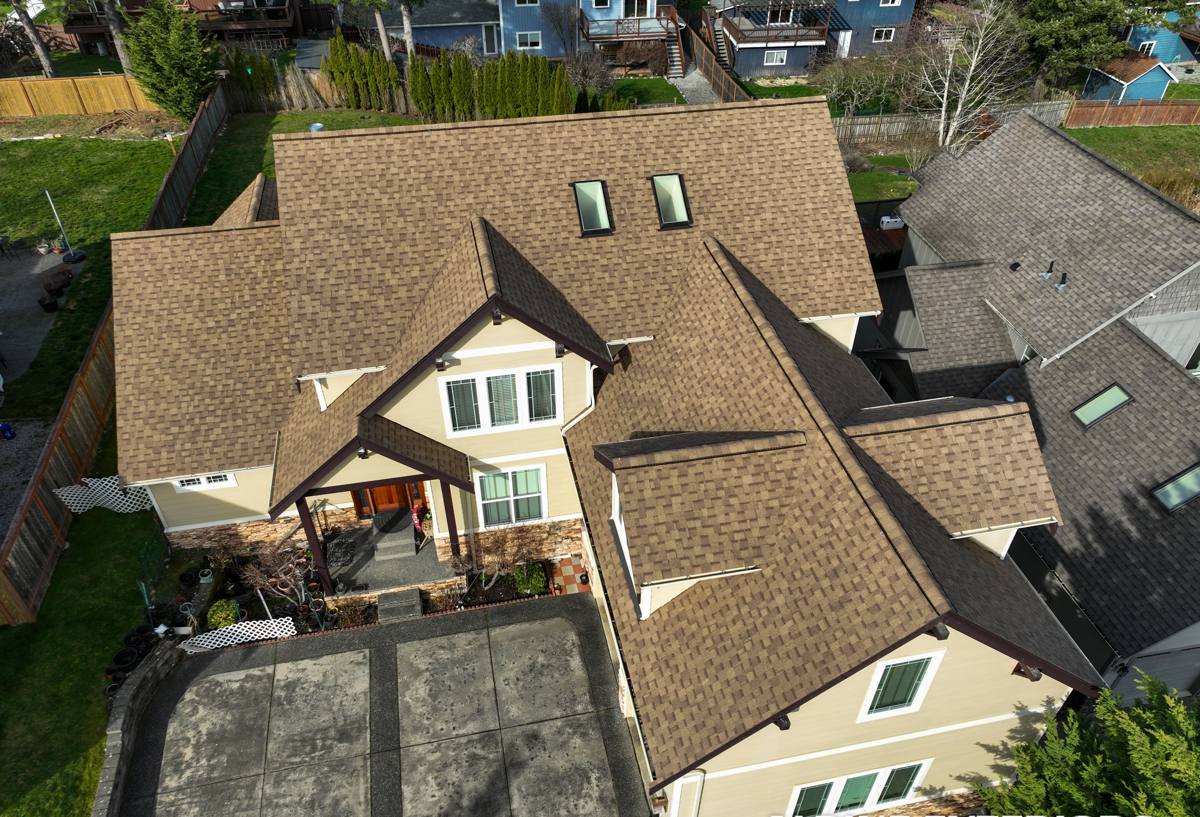
 Asphalt Shingle Roofing Built for Silver Beach's Conditions
Silver Beach sits close enough to Lake Whatcom and the broader Bellingham weather pattern that roofs here take a specific kind of beating: damp, mossy winters, wind-driven rain off the water, and long stretches where a roof surface barely gets a chance to fully dry out. Asphalt shingles remain one of the most practical, cost-effective roofing choices for this neighborhood, but only when they're installed and maintained with those conditions in mind. A shingle roof that would perform fine in a drier inland climate can fall well short here if the underlayment, ventilation, and flashing details aren't matched to what Whatcom County actually throws at a roof over the course of a year.
We work on homes throughout the Silver Beach area and see the same failure patterns repeat: moss working into shingle edges, granule loss from prolonged moisture exposure, and valleys or transitions where water finds a way in because a detail was rushed. None of that is inherent to asphalt shingles as a product — it's what happens when a roof is installed to a generic spec instead of a local one.
Why Local Climate Matters More Than the Shingle Brand
Homeowners often start by asking which shingle brand is "best." That's a reasonable question, but in a climate like ours, the bigger variable is almost always installation quality and system design — not the label on the shingle wrapper. A few climate-driven realities shape how we approach every roof in this neighborhood:
Salt Air and Moisture Load
Proximity to water means the air carries more moisture and, depending on wind direction, some salt exposure. This accelerates corrosion on unprotected metal fasteners and flashing, and it keeps roof surfaces damp longer after rain than homes further inland. Materials and fasteners need to be chosen with that in mind, not just for their sticker price.
Driving Rain and Wind-Driven Water
Rain in this part of Whatcom County doesn't always fall straight down. Wind off the water can drive rain sideways under shingle tabs, into exposed nail heads, and along poorly sealed edges. Standard installation practices that work fine in calmer climates can leave small gaps that turn into leaks after a few seasons of that kind of weather.
Moss Season
Bellingham's moss season is long — shaded, north-facing, and tree-covered roof sections can stay damp for months at a time. Moss isn't just cosmetic. Its root structure lifts shingle edges, holds moisture against the roof deck, and accelerates granule loss, which shortens the usable life of an otherwise sound roof.
What a Correct Asphalt Shingle Job Looks Like Here
A shingle roof is a system, not a single layer. Every component below plays a role in how well the roof handles Silver Beach's specific conditions, and skipping or downgrading any one of them is where most premature failures start.
- Deck inspection and repair: Any soft, rotted, or delaminated sheathing gets replaced before new material goes down — shingles installed over a compromised deck will fail regardless of quality.
- Ice-and-water shield at vulnerable zones: Eaves, valleys, and roof-to-wall transitions get a self-adhered waterproof membrane, not just felt, because these are the areas where wind-driven rain and ice dams (on the rare cold snap) cause the most damage.
- Synthetic underlayment across the field: A high-quality synthetic underlayment holds up better to prolonged moisture exposure than old-style felt and gives the roof a second line of defense if wind ever lifts a shingle edge.
- Corrosion-resistant flashing and fasteners: Given the moisture and mild salt exposure near the water, we use flashing and fastener materials chosen to resist corrosion over the long haul, not the cheapest option that meets minimum code.
- Balanced attic ventilation: Proper intake and exhaust airflow keeps the underside of the roof deck dry and regulates temperature, which reduces moisture buildup that feeds moss and mildew and extends shingle life from the inside out.
- Correct nailing pattern and shingle exposure: Manufacturer nailing specs exist for wind resistance. Rushed or improperly placed nails are one of the most common causes of blow-offs during winter storms.
Repair, Re-Roof, or Full Replacement — How We Help You Decide
Not every roof problem in Silver Beach means a full tear-off. We look at the roof's age, the extent of moss and moisture damage, how many layers of shingles are already on the deck, and whether the deck itself is sound before recommending anything.
When Repair Makes Sense
Isolated issues — a section of storm-damaged shingles, a failed flashing detail around a chimney or vent, or moss damage confined to one shaded slope — are often addressed with targeted repair rather than a full replacement, especially on a roof that's otherwise in reasonable shape.
When Replacement Is the Honest Answer
Widespread granule loss, multiple layers of old shingles, a roof deck showing soft spots in several areas, or a shingle system nearing the end of its expected service life are signs that repair would just be delaying an inevitable, more expensive fix. We'll tell you plainly which situation you're in rather than defaulting to whichever answer costs more.
Rough Cost Factors for Silver Beach Homes
| Factor | Why It Affects Cost |
|---|---|
| Roof size and pitch | Steeper roofs and larger square footage require more material, labor time, and safety measures |
| Number of layers to remove | Tear-off of existing layers adds disposal and labor cost versus a single-layer install |
| Deck condition | Rotted or soft sheathing found during tear-off adds repair cost before new roofing goes down |
| Shingle tier chosen | Standard three-tab, architectural, and higher wind/impact-rated shingles carry different material costs |
| Flashing and ventilation upgrades | Bringing older roofs up to a proper moisture-management standard adds material and labor |
| Access and roof complexity | Multiple valleys, dormers, skylights, and tight access all add labor time |
We give straightforward, itemized estimates so you can see exactly what's driving the number — no vague lump-sum quotes that hide what you're actually paying for.
Our Process for Silver Beach Roofing Projects
- On-site inspection: We walk the roof (weather permitting) and check the attic, looking at deck condition, ventilation, existing flashing, and moss or moisture patterns specific to your property's exposure and tree coverage.
- Straightforward written estimate: You get a clear breakdown of scope, materials, and cost — repair versus replacement laid out honestly, with no pressure to upsell beyond what the roof actually needs.
- Material selection: We walk through shingle tier and color options suited to both your home and the durability demands of this climate, explaining trade-offs rather than just pointing at the most expensive line.
- Scheduling around the weather: Roofing in Whatcom County means working around rain windows. We plan installation timing to give the crew a realistic dry window for tear-off and dry-in.
- Installation with daily cleanup: Old material and debris are cleared as work progresses, with magnetic sweeps for stray nails and a final site walkthrough with you at completion.
- Warranty documentation: You receive clear paperwork on both material and workmanship coverage so there's no confusion later about what's protected and for how long.
Maintenance That Actually Extends Roof Life Here
A well-installed shingle roof in Silver Beach still needs periodic attention to reach its full service life — this isn't a "install and ignore for 25 years" material in a climate like ours.
- Schedule moss treatment and gentle removal before it establishes deep root structure, especially on shaded or tree-covered slopes.
- Keep gutters clear so water isn't backing up under the shingle edge during heavy rain events.
- Trim back overhanging branches to reduce shade, debris buildup, and physical abrasion on the shingle surface.
- Have flashing around chimneys, vents, and skylights checked periodically — these are the most common leak points on an otherwise healthy roof.
- After major windstorms, do a visual check (from the ground is fine) for lifted or missing shingles rather than waiting for a leak to show up inside.
Why Hiring a Crew That Already Works in Silver Beach Matters
A roofing crew that regularly works this specific area already knows which slopes tend to hold moss, how the wind off the water behaves differently than it does a few miles inland, and which flashing details fail first on homes with this kind of tree coverage and moisture exposure. That local pattern recognition shows up in fewer callbacks and a roof that's built for the conditions it will actually face, not a generic textbook install. It also means faster response if something does come up after a storm — we're not driving across the county to get to you.
Beyond local knowledge, working with a crew based in and around Bellingham means accountability. We're not a traveling storm-chasing outfit that disappears after the check clears — we're here for the warranty period and beyond, and our reputation in Whatcom County depends on the roofs we've already put on staying sound for years.
Ready to Talk About Your Roof?
If you're dealing with moss buildup, a suspected leak, storm damage, or simply want an honest read on how much life is left in your current shingle roof, we're happy to take a look. Reach out for a free, no-pressure estimate using the form below, and we'll walk you through exactly what your Silver Beach home needs.