 Bellingham Roofing
 Roofing in Happy Valley: What the Climate Actually Demands
Happy Valley sits close enough to the water and the hills around Bellingham that its roofs take a beating most homeowners never fully see. Salt-laden air moves in off the bay, rain comes in sideways more often than it falls straight down, and the tree cover that makes the neighborhood pleasant to live in also means shade, moisture, and organic debris sit on roof surfaces for months at a time. None of that is unusual for Whatcom County. But it does mean a roof replacement here needs to be planned differently than one in a dry inland climate, and it means the materials and details that work fine somewhere else can fail early in this one.
Salt Air and Metal Fatigue
Metal flashing, fasteners, and roofing components that aren't rated for coastal exposure corrode faster near the water. This shows up first at fasteners, valleys, and any exposed metal edge — long before the field of the roof shows a problem. A replacement is the right time to upgrade to corrosion-resistant flashing and fasteners rather than matching whatever was used originally.
Driving Rain and Underlayment
Wind-driven rain doesn't just run down a roof slope — it gets pushed sideways and upward under shingle tabs, around vents, and into any gap in the flashing. A roof that was installed to a bare-minimum standard can shed water fine in a light drizzle and still leak during a wind-driven storm. Underlayment choice and lap direction matter more here than they would in a calmer climate.
The Long Moss Season
Bellingham's moss season runs long — shaded, north-facing slopes and anything under tree cover can stay damp for most of the year. Moss and algae growth holds moisture against the roofing material, which shortens the life of the roof and can lift shingle edges over time. A replacement gives you the chance to address the conditions that fed moss growth in the first place, not just the growth itself.
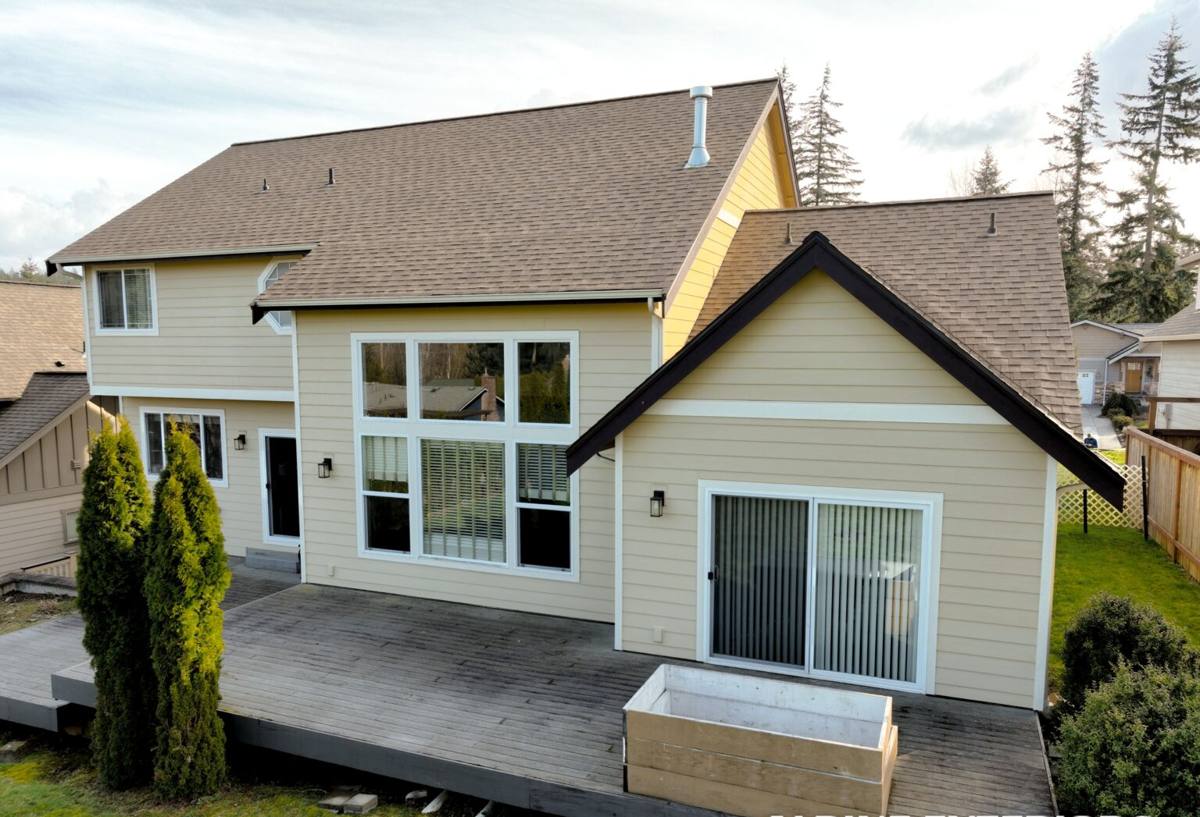
Signs Your Happy Valley Roof Is Ready for Replacement
Not every roof problem means a full replacement — but in this climate, certain signs are reliable indicators that repair has stopped being cost-effective.
- Granule loss heavy enough that you're finding grit in gutters or downspouts regularly
- Shingles that are cupping, curling, or cracking, especially on south- and west-facing slopes
- Moss or algae that returns within a season or two of cleaning, even after treatment
- Soft spots in the roof deck when walked, or visible sagging along a ridge or valley
- Flashing that's rusted, lifting, or was never properly integrated with the roofing material
- Interior signs — ceiling stains, musty attic smell, or daylight visible through the roof deck
- A roof approaching or past the manufacturer's expected service life for its material and exposure
- Repeated repairs to the same areas without the underlying cause being addressed
If you're seeing two or more of these, it's worth getting a straight answer on whether you're looking at another round of patchwork or a replacement that actually solves the problem.
What a Correct Roof Replacement Actually Involves
A roof replacement is more than swapping old shingles for new ones. The materials you can see are only part of the system — most of what determines whether a roof holds up in this climate is underneath.
Tear-Off and Deck Inspection
A full tear-off exposes the roof deck, which is the only way to actually check its condition. In a wet climate, deck damage from long-term moisture intrusion is common and isn't visible from the attic side or from the ground. Any soft, delaminated, or rotted decking needs to be replaced before new roofing goes down — covering it over just hides the problem for the next owner to find.
Underlayment and Water Barrier
Given how much wind-driven rain this area sees, underlayment selection and installation detail matter. Self-adhered ice-and-water barrier at eaves, valleys, and roof penetrations gives an extra layer of protection in exactly the spots where wind-driven rain and ice dams (during cold snaps) cause the most damage.
Flashing Details
Flashing around chimneys, skylights, vents, and wall intersections is where most roof leaks actually originate — not the field of the roof itself. Corrosion-resistant metal, correct step-flashing technique at walls, and proper counter-flashing integration are non-negotiable details, especially with salt air in the mix.
Ventilation
Proper intake and exhaust ventilation keeps the attic dry and temperature-balanced, which reduces moisture buildup that contributes to moss growth, mildew, and premature aging of roofing materials from the underside. A replacement is the right time to correct ventilation that's undersized or unbalanced.
Choosing a Roofing Material for Happy Valley Conditions
There's no single "best" roofing material — the right choice depends on your home's exposure, your budget, and how much long-term maintenance you're willing to do. Here's an honest comparison for this climate:
| Material | Moisture & Moss Behavior | Maintenance | Typical Lifespan |
|---|---|---|---|
| Architectural asphalt shingle | Good performance with proper ventilation; algae-resistant granule options available | Low to moderate — periodic moss and debris removal recommended | 25–30 years, exposure-dependent |
| Standing seam metal | Sheds water and debris well; minimal surface for moss to root into | Low — occasional debris clearing | 40–50+ years with proper coastal-rated fasteners |
| Cedar shake | Attractive but holds moisture readily; needs active management in a moss-prone climate | High — regular treatment and inspection | 20–30 years with diligent maintenance |
| Synthetic composite shingle/shake | Doesn't absorb moisture the way wood does; more consistent moss resistance | Low to moderate | 30–50 years depending on product |
We install a range of these based on what your home and budget call for. We generally steer homeowners away from lower-tier three-tab asphalt on heavily shaded or moss-prone slopes — not because the product is bad, but because in this specific microclimate, it's more maintenance-sensitive than a mid-grade architectural shingle for a modest cost difference.
What Drives the Cost of a Roof Replacement
Every roof is different, so we won't quote a number without seeing yours — but these are the factors that move the price up or down:
| Factor | Why It Matters |
|---|---|
| Roof size and number of planes | More square footage and more cuts/seams mean more material and labor |
| Pitch and accessibility | Steep or hard-to-access roofs require more safety setup and slower, more careful work |
| Deck condition underneath | Rot or delamination found during tear-off adds repair scope before new roofing goes on |
| Number of penetrations | Chimneys, skylights, and vents each need individual flashing detail |
| Material selection | Asphalt, metal, and composite products carry different material and labor costs |
| Layers of existing roofing | Multiple old layers mean more tear-off labor and disposal |
Our Replacement Process, Start to Finish
- On-site inspection and estimate — we walk the roof (or use safe alternative methods where needed), check the attic, and give you a written scope and price, no pressure attached.
- Material selection — we walk through the options that make sense for your home's exposure and your budget, including trade-offs, not just upsells.
- Scheduling and prep — we plan around weather windows, since a rushed tear-off in an active storm system is how leaks happen.
- Tear-off and deck inspection — old roofing comes off, the deck gets checked and repaired as needed, with any additional findings communicated before we cover them up.
- Underlayment, flashing, and ventilation install — the parts you won't see again, done to hold up to wind-driven rain and salt exposure.
- Roofing material installation — installed to manufacturer spec so warranties stay intact.
- Final walkthrough and cleanup — site cleared, magnetic sweep for stray fasteners, and a final review with you before we call it done.
Why a Crew That Already Works Happy Valley Matters
A roofing crew that regularly works this neighborhood already understands its exposure patterns — which slopes hold moss longest, how the local wind and rain direction stresses a roof, and what flashing and material choices actually hold up here versus what looks fine on paper. That local familiarity shows up in fewer surprises during tear-off, more accurate estimates up front, and roofing decisions that account for your specific microclimate instead of a generic playbook. It also means faster response if something needs a look after a storm, since we're not driving in from across the county.
Maintaining Your New Roof Through Bellingham's Moss Season
A correctly installed roof still benefits from basic upkeep in this climate. Keep gutters and valleys clear of needles and debris, especially heading into fall. Have shaded or north-facing slopes checked periodically for early moss growth, since catching it early is far easier than removing an established colony. And after any major windstorm, a quick visual check — or a call to us — can catch a lifted shingle or damaged flashing before it turns into an interior leak. None of this replaces professional inspection, but it goes a long way toward getting the full lifespan out of your new roof.
If your Happy Valley roof is showing its age or you just want a straight, no-pressure assessment of where it stands, we're glad to come take a look. Use the form below to request a free estimate — we'll give you an honest read on your roof and what it actually needs, not a sales pitch.