 Bellingham Roofing
 Why Edgemoor's Setting Is Hard on Siding
Edgemoor sits close to Bellingham Bay, and that proximity is a double-edged sword. The water views that make the neighborhood desirable also mean homes here take a steady beating from salt-laden air, wind-driven rain coming off the water, and the deep shade many lots have from mature trees. That combination — salt, moisture, and shade — is about as tough an environment as siding sees anywhere in Whatcom County.
Salt air is corrosive to metal fasteners and trim, and it accelerates the breakdown of finishes that aren't built to handle it. Driving rain doesn't just wet the surface of a wall — on exposed elevations facing the bay, it gets pushed sideways and upward, working its way into laps, seams, and butt joints that would stay dry on a more sheltered lot. And the tree cover that gives Edgemoor its character also means less sun exposure, longer drying times after storms, and a moss and algae season that can run most of the year in the shadier yards.
None of this means siding is doomed here. It means the choice of material, the quality of the installation details, and the ongoing moisture management around the wall matter more in Edgemoor than they would in a drier, sunnier part of Bellingham.
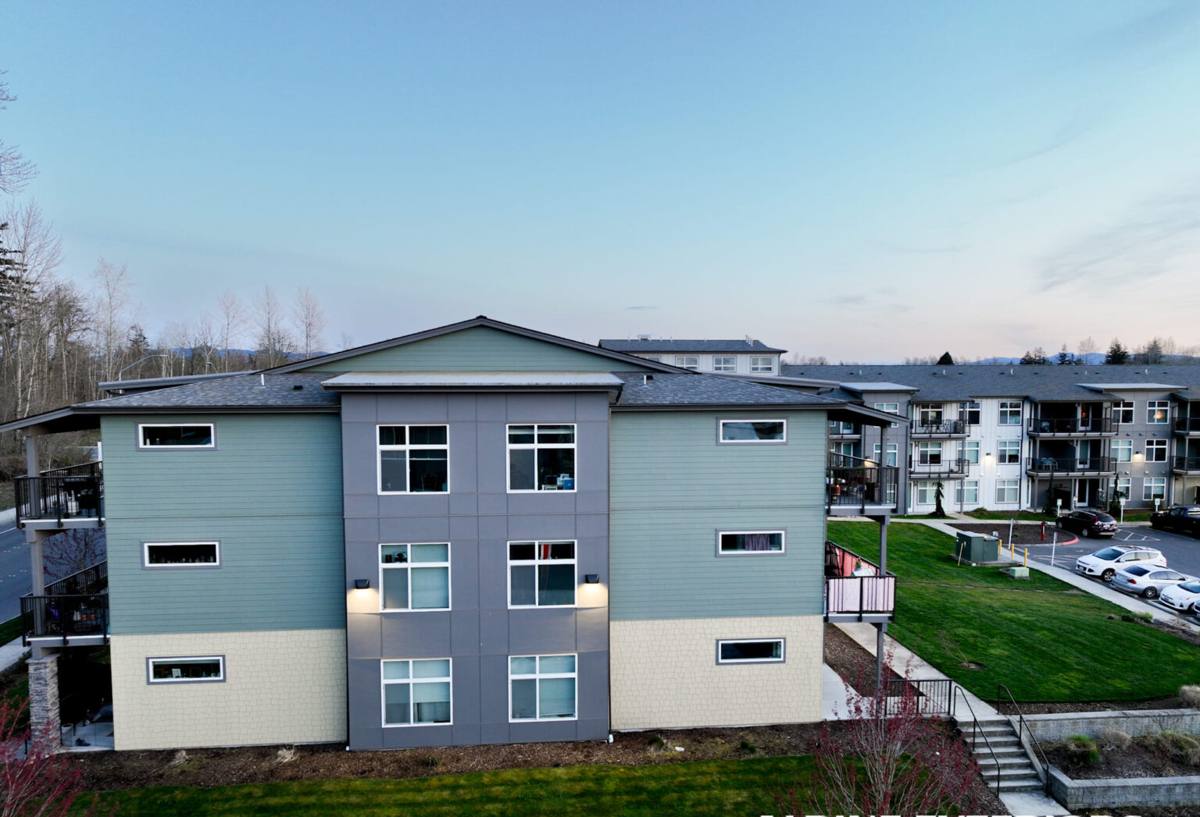
What Failing Siding Looks Like on Bay-Facing Homes
Before we talk about replacement, it's worth knowing what to look for, since siding problems near the water often show up differently than they do further inland.
- Soft or swollen spots near the bottom courses, behind downspouts, or at any horizontal trim — usually a sign moisture has been sitting against the material.
- Persistent green or black staining on shaded walls that comes back within weeks of cleaning — a sign the surface is holding moisture rather than shedding it.
- Corroding or rust-streaked fasteners, nail pops, or trim that's separating slightly at the corners — salt air accelerates this compared to inland homes.
- Peeling or chalking paint that's returning faster than a normal repaint cycle would suggest.
- Warping or cupping panels, especially on wood-based or engineered wood products that have taken on repeated wetting and drying cycles.
Any one of these can often be spot-repaired. Several at once, especially on a bay-facing elevation, usually means the siding system itself is losing the fight with the environment and a full replacement is the more honest long-term answer.
What We Install — and What We Don't
We install James Hardie fiber cement siding exclusively. We don't carry vinyl, LP SmartSide, Cemplank, Allura, or bare cedar and primed spruce products. That's a deliberate standard, not a sales pitch, and in a setting like Edgemoor the reasoning is straightforward.
Vinyl can warp and become brittle with prolonged UV and temperature cycling, and its seams and lap joints give wind-driven rain more opportunities to find a way behind the cladding on exposed, water-facing walls. Wood products — cedar, primed spruce, and wood-based engineered sidings — perform well when maintenance stays on schedule, but they depend on that maintenance; in a shaded, moisture-holding environment like much of Edgemoor, the paint and caulk cycle needed to keep them sound comes around faster than most homeowners want to deal with. Other fiber cement brands aren't unreasonable products, but we've standardized on one manufacturer, one installation method, and one warranty structure so every job we do gets the same result — and it's the one we're confident holds up against this exact combination of salt air, rain, and shade.
James Hardie fiber cement is non-combustible, dimensionally stable across wet and dry cycles, and finished at the factory with ColorPlus technology — a baked-on finish that resists fading and doesn't require repainting on the timeline a field-applied finish does. For a bay-adjacent, shade-heavy neighborhood, that stability is the whole point.
Matching the Product to the Exposure
Hardie's HZ5 product line is engineered for cold, wet climates, which fits the Pacific Northwest generally. On a lot-by-lot basis in Edgemoor, we also look at how much direct sun a wall gets, how close it sits to the water, and how much wind-driven rain it's likely to take, and we adjust panel selection, lap exposure, and trim detailing accordingly. A shaded north wall facing the bay gets treated differently at the flashing and caulk joints than a sheltered, sun-exposed wall on the same house.
What a Correct Installation Actually Involves
Fiber cement siding is only as good as the water management system behind it. Most siding failures we see, on any brand, trace back to installation shortcuts rather than the material itself. On an Edgemoor home, we treat these steps as non-negotiable:
- Full removal and sheathing inspection. We don't side over existing material. Removing the old siding lets us check the sheathing, framing, and any existing house wrap for hidden rot or moisture damage before it's covered up again.
- Weather-resistive barrier, done right. A correctly lapped and taped house wrap is the first line of defense against wind-driven rain — this is where a lot of the "shed water on a bay-facing wall" performance actually comes from, more than the siding surface itself.
- Rainscreen or drainage plane where warranted. On exposed or shaded walls that stay damp longer, a ventilated gap behind the siding lets any moisture that does get in dry out instead of sitting against the wall assembly.
- Correct fastening. Hardie specifies fastener type, placement, and penetration depth for a reason — done wrong, it's the single most common cause of premature siding problems, including in salt air environments where the wrong fastener corrodes early.
- Proper flashing at every penetration. Windows, doors, hose bibs, light fixtures, and vents are where driving rain finds its way in. Each one gets flashed and sealed to shed water down and out, not into the wall.
- Correct joint and caulk detailing. Butt joints, corners, and trim-to-siding transitions are sealed with products and methods rated for the exposure, not just whatever's on the truck.
Comparing Siding Options for a Bay-Adjacent Home
| Factor | Vinyl | Wood / Engineered Wood | James Hardie Fiber Cement |
|---|---|---|---|
| Moisture behavior near water | Sheds water at the surface but seams can allow wind-driven rain behind panels | Absorbs moisture; needs paint/caulk maintained on schedule to stay sealed | Dimensionally stable; factory finish resists moisture-driven fading and cracking |
| Maintenance in a shaded, mossy setting | Low, but can't be repainted if color fades or chalks | Higher — repainting and recaulking needed on a regular cycle | Low — ColorPlus finish holds color without a repaint cycle |
| Salt air / coastal exposure | Can become brittle with UV and temperature cycling over time | Performs adequately with diligent upkeep | Non-combustible, engineered for wet climate performance |
| Fire resistance | Combustible | Combustible | Non-combustible |
| Warranty structure | Varies by manufacturer | Varies; often shorter on finish | Strong transferable manufacturer warranty on the substrate |
Cost Factors Specific to Edgemoor Homes
We don't quote pricing without seeing the house, but a few factors tend to move the number on Edgemoor jobs specifically:
| Factor | Why it matters here |
|---|---|
| Sheathing condition | Bay-facing walls with a history of moisture intrusion sometimes need sheathing repair once old siding comes off |
| Number of penetrations | Homes with more windows, deck ledgers, and fixtures on the water side need more flashing work |
| Access and lot layout | Mature trees, retaining walls, and slope common to the neighborhood can affect staging and scaffolding needs |
| Trim and detail level | Corner boards, window trim, and fascia detailing add labor beyond flat wall square footage |
| Rainscreen inclusion | Adding a drainage gap on exposed elevations is worth the modest added cost for long-term drying performance |
Our Process for an Edgemoor Project
- On-site assessment. We walk the exterior, note exposure differences wall by wall, and check for existing moisture or rot signs.
- Scope and product plan. We specify HZ5 panel profile, trim package, and drainage detailing based on what each elevation actually faces.
- Written estimate. Clear scope, product, and price — no surprise add-ons once work starts unless hidden damage is found during removal.
- Removal and inspection. Old siding comes off, sheathing gets inspected, and any necessary repairs are addressed and documented before new siding goes up.
- Weather barrier and flashing installation. This is the step that determines long-term performance, and we don't rush it.
- Siding and trim installation to Hardie spec. Correct fastening, spacing, and joint treatment throughout.
- Final walkthrough. We review the finished work with you before calling the job complete.
Why Local Experience in Edgemoor Matters
A crew that's worked this neighborhood already knows which walls take the worst of the bay wind, where moss builds up fastest under the tree canopy, and how the slope and lot layout typical here affects staging and drainage planning. That's not something you get from a generic siding crew working from a standard checklist — it comes from having done the work on similar homes, in similar exposure, in this part of Bellingham. It shows up in small decisions: where we add a rainscreen even when it's not strictly required, which trim details get extra sealant, and which elevations we flag for closer inspection once the old siding comes off.
Signs It's Time to Replace, Not Repair
- Moisture damage showing up on more than one elevation
- Siding that's original to a home more than 20-25 years old, especially wood-based products
- Recurring moss, algae, or staining that returns quickly after cleaning
- Multiple soft spots, warped panels, or corroded fasteners rather than one isolated area
- Rising energy bills that point to a compromised wall assembly, not just the siding surface
If your home only shows one or two of these on a single wall, a repair may still make sense. If it's spread across the house, replacement is usually the more cost-effective path once you account for repeated future repairs.
If you're weighing your options for a home in Edgemoor, we're happy to walk the exterior with you and give you a straight assessment — no pressure, no obligation. Use the form below to request a free estimate.