 Bellingham Roofing
 Why Birch Bay Siding Wears Differently Than Inland Bellingham Homes
Birch Bay sits right on the water, and that changes what siding has to survive out here compared to a home a few miles inland in Bellingham. Homes closer to the shoreline take on salt-laden air almost daily, along with wind-driven rain that gets pushed sideways into wall assemblies most siding products were never designed to shed. Add in the long, wet Whatcom County shoulder seasons where surfaces barely have time to dry between storms, and you have an environment that finds every weak point in a siding system faster than it would anywhere else in the region.
Salt air is corrosive to exposed metal fasteners and trim, and it accelerates the breakdown of paint films and lower-grade composite materials. Combine that with near-constant moisture exposure and shaded, damp conditions common along the bay, and you get an extended moss and algae season that keeps siding surfaces wet longer than homes further from the water. None of this means Birch Bay homes need something exotic — it means they need siding installed correctly, in a material that was actually built to handle sustained moisture and salt exposure without breaking down.
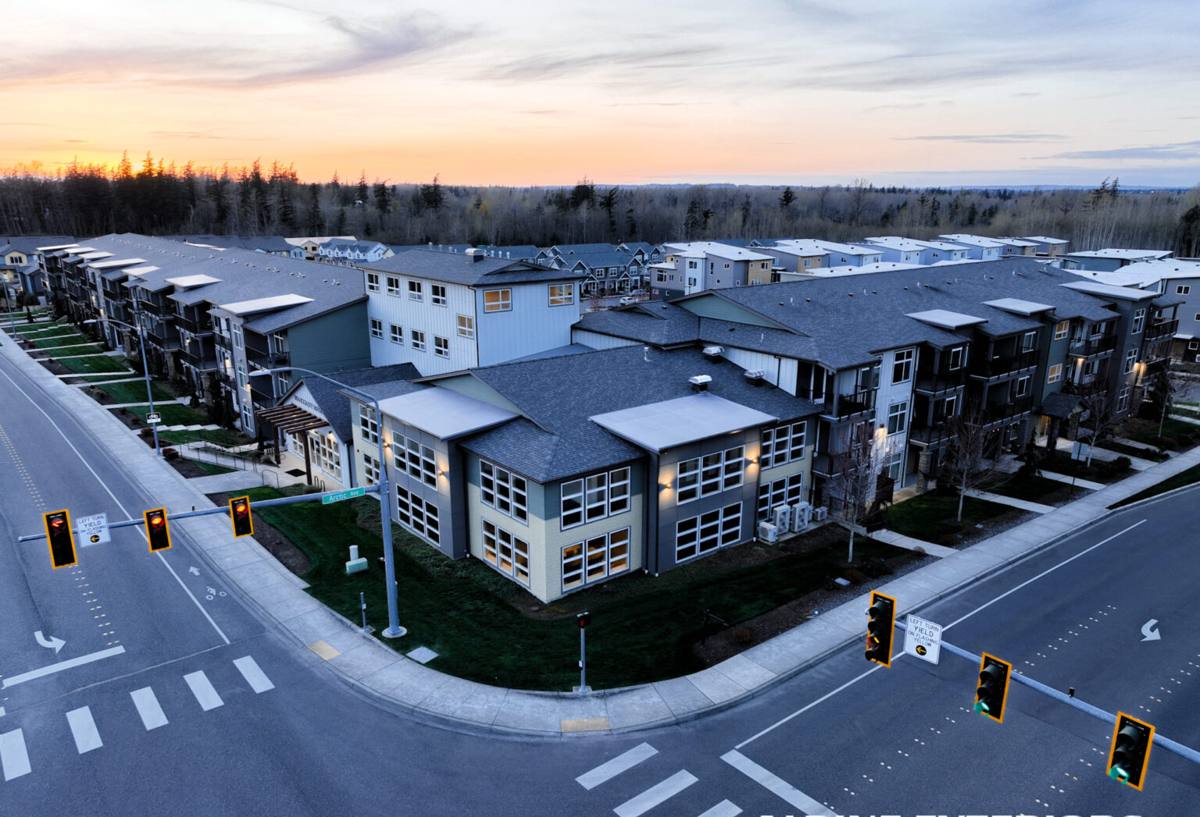
What Coastal Exposure Actually Does to a Wall System
It helps to understand the mechanism, not just the symptom. Wind-driven rain along the bay doesn't just wet the surface of your siding — it drives moisture up under laps, around penetrations, and into seams that aren't properly flashed or lapped. If the water-resistive barrier behind the siding isn't installed correctly, or if the siding material itself absorbs and holds that moisture instead of shedding it, the wall assembly stays damp far longer than it should. That's when you start seeing soft trim, staining, bubbling paint, and eventually rot in the sheathing behind the siding — problems that are expensive to fix because they aren't just cosmetic.
Salt air adds a second layer to this. It's mildly corrosive to unprotected steel fasteners and cheaper trim hardware, and over years it dulls and degrades factory finishes that weren't engineered for marine-adjacent exposure. A siding product that performs fine in a dry inland climate can underperform noticeably once it's facing the bay every day.
How Different Siding Materials Hold Up Near the Water
| Material | Behavior in Salt Air & Driving Rain | Long-Term Concern |
|---|---|---|
| Vinyl siding | Doesn't absorb moisture itself, but panels and trim can warp, fade, and become brittle faster under salt exposure and UV | Cracking and fading shorten usable lifespan near the coast |
| Primed wood or cedar | Absorbs moisture readily; needs frequent repainting to keep water out | Rot risk climbs quickly if maintenance slips even one season |
| Lower-grade composite/OSB-based siding | Vulnerable to swelling and edge deterioration where moisture gets in | Damage often hidden until it's advanced |
| James Hardie fiber cement | Non-combustible and engineered to resist moisture absorption and warping; factory ColorPlus finish resists fading | Requires correct installation to fully deliver on its warranty and performance |
The takeaway isn't that every alternative product fails on the coast — it's that coastal exposure narrows the margin for error. A material that's forgiving inland can become high-maintenance right on Birch Bay, and a mediocre installation shows its flaws here years before it would somewhere drier.
Signs a Birch Bay Home Needs Siding Replacement, Not Just Repair
Some siding problems are legitimately fixable with spot repair or a fresh coat of paint. Others are signs the material or the original installation has failed and a patch will just delay the inevitable. Before we recommend full replacement, we look for these signs:
- Soft, spongy, or crumbling siding when pressed, especially near the bottom edges and around windows
- Persistent staining or streaking that comes back shortly after cleaning
- Paint that's bubbling, peeling, or failing across large sections rather than isolated spots
- Visible warping, buckling, or gaps between panels or boards
- Moss or algae that returns heavily within weeks of cleaning, especially on shaded or north-facing walls
- Soft trim boards, corner boards, or window casings
- Rising energy bills with no other explanation, which can point to a compromised wall assembly
- Visible daylight, drafts, or moisture at seams from the interior
If you're only seeing one or two of these in a limited area, repair may still make sense. Widespread moisture damage, especially anything involving soft sheathing underneath, is usually a sign the whole system needs to come off and be redone correctly.
Why We Install Only James Hardie Fiber Cement
We don't install vinyl, LP SmartSide, Cemplank, Allura, primed spruce, or cedar siding, and that's a deliberate standard, not a lack of options. James Hardie fiber cement is engineered specifically to resist the kind of moisture cycling and weather exposure that's routine in a place like Birch Bay. It's non-combustible, which matters for wildfire-conscious insurance and building considerations across Washington. It holds its factory-applied ColorPlus finish far longer than field-applied paint on wood or lower-grade composites, which means less repainting over the life of the siding. And Hardie's HZ5 product line is specifically engineered for regions with cold, wet weather cycles — a good match for Whatcom County's climate.
The other piece is the warranty. Hardie's transferable limited warranty is backed by a large, established manufacturer with a long track record, which matters if you ever sell the home. That warranty is only as good as the installation behind it, though — which is why correct installation technique matters as much as the product choice itself.
What a Correct Siding Replacement Actually Involves
Tear-Off and Inspection
Replacement starts with removing the old siding and trim, which gives us a direct look at the sheathing and framing underneath. This is the point where hidden rot, soft spots, or past water intrusion get found and dealt with — patching over damaged sheathing is one of the most common shortcuts that leads to problems resurfacing a few years later.
Weather-Resistive Barrier and Flashing
A correctly installed water-resistive barrier, with properly lapped and sealed seams, is what actually keeps wind-driven rain from reaching your framing — the siding itself is the first line of defense, not the only one. Flashing around windows, doors, and any wall penetrations has to be detailed to shed water downward and outward, not trap it behind the cladding.
Installation to Manufacturer Spec
James Hardie publishes specific fastening patterns, clearance requirements, and gapping guidelines, and following them isn't optional if you want the product to perform as designed — or for the warranty to be valid. Correct clearance from grade, decks, and roof lines keeps siding out of standing water and prolonged dampness, which is especially important on a property exposed to bay winds and rain.
Trim, Caulking, and Finish Details
The finish work — corner trim, caulking at joints, and paint touch-up where field-cut edges are exposed — is where a lot of long-term performance is won or lost. Sloppy caulking or unsealed cut ends give moisture an entry point no matter how good the panel itself is.
Our Process From Estimate to Finished Job
- On-site inspection: We walk the exterior with you, check for soft spots and existing moisture damage, and talk through what we're seeing before any work is proposed.
- Written estimate: You get a clear scope of work and pricing before committing to anything — no pressure, no rushed decisions.
- Material staging: Hardie siding, trim, and weather-barrier materials are ordered and staged so the job isn't delayed mid-project.
- Tear-off and sheathing check: Old siding comes off, and any damaged sheathing or framing is addressed before new material goes up.
- Installation: Weather barrier, flashing, and siding go on to manufacturer spec, with attention to the coastal exposure specifics of the property.
- Final walkthrough: We go over the finished job with you and address anything before we call it done.
Cost Factors for Siding Replacement in Birch Bay
| Factor | Why It Affects Cost |
|---|---|
| Extent of hidden damage | Rotted sheathing or framing found during tear-off adds repair scope beyond the siding itself |
| Home size and wall complexity | More corners, gables, and trim detail mean more labor and material cuts |
| Siding profile and accessories | Lap width, trim style, and accent details affect material cost |
| Access and site conditions | Wind exposure, waterfront setbacks, and site access can affect scheduling and staging |
| Existing paint or finish removal | Older wood or composite siding may need extra prep or disposal handling |
Every property is different, which is why we give a firm, written estimate after an actual inspection rather than a ballpark number over the phone.
Why Local Experience in Birch Bay Matters
A crew that mainly works drier, inland neighborhoods isn't necessarily thinking about wind direction off the water, salt exposure on fasteners and trim, or how much longer surfaces stay wet on a shaded, bay-facing wall. Those details change how a job should be detailed — clearance heights, flashing choices, and where extra attention to sealing matters most. Working regularly in coastal Whatcom County communities like Birch Bay means those considerations are part of the plan from the estimate forward, not an afterthought discovered after the first hard winter storm.
If your siding is showing wear, staying damp longer than it used to, or you're just not sure whether it's a repair or a replacement situation, we're happy to take a look. Reach out for a free, no-pressure estimate using the form below.