 Bellingham Roofing
 Siding That Has to Work as Hard as Barkley's Weather Does
Homes in the Barkley area of Bellingham sit close enough to Bellingham Bay and the surrounding water bodies that salt-laden air is a constant, low-grade presence on every exterior surface. Add Whatcom County's driving winter rain, coming in sideways off frequent storm systems, and a moss season that can stretch from early fall through late spring, and you have a climate that is genuinely tough on exterior building materials. Siding here isn't just decorative — it's the single biggest barrier between your framing and a year-round wet, salty, shaded environment that never really lets a house dry out completely.
That's why we treat siding installation in Barkley as a climate-engineering decision, not just a cosmetic one. We install one product system, James Hardie fiber cement, because it's the one we trust to hold up to this specific mix of conditions without the maintenance headaches or moisture problems that come with the alternatives.
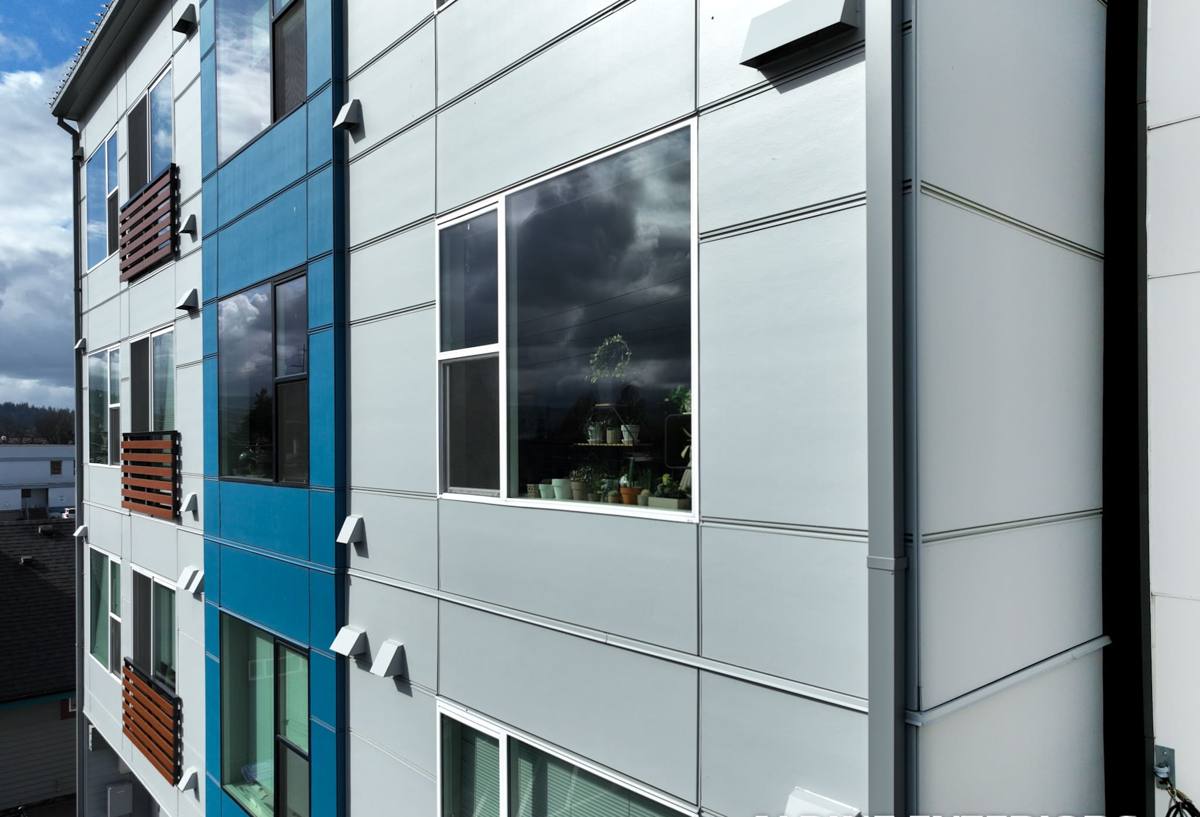
What Bellingham's Climate Actually Does to Siding Over Time
Salt Air and Coastal Exposure
Airborne salt doesn't just affect homes directly on the waterfront. It travels on prevailing winds and settles on exterior surfaces throughout Whatcom County, including inland neighborhoods like Barkley. Over years, that salt accelerates corrosion of exposed metal fasteners and trim, and it can degrade lower-quality paint finishes faster than manufacturers' published fade ratings would suggest. Siding that isn't engineered with a factory-cured finish tends to chalk, fade, and lose adhesion faster in this kind of environment.
Driving Rain and Wind-Driven Moisture
Bellingham doesn't just get a lot of rain — a meaningful share of it arrives horizontally, pushed by wind off the water. That matters enormously for siding, because wind-driven rain gets forced up and under laps, into seams, and behind trim in ways that straight-down rain never would. A siding system that isn't detailed correctly at every joint, corner, and penetration will eventually let that moisture behind the cladding, where it can sit against sheathing and framing for weeks at a time during our wet season.
The Long Moss Season
Shaded, moisture-retentive conditions in and around Barkley's tree cover create ideal growing conditions for moss and algae on north- and west-facing walls for much of the year. Beyond the cosmetic staining, sustained moss growth holds moisture directly against the siding surface, which is exactly the wrong thing for any material that can absorb water or that relies on a surface coating to stay protected. Products that swell, delaminate, or lose their finish when kept damp for long stretches are a poor match for this environment.
Why We Install Only James Hardie Fiber Cement Siding
We made a deliberate decision to standardize on James Hardie for every siding installation we do, including here in Barkley. It's not the cheapest material on the market, and it's not the only one available — but given what this climate does to a home over ten, twenty, and thirty years, it's the one we're willing to put our name behind.
Fiber Cement, Not Wood or Wood-Based Products
Hardie siding is made from cement, sand, and cellulose fibers, engineered specifically to resist moisture absorption, swelling, and the freeze-thaw and wet-dry cycling that's constant in a marine climate like ours. Unlike wood-based siding products, it doesn't rely on an intact factory coating alone to stay dimensionally stable — the substrate itself is inherently resistant to the moisture damage that drives most siding failures in this region.
Climate-Engineered HZ Product Lines
James Hardie manufactures its siding in different formulations tuned to different climate zones, and the Pacific Northwest falls under their wetter-climate engineering specification. That means the product installed on a Barkley home is formulated with this region's rain exposure and humidity in mind, not a generic national spec.
ColorPlus Factory Finish
Most of the siding we install uses Hardie's ColorPlus finish, a coating baked on in a controlled factory environment rather than sprayed or brushed on site. That process produces a more uniform, more durable bond than field-applied paint, which matters directly in a climate where UV exposure, salt air, and constant damp cycling all work to break down a finish over time. It also comes backed by its own finish warranty, separate from the substrate warranty.
Non-Combustible and Built for Longevity
Fiber cement doesn't support combustion the way wood-based siding does, which matters for insurance and long-term risk even in a wet coastal climate where wildfire isn't the primary concern homeowners think about — but the same density and stability that make it fire-resistant are also what make it hold its shape and finish for decades under sustained moisture exposure. Correctly installed Hardie siding is a multi-decade investment, not a ten-year fix.
What a Correct Siding Installation Actually Involves
The material is only half the equation. Fiber cement siding installed poorly will still fail — trap moisture, crack at fasteners, or fail early — regardless of the product's own durability. A correct installation in a climate like Bellingham's means getting the water management details right everywhere the siding meets something else: the foundation, windows, doors, roof lines, and trim.
- A properly lapped, ventilated weather-resistive barrier installed behind the siding, not just stapled up as an afterthought
- Correct flashing at every window, door, and horizontal trim transition, integrated with the water-resistive barrier rather than just caulked over it
- Proper minimum clearance between the bottom of the siding and grade, decks, patios, and roof lines, so splash-back and ponding water can't wick into the material
- Fastener placement and spacing that follows Hardie's published installation specifications, not generic siding nailing patterns
- Field-cut edges sealed and primed per manufacturer requirements, especially at butt joints and corners
- Rainscreen or drainage gap detailing appropriate to the wall assembly, giving incidental moisture a way out instead of a place to sit
- Caulking used only where specified, not as a substitute for correct flashing and lap sequencing
Skipping any one of these steps doesn't usually show up as a problem in year one. It shows up in year five or year ten, as staining, soft trim, or moisture damage behind the wall that costs far more to fix than it would have to install correctly the first time.
Signs a Barkley Home May Need New Siding
Because moisture problems in this climate develop slowly and often behind the siding itself, homeowners frequently miss the early warning signs. Some of the more common indicators we look for during an inspection include:
- Visible cracking, buckling, or warping in siding panels or boards, especially near corners and butt joints
- Persistent moss or algae growth that returns quickly after cleaning, particularly on shaded walls
- Peeling or bubbling paint, or chalky residue that wipes off on your hand
- Soft or spongy spots when you press on trim boards or lower courses of siding
- Visible gaps opening up at seams, corners, or where siding meets window and door trim
- Interior signs like musty odors, peeling interior paint, or staining on walls that share an exterior wall with visible siding issues
Any one of these on its own isn't necessarily an emergency, but in combination, or if they're concentrated on the north- or west-facing walls that see the most driving rain and shade, they're worth a professional look sooner rather than later.
Our Installation Process
Every siding installation we do in Barkley follows the same sequence, adjusted for the specific home:
- On-site assessment. We evaluate the existing siding, wall assembly, and any signs of moisture intrusion before quoting anything, so the estimate reflects the actual condition of your home rather than a generic assumption.
- Tear-off and substrate inspection. Once old siding comes off, we check the sheathing and framing underneath for hidden rot or moisture damage that needs to be addressed before new siding goes on — a step that's easy to skip and expensive to regret skipping.
- Weather-resistive barrier and flashing. This is where most long-term performance is decided. We install and lap the barrier correctly and flash every penetration and transition before a single piece of siding goes up.
- Hardie installation to manufacturer spec. Panels or planks are installed with correct clearances, fastening, and joint treatment, following James Hardie's published installation guidelines for our climate zone.
- Trim, caulking, and finish detail. Final trim work and any specified caulking are completed last, and only where the manufacturer's instructions call for it.
- Final walkthrough. We walk the finished job with you, covering what was done and what routine maintenance, if any, the finish will need going forward.
Cost Factors for a Barkley Siding Installation
Every home is different, and we don't quote firm numbers without seeing the property, but the factors below are what typically move the price of a siding installation up or down.
| Factor | Why It Affects Cost |
|---|---|
| Home size and wall complexity | More square footage, corners, gables, and dormers mean more material, cutting, and flashing detail work |
| Condition of existing sheathing | Hidden rot or moisture damage found during tear-off requires repair before new siding can go on |
| Siding profile chosen | Lap siding, shingle-style panels, and board-and-batten each involve different labor and material costs |
| Trim and accessory scope | Corner boards, window and door trim, and fascia work add material and installation time |
| Accessibility of the home | Steep grades, limited access, or multi-story walls affect staging, scaffolding, and labor time |
| Removal and disposal of old siding | Tear-off and haul-away of the existing material is a separate cost component from the new install |
Why Hiring a Crew That Already Works in Barkley Matters
Siding installation isn't a one-size-fits-all trade, and a crew that mainly works drier inland climates or generic national specs can miss details that matter specifically here. A crew already familiar with Barkley and the broader Bellingham area brings a few real advantages:
- Familiarity with how wind-driven rain typically hits homes in this specific area, and which walls and details need the most attention as a result
- Experience with Whatcom County permitting and inspection expectations, so the job doesn't stall on paperwork
- A working sense of how shaded, moisture-retentive lots in and around Barkley affect moss growth and where extra drainage detailing pays off
- Established relationships with local suppliers, which helps keep material lead times predictable rather than guessing on a first-time order
None of that replaces careful installation to manufacturer spec — that's the non-negotiable part regardless of location. But local experience means fewer surprises during tear-off, fewer callbacks after the first hard winter storm, and a finished job that's actually built for the conditions it has to survive.
Get a Straightforward Estimate
If your Barkley home's siding is showing signs of wear, or you're planning ahead before the next wet season sets in, we're glad to take a look and give you a straightforward, no-pressure estimate. Use the form below to get started.